
STEADI: intervene
A Room-by-Room Guide to Power Outage Safety for Seniors
A power outage transforms a senior's home into an unfamiliar obstacle course, especially in the dark. This room-by-room guide helps caregivers identify and remove fall hazards in advance, and navigate safely when the power goes out.
At 2:00 a.m., a bedroom changes shape faster than anyone expects. The dresser is still in the same place. The bathroom is still ten steps away. The cane is still nearby, unless it was left on the far side of the bed. But when the power goes out, the small cues that make that route automatic disappear: the edge of the rug, the doorway shadow, the pale line of tile at the bathroom threshold, the grab bar beside the toilet.
That is the practical center of power outage safety for seniors. The problem is not only spoiled food, dead phones, or whether the flashlight has batteries. Those things matter. But for an older adult who wakes half-asleep and needs the bathroom, the first danger may be the familiar route that suddenly gives the body one less clue.
The baseline risk is already high: the CDC reports that more than 1 in 4 older adults falls each year, and falls are the leading cause of fatal and nonfatal injuries among adults 65 and older in the United States.[1] A blackout does not create that risk from nowhere. It amplifies it by removing light, shifting routines, and making ordinary objects harder to judge.
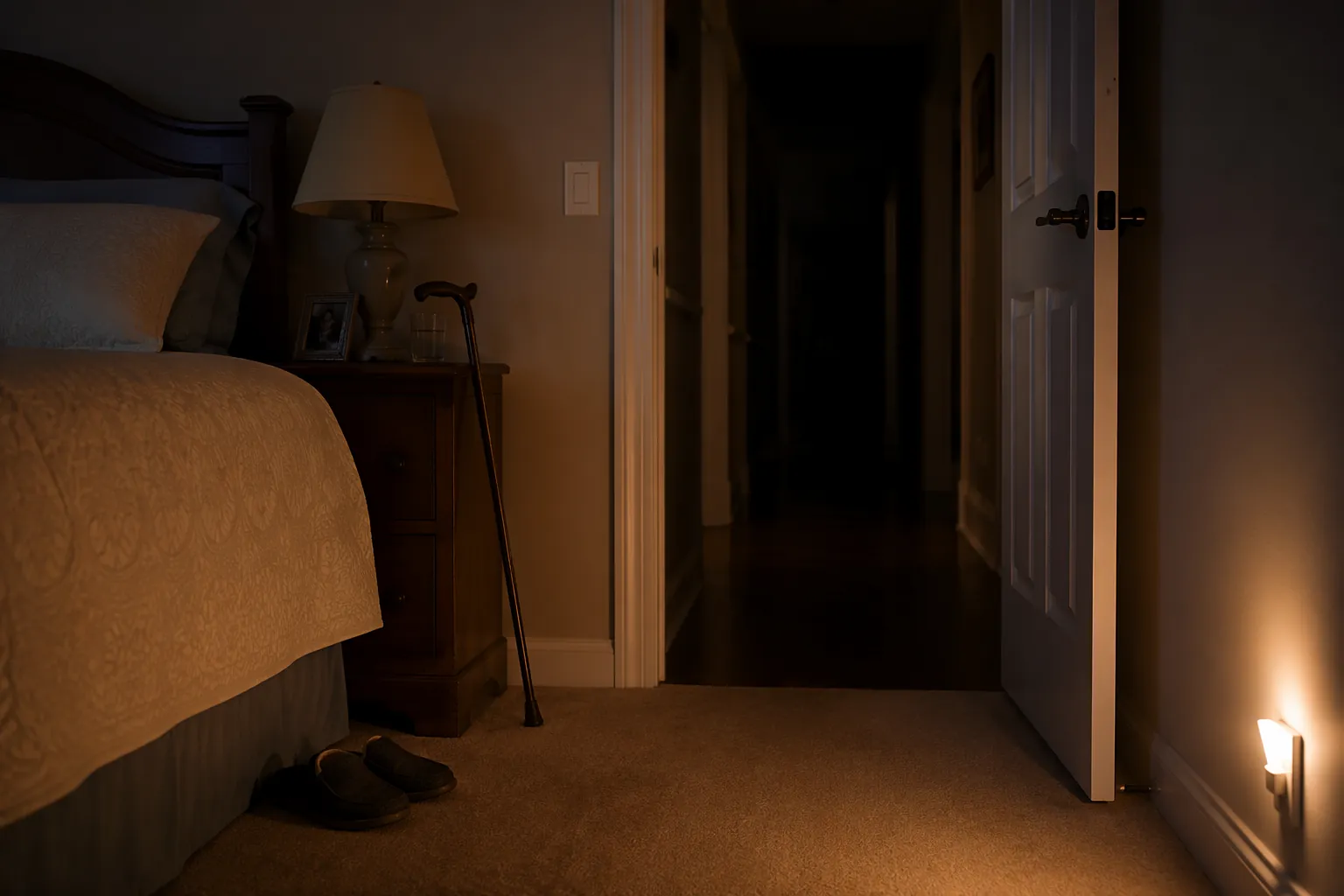
Start With the Route Someone Actually Walks
A good outage plan begins with movement, not supplies. Stand at the bed. Walk to the bathroom. Turn around. Walk back. Then do the same thing while imagining the house has no overhead lights, no glowing microwave clock, no hallway lamp, and no easy way to see whether a slipper has tipped sideways.
Most nighttime fall-prevention work belongs in that route. Bedroom, bathroom, hallway, and stairs deserve the first inspection because they are where sleepiness, urgency, poor lighting, and balance demands overlap. The kitchen, living room, and entryway still need attention, but they usually do not have the same 2:00 a.m. pressure.
| Area | What Darkness Changes | First Fix |
|---|---|---|
| Bedroom | The first step from bed loses visual reference points. | Put light, cane, walker, glasses, and slippers in fixed reachable positions. |
| Bathroom | Tile, water, thresholds, and grab bars become harder to see. | Add visible lighting and contrast around the toilet, shower, and floor transitions. |
| Hallway and stairs | Edges, turns, and steps flatten into one dark surface. | Use path lighting and high-contrast step edges. |
| Kitchen | Chairs, pet bowls, cords, and open cabinets become foot-level hazards. | Clear walking lanes before storm season, not during the outage. |
| Living room and entryway | Furniture, shoes, bags, and extension cords block exits. | Keep exit routes open and avoid rearranging furniture during an outage. |
Bedroom: Fix the First Ten Feet
The bedroom is where a power outage becomes personal. A parent may know the room perfectly in daylight and still misjudge the first step after waking. Aging eyes adapt more slowly to darkness, and balance is worse when someone is groggy, dehydrated, medicated, or hurrying to the bathroom. The fix is not to ask a senior to be more careful. The fix is to make the first ten feet less demanding.
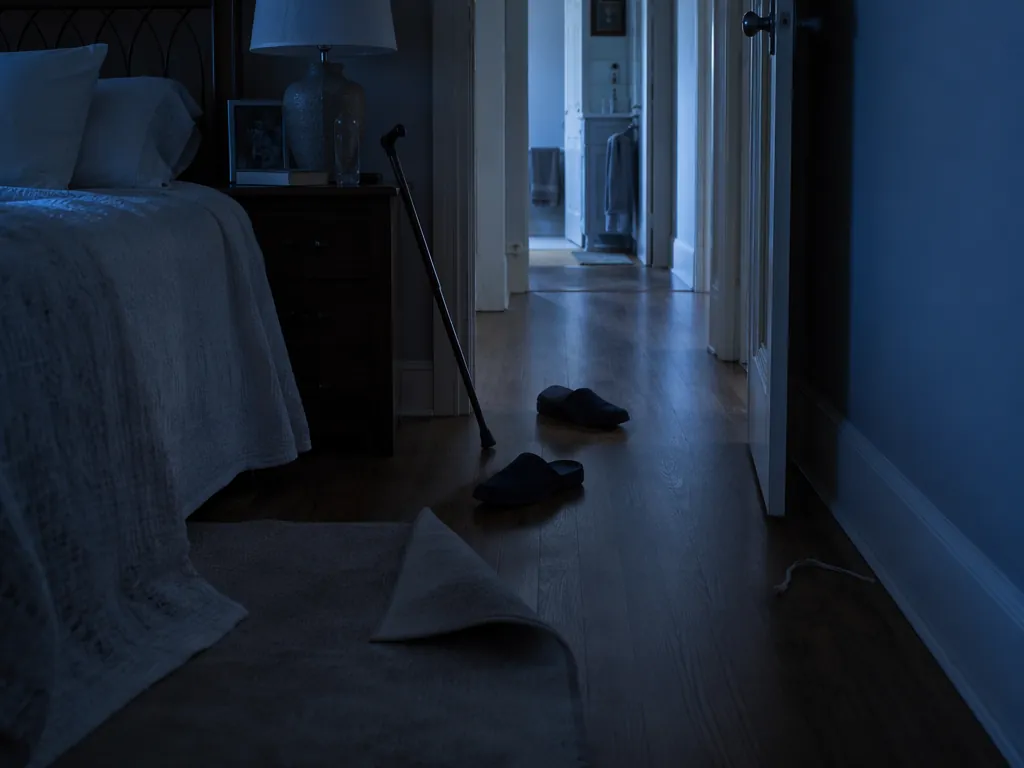
Begin at the side of the bed the person actually uses. Bed height matters because standing up from a too-low mattress requires more leg strength and balance before the person is fully awake. A bed that is too high can leave feet searching for the floor. The goal is not a showroom bedroom; it is a repeatable transfer: feet down, hands supported, assistive device reachable, path visible.
- Keep the cane or walker on the same side of the bed every night, close enough to reach before standing.
- Place slippers heel-to-bed and toe-to-path so they do not need to be hunted for or kicked into position.
- Remove loose throw rugs from the bed-to-door route, especially rugs with curled corners or thick edges.
- Move charging cords, oxygen tubing, fan cords, and lamp cords away from the first steps out of bed.
- Put a flashlight or lantern where a hand naturally lands, not inside a drawer that requires searching in the dark.
Battery backup nightlights are worth placing low enough to mark the floor, not so high that they glare into older eyes. A light that points toward the route is more useful than a bright lantern that blinds someone the moment it turns on. Motion-sensor lights can help if they come on gently and reliably; for families considering connected devices, a staged approach such as smart home integration for senior safety is safer than buying several gadgets at once and discovering during an outage that no one remembers how they work.
During an outage, the bedroom rule should be simple: sit first, turn on the nearest light source, put on glasses if needed, take the assistive device before standing, and do not step over anything. If the cane is not where it belongs, that is not a small inconvenience. It is a reason to pause and call for help if help is available.
Bathroom: Make the Safety Features Visible
The bathroom is unforgiving in a blackout. Tile reflects and hides water. A bathmat edge feels small until a foot catches it. A threshold into a shower or bathroom can disappear when the hallway is dark. Even a properly installed grab bar can fail its purpose if it visually blends into the wall and the person reaches for the towel bar instead.
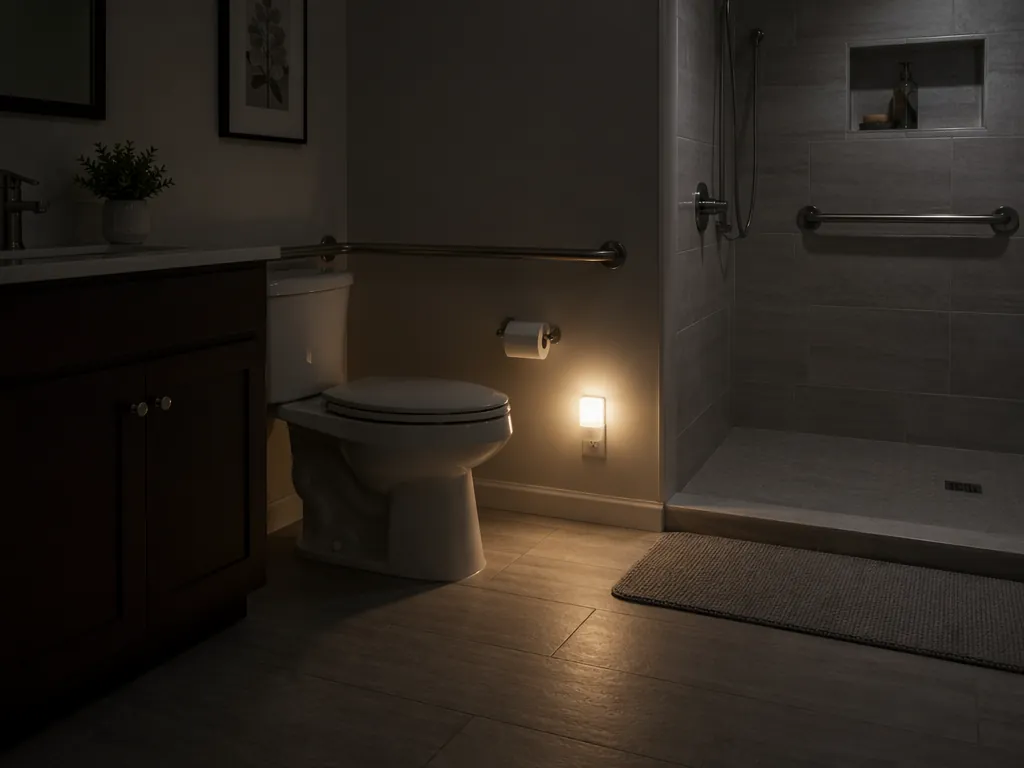
Before storm season, look at the bathroom at night with the main light off. Can the toilet be seen from the doorway? Can the grab bar be found without sweeping a hand along the wall? Is the shower threshold obvious? If everything becomes the same shade of gray, the room needs contrast as much as it needs equipment.
- Use battery backup or plug-in nightlights with outage backup near the toilet path and bathroom entrance.
- Choose grab bars that contrast with the wall or add visual contrast around existing bars.
- Replace loose bathmats with non-slip mats that lie flat and do not bunch at the edges.
- Keep towels, laundry, scales, trash cans, and toiletries out of the walking and turning path.
- Mark shower thresholds or floor transitions with contrast that remains visible in low light.
For a parent who already needs bathroom changes, outage planning is another reason to treat lighting, grab bar placement, toilet transfers, and flooring as one system. A bathroom remodel for elderly safety should not stop at installing a bar and calling the room safe. The question is whether the person can recognize and use that support when the room is dim, urgent, and possibly wet.
During the outage, avoid showers and baths unless they are medically necessary and help is present. Use the toilet path only with a light source on. If the bathroom floor is wet, treat it as closed until it is dried. That may sound strict, but a wet tile floor in the dark gives very little warning before it takes away balance.
Hallways and Stairs Need Edges, Not Just Light
Hallways look simple in daylight because the body reads walls, doorframes, carpet changes, and furniture edges without effort. In a blackout, a hallway can become a tunnel with no reliable depth cues. Stairs are worse: if every tread becomes the same dark strip, the foot has to guess where the next edge begins.
Lighting belongs along the route, not only at the destination. A flashlight kept in the kitchen does not help someone who wakes in the bedroom. A lantern at the top of the stairs helps more if it marks the landing and the first step, not if it sits on a table behind the person.
- Place outage-ready lights at both ends of a hallway and near turns, not just in one central room.
- Add contrast tape or nosing to stair edges if the steps blend together in low light.
- Keep handrails clear and usable; decorations, laundry, and bags should not hang from them.
- Remove narrow runner rugs or secure them completely so edges cannot curl.
- Close doors that open into the walking path, or keep them consistently open so the route does not change.
During an outage, stairs should be optional whenever possible. If a bedroom, bathroom, medication, or phone is on another level, make a plan before storm season for what moves temporarily to the main floor. This is where broader aging-in-place modification priorities become very practical: the safest stair is sometimes the one an older adult does not have to use during a storm.
Kitchen: Clear the Floor Before Anyone Gets Hungry
The kitchen is not usually the first room people worry about for falls during a blackout, but it collects hazards quickly. Chairs get pulled out. Cabinet doors stay open. Pet bowls migrate into the walking path. Appliance cords stretch across counters or toward temporary power sources. A person trying to make tea, check the refrigerator, or find medication may be moving with one hand full and one eye on the flashlight.
Before an outage, make the kitchen boring at floor level. Push chairs fully under the table. Keep pet dishes against a wall. Clear the path from the entrance to the sink, refrigerator, and medication storage area. If counters are cluttered, the risk is not only that something falls; it is that someone steps backward or sideways to avoid it and catches a foot on a stool or mat.
A kitchen fall scan does not need to be elaborate. The same habits in a kitchen fall prevention checklist for older adults become more important when the refrigerator light is gone and everyone is using portable light.
During the outage, avoid cooking by flashlight if balance, vision, or attention is already strained. Use stable battery lanterns instead of carrying a phone light in one hand while opening cabinets with the other. Do not run cords across walking lanes for temporary appliances or chargers.
Living Room and Entryway: Do Not Let the Backup Plan Become the Hazard
When the power fails, people tend to gather supplies in the living room: lanterns, phones, blankets, radios, chargers, medication bags, shoes, and bottled water. That pile may feel organized to the person who made it. To an older adult crossing the room in low light, it may be a new obstacle course in a place that used to be familiar.
Keep the main seating area stable. Do not rearrange furniture during the outage unless there is no alternative, and if furniture must move, walk the new path with the older adult before leaving them alone. A favorite chair should have light within reach, a clear path to the bathroom, and a side table that does not require twisting or leaning to reach water, medication, or a phone.
- Keep shoes, bags, umbrellas, and delivery boxes out of the entryway.
- Store emergency supplies against a wall or on a stable shelf, not in the walking lane.
- Use lanterns on stable surfaces rather than candles or low lights that can be kicked.
- Leave the route to the exit clear enough for a walker, not just for a person walking sideways.
Official power outage guidance from the American Red Cross and Ready.gov covers broader issues such as food safety, generators, carbon monoxide risk, communication, and emergency supplies.[3][4] Those belong in the family plan. They just should not crowd out the simpler question of whether someone can cross the living room safely after the lamps go out.
Hearing, Alerts, and the Problem of Being Alone
Caregivers often assume they will hear if something goes wrong, or that a parent will hear the phone, a weather alert, a knock, or someone calling from another room. That assumption deserves checking. PowerOutage.us cites NIH data indicating that about 22% of adults ages 65 to 74 and 55% of those 75 and older have disabling hearing loss.[2] The numbers are best treated as context rather than a diagnosis for any one household, but the practical point is clear: an alert that works for one person may not work for another.
For outage planning, hearing loss changes the safety setup. A parent may not hear a caregiver enter the house. A spouse may not hear a fall from the next room. A phone ringing on the kitchen counter may be useless from the bedroom. Visual alerts, vibration alerts, wearable call buttons, and scheduled check-ins can matter more than another flashlight in a drawer.
If nighttime wandering, repeated bathroom urgency, missed calls, or recent near-falls are already part of the pattern, it may be time to look beyond objects and lighting. A guide to recognizing red flags for overnight care can help families separate a one-time storm concern from a routine that has become unsafe after dark.
Before the Outage, Walk the House in Daylight
The most useful caregiver task is also the least dramatic: walk the home in daylight as if the lights are already out. Do not start with the garage shelf full of emergency supplies. Start at the bed. Put your hand where your parent would reach. Notice whether the cane is there. Look at the rug edge. Look at the bathroom doorway. Then keep walking.
- Trace the nighttime bathroom route first, including the return trip to bed.
- Remove floor hazards before buying new equipment.
- Place outage-ready lighting where movement begins, turns, and transfers happen.
- Add contrast where the body needs to judge an edge: stairs, thresholds, grab bars, and toilet transfers.
- Decide what rooms are off-limits during an outage, especially stairs, showers, basements, and cluttered storage areas.
- Set a check-in plan that accounts for hearing, vision, mobility, and whether the older adult lives alone.
This is not a replacement for a full severe-weather plan. Families still need charged phones, medication planning, safe heating and cooling decisions, food guidance, and generator safety if a generator is used. For storm-specific planning beyond indoor fall hazards, see how to help an older adult stay safe and steady during severe weather. The room-by-room walk simply protects the place where many injuries begin: the ordinary path someone trusts too much to question.
Do the walk before storm season. Prioritize the bedroom-to-bathroom route. Put light where the hand and foot need it. Remove what the foot can catch. Make the grab bar visible in the dark. Then move room by room until the house still makes sense when the power does not.
References
- Facts About Falls | Older Adult Fall Prevention | CDC, CDC, January 2026.
- Power Outage Preparedness for Seniors & Elderly, PowerOutage.us.
- Power Outage Safety, American Red Cross.
- Power Outages, Ready.gov.
Related reading
Noticed something outdated or inaccurate on this page? Flag a correction. We review every report against CDC, NIA, and AARP HomeFit guidance before updating a page.
Part of the Fall Prevention section.