
STEADI: Intervene
How to Protect Older Parents During an Extreme Heat Warning
An Extreme Heat Warning is a take-action-now alert, not background weather news. Get a plain-language breakdown of what that alert level means plus a 24-hour caregiving checklist covering cool-air access with transportation, medication-aware hydration, keeping heat out of the home, and twice-daily check-ins.
When an Extreme Heat Warning shows up for your older parent’s area, the job is not to watch the forecast more closely. The job is to answer two questions before the hottest part of the day: where will they be safely cool for the next 24 hours, and how will they get there if home is not safe enough?
Local National Weather Service offices may use “Extreme Heat Warning” or “Excessive Heat Warning.” Either way, a warning means extremely dangerous heat conditions are expected or already occurring. That is a different level from a watch, which means dangerous heat is possible, or an advisory, which means hot conditions may cause heat illness but do not carry the same take-action-now signal as a warning. [1]
So the practical answer to protecting an older adult during an Extreme Heat Warning is a 24-hour plan, not a reminder to “stay cool.” A fan, a water bottle, and a promise to call later are not enough unless someone has confirmed the apartment temperature, the cooling destination, the ride, the medication constraints, and the next check-in.
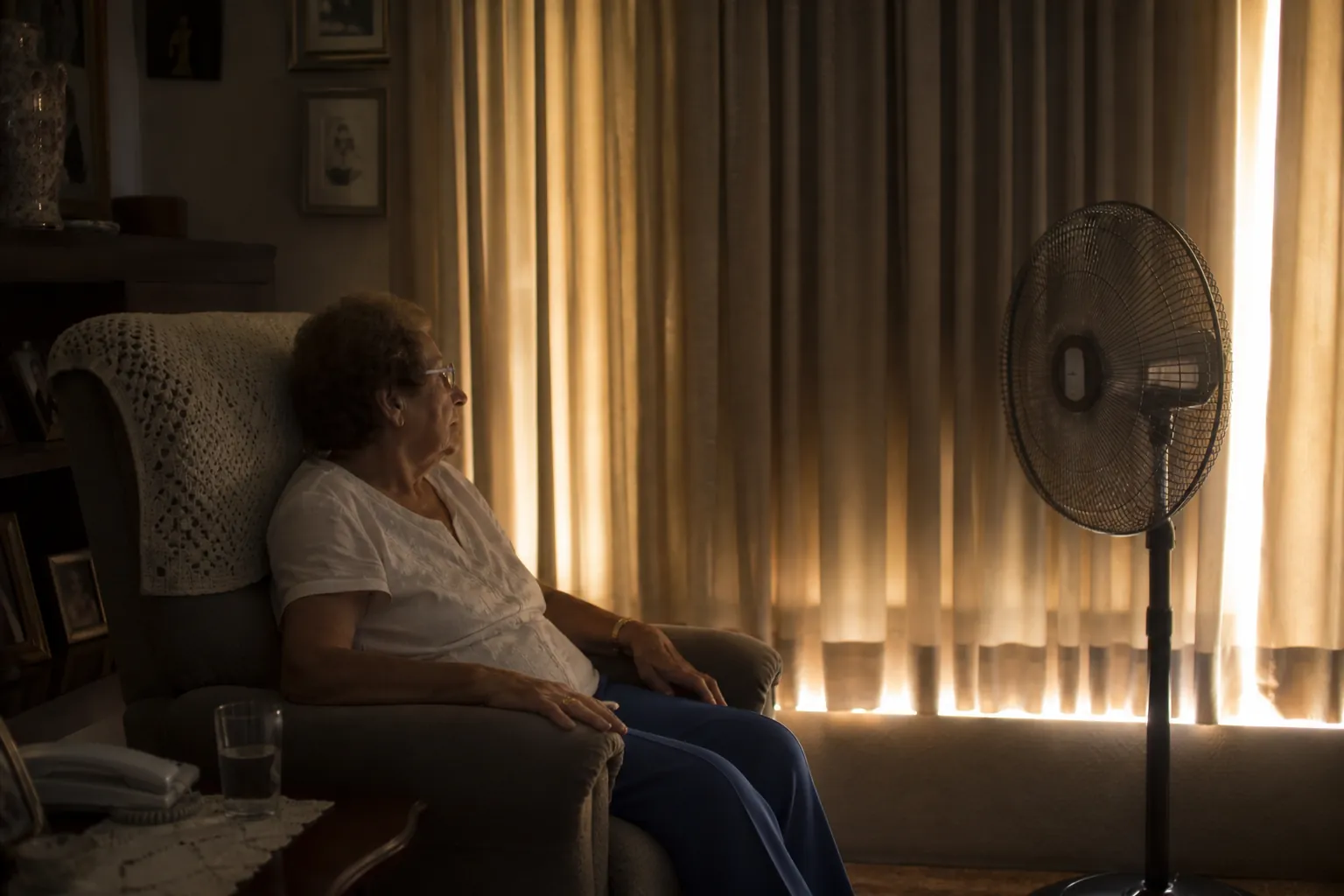
Start with the 24-hour safety loop
Use the warning as a trigger for assignments. If you are calling between work meetings, do not try to solve every possible heat emergency. Get the next day covered.
| Decision to lock in | What to confirm | Who owns it |
|---|---|---|
| Alert level | Warning vs. advisory/watch, warning start and end time, hottest hours | Adult child or main caregiver |
| Cooling location | Home with working cooling, a cooling center, library, senior center, clinic lobby, relative’s home, or another reliable cooled place | Caregiver plus parent, neighbor, building staff, or local contact |
| Transportation | Exact ride, pickup time, return plan, backup if the first ride cancels | Named driver, paratransit, taxi/rideshare payer, neighbor, agency contact |
| Hydration plan | What they can drink, whether fluid restriction or water pills change the advice, who to call if uncertain | Caregiver, pharmacist, clinician, or home health nurse |
| Home setup | Curtains, windows, AC/fan use, safe nighttime ventilation, plan if power or smoke changes conditions | Parent if able, nearby helper if not |
| Check-ins | Two confirmed contacts each day, with escalation if no answer | Named caller or visitor, not “whoever is free” |
If the warning arrived because you helped set up phone alerts, this is the handoff point from notification to action. If the alert did not reach the right people, use the next calm day to fix that with a dedicated setup like heat alerts on an older parent’s phone.
Choose the cool place before you talk about water or fans
The weakest instruction in heat advice is usually “go somewhere cool.” It sounds simple until the parent does not drive, the building hallway is also hot, the cooling center is across town, the taxi app is on your phone rather than theirs, and nobody has checked whether they will agree to leave.
That gap is not rare enough to ignore. A Center for American Progress analysis reported that about 1 in 3 older adults, approximately 14.8 million people, experienced energy insecurity, and that 18% of adults age 65 and older do not drive. The same analysis found that LIHEAP cooling assistance was available in only 26 states, Washington, D.C., and 3 territories. [2]
Those numbers change the caregiving task. If home cooling is questionable, the plan is not complete until transportation and cost are handled. “Can you get to the library?” is not the same as “Mrs. Alvarez downstairs has the key, will come at 10:30, and will ride with you to the senior center; I prepaid the return ride for 4:00 unless we decide you should stay longer.”
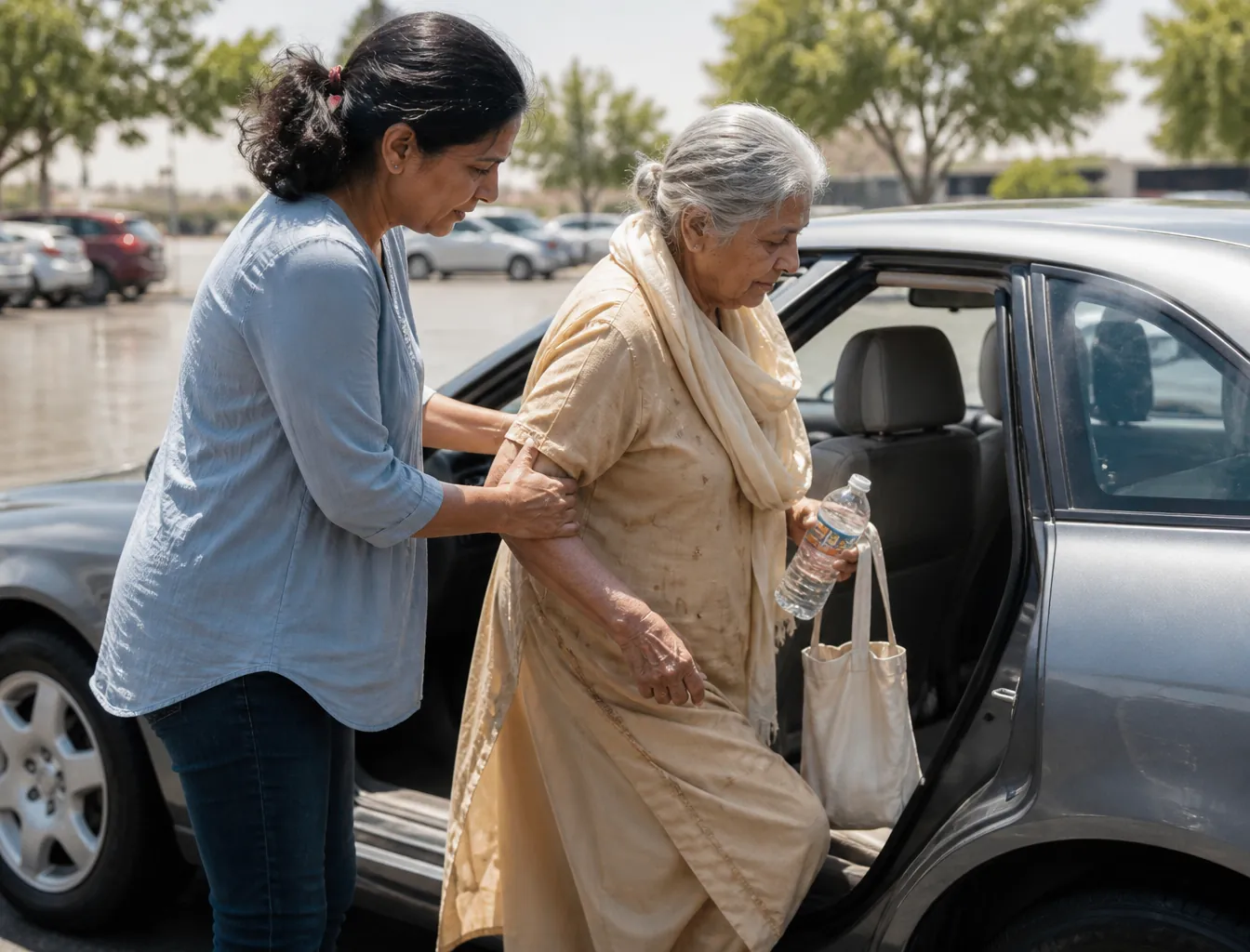
For the next 24 hours, pick the safest realistic option:
- If the home has reliable air conditioning, confirm that it is working, set, and affordable to run. Ask for the actual indoor temperature if your parent can read it, or have a nearby person check.
- If the home is not reliably cool, choose a specific cooled destination and confirm hours, seating, accessibility, bathroom access, and whether your parent can bring medications, mobility aids, oxygen equipment, snacks, or a caregiver.
- If your parent resists leaving, lower the friction: a familiar neighbor, a short first trip, a clear pickup time, and a place they already know often work better than a lecture about risk.
- If nobody nearby is available, call the local Area Agency on Aging, senior center, building manager, faith community, or nonemergency city line and ask specifically about heat-warning transportation or wellness checks.
- If the first ride depends on one person’s availability, name a backup before the hottest hours arrive.
Do not let the cooling plan rest on a fan alone. A fan can help comfort in some conditions, especially with cooler air or air conditioning, but it is not a substitute for access to cooled air during dangerous heat.
Make hydration medication-aware, not automatic
The CDC tells older adults to drink more water than usual during heat and not wait until they feel thirsty, but it also gives an important caveat: people on fluid restrictions or water pills should ask their doctor how much to drink during hot weather. [3]
That caveat matters because many older adults take medications that can change heat tolerance, fluid balance, sweating, blood pressure, or alertness. AARP identifies medication classes of concern during heat waves, including diuretics, blood-pressure drugs, some antidepressants, and antihistamines, and emphasizes that people should not stop taking medications on their own. [4]
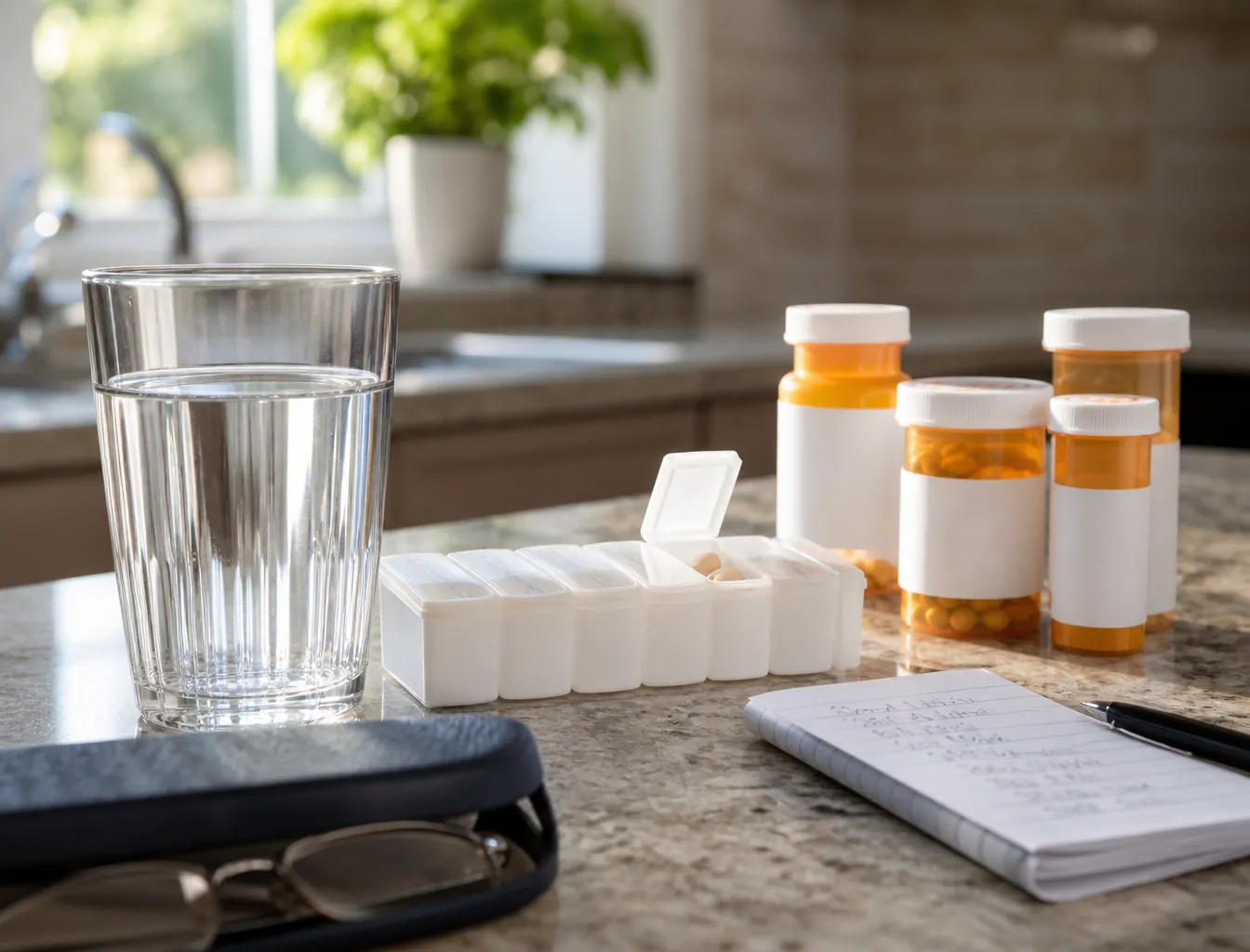
This is where a caregiver should get specific without pretending to be a clinician. Do not say, “Drink tons of water,” if your parent has heart failure, kidney disease, a prescribed fluid limit, or a diuretic schedule you do not understand. Do not tell them to skip a water pill because it is hot. Do make the call that is often missing: pharmacist, prescribing office, home health nurse, or after-hours clinician line.
A useful script is short: “My mother is under an Extreme Heat Warning for the next 24 hours. She takes these medications, including her water pill. She has been told to limit fluids / has not been told to limit fluids. How much should she drink today, and are there symptoms that should make us seek urgent help?”
New York State Office for the Aging advises older adults to drink 2 to 4 glasses of water per hour during extreme heat. That can be a helpful public-health benchmark for people without fluid limits, but it should not override a clinician’s instructions for someone who has been told to restrict fluids or who takes water pills. [5]
For the 24-hour plan, put drinks where they will actually be used: a glass by the chair, a bottle for the ride, water at the bedside, and a written note if your parent forgets whether they drank. If they dislike plain water, ask the clinician or pharmacist whether alternatives are appropriate. Avoid turning hydration into a guessing game built around shame or nagging.
Set up the home to hold heat out
Home preparation is secondary to securing cooled air, but it still buys margin. The World Health Organization advises keeping heat out during the day by closing windows and shutters or curtains when outdoor air is hotter, then opening windows at night when outdoor air is cooler and it is safe to do so. WHO also notes that air conditioning around 81°F with a fan can reduce energy use while helping maintain cooling, and that fans are useful only when indoor temperatures are below about 104°F. [6]
The American Red Cross gives the plainer caregiver version: electric fans alone do not prevent heat-related illness when temperatures are in the high 90s. [7]
So the home setup should look like this:
- Close curtains, blinds, and windows during the day when the outside air is hotter than inside.
- Use air conditioning if available, and keep the room your parent uses most as the priority space.
- Use a fan to move cooled air, not as the only safety measure during dangerous heat.
- Open windows at night only if the outside air is cooler and conditions are safe.
- Move sitting, sleeping, medications, phone charger, water, glasses, and mobility aids into the coolest practical room.
- Reduce stove and oven use during the hottest hours; simple cold meals or delivered food may be safer than cooking.
Two complications need their own plan. If power fails, the cooling plan has to move outside the home quickly; do not wait for the apartment to become unbearable. If wildfire smoke is also present, opening windows at night may not be safe even if the air is cooler. For those overlapping problems, use separate guidance for heat, smoke, and older adults or a power-outage fall-prevention plan.
Twice-daily contact is the accountability system
The CDC recommends checking on older adults at least twice a day during hot weather and asking about signs of heat stress. [3]
Treat that as an assigned safety task, not a nice extra call. A twice-daily check-in should have a person, a time, and a backup action if there is no answer.
| Check-in | Ask or verify | Escalate if |
|---|---|---|
| Morning | Where will you be during the hottest hours? Is the AC working? What will you drink? Who is the ride if you leave? | They are already hot, confused, dizzy, unusually weak, unable to reach water, or unsure of the plan |
| Late afternoon or evening | Did you stay in cooled air? Did you drink according to the plan? Any dizziness, falls, nausea, headache, cramps, or new confusion? | They sound worse, missed the ride, lost power, cannot cool down, fell, or do not answer |
If your parent does not answer, decide in advance who is next: neighbor with a key, building staff, nearby relative, local police nonemergency wellness check, or emergency services if symptoms or circumstances suggest immediate danger. “I’ll try again later” is not a plan during a warning.
Also ask about falls, not just heat. Heat can leave an older adult lightheaded, dehydrated, rushed to the bathroom, or weaker than usual. If dizziness, unsteadiness, or near-falls show up, use a focused guide to heat-wave fall warning signs rather than treating the heat plan and fall plan as separate chores.
Keep symptom triage separate, but close
This checklist is for preparation and monitoring around an active warning. If your parent has alarming symptoms, suddenly becomes confused, stops sweating despite heat, faints, has chest pain, cannot be cooled, or you are worried they may already be in heat illness, switch to act-now guidance instead of continuing the checklist.
Use the companion page for red-alert heat safety and urgent triage if symptoms appear. If the main issue is dehydration risk, water access, or safe drinking during a broader service disruption, keep water-crisis planning for senior fall risk nearby.
The warning has been handled for the next 24 hours only when your parent has a cool place, a confirmed way to reach it if home is not safe enough, a hydration plan that respects medications and fluid limits, a home arranged to resist daytime heat, and two check-ins with escalation already named.
References
- Understanding Heat Alerts — National Weather Service
- Protecting Older Adults from the Growing Threats of Extreme Heat — Center for American Progress
- Heat and Older Adults (Aged 65+) — Centers for Disease Control and Prevention
- Heat Wave Dangers — AARP
- Extreme Heat Resources — New York State Office for the Aging
- Climate change: Heat and health — World Health Organization
- Extreme Heat Safety — American Red Cross
Related reading
Noticed something outdated or inaccurate on this page? Flag a correction. We review every report against CDC, NIA, and AARP HomeFit guidance before updating a page.
Part of the Fall Prevention section.