
How the Cyclospora Outbreak Raises Fall Risk for Older Adults
The 2026 Cyclospora outbreak is not just a food safety issue—it poses a hidden fall danger for older adults. This article explains how prolonged diarrhea triggers dehydration, dizziness, and urgency-driven falls, and provides prevention steps and post-illness reconditioning guidance.
A Cyclospora infection may start as a foodborne parasite problem, but in an older adult’s home it can quickly become a bathroom safety problem. The urgent diarrhea stops being the only concern once the person is weak, thirsty, lightheaded when standing, or trying to reach the toilet in the dark without waking anyone.
As of July 13, 2026, the CDC reported 1,645 laboratory-confirmed domestic Cyclospora infections across 34 states, with 141 hospitalizations, or 9% of reported cases. That was 6.6 times the number reported during the same period in 2025, and the CDC cautioned that the real count is likely higher because FoodNet reporting is optional and surveillance data continue to evolve. [1]
Those numbers make Cyclospora prevention for older adults current and practical, not theoretical. Still, case counts are not the most useful thing for a family standing in a hallway at 2 a.m. The more important question is what happens after repeated watery diarrhea drains fluid, lowers blood pressure, weakens muscles, and turns every bathroom trip into a timed event.
This article is educational and not a substitute for medical care. Diarrhea in an older adult can become serious quickly, especially when the person has heart disease, kidney disease, diabetes, blood pressure problems, frailty, or takes medications affected by fluid loss. A clinician should guide diagnosis and treatment.
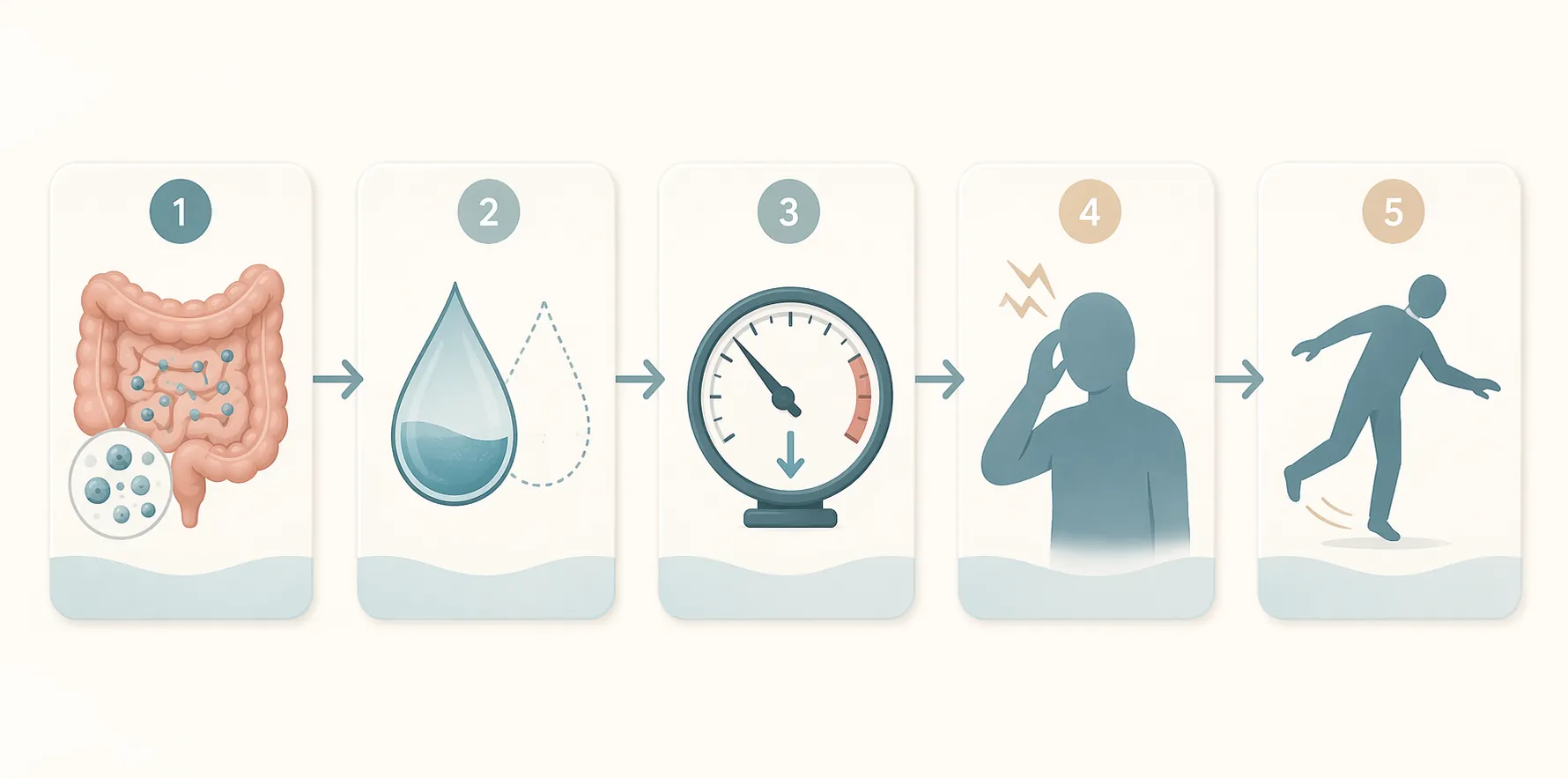
The fall risk begins before anyone says “fall risk”
Cyclospora often causes watery diarrhea that can last long enough to wear a person down. In a younger, otherwise healthy adult, that may mean several miserable days near a bathroom. In an older adult, it can mean a narrower margin for error: less fluid reserve, more medications, slower recovery, and more consequences from one dizzy stand.
The fall-prevention concern is not that Cyclospora has been proven to directly cause falls in seniors. No study in the research base has directly measured fall rates among older adults infected with Cyclospora. The concern is the cascade around the infection: dehydration, blood-pressure drops, weakness, urgency, nighttime movement, and medication complications. Those are familiar fall-risk ingredients, even when the original illness is gastrointestinal.
A large Mayo Clinic Proceedings study by Hamrick and colleagues found that 37.9% of adults 65 and older were already dehydrated at baseline, and dehydration was positively associated with falls, with an odds ratio of 1.13. That finding does not prove dehydration caused any individual fall, but it does support treating dehydration as a meaningful fall-risk factor rather than a side detail. [2]
Dr. Luis Marcos of Stony Brook Medicine made the same practical connection in AARP’s July 2026 Cyclospora coverage, warning that dehydration complications in older adults can include “weakness, dizziness, falls and worsening of chronic conditions.” [3]
How diarrhea turns into a fall
The first step is fluid loss. Repeated watery stools pull water out of the body faster than many older adults can comfortably replace it. Nausea, poor appetite, embarrassment, and fatigue can make the person drink less at exactly the wrong time. Some people also avoid drinking because they do not want more bathroom trips, a choice that can feel reasonable in the moment and dangerous by morning.
The second step is volume depletion. With less circulating fluid, blood pressure can fall when the person sits up or stands. That positional drop, often discussed as orthostatic hypotension, is one reason a person may feel fine lying in bed and suddenly unsteady on the way to the bathroom. A few seconds of lightheadedness beside a bed, toilet, or hallway rug can be enough.
The third step is weakness. Diarrhea can also disturb electrolytes, including sodium and potassium, which matter for muscle function and overall steadiness. Families may notice that the older adult is moving more slowly, pushing harder on chair arms, or reaching for furniture that was never meant to be a support rail. The towel bar, the sink edge, and the nightstand become improvised balance devices.
The fourth step is urgency. Bathroom urgency changes how people move. They skip slippers, leave the walker behind, rush across a wet floor, or stand before they are fully awake. At night, the path may be dim, the person may be half asleep, and the body may already be volume-depleted from the day’s fluid losses.
The fifth step is recovery lag. Diarrhea can improve before strength, balance confidence, hydration, and blood pressure have caught up. That is the day many families relax. It is also the day an older adult may try to shower alone, restart errands, change sheets, or walk to the mailbox after several days of reduced intake and bed-to-bathroom living.
| What the family sees | Why it matters for falls | What to check next |
|---|---|---|
| More bathroom trips than usual | Urgency increases rushing, especially at night | Lighting, clear path, footwear, walker or cane within reach |
| Dizziness when sitting or standing | May signal volume depletion or blood-pressure drop | Call the clinician, especially if dizziness persists or the person nearly falls |
| Weak legs or furniture-walking | Strength and balance may lag behind symptom improvement | Use supervised transfers and delay solo showering or errands |
| Less drinking to avoid the toilet | Fluid restriction can worsen dehydration | Keep preferred fluids nearby and track intake and urine changes |
| New antibiotic or medication change | Drug interactions or blood-pressure effects can compound risk | Ask the prescriber or pharmacist to review the full medication list |
Older adults have less room for a “minor” stomach illness
A stomach illness does not arrive in an empty body. It arrives in someone who may already take a diuretic, an antihypertensive, a diabetes medication, a blood thinner, or a drug that affects potassium. It arrives in someone whose balance may depend on glasses, hearing, careful footwear, familiar furniture placement, and taking time before standing.
Infectious disease expert Nasuhidehnavi of Binghamton University noted in Newswise coverage that waning immune defenses help explain why seniors can be hit harder by Cyclospora. That does not mean every older adult will have severe illness, but it does mean families should not judge risk only by the first day’s symptoms. [4]
The phrase “Mom just has a stomach bug” can hide the details that matter: How many times did she go today? Is she dizzy when she stands? Is she still taking her water pill? Is she skipping fluids because she is afraid of another accident? Did she almost grab the towel bar when getting off the toilet?
Cyclospora is not just another recall story
It is tempting to treat every foodborne outbreak the same way: avoid the recalled product, wash produce, call the doctor if symptoms worsen. Those steps matter, but Cyclospora has features that change the home-safety plan.
- Cyclospora can have a longer incubation pattern than many bacterial foodborne illnesses, so symptoms may not feel tied to a meal from the previous day.
- The illness can be prolonged or relapsing, which stretches the dehydration and bathroom-urgency window.
- Diagnosis may require specific testing; it is not safe to assume a routine stool workup will automatically look for Cyclospora.
- Treatment commonly involves trimethoprim-sulfamethoxazole, or TMP-SMX, which requires extra caution in older adults because of allergies, kidney considerations, and drug interactions.
That last point is easy to miss. TMP-SMX can interact with medications common in older adults, including warfarin, diuretics, diabetes drugs, and potassium-affecting medications. HealthPals and AARP both flag this interaction concern in older adults with Cyclospora. [3][5]
The fall-prevention implication is not to avoid treatment. Untreated or prolonged illness can also be risky. The point is that treatment should begin with a full medication review, including over-the-counter drugs and supplements, so the person is not pushed from dehydration risk into a second layer of blood-pressure, potassium, blood sugar, or bleeding risk.
This is also where Cyclospora differs from the site’s Salmonella-focused guidance, such as Salmonella warning signs in elderly adults. Both illnesses can create dehydration-related fall risk, but the timing, testing, duration, and treatment issues are not interchangeable.
A prevention plan that treats diarrhea as a fall-risk event
During the 2026 outbreak, general food-safety steps still belong in the plan: follow CDC outbreak updates, avoid implicated foods when advisories name them, wash hands, rinse produce, clean preparation surfaces, and keep high-risk older adults away from foods or settings identified by public health officials. But once diarrhea starts, the home needs a different kind of prevention.
Track the illness in a way a clinician can use
A caregiver does not need a medical chart to collect useful information. A notepad by the bed can record diarrhea episodes, vomiting if present, fluids taken, urine changes, temperature if checked, dizziness, near-falls, and new confusion. The goal is not surveillance for its own sake; it is to keep the story from becoming vague when someone finally calls the doctor.
- Call promptly if diarrhea is frequent, persistent, bloody, accompanied by fever, or paired with dizziness, fainting, confusion, chest symptoms, severe weakness, or signs of dehydration.
- Ask whether Cyclospora-specific stool testing is needed if symptoms fit the outbreak pattern or exposure is plausible.
- Mention the person’s age, chronic conditions, kidney disease if present, and all medications, especially diuretics, blood pressure drugs, diabetes drugs, potassium-related drugs, and warfarin.
- Report near-falls, not just completed falls. A near-fall during diarrhea is a warning sign, not an embarrassing footnote.
Make hydration visible
Older adults often do not announce thirst clearly. Some are used to limiting fluids because of bladder urgency. Others dislike asking for help. During diarrheal illness, fluids should be easy to reach, offered often, and matched to what the clinician allows for that person’s heart, kidney, and medication situation.
Watch for a dry mouth, very dark urine, less frequent urination, new sleepiness, new confusion, dizziness on standing, or a sudden drop in usual function. If a clinician has already given the person fluid limits, heart failure instructions, kidney instructions, or diabetes sick-day guidance, those instructions should drive the plan.
Turn the bathroom route into a protected route
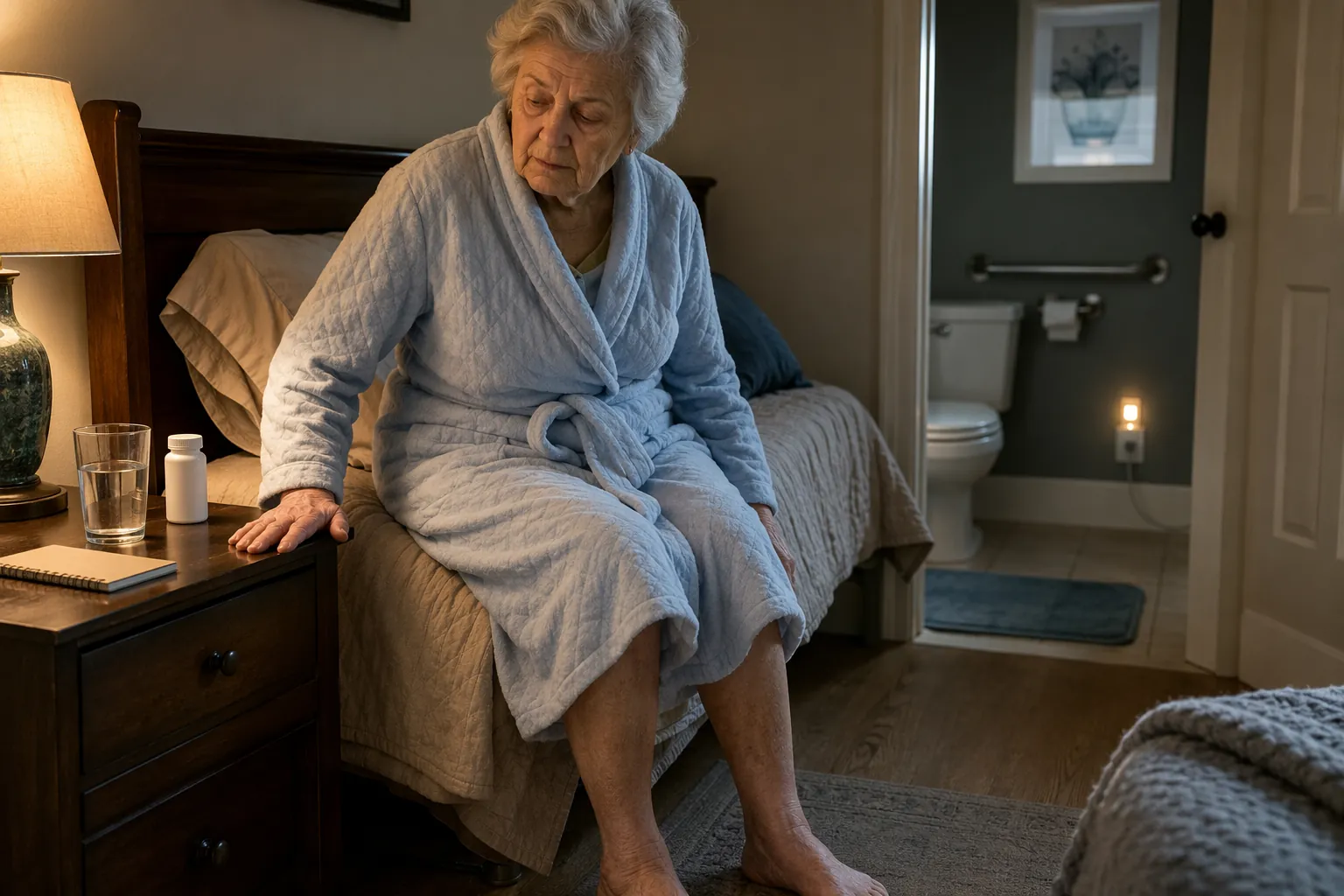
Bathroom urgency is where fall prevention becomes physical. The path from bed or chair to toilet should be short, bright, dry, and predictable. If the person uses a cane or walker, it should be positioned where the person can reach it before standing, not across the room. Nightlights matter. So does removing the throw rug that has been harmless for years.
- Place a light within reach before bedtime.
- Keep the walker, cane, glasses, and phone beside the bed or chair.
- Use non-slip footwear rather than socks on smooth floors.
- Clear cords, laundry, pet bowls, and loose rugs from the bathroom route.
- Consider supervised bathroom trips during the worst symptoms, especially overnight.
- Do not rely on towel bars, sink edges, or shower doors as grab bars.
For families already using a structured fall-prevention approach, this illness can be folded into a broader CDC STEADI home fall-prevention checklist. STEADI’s screen-assess-intervene logic fits this situation well: the illness adds new risk factors, and the home plan should change until those risk factors improve.
Review medications before and during treatment
Medication review is not a formality in this illness. A prescriber or pharmacist needs to know what the older adult takes every day and what has changed since symptoms began. Diuretics during fluid loss, blood pressure medications during poor intake, diabetes medications during reduced eating, and TMP-SMX interactions can all matter. No family should stop or restart prescription drugs on guesswork, but families can make the review happen sooner by having the medication list ready.
The practical question is simple: “Given the diarrhea, dizziness, and possible Cyclospora treatment, should any medication be adjusted or monitored?” That question belongs with the clinician who knows the person’s conditions, kidney function, allergy history, and current lab needs.
The two days after symptoms improve still count
A person can stop having urgent diarrhea and still be unsafe walking to the bathroom alone at night. They may be under-hydrated, deconditioned, sleeping poorly, eating lightly, and newly cautious or newly overconfident. That recovery window deserves the same attention as the active illness.
Before assuming the person is back to normal, watch one or two ordinary transfers: bed to stand, chair to stand, toilet to stand. Look for swaying, grabbing, short steps, breathlessness, dizziness, or a need to pause. Ask directly about near-falls. Older adults often report “I caught myself” as if it does not count.
Reconditioning does not need to be dramatic. It may mean supervised short walks inside the home, sitting at the edge of the bed before standing, delaying solo showers, keeping the nighttime bathroom setup in place for a few more days, and asking a clinician whether a fall-risk reassessment is needed. If the person was already using physical therapy, a walker, or a balance program, the illness may justify a temporary step back rather than a quick return to the old routine.
A printable fall-prevention handout can help families turn that recovery period into a short checklist instead of a memory test. For general questions about what increases fall risk, the site’s fall-prevention FAQ can also help place diarrheal illness alongside more familiar risks such as medications, weakness, vision, and home hazards.
What to do if an older adult may have been exposed
If an older adult ate food that may be linked to an outbreak but has no symptoms, the immediate work is monitoring and prevention: follow CDC advisories, avoid implicated products, wash hands and produce carefully, and make sure the person knows to report diarrhea early. There is no fall-risk emergency without symptoms, but it is worth checking that the bathroom route is already safe before illness tests it.
If diarrhea has started, the work changes. Track episodes and fluids, call the clinician if symptoms are significant or persistent, ask about Cyclospora-specific testing, and treat dizziness or near-falls as part of the medical story. If treatment is prescribed, review medications before the first dose whenever possible.
If the illness is improving, do not remove the supports too quickly. Keep the nightlight, clear path, nearby walker, easy fluids, and supervised bathing plan until hydration, steadiness, bathroom urgency, and medication concerns have been checked. For older adults, Cyclospora prevention is fall prevention, and recovery is not complete just because the diarrhea slowed.
References
- Increase in Reported Cyclospora cayetanensis Infections, CDC Health Alert Network, July 14, 2026
- Association Between Dehydration and Falls, Mayo Clinic Proceedings, 2020
- Cyclospora Outbreak: What Older Adults Need to Know, AARP, July 2026
- Cyclospora outbreak: An infectious disease expert explains who is most at risk and how to stay safe, Newswise
- Cyclospora in Older Adults, HealthPals
Related reading
Noticed something outdated or inaccurate on this page? Flag a correction. We review every report against CDC, NIA, and AARP HomeFit guidance before updating a page.
Part of the Fall Prevention section.