
STEADI: intervene
Food Recall? A Senior-Safe Response Plan for Caregivers
A clear, step-by-step response for when a food recall affects an older adult: verify the exact product, dispose of it safely, sanitize every contact surface, and know which symptoms mean it's time to call a clinician.
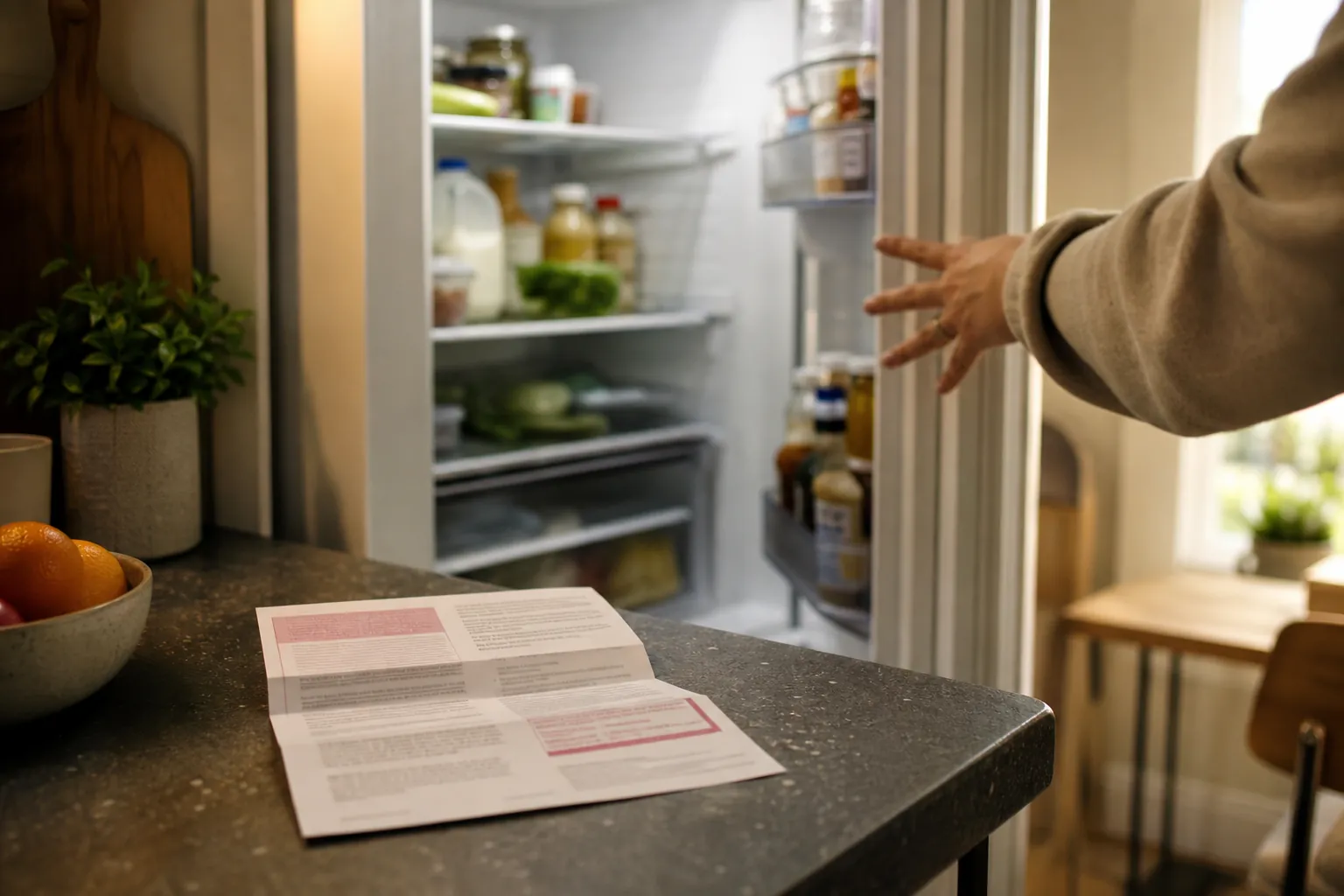
The first question is not whether the food looks normal. It is whether the package in the refrigerator, freezer, pantry, or delivery box is the same product named in the recall notice. If it is, the safe sequence is plain: do not eat it, do not open it, and follow the notice for whether the product should be returned or thrown away. FoodSafety.gov’s recall guidance starts there for a reason: stay calm, stop using the product, and let the official notice—not a smell test or a quick glance—decide the next move.[1] FDA guidance gives the same practical fork in the road: return the recalled food if the notice says to, or dispose of it safely if that is the instruction.[2]
For an older adult, this is worth treating as an act-now household safety task. Nearly half of adults 65 and older with lab-confirmed Salmonella, Campylobacter, Listeria, or E. coli infection are hospitalized, according to CDC material on higher-risk groups.[3] That does not mean every recalled food has been eaten, or that every exposure causes illness. It does mean the first response should be fixed and boring: confirm, remove, clean, then watch.
| Do this in order | What it prevents |
|---|---|
| Pause use of the product. Do not taste it, serve it, or open it. | A normal look or smell from overruling the recall notice. |
| Match the package against the official recall details. | Throwing away the wrong item—or keeping the recalled one. |
| Return it if instructed, or wrap it securely before trashing it. | The product being eaten later by a person, pet, or someone else. |
| Wash and sanitize every surface the food or packaging touched. | Residue or leakage staying in the refrigerator, freezer, drawer, shelf, counter, or utensil area. |
| Monitor for symptoms and call early when warning signs appear. | A foodborne illness becoming dehydration, weakness, or a fall risk before anyone acts. |
Match the product before making the discard decision
The verification step is where a rushed kitchen sweep can go wrong. “Same kind of food” is not enough. A recalled chicken salad is not every chicken salad. A recalled frozen entrée is not every frozen entrée. The package has to match the recall notice closely enough that you would be comfortable saying, “Yes, this is the named product.”
Start with the details that can be checked without memory: brand, product name, use-by or freeze-by date, and, for USDA-regulated meat, poultry, or egg products, the establishment number marked as “EST.” AARP’s recall guidance notes those identifying details as part of the match, and Eatright.org similarly points readers to the recall notice and package labeling when deciding whether a product is affected.[4][5]
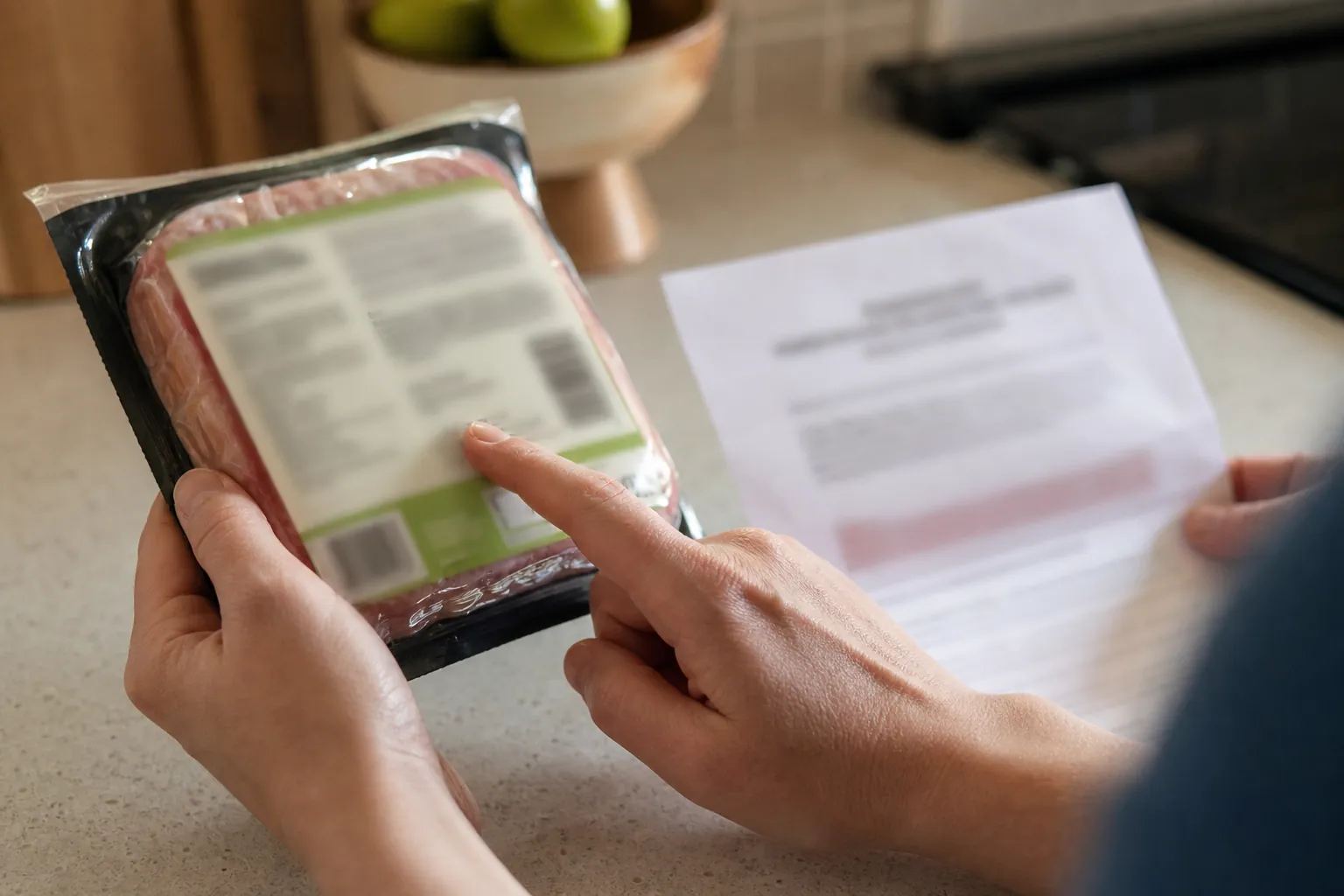
A caregiver checking a parent’s kitchen should make the match in a way that does not depend on remembering what was bought last week. Put the notice next to the package. Read the brand first, then the exact product name or variety, then the date, then any establishment number or other identifier named in the notice. If the recall notice names a specific package size, flavor, lot, or date range, treat that as part of the match. If the product is in a freezer bag, an opened box, or a container without its outer packaging, do not taste it to decide. Set it aside, keep it away from ready-to-eat food, and use the notice, receipt, grocery account, or manufacturer contact information to clarify.
This is also the moment to check the places older adults actually store food: the refrigerator door, freezer bins, a second freezer, meal-delivery stacks, pantry overflow, and any cooler or insulated bag used for grocery pickup. If someone else prepares meals, include that person in the check. A recall notice taped to the refrigerator helps only if the recalled package is not still sitting behind the milk.
For product-specific examples of why recall details matter in a fall-prevention household, see why egg recalls deserve a spot in your fall prevention plan. The food category changes, but the matching habit is the same: the label decides.
Remove it without creating a second problem
Once the package matches the recall, the food is no longer a maybe. It should not be eaten, opened, cooked “just in case,” donated, or given to a pet. FDA guidance says recalled food should never be given to a food bank and should not be fed to pets; if the product is not being returned, it should be wrapped securely before being placed in the trash.[2]
If the recall notice says to return the item for a refund, put the package in a separate bag and take it back according to the notice. If the notice says to discard it, bag it before it goes into the trash, especially if the package is open or has leaked. The goal is not just to get it out of the refrigerator. The goal is to keep another person, a pet, or a well-meaning neighbor from retrieving it later.
Do not pour liquid from a recalled product into the sink unless the recall notice or manufacturer instructions specifically tell you to. Do not rinse an affected food item. Do not transfer it into another container to “save space” before disposal. More handling means more surfaces to clean and more chances for someone to touch the wrong thing.
Clean the path the food traveled
Cleanup is not a courtesy step. If the food sat on a refrigerator shelf, leaked into a drawer, rested on a counter, or touched a cutting board, those areas need attention after the product is removed. FDA and AARP guidance call for washing affected areas with hot, soapy water and then sanitizing them with a bleach solution made from 1 tablespoon of unscented liquid chlorine bleach in 1 gallon of water; surfaces should air-dry, and hands should be washed for 20 seconds afterward.[2][4]
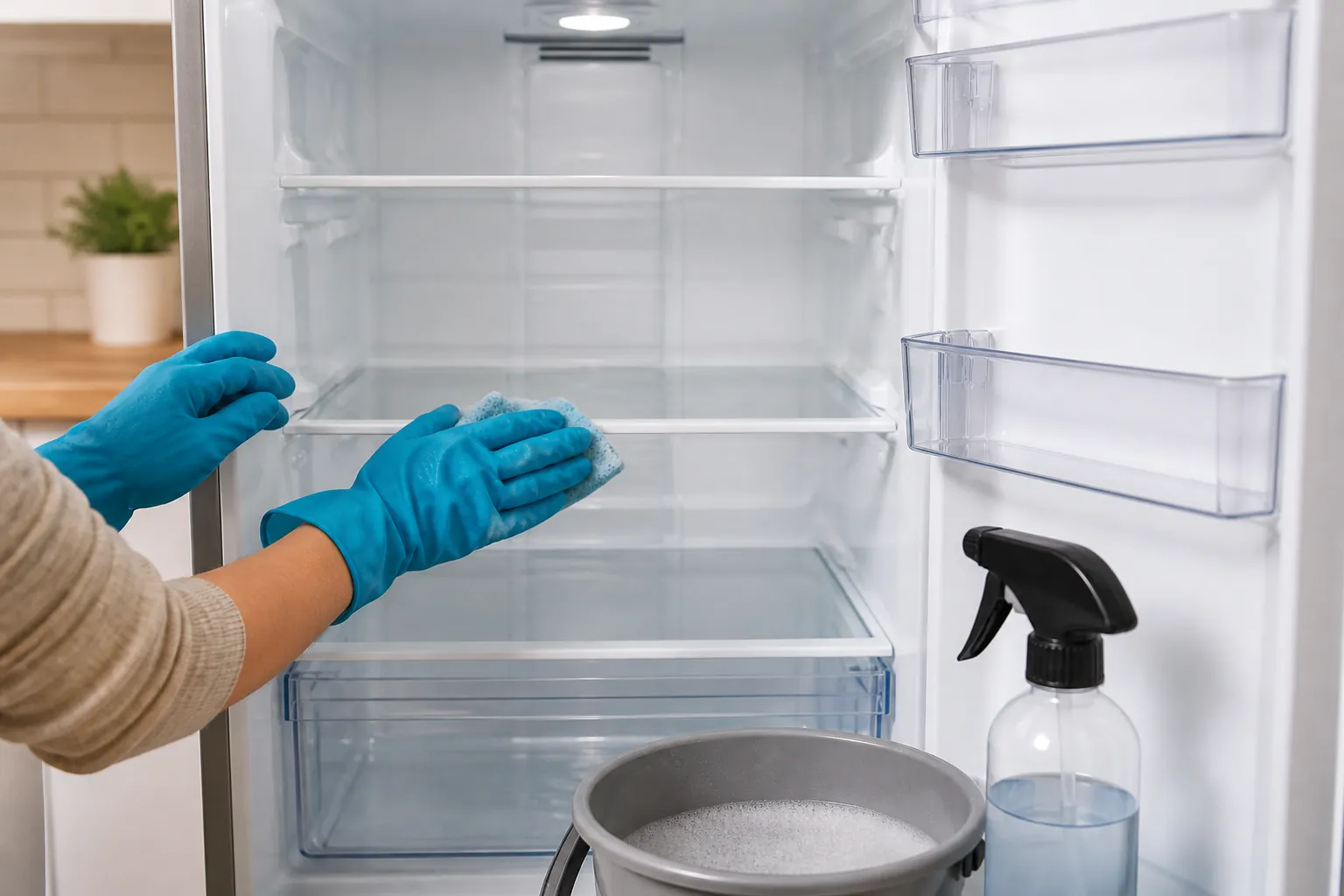
Work from the storage spot outward. Remove nearby items long enough to see the shelf or drawer. If another package has visible residue on it, wash the outside before putting it back, or discard it if it cannot be cleaned safely. Wipe the shelf, drawer, bin, handle, and counter where the recalled food sat. If the product was prepared before the recall was noticed, include knives, cutting boards, plates, sink areas, and any appliance surfaces that were touched during prep.
For a caregiver doing this in someone else’s kitchen, the simplest routine is often the safest:
- Bag or isolate the recalled product first.
- Clear the shelf, drawer, bin, or counter area it touched.
- Wash the area with hot, soapy water.
- Apply the bleach solution: 1 tablespoon unscented liquid chlorine bleach per gallon of water.
- Let the surface air-dry.
- Wash hands with soap and water for 20 seconds.
This is where recall advice often becomes too vague. “Clean the refrigerator” can mean anything from a quick swipe to a full scrub. The useful instruction is narrower: clean every place the recalled food or its packaging touched, and do it after the food is out of reach.
If the older adult uses a walker, cane, wheelchair, or has poor balance, keep the cleanup path dry. A wet kitchen floor added to an illness risk is not harmless. Put towels down only where they will not become trip hazards, and move cleaning supplies out of the walking path when the job is done.
If someone may have eaten it, monitor with a low threshold to call
If the recalled food was not eaten, the job may end with disposal and cleanup. If it might have been eaten, write down what was eaten, when it was eaten, the product name, and the recall details. Do not rely on memory, especially if more than one caregiver may be checking in. A simple symptom note can help a clinician decide what matters later; the habit is similar to the one used when families monitor health changes in elderly parents.
Call a clinician promptly for bloody diarrhea, diarrhea lasting more than 3 days, nonstop vomiting, signs of dehydration, or a fever of 102°F or higher. AARP identifies those as symptoms that warrant medical attention after eating recalled food.[4] In an older adult, vomiting or diarrhea can also mean weakness, dizziness, missed medications, and rushed trips to the bathroom—exactly the kind of chain that turns a food problem into a fall problem.
Listeria deserves special patience in the symptom watch because symptoms may appear the same day as exposure or as late as 10 weeks afterward, according to CDC information on higher-risk groups and FDA recall guidance.[6][2] That long window does not mean someone should worry for 10 weeks over every stomach noise. It does mean the recall details should be kept somewhere findable if fever, diarrhea, confusion, severe aches, or other concerning symptoms appear later and a clinician asks about recent exposures.
This article is not medical advice. If the person has emergency warning signs—such as trouble breathing, fainting, severe confusion, chest pain, or signs that they are dangerously weak or dehydrated—call 911 or local emergency services. If the situation is not an emergency but you are unsure whether symptoms are serious, call the person’s clinician, nurse line, pharmacist, or local health department rather than waiting for symptoms to “prove” themselves.
When the notice is gone but the routine should stay
A recall response should leave very little to interpret. The affected food is either matched or not matched. If matched, it is returned or securely discarded. The surfaces it touched are washed and sanitized. The person who may have eaten it is watched for the symptoms that justify a call.
If the issue is not food but a product used near the eyes, medications, or mobility routines, a checklist approach can keep the response from depending on memory; for example, this senior safety checklist for recalled eye drops follows the same caregiver logic: identify the exact item, remove it from use, clean up the loose ends, and know when to call.
References
- What Do You Do If You Have a Recalled Product? — FoodSafety.gov
- Food Recalls: What You Need to Know — FDA
- People at Increased Risk for Food Poisoning — CDC
- I Ate Recalled Food That Might Be Contaminated. Now What? — AARP
- What to Do During a Food Recall — Eatright.org
- People at Increased Risk for Listeria Infection — CDC
Related reading
Noticed something outdated or inaccurate on this page? Flag a correction. We review every report against CDC, NIA, and AARP HomeFit guidance before updating a page.
Part of the Fall Prevention section.