
STEADI: Intervene
Elderly Flood Safety Checklist for Caregivers
A flood safety checklist for caregivers of older adults covering before, during, and after a flood, organized around the three risks that make flooding most dangerous for seniors: limited mobility, medication dependence, and electric-powered medical devices. It provides concrete, source-verified thresholds for evacuation water depth, medication supply, backup power, and flood insurance timing.
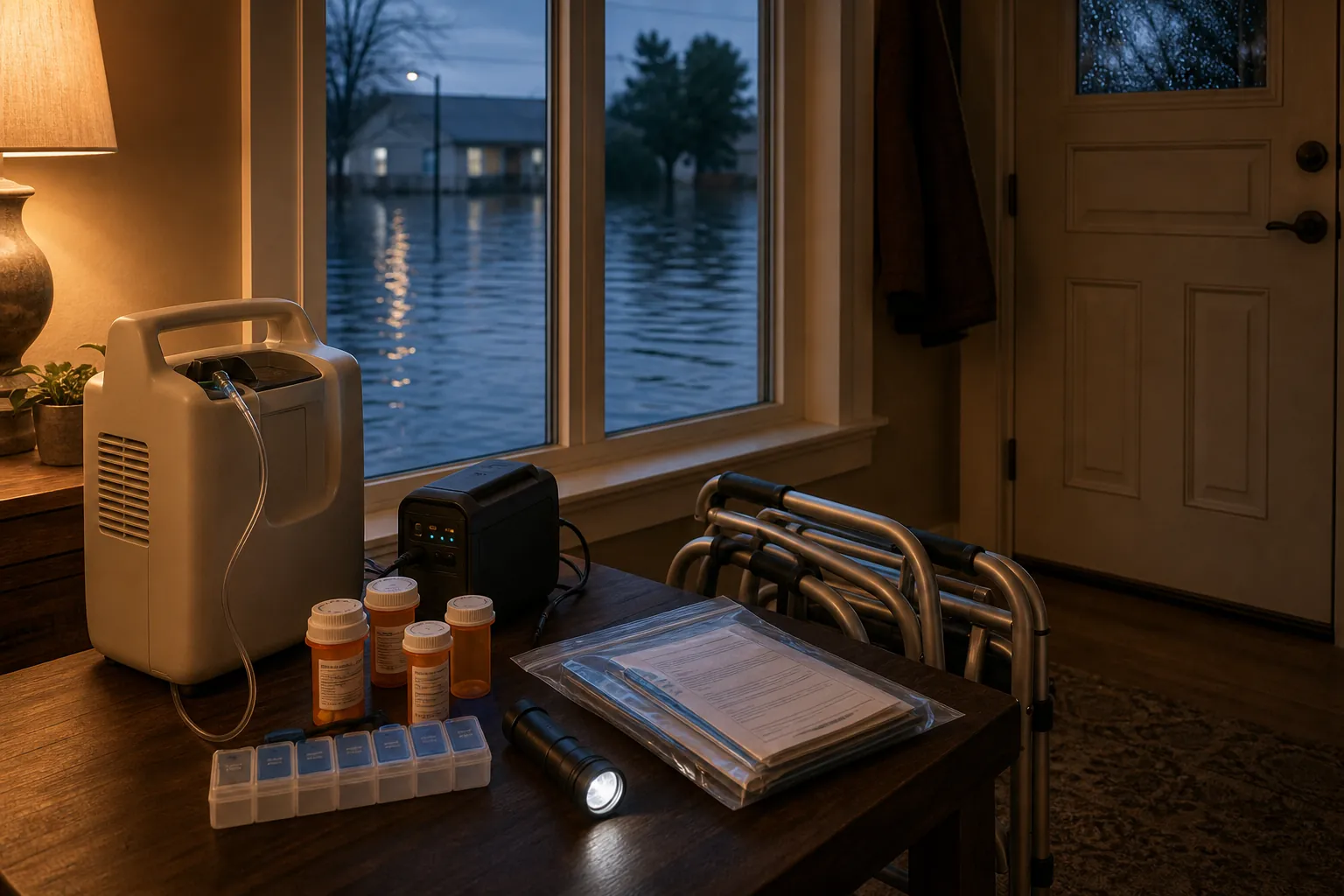
An elderly flood safety checklist for caregivers has to start before the emergency kit. It has to start with the older adult who cannot walk quickly, cannot miss certain medications, or cannot safely ride out a power outage because oxygen, CPAP, a nebulizer, refrigeration, or another device is part of daily care.
That is not a small adjustment to an ordinary flood plan. In 2024, adults 50 and older accounted for 59% of U.S. flash and river flood deaths, based on National Weather Service hazard statistics as reported by AARP. That figure is 50+, not 65+, but it is still a blunt reminder that flood risk rises sharply when speed, balance, transportation, health routines, and home equipment are already fragile.[1]
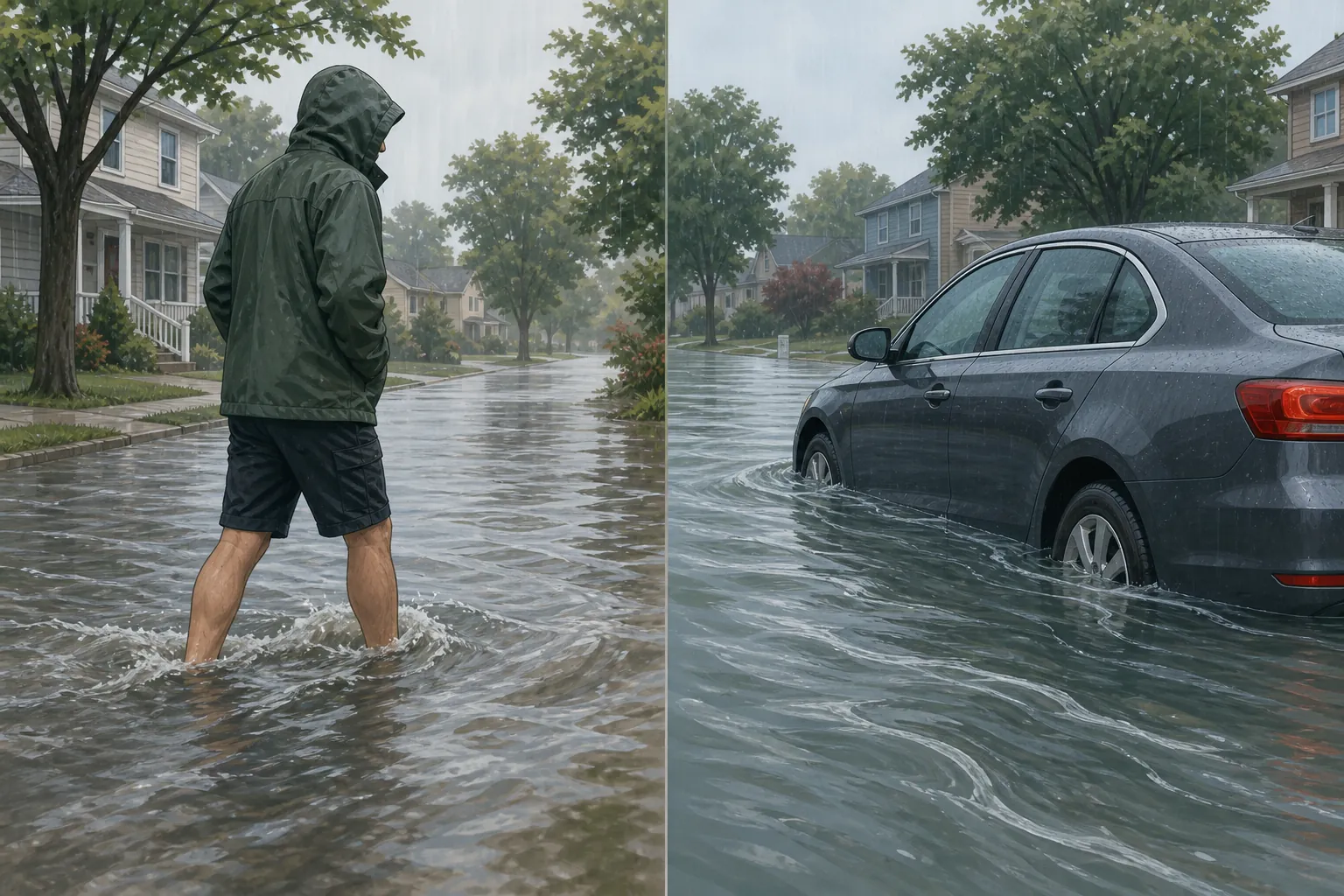
The first mobility rule is also blunt: 6 inches of fast-moving water can knock a person down, and 12 inches can carry a vehicle away.[2][3] For a caregiver, that means floodwater is not just “dirty water” or “bad weather.” It is a fall hazard, an evacuation barrier, and sometimes the line between a manageable relocation and a rescue.
Reviewed for medication, medical-device, and home-safety considerations by Elena Ruiz, RN, BSN, Certified Aging-in-Place Specialist. This article is for general preparedness education and is not a substitute for medical, legal, insurance, or emergency-management advice. Confirm medical-device, medication, evacuation, insurance, and re-entry decisions with the older adult’s clinician, device supplier, pharmacist, insurer, utility, and local emergency-management office where appropriate.
The caregiver checklist at a glance
| When | Mobility and evacuation | Medication and health routines | Electric-powered devices and home systems |
|---|---|---|---|
| Before a flood | Map a route that does not require walking or driving through floodwater. Arrange a ride before warnings become urgent. Keep mobility aids, shoes, glasses, hearing aids, and a go-bag by the exit. | Aim for a 30-day flood-season medication supply when possible; other preparedness guidance ranges from an extra week to 2 weeks, so document the backup plan if 30 days is not possible.[4][5][6] | List every device that needs power. Ask the utility about medical-needs registration, confirm battery runtime with the device supplier, and charge backup batteries.[9] |
| Before flood season | Clear the route from bed, bathroom, chair, and main living area to the exit. Practice the route with the actual walker, cane, wheelchair, or transfer help used every day. | Keep a printed medication list, prescriber contacts, pharmacy contacts, allergies, diagnoses, and insurance cards in a waterproof bag. | Buy flood insurance before it is needed. Homeowners insurance does not typically cover flooding, and National Flood Insurance Program policies usually have a waiting period of up to 30 days.[7] |
| During a flood | Do not walk or drive through moving water. Six inches can knock a person down; 12 inches can carry a vehicle away.[2][3] | Keep medications with the person, not in a room, car, or bag that may become unreachable. Protect refrigerated medications during an outage and ask a pharmacist or clinician before using medicine that may have warmed. | Switch to the backup-power plan early. Run generators only outdoors and at least 20 feet from windows, doors, and vents.[8] |
| After a flood | Do not re-enter until officials say it is safe. Expect slippery floors, loose flooring, displaced furniture, contaminated water, and hidden trip hazards. | Check whether refrigerated medicines exceeded safe temperature limits; CDC guidance says refrigerated medications should generally be discarded after about a day without power unless the drug label says otherwise.[8] | If the home was flooded and not dried within 24–48 hours, assume mold growth. Keep people with asthma or lung conditions away from visible mold or water leaks.[10] |
Before a flood: make the plan while there is still time to be picky
The preparation work that matters most for an older adult is not the neatest bin of canned food. It is the part that removes decisions from the worst hour: who will drive, which door will be used, which medications leave with the person, how the oxygen battery is charged, and who gets called if the caregiver is stuck across town.
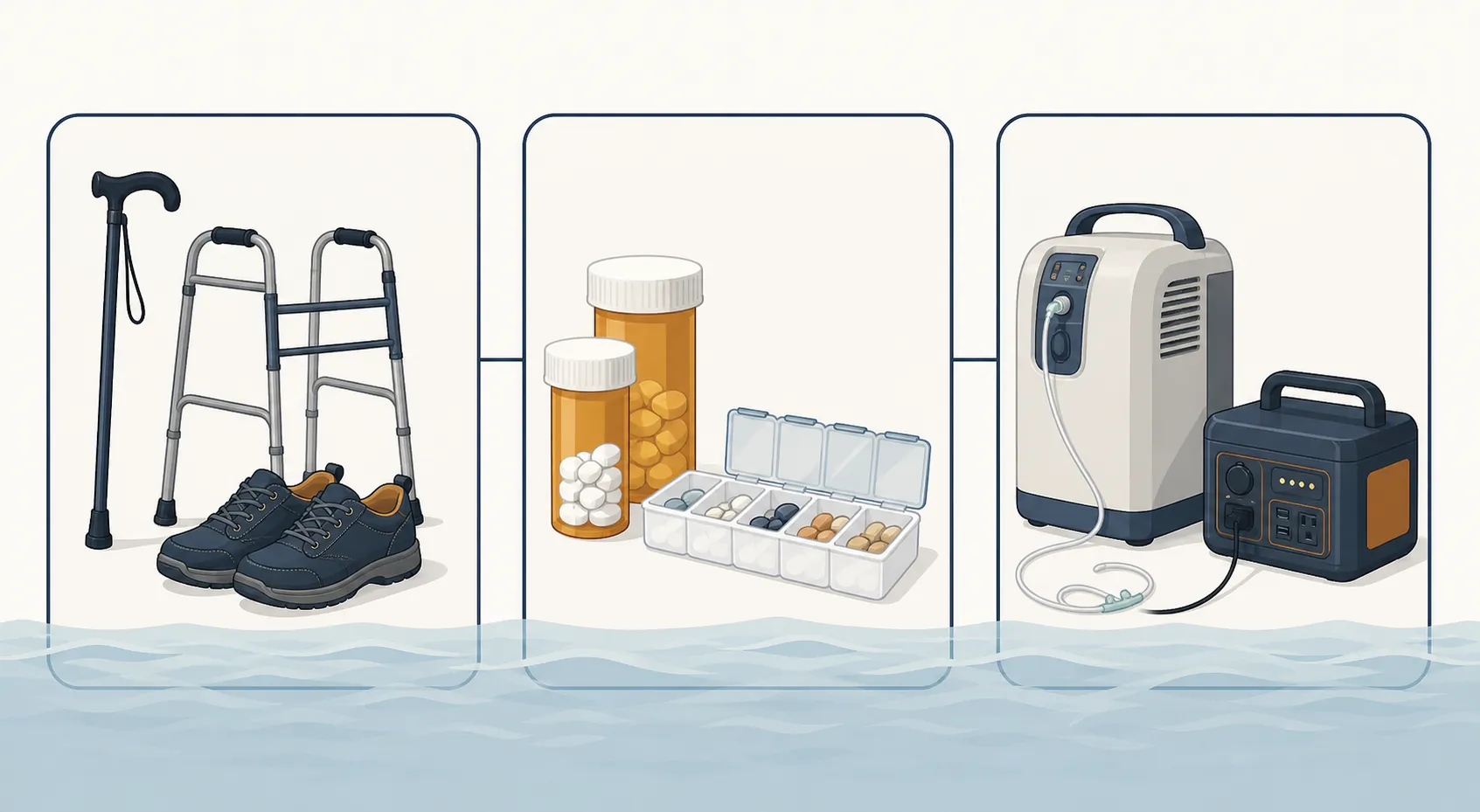
Build the evacuation route around the person’s actual mobility
Walk the route from the older adult’s bed, favorite chair, bathroom, kitchen, and main exit as if the flood warning came at night. Use the same cane, walker, wheelchair, brace, oxygen tubing, shoes, and glasses that would be used in real life. A route that works for a healthy adult in daylight may fail for someone who needs two hands on a walker or becomes unsteady when rushed.
Clear the exit path before storm season, not while water is rising. Remove loose rugs, low tables, pet bowls, cords, boxes, and storage bins from the path to the door. If the home already needs a safer route through narrow halls, steps, thresholds, or poor lighting, use a home-modification priority guide to decide what to fix first. Flood planning is one of the times when a loose threshold or cluttered hallway stops being a nuisance and becomes an evacuation problem.
The route should not depend on walking through a yard, driveway, ditch, or street that may flood. Caregivers sometimes underestimate shallow water because it looks passable from a porch or car window. For an older adult with neuropathy, arthritis, low vision, dizziness, a recent fall, or a mobility aid, moving water turns a few steps into a fall-and-rescue event. For a deeper look at that specific hazard, see why a water crisis is a fall emergency for older adults.
Arrange transportation before it is obviously needed. Write down the first-choice driver, backup driver, and out-of-area contact. If the older adult cannot transfer into an ordinary car, call local emergency management before flood season and ask about evacuation assistance, accessible transportation, medical-needs registries, and shelter options. County and city systems vary, so this needs to be local, not copied from another state’s checklist.
Make medications portable, documented, and refillable
Medication guidance is not perfectly uniform. The American Red Cross recommends at least a 30-day supply of medications for older adults, while other preparedness guidance uses shorter targets such as 2 weeks or an extra week.[4][5][6] For flood season, 30 days is the safer planning target when insurance rules, prescribing rules, and storage needs allow it. If it is not possible, write down the reason and the workaround instead of leaving the gap invisible.
- Ask the prescriber which medications cannot be missed and which have safe temporary substitutions.
- Ask the pharmacist how early refills, emergency refills, mail-order delays, and refrigeration requirements are handled during a declared emergency.
- Keep a printed medication list in the go-bag: drug name, dose, timing, reason for use, prescriber, pharmacy, allergies, diagnoses, and insurance information.
- Use waterproof bags for pill bottles, paper lists, insurance cards, and backup prescriptions if the clinician provides them.
- Do not leave the only pill organizer on a kitchen counter if the evacuation plan moves the older adult to a car, neighbor’s house, or shelter.
Refrigerated medications need special attention because a flood can interrupt power and access at the same time. Put the medication name, storage instructions, pharmacist phone number, and prescriber phone number on the same page as the evacuation plan. If a medication has been warm longer than the label allows, do not guess based on appearance; ask a pharmacist or clinician.
Treat powered medical equipment as part of the evacuation plan
Write down every device that depends on electricity: oxygen concentrator, CPAP or BiPAP, nebulizer, hospital bed, lift chair, stair lift, power wheelchair, scooter, feeding pump, suction device, refrigeration for medicine, communication device, and any charging equipment. Next to each item, write what happens if power is out for 4 hours, overnight, and longer than a day.
Many caregivers own the device but not the operating plan. Call the device supplier and ask for the battery runtime, safe charging method, maintenance schedule, travel instructions, and what to do if evacuation goes to a shelter, hotel, or relative’s home. If oxygen is involved, ask about portable tanks or concentrator batteries before storm season, not after the outage starts.
Ask the electric utility whether it offers a medical-needs or life-support registry. The American Lung Association notes that utility registries may give priority restoration to electric-dependent customers, but registration should never be treated as a guarantee that the power will stay on or return quickly.[9] The backup plan still has to work if the house goes dark.
If the older adult has already had a fall during an outage, or if the home depends heavily on lamps, powered recliners, stair lifts, or extension cords, review a power-outage fall-prevention checklist for seniors alongside the flood plan. Flooding and power loss often arrive as a pair, and the first injury may happen in a dark hallway before anyone reaches floodwater.
Buy insurance before the waiting period matters
Flood insurance belongs in a caregiver checklist because recovery decisions can become health decisions. Ready.gov notes that homeowners policies do not typically cover flooding and that National Flood Insurance Program coverage usually has a waiting period of up to 30 days before it takes effect.[7] If the older adult owns the home, rents, lives with family, or depends on home modifications that would be expensive to replace, review coverage before storm season.
Keep copies of insurance policies, identification, Medicare or insurance cards, powers of attorney if applicable, medication lists, device information, and emergency contacts in a waterproof bag and in a digital location that trusted helpers can reach. If more than one adult child or neighbor may help, make sure they all know where the current version is.
Then add the ordinary emergency-kit items
Food, bottled water, flashlights, batteries, phone chargers, cash, pet supplies, hygiene items, hearing-aid batteries, incontinence supplies, spare glasses, and a change of clothes still matter. They just should not crowd out the senior-specific failures that are harder to improvise. A caregiver can borrow a flashlight from a neighbor. It is much harder to invent an oxygen backup, wheelchair-accessible ride, or missing heart medication at midnight.
If the household also faces wildfire, extreme heat, or evacuation for another hazard, keep one shared go-bag structure and adapt the trigger points. A wildfire safety guide for older adults can help caregivers keep those plans from becoming separate piles of paper that nobody can find.
During a flood: do not wait for the plan to become impossible
For a mobile adult, “leave if it gets worse” may sound reasonable. For an older adult who needs transfer help, medication timing, oxygen, or an accessible vehicle, waiting can quietly remove every good option. The caregiver’s job during a flood is to act on the earlier trigger, not the more dramatic one.
Use the water-depth rule without bargaining
Six inches of fast-moving water can knock a person down. Twelve inches can carry a vehicle away.[2][3] Those numbers should settle the argument before anyone is standing at the door deciding whether the driveway “looks okay.” A walker, cane, wheelchair, weak legs, low vision, neuropathy, dizziness, or fear of falling makes the margin even smaller.
If evacuation requires crossing moving water, the plan has already failed for that moment. Do not ask the older adult to walk through it. Do not drive through it. Call emergency services or local emergency management and follow official instructions. If officials have ordered evacuation and the route is still dry, leave early enough to preserve the person’s normal transfer pace, bathroom needs, medication schedule, and oxygen or battery setup.
Keep medications and devices with the person
During a flood, the medication bag should travel with the older adult, not with whichever helper happens to load the car first. The same goes for glasses, hearing aids, mobility aids, oxygen accessories, chargers, and the printed medical list. If the caregiver is separated from the older adult, the person receiving them should be able to understand the next medication dose without calling three people.
If power goes out, move quickly to the written device plan. CDC guidance says refrigerated medications should generally be discarded after about a day without power unless the drug label says otherwise; the same CDC guidance notes that a refrigerator keeps food cold for about 4 hours if unopened, while a full freezer holds temperature for about 48 hours, or 24 hours if half full.[8] Those clocks matter when the older adult is insulin-dependent, medically fragile, or likely to eat whatever is familiar in the refrigerator.
Keep the refrigerator and freezer doors closed as much as possible. Put refrigerated medication decisions ahead of saving ordinary groceries. If a medication’s safety is uncertain, call the pharmacist, prescriber, poison control, or another appropriate medical contact rather than using smell, color, or habit as the test.
Generators solve one problem and can create another
A generator may keep medical equipment running, but it must not be brought indoors, into a garage, onto a porch, or near an open window. CDC guidance says generators should be used outside, at least 20 feet from windows, doors, and vents.[8] Carbon monoxide poisoning causes roughly 500 deaths and 15,000 emergency room visits each year in the United States, and adults 65 and older are especially vulnerable.[5]
Place carbon monoxide alarms where the older adult can hear them or where a caregiver will be alerted. If the older adult has hearing loss, do not assume a standard alarm is enough. Pair the generator plan with a human check-in plan: who confirms the generator is outside, who checks the device battery, and who calls if the older adult does not answer.
After a flood: re-entry is not the end of the emergency
After the water recedes, the home may look familiar enough to tempt a quick return. That is when a caregiver needs to be more cautious, not less. Flooded homes collect slip hazards, unstable flooring, contaminated water, spoiled food, damaged wiring, hidden debris, and mold risk. A person who survived the evacuation should not be injured during cleanup.
Do not re-enter casually
Wait for local officials to say the area is safe before returning. Floodwater and the areas it touches can contain sewage, chemicals, sharp objects, displaced animals, and electrical hazards; CDC floodwater safety guidance treats contact with floodwater and flooded spaces as a health risk, not a cleanup inconvenience.[11]
If someone must inspect the home, send a healthy adult with proper protective equipment when possible, not the older adult who has asthma, COPD, poor balance, wounds, diabetes-related foot problems, immune compromise, or trouble navigating debris. Keep the older adult out until the path is dry, lit, stable, and clear enough for their actual mobility aid. The post-flood floor is often a fall-prevention problem before it is a decorating problem.
Assume mold if the home was not dried quickly
CDC and Red Cross cleaning guidance says that if a flooded home has not been dried within 24–48 hours, mold growth should be assumed.[10] The same guidance warns that people with asthma, allergies, or other breathing conditions should not enter buildings with visible mold growth or water leaks.[10] That is not overprotective; it is the difference between cleanup and a respiratory setback.
Throw away flood-contaminated porous items that cannot be cleaned and dried safely. Do not ask an older adult to sort through wet boxes, carpet, upholstered furniture, or drywall dust if breathing, balance, stamina, or skin integrity is a concern. If the home needs repairs before it is safe for aging in place again, compare the cleanup priorities with aging-in-place modification priorities so the first money goes toward safe entry, walking paths, bathroom access, lighting, and essential daily function.
Recheck food, medicine, and equipment before routines resume
Do not restart normal routines from memory. Check the medication list against what is still usable, what was left behind, what got wet, and what may have warmed too long. Check device cords, batteries, filters, tubing, chargers, and outlets before use. If equipment was exposed to water or questionable power, call the supplier before plugging it in.
Use the CDC refrigerator and freezer time limits as a screening tool: about 4 hours for an unopened refrigerator, about 48 hours for a full freezer, and about 24 hours for a half-full freezer.[8] When in doubt, throw away questionable food. For medication, ask the pharmacist or prescriber because some drugs have narrower storage limits than a caregiver can judge at home.
Watch for the quieter recovery problem
Flood recovery can leave an older adult disoriented, grieving, embarrassed, angry, or newly afraid to live alone. A caregiver may notice sleep changes, irritability, confusion, appetite changes, or refusal to use rooms that flooded. The Disaster Distress Helpline is available by calling or texting 1-800-985-5990 for emotional support after a disaster.[4]
Emotional recovery also affects safety. An older adult who rushes cleanup may fall. One who refuses to leave next time may need a different evacuation conversation now. One who lost a walker, dentures, hearing aids, or medication organizer may look “home” on paper while daily function is still disrupted.
Who to call before the next storm
A caregiver’s flood checklist is only useful if the people named in it know their jobs. Before flood season, confirm the plan with local emergency management, the older adult’s clinician when medical decisions are involved, the pharmacist, medical-device supplier, electric utility, insurance agent, transportation helpers, and at least one backup caregiver who can reach the home if the primary caregiver cannot.
References
- Texas Flood Victims, AARP
- Flood Safety, American Red Cross
- Floods, Ready.gov
- Emergency Preparedness for Older Adults, American Red Cross
- Older Adults and Disaster Preparedness and Response, American Association for Geriatric Psychiatry
- Caregiving Guide: Emergency Preparedness, Senior1Care
- Older Adults, Ready.gov
- What to Do to Protect Yourself During a Power Outage, Centers for Disease Control and Prevention
- Power Outage Preparation, American Lung Association
- Guidelines for Cleaning Safely After a Disaster, Centers for Disease Control and Prevention
- Floodwater After a Disaster or Emergency Safety, Centers for Disease Control and Prevention
Related reading
Noticed something outdated or inaccurate on this page? Flag a correction. We review every report against CDC, NIA, and AARP HomeFit guidance before updating a page.
Part of the Fall Prevention section.