
STEADI: intervene
Is the Outdoor Fire Pit Safe for Seniors Tonight?
Use this go/no-go check to decide whether an older adult should use the outdoor fire pit tonight — from wind and burn bans to mobility, medication, and the yard setup. The last gate holds the only definition of 'out' that counts: no embers, no smoke, and a pit surface cool to the touch.
If you are looking at the patio and asking whether to light the outdoor fire pit tonight, start with the vetoes. A no-burn alert, windy conditions, or a setup that cannot keep the fire at least 10 feet from the home or anything that burns should end the plan before chairs move and before anyone says, “Just for a little while.” The U.S. Fire Administration tells people to follow no-burn alerts, avoid starting outdoor fires in windy conditions, and keep outdoor fires at least 10 feet from a home or anything combustible. [1]
For an older adult, this is not only a burn-safety question. It is a fall-prevention question with flame nearby. The U.S. Fire Administration says 1 in 4 older adults falls each year, and falls are the leading cause of fatal and nonfatal injuries among adults 65 and older. [2] Burn literature also notes that older adults can be more vulnerable to severe burn injury because of impaired coordination, comorbidities, and medication-induced side effects; in that broader burn literature, roughly 25% of older adults fall during a fire event. That finding is not fire-pit-specific, but it is exactly the kind of double-risk problem a backyard fire can create. [3]
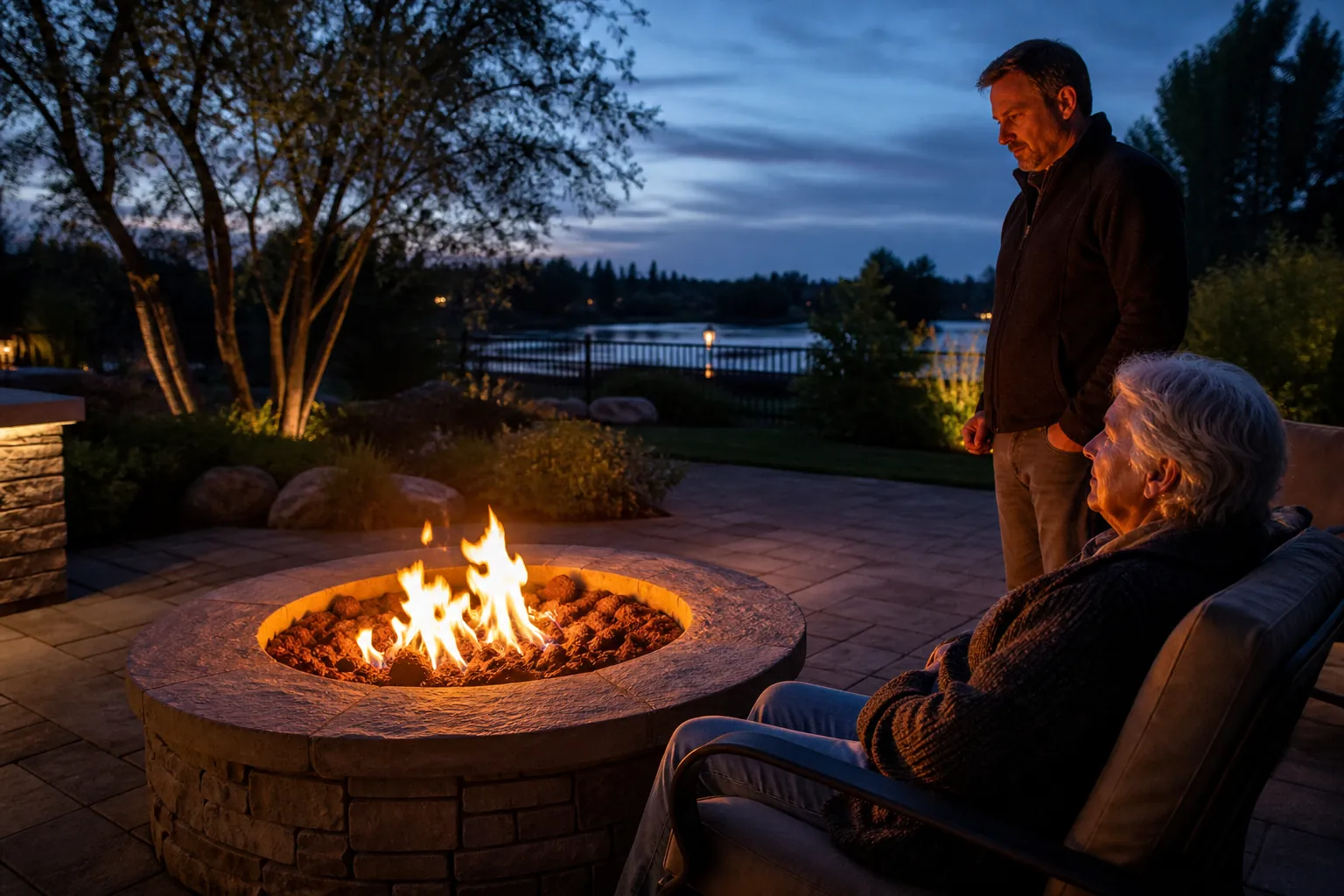
This is general safety guidance, not medical advice. If oxygen use, medication side effects, balance, neuropathy, vision changes, or mobility problems are part of the picture, ask the person’s clinician for individualized guidance. But the same-evening decision still has several observable gates. If one of them fails, the answer for tonight is no.
The fast go/no-go screen
| Gate | What you check tonight | Decision |
|---|---|---|
| Outside conditions | No-burn alert or burn ban? Wind moving smoke, sparks, leaves, or chair cushions? Less than 10 feet from the home, fence, deck, shrubs, furniture, or anything combustible? | Any yes means do not light it. |
| Person state | Medical oxygen in use? Unsteady walking or transfers? Dizziness, sedation, or balance problems from medication or illness? Alcohol already involved? Loose sleeves, robes, blankets, or trailing clothing? | Any yes means do not light it. |
| Fire source | Portable alcohol- or liquid-burning tabletop pit, especially one that can be refilled or spilled? | Do not use it for this evening. |
| Yard setup | Stable, level, fire-resistant surface? Clear path back to the house? Chairs placed so no one has to step over legs, hoses, pavers, or firewood? | Fix it before lighting, or cancel. |
| Supervision | A sober, steady adult can stay outside and own the fire until it is fully out? | If no, do not light it. |
| Out standard | No glowing embers, no smoke, and the pit surface is cool to the touch? | Until all three are true, the night is not over. |
Gate 1: outside conditions get the first vote
A burn ban or no-burn alert is not a suggestion to build a smaller fire. It is a stop sign. The same goes for wind. If smoke is shifting unpredictably, sparks can travel, or lightweight objects on the patio are moving, do not treat the evening as a test of everyone’s reflexes.
The 10-foot clearance is also not a decorating guideline. It is the minimum distance from the home or anything that burns. That means the check includes the house, deck rails, siding, fence, pergola, dry leaves, outdoor cushions, planters, stored firewood, and the blanket someone intends to pull around their knees. [1]
If tonight’s real problem is weather, use the same no-guilt approach you would use for a storm or heat-risk decision. A backyard fire can wait; a fall in the dark usually becomes everyone’s emergency. For related same-day decision tools, see the severe-storm checklist for seniors and the guide to why extreme heat raises fall risk in older adults.
Gate 2: the older adult has to be steady enough for fire, not just steady enough for the patio
A person can look fine in the kitchen and still be a poor match for a fire pit tonight. The relevant question is not whether they “usually do okay.” It is whether they can stand up from the chair, turn, walk on the actual surface outside, avoid reaching toward the flame, and return indoors after dark without a rushed helper pulling furniture out of the way.
Make tonight a no if the older adult is already unsteady, newly weak, dizzy, short of breath, unusually sleepy, confused, or recovering from a recent fall. Also cancel if a medication taken today is known for that person to cause lightheadedness, sedation, slowed reaction time, or balance trouble. The burn-review evidence is broader than outdoor fire pits, but its warning is useful here: impaired coordination, comorbidities, and medication-induced side effects can make burn injuries more severe and escape or self-protection harder. [3]
Medical oxygen should be a hard stop around an open flame. The U.S. Fire Administration specifically says never to smoke near medical oxygen; the same fire-safety reasoning applies to sitting near, walking past, or leaning over an outdoor flame. That is an analogy from oxygen-and-smoking guidance, not a quoted fire-pit rule, but it is strong enough for a same-evening decision. [4]
Alcohol is another no for the older adult and for the person supervising the fire. The issue is not moralizing over a drink. It is that alcohol makes balance, judgment, and reaction time less dependable at the exact place where a missed step can become a burn injury. If drinks have already started, choose the patio lights and skip the flame.
Clothing gets a vote too. Loose sleeves, open robes, long scarves, dangling shawls, lap blankets that trail near the ground, and slippers that shuffle instead of grip are all reasons to change the setup or cancel. Nobody should have to grab at a blanket, chair arm, or walker while turning near hot metal.
Be especially cautious with small alcohol- or liquid-burning tabletop fire pits. The Consumer Product Safety Commission issued a product-specific consumer alert about alcohol or other liquid-burning fire pits that violate voluntary standards and present flame-jetting and fire hazards; the alert reported two deaths and dozens of serious burn injuries since 2019. That does not prove every outdoor fire pit is unsafe, but it is enough reason not to use that category for an older adult’s evening gathering. [5]
If mobility is the uncertain part, solve that before solving the seating plan. A walker needs a route, not a polite promise that someone will “help them across.” A wheelchair needs room to turn without backing toward heat. For more outdoor access planning, see adaptive gardening for seniors and the wheelchair safety checklist for seniors.
Gate 3: the yard setup only needs to answer a few safety questions
This does not need to become a full patio makeover. Before lighting, check the items that change the consequence of a stumble: the surface under the pit, the path to the chair, the path back to the house, and what someone would grab if they lost balance.
- The pit sits on a stable, level, fire-resistant surface, not on a wobbly stand, uneven pavers, dry grass, or a surface that can ignite.
- Chairs are placed so the older adult does not have to step over chair legs, cords, hoses, tools, planters, or stacked wood.
- The route back inside is lit well enough for tired eyes and tired feet, not just bright enough to look pleasant.
- Extra firewood is not stacked beside the pit or beside the older adult’s chair. Travelers advises storing firewood at least 30 feet from the pit and the house. [6]
- A sober, steady adult can sit or stand where they can see both the fire and the older adult’s path, without becoming another obstacle.
Retailers sometimes publish seating-distance numbers for comfort. Treat those as comfort guidance, not as the safety clearance that matters most. The safety clearance that belongs in the go/no-go decision is the 10-foot distance from the home or anything combustible, along with a setup that does not require an older adult to pivot, reach, or squeeze past heat. [1]
Gate 4: once lit, one capable adult owns the fire
Do not light the fire unless one capable adult is assigned to stay with it. Travelers warns never to leave a fire pit unattended. [6] “Everyone is just inside for dessert” is unattended. “We can still see a glow from the window” is unattended. “The older adult is sitting right there” is not supervision if that person would have trouble moving quickly, judging distance, or handling a sudden flare.
The supervising adult is also the person who says no to one more log when the evening is already winding down. Adding fuel late is how a small, manageable fire becomes a long wait in the cold while someone else needs help getting back indoors. If the older adult is tired, chilled, restless, or ready to stand, the fire should be moving toward out, not toward round two.
The older adult should not be the person leaning forward to adjust logs, carrying wood across uneven ground, or trying to move a chair closer after the fire is hot. Those are the ordinary little movements that create the bad version of the evening: a hand on a hot rim, a foot caught on a paver, a sleeve drifting toward flame, or a hurried transfer in low light.
Gate 5: “out” has one meaning
The fire is not out when the conversation ends. It is not out when the flames are low. It is not out because everyone is cold and wants to go inside. It is out only when there are no glowing embers, no smoke, and the pit surface is cool to the touch.
Travelers’ extinguishing guidance uses the key visible standard: no glowing embers and no smoke. [6] For a senior-safety decision, add the heat standard as well. Fire pit surfaces and abandoned coals can remain extremely hot into the next day, which is why “we’ll deal with it in the morning” is not a safe plan. [7]
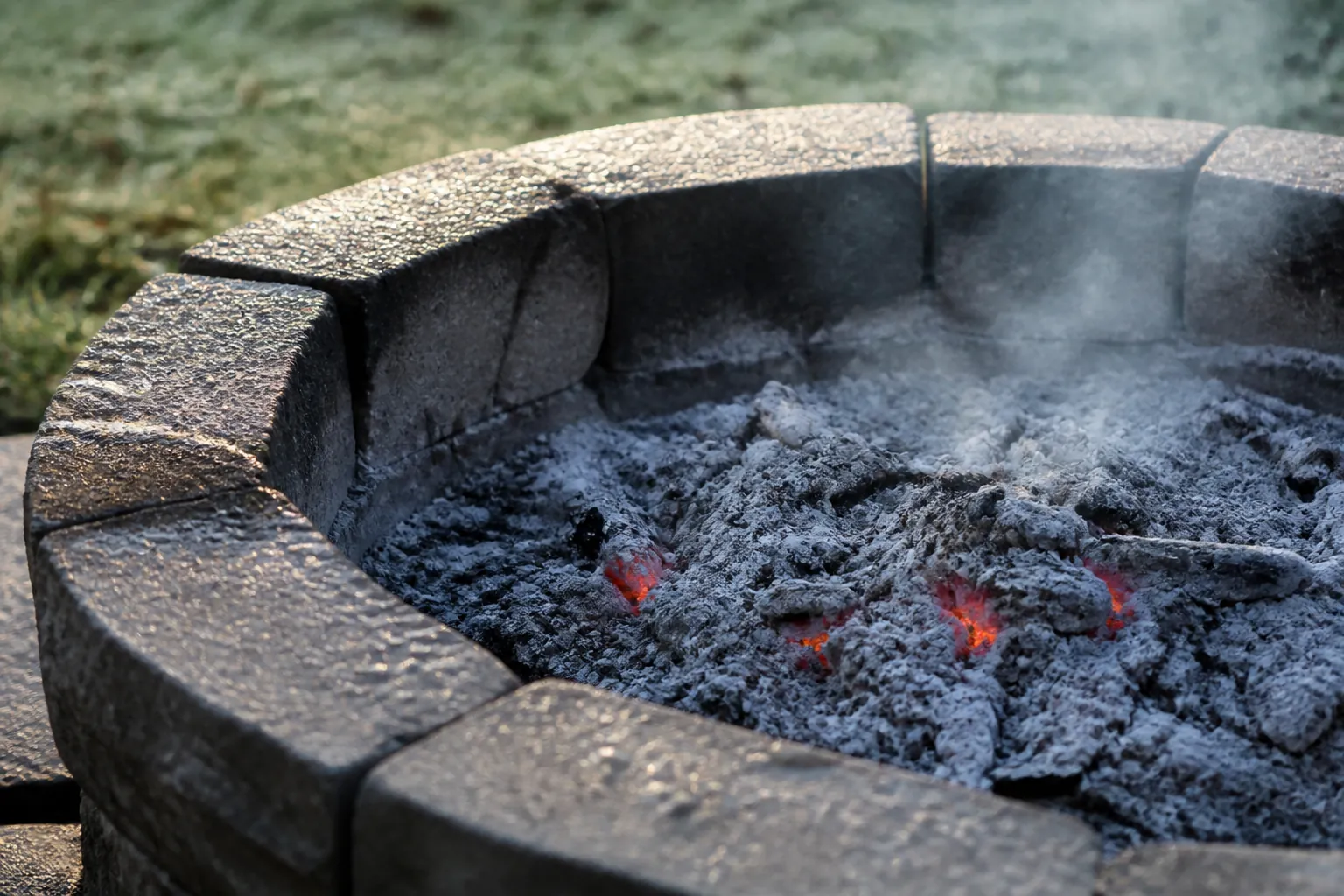
Build the end of the evening into the beginning. Stop adding fuel early enough that one responsible person can finish the job without rushing. Keep guests, pets, and the older adult away from the pit during extinguishing, because that is when people tend to lean in, poke at coals, or assume the danger has passed.
- No visible flame is not enough.
- Gray ash is not enough.
- A pit that looks quiet but smokes is not out.
- A pit that still gives off heat is not out.
- A pit that could burn a hand, shoe, cane tip, walker wheel, paw, or curious child in the morning is not out.
Before bed, someone should re-check the pit, the surrounding surface, and the path people might use in the morning. That re-check is not fussy. It is the difference between ending the evening and leaving a hidden heat source for the first person who steps outside with coffee, trash, a dog leash, or a walker.
So, is the fire pit safe for this older adult tonight?
Say no tonight if there is a no-burn alert, wind, inadequate clearance, medical oxygen, unsteady mobility, balance-affecting medication effects, alcohol, unsafe clothing, a liquid-fueled tabletop pit, an unstable surface, an unclear path, or no sober adult who can stay with the fire until it is truly out.
Say yes only if the conditions pass, the person is steady enough for the actual patio, the setup does not require reaching or awkward transfers near flame, and one responsible adult remains on duty. The night ends when there are no glowing embers, no smoke, and the pit surface is cool to the touch.
References
- Outdoor Fire Safety, U.S. Fire Administration.
- Fall Prevention, U.S. Fire Administration.
- Older adult burns: a review, Burns Open / PMC.
- Fire Safety for Older Adults, U.S. Fire Administration.
- Consumer Alert: Stop Using Alcohol or Other Liquid-Burning Fire Pits That Violate Voluntary Standards and Present Flame Jetting and Fire Hazards; Two Deaths and Dozens of Serious Burn Injuries Reported, U.S. Consumer Product Safety Commission.
- Outdoor Fire Pit Safety Tips, Travelers.
- Injuries from backyard fire pits on the rise, experts warn, NBC News.
Related reading
Noticed something outdated or inaccurate on this page? Flag a correction. We review every report against CDC, NIA, and AARP HomeFit guidance before updating a page.
Part of the Fall Prevention section.