
STEADI: intervene
Peak Energy Strategies That Keep Seniors Safe and Save Money
A health-first guide for seniors and their caregivers to reduce peak electricity demand without compromising safety. Learn precooling, zone cooling, low-heat cooking, and when it is dangerous to cut back on cooling.
The hardest hours to save electricity are often the same hours an older person most needs the air conditioner. That is the part many peak-demand tips skip. They say to turn the thermostat up, delay appliance use, or coast through the afternoon. For a healthy worker who leaves the house all day, that may be manageable. For a 78-year-old sitting in the living room from lunch through supper, taking a diuretic, using oxygen, or recovering from a fall, that same advice can turn a utility strategy into a health risk.
The CDC has long identified adults 65 and older as among those at highest risk during extreme heat, and heat causes more than 600 preventable deaths a year in the United States. A 2019 Nature Energy study, summarized by IEEE Spectrum, looked at about 7,500 households in a 2016 time-of-use electricity pilot and found that older households were hit harder: they could face both higher costs and worse health-related outcomes because they could not safely shift air-conditioning use the way other households might.[1] That finding matters more than any neat list of “tips for seniors to reduce electricity usage during peak demand.” It tells us where the line is: savings are useful only if the home remains safe to live in.
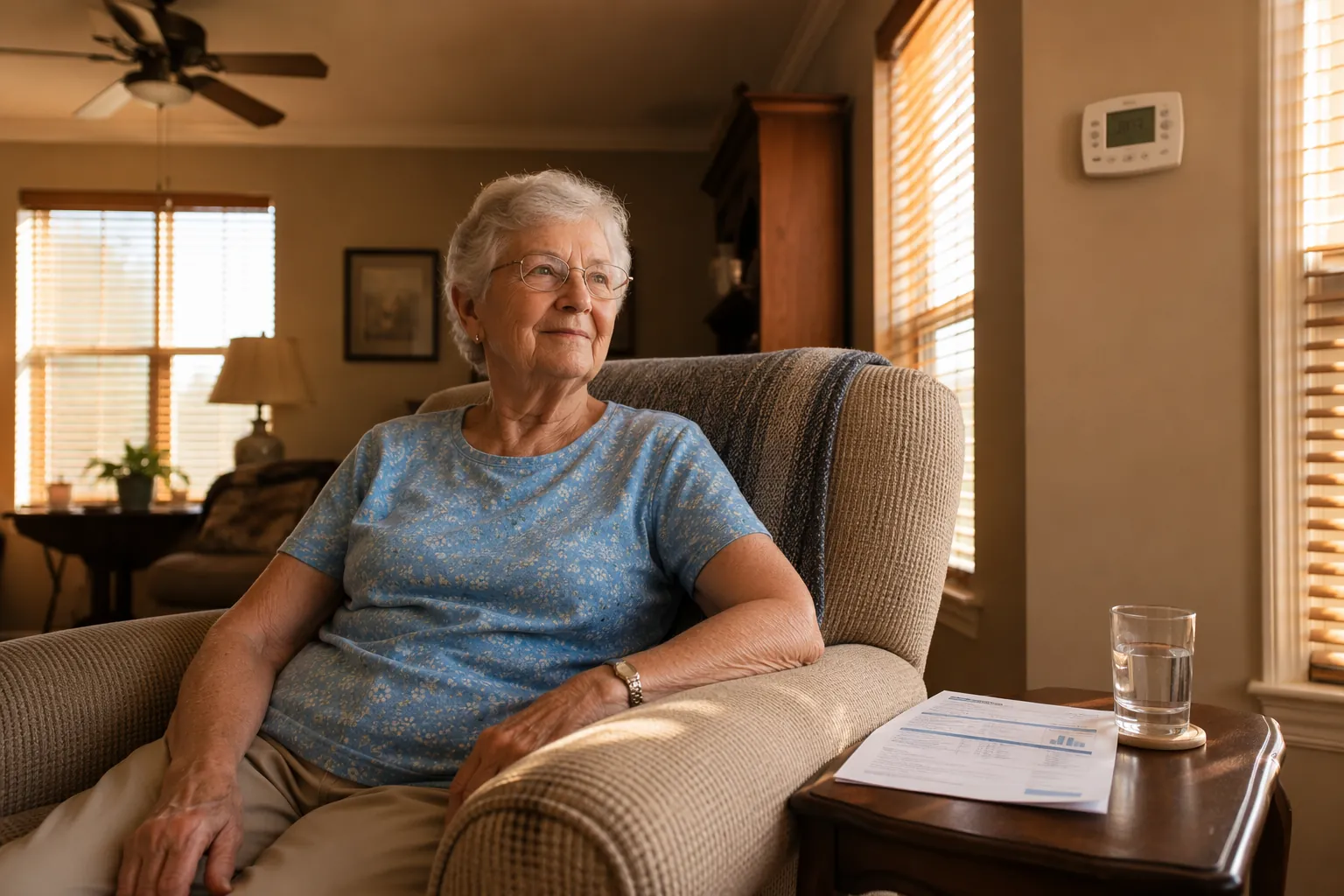
So this guide starts with the rule I wish every utility flier printed in large type: do not tough out unsafe heat. If the room is climbing into a risky range for someone with heart disease, lung disease, heat sensitivity, medication-related temperature problems, or a clinician’s instruction to stay cool, keep the cooling on and get medical guidance. If there are signs of heat exhaustion, confusion, faintness, worsening weakness, or a fall risk that rises with heat, treat that as a safety problem first. This article is not medical advice; temperature decisions for someone with relevant health conditions should be discussed with a healthcare provider.
For caregivers, the question is not “How low can we get the bill?” It is “Which electric use can move out of the expensive window without moving the person into danger?” That usually means cooling earlier, cooling fewer rooms, blocking heat before it enters, and saving the oven or laundry for later.
Find the Real Peak Window Before Changing Anything
Peak hours are not national. They vary by utility, rate plan, season, and region. Constellation describes summer peak periods that can fall broadly between early afternoon and evening, and consumer guidance commonly points people toward checking their own utility’s time-of-use schedule rather than assuming one fixed window.[2] In plain terms: the expensive hours in Arizona may not match the expensive hours in Ohio, and a neighbor on a flat-rate plan may not be billed the same way as someone on time-of-use pricing.
Before changing the thermostat, find three things on the bill, the utility app, or by calling customer service:
- Whether the household is actually on a time-of-use, critical-peak, or demand-based plan.
- The exact weekday and weekend peak hours, including seasonal changes.
- Whether medical baseline, senior, disability, budget billing, or shutoff-protection programs are available.
If an older adult does not understand the rate plan, do not ask them to manage it by memory. Put the peak window on the refrigerator in large print. If a caregiver checks in by phone, set the call before peak hours begin, not after the house is already hot.
The Safest Savings Usually Happen Before Peak Hours
Precooling is the most useful peak-hour habit because it does not ask the body to absorb the savings. The idea is simple: use cheaper or lower-demand hours to bring the main living area or bedroom to a safe, comfortable temperature before the peak window starts, then slow the heat coming back in.
A practical morning routine can look like this:
| Time | Action | Why it helps |
|---|---|---|
| Morning, before outdoor heat builds | Cool the room where the senior will spend the afternoon. | The air conditioner works before the most expensive hours and before the home is heat-soaked. |
| Late morning | Close blinds, curtains, or shades on sunny windows. | Less solar heat enters, so the room warms more slowly. |
| Just before peak begins | Check the room temperature, water within reach, phone access, and whether the fan is aimed where the person actually sits. | The setup is tested before the risky hours, not during them. |
| During peak | Maintain safe cooling in occupied rooms and avoid cooling rooms nobody is using when doors and vents can be managed safely. | Electricity use drops without treating the whole house as one big occupied space. |
| After peak | Run delayed appliances, reset rooms for sleep, and reopen windows only if outdoor air is cooler and safe. | The household catches up without adding heat during the expensive window. |
The room choice matters. Many older homes have one room that holds cool air better than the others. Sometimes it is the bedroom with one shaded wall. Sometimes it is the den with a ceiling fan. Sometimes, inconveniently, it is not the room where the favorite recliner sits. If the safest cool zone is not where the person spends the afternoon, that is a home-safety issue, not a decorating issue. Move the chair, the phone charger, the walker path, the lamp, and the water glass to the room that can be kept safe.
Caregivers doing a broader home check can pair this with a room-by-room home safety assessment. A cool room still needs a clear walking path, a safe chair height, reachable medication, and a bathroom route that does not turn into an obstacle course after dark.
Use the Thermostat as a Guardrail, Not a Dare
Programmable thermostat advice often points to savings from setting temperatures back for long blocks of time. University of Wisconsin Extension cites an estimated savings of about $100 per year from a 7- to 10-degree Fahrenheit setback for 8 hours.[3] That estimate can be helpful in winter or for an empty house. In summer, for a senior who is home all afternoon, a large setback during peak heat may be the wrong tool.
A safer use of a programmable or smart thermostat is to schedule comfort before peak begins and prevent accidental overcorrection during peak. If the household has Wi-Fi, a caregiver may be able to check whether the home is cooling as expected. If there is no Wi-Fi, no smartphone, or no comfort with apps, a plain thermostat with large numbers and a written schedule may be better than a device nobody trusts.
For people with medical heat concerns, do not copy a generic setback number from the internet. Ask the clinician what indoor temperature range is safe for that person, especially if they have heart or lung disease, reduced sweating, dementia, diabetes, kidney disease, mobility limits, or medications that affect fluid balance or temperature regulation.
During Peak Hours, Cool the Person and the Occupied Room
During the utility’s peak window, the goal is not to turn everything off. The goal is to stop wasting electricity on heat that does not help the person stay safe.
- Keep safe air conditioning in the room where the senior is sitting, resting, or sleeping.
- Close doors to unused rooms only if it does not create pressure, airflow, moisture, or safety problems in that home.
- Use ceiling or portable fans only when someone is in the room; fans cool people, not empty rooms.
- Keep blinds or curtains closed on sun-facing windows before the room heats up.
- Avoid running the oven, dryer, dishwasher heat-dry cycle, or other heat-making appliances until after peak hours when possible.
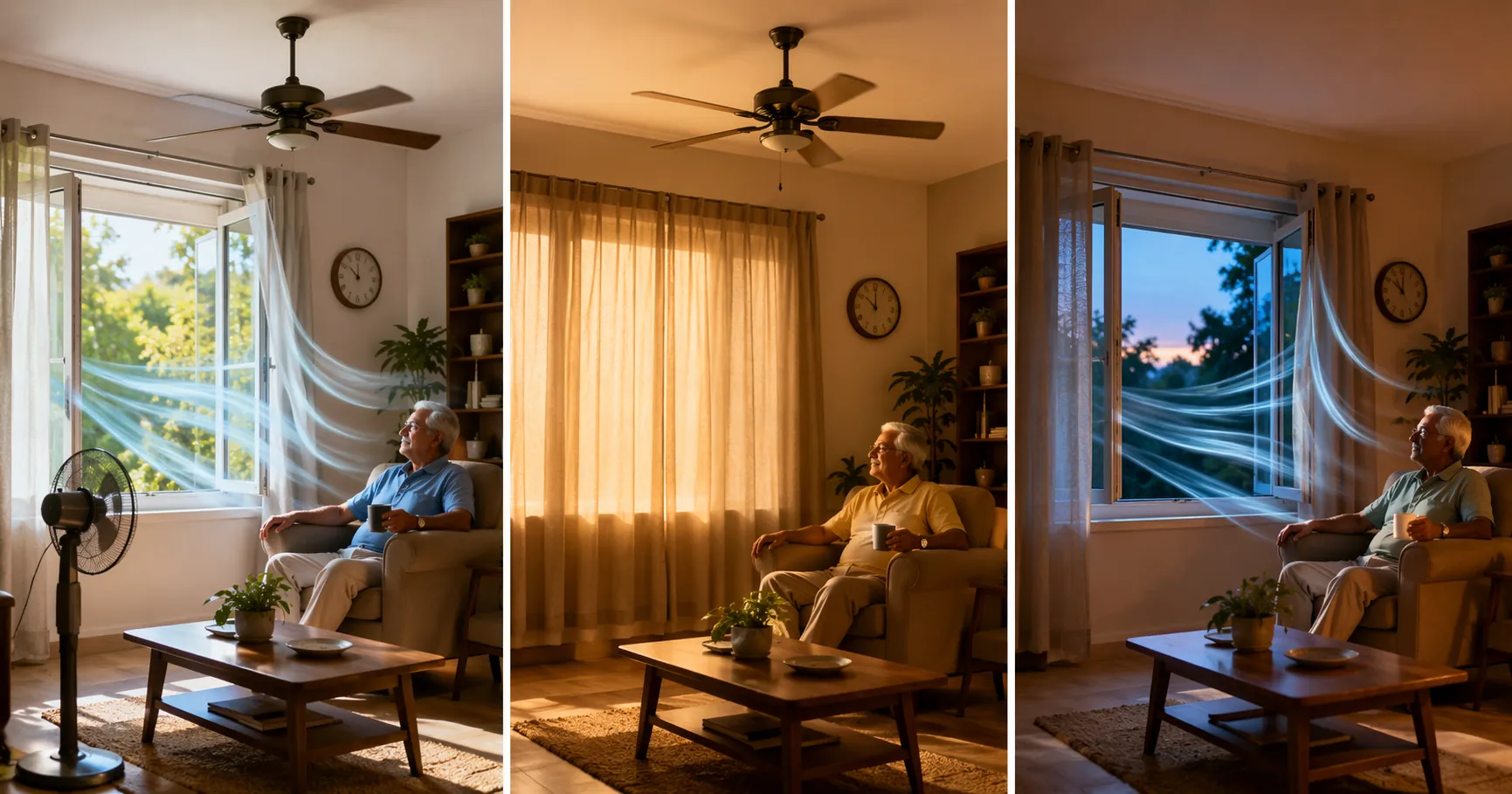
Fans deserve a little respect and a little caution. A ceiling fan can make a room feel cooler while using much less electricity than central air conditioning, but it does not lower the room temperature. If the room is already too hot for that person’s health, a fan is not a substitute for cooling. And if nobody is in the room, turn the fan off.
Some utility programs report modest average savings from time-based plans or peak-reduction behavior. Santee Cooper’s Defeat the Peak materials point to related utility efforts, and Salt River Project has reported about 4% average savings for time-of-day customers.[4] That kind of number is worth considering, but it is an average, not a medical clearance slip. A household with an older adult home all day may have less flexible load than a household that is empty during the afternoon.
Cook Without Heating the Kitchen at the Worst Time
The kitchen can undo a careful cooling plan in half an hour. If the oven runs at 4 p.m. in a small house, the air conditioner has to fight both the weather and supper. This is where simple habits help.
- Use the microwave for vegetables, potatoes, leftovers, and oatmeal instead of heating the oven.
- Use a slow cooker or Instant Pot earlier in the day, then keep portions ready for peak hours.
- Use a toaster oven for small portions if it keeps less heat in the room than the full oven.
- Plan no-oven meals for the hottest days: sandwiches, salads with protein, chilled soups, fruit, yogurt, or prepared meals.
- Batch-cook in the morning or evening when the house can recover more easily.
This is not about making an older person live on crackers because electricity is expensive. It is about moving heat-making chores out of the hours when the home is already under strain. If appetite drops in hot weather, or if cooking changes interfere with a medical diet, that belongs in the same conversation as the thermostat: safety first, then savings.
Small Weatherization Fixes Can Make Peak Hours Less Punishing
Weatherization is not glamorous, but it is often kinder than telling someone to sit in a hotter room. Sealing obvious air leaks, adding weatherstripping, using window coverings, repairing door sweeps, replacing hot incandescent bulbs with LEDs, and shading sunny windows can help the home hold onto cooled air longer. These are the kinds of changes that fit naturally into an aging-in-place modification checklist because they affect both comfort and safety.
The federal Weatherization Assistance Program can provide free home energy improvements for eligible households, and older adults may receive priority. NCOA reports average annual energy savings of $372 from weatherization, but that is a national average, not a promise for a particular house.[5] A drafty older home in a hot climate will not behave like a newer apartment in a milder one.
If a senior owns the home, start with the places that can be checked without climbing: daylight under exterior doors, loose weatherstripping, bare sunny windows, an attic hatch that leaks air, or a window air conditioner with gaps around the sides. If the senior rents, ask the landlord before making permanent changes, but temporary window coverings, draft blockers, and safe appliance habits may still help.
When the Bill Is the Reason the House Is Too Hot
There is a particular kind of quiet that happens when an older person says, “I’m fine,” while sitting in a room that is too warm. Sometimes the problem is not that they do not know how to save energy. The problem is that they are afraid of the bill.
That is where assistance programs matter. NCOA’s energy assistance overview explains that programs such as LIHEAP and related benefits may help eligible households pay energy bills, manage shutoff risk, or handle energy-related repairs.[6] If the air conditioner is being rationed because of cost, the answer should not be more discomfort. The answer may be help with the bill, a rate review, budget billing, medical protections, weatherization, or all of those together.
A caregiver can make this easier by sitting with the older adult while calling the utility, the local Area Agency on Aging, or a benefits counselor. Have the account number, income documents, medication or medical equipment information if relevant, and any shutoff notice nearby. The paperwork is less frightening when nobody has to read the fine print alone at a hot kitchen table.
A Safer Peak-Day Routine
On a hot day with peak pricing, a workable routine may be short and ordinary:
- Before noon, check the utility’s peak window and the weather forecast.
- Cool the main living area or bedroom before peak begins.
- Close blinds and curtains before the sun is strongest.
- Put water, phone, medications, mobility aids, and a thermometer within reach.
- Use a fan only in the occupied room, and keep air conditioning at a medically safe setting.
- Delay the oven, dryer, dishwasher heat-dry cycle, and heavy appliance use until after peak if that does not create another safety problem.
- After peak, prepare the bedroom for sleep and check whether the home cooled back down.
For someone with a recent fall, dizziness, dehydration, or new mobility trouble, heat planning also belongs inside the bigger aging-in-place plan. A caregiver who is already reviewing the home after a fall can use a post-fall aging-in-place checklist to look beyond the thermostat: bathroom access, night lighting, hydration setup, emergency contacts, and clear routes through the cooled rooms.
The Line Not to Cross
There are days when the right energy strategy is to keep the air conditioner running. If an older adult has heart or lung disease, medication-related heat sensitivity, poor fluid balance, confusion, faintness, heavy sweating, nausea, muscle cramps, unusual weakness, a recent fall, or a clinician’s instruction to avoid heat, do not rely on generic peak-demand advice. Keep the person cool and seek medical or emergency guidance as appropriate.
Indoor temperatures around the low 80s Fahrenheit can already be concerning for some people with heart, lung, medication, or heat-sensitivity issues. A thermometer in the room where the person actually sits is more useful than the thermostat reading in a hallway. If the recliner is in a sunny corner, measure that corner. If the bedroom traps heat after sunset, measure the bedroom before sleep.
Heat also increases fall risk for many older adults through dehydration, dizziness, weakness, and rushed trips to the bathroom. If that is a concern in your household, see Heat Wave Preparedness for Seniors Also Prevents Falls for a deeper safety checklist.
The useful savings are the ones that come from timing, shading, sealing, cooking differently, and cooling the right room before the expensive hours begin. The dangerous savings are the ones that depend on an older body enduring heat it cannot safely handle.
References
- Time-of-Use Rates May Hit Vulnerable Groups Harder, IEEE Spectrum
- Peak vs. Off-Peak Electricity Hours, Constellation
- Energy Saving Tips Help Older Adults Save Money During Winter Months, University of Wisconsin Extension, November 17, 2022
- Defeat the Peak, Santee Cooper
- What Is Weatherization Assistance?, National Council on Aging
- Energy Assistance Benefits, National Council on Aging
Related reading
Noticed something outdated or inaccurate on this page? Flag a correction. We review every report against CDC, NIA, and AARP HomeFit guidance before updating a page.
Part of the Fall Prevention section.