
The Hidden Aftermath of a Fall: How Fear Creates a Downward Spiral and What Families Can Do
For many older adults, the psychological impact of a fall — fear, anxiety, and withdrawal — is more disabling than the physical injury itself. This guide helps adult children and spousal caregivers recognize post-fall anxiety syndrome, understand the dangerous cycle it triggers, and find effective treatments including CBT, physical therapy, and Medicare-covered mental health services.
The Fall No One Talks About: When the Real Injury Is Invisible
When an older adult falls, the family's attention naturally goes to the visible damage: a fractured hip, a bruised wrist, a cut that needs stitches. The emergency room visit happens. The X-rays are taken. The cast is applied. But for a significant number of older adults, the most disabling consequence of a fall is not the broken bone — it is the psychological injury that follows.
This is not simply being "a little more careful." It is a clinical phenomenon known as post-fall anxiety syndrome, and it affects roughly one in three older adults who fall. The fear becomes so consuming that it fundamentally changes how a person moves through their own home — and that change, paradoxically, makes another fall more likely.
This article is for the adult children and spousal caregivers who notice that something has shifted in their loved one after a fall — even a minor one. The person who used to walk to the mailbox every morning now stays inside. The avid gardener has stopped tending the backyard. The grandparent who never missed a school play now makes excuses to stay home. These are not signs of "slowing down with age." They are symptoms of a treatable condition.
What Post-Fall Anxiety Syndrome Looks Like in Daily Life
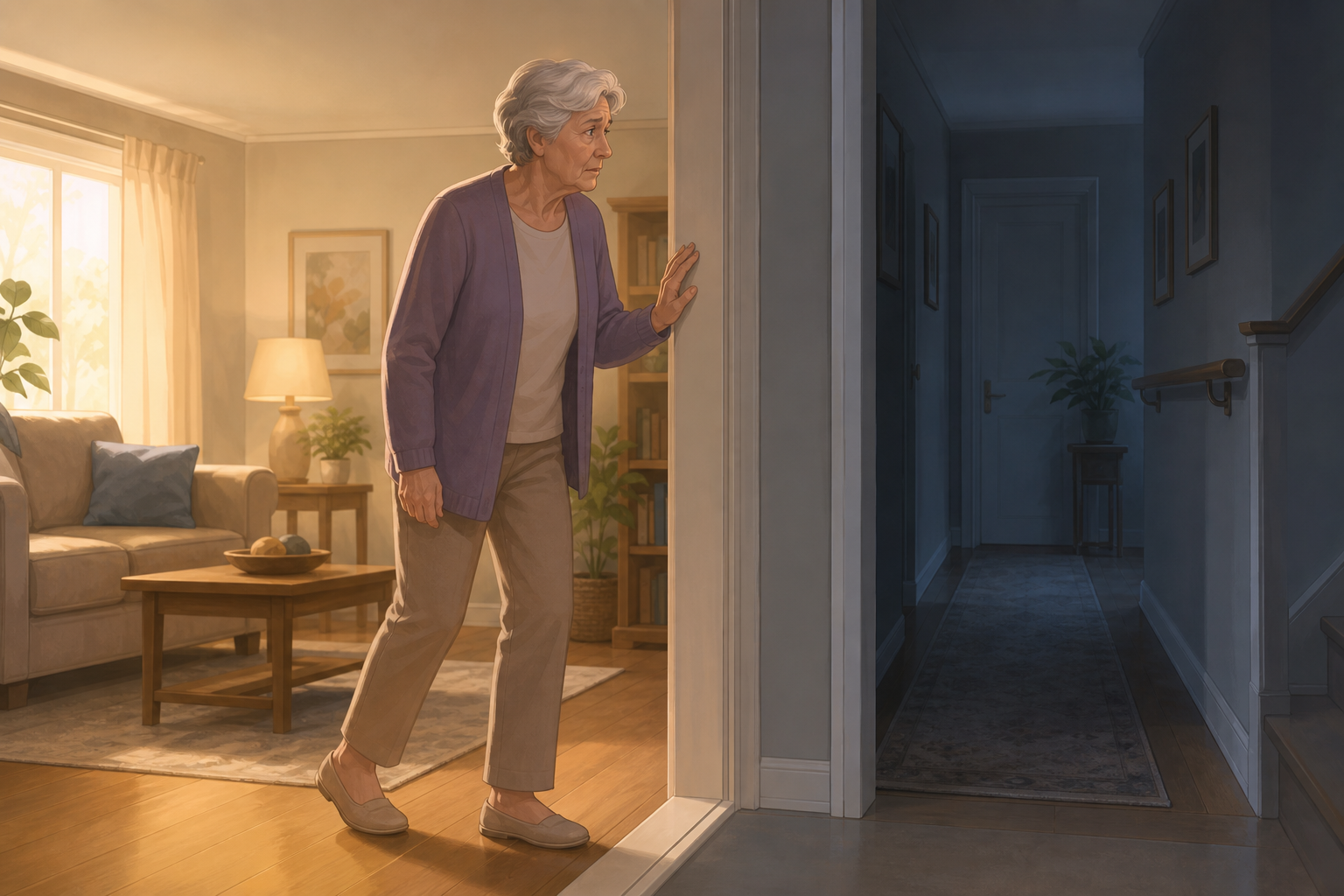
Post-fall anxiety syndrome does not always announce itself with words. Many older adults will not say "I'm afraid of falling again." Instead, the fear shows up in behavior. Caregivers who know what to look for can spot the pattern before it becomes entrenched.
Common behavioral signs include:
- Avoiding specific rooms or areas of the home, particularly the bathroom at night, the basement stairs, or the kitchen
- Refusing to go outside for walks, errands, or social visits — even with assistance
- Stopping hobbies that require standing or walking, such as gardening, cooking, or shopping
- Hypervigilance while walking — gripping walls, furniture, or railings even on flat, clear surfaces
- "Freezing" at thresholds, doorways, or transitions between different floor surfaces
- Reluctance to be left alone during the day or to stay alone overnight
- Increased dependence on furniture for support — "furniture surfing" — even when a walker or cane is available
These behaviors often emerge gradually, which is why families may not connect them to the fall that happened weeks or months earlier. The older adult may not mention the connection either. Research shows that less than half of older adults who fall tell their doctor, according to the CDC. Shame, fear of losing independence, and a desire not to burden family members all contribute to this silence.
The Downward Spiral: How Fear of Falling Actually Increases Fall Risk
Here is the cruel irony at the heart of post-fall anxiety: the very behaviors meant to prevent another fall — staying seated, moving less, avoiding challenging environments — are the same behaviors that make another fall more likely.
The clinical cycle, documented in BMC Geriatrics research, works like this:
- A fall occurs, creating fear of falling again
- Fear leads to activity restriction — the person stops doing things they previously did safely
- Reduced activity causes muscle atrophy, deconditioning, and loss of balance
- Weakened muscles and poorer balance increase the actual risk of falling
- Another fall — or a near-miss — reinforces the fear, and the cycle tightens
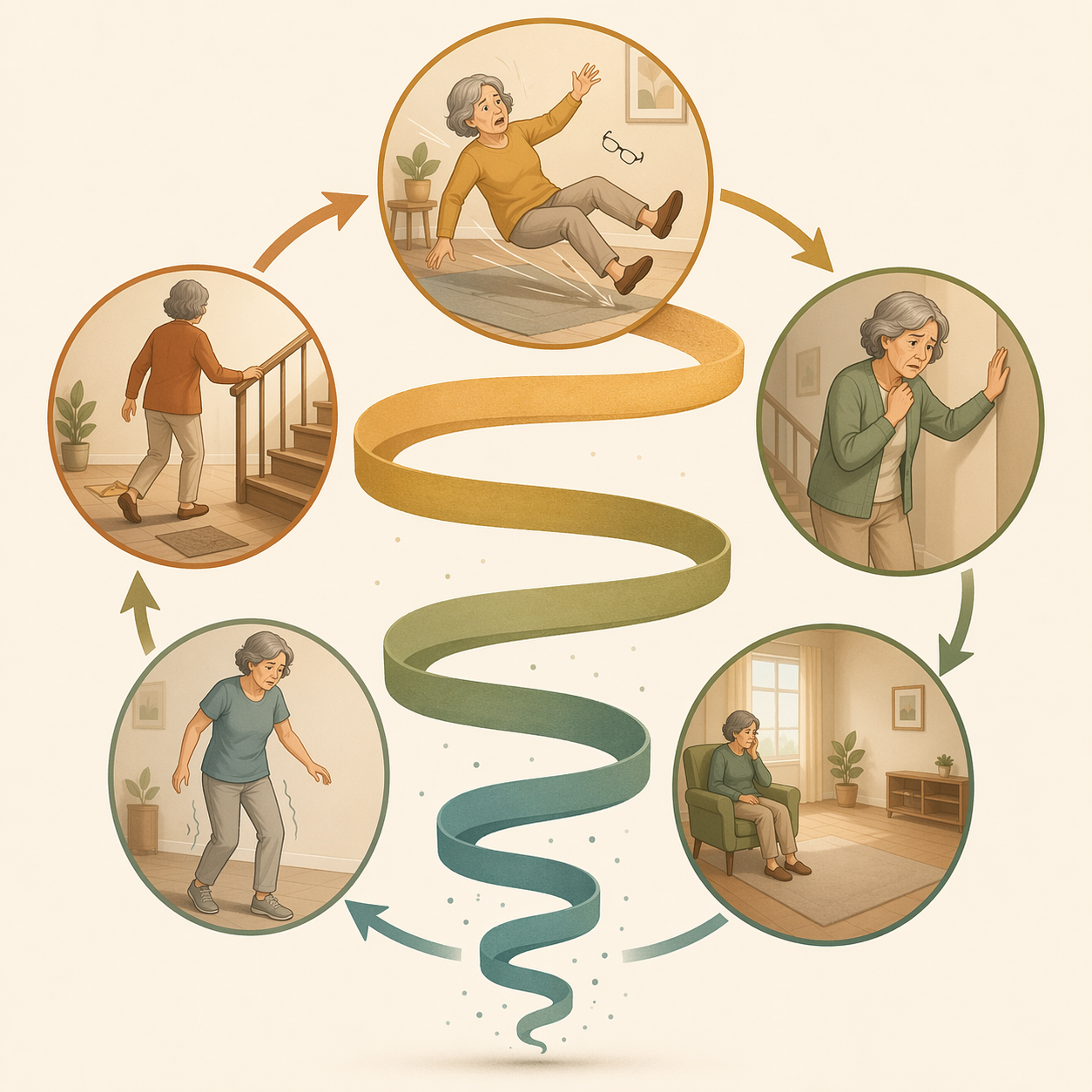
The National Council on Aging (NCOA) reports that about 30% of older people who fall lose their self-confidence and start to go out less often. This withdrawal from activity is not a lifestyle preference — it is a clinical response that accelerates physical decline. The CDC confirms that people who fall, even if they are not injured, often become afraid of falling, and that this fear causes them to cut down on everyday activities. When a person is less active, they become weaker, and this increases their chances of falling.
How Common Is Post-Fall Anxiety? The Numbers Behind the Fear
The prevalence of post-fall psychological distress is higher than most families realize. A 2014 study by Jayasinghe and colleagues found that 30.5% of older adults showed significant anxiety immediately after a fall, and 26% met diagnostic criteria for PTSD at a two-month follow-up. These are not fleeting worries — they are clinically significant conditions that meet established diagnostic thresholds.
To put these numbers in context:
| Statistic | Source | Implication |
|---|---|---|
| 30.5% of older adults show significant anxiety immediately after a fall | Jayasinghe et al., 2014 | Nearly 1 in 3 fall victims need psychological support from day one |
| 26% meet PTSD criteria at 2 months post-fall | Jayasinghe et al., 2014 | More than 1 in 4 develop a lasting trauma response requiring treatment |
| About 30% lose self-confidence and go out less often | NCOA Stepping On program data | Activity withdrawal is a measurable, widespread consequence of falls |
| Less than half of older adults who fall tell their doctor | CDC, 2026 | The majority of post-fall psychological distress goes unreported and untreated |
These conditions are frequently missed because older adults hide their falls and their fear. The CDC reports that in 2021, falls caused 38,000 deaths among adults aged 65 and older, and emergency departments recorded 3 million visits for fall-related injuries. But the millions of non-injurious falls — the ones that do not result in an ER visit — are the ones most likely to go unmentioned and untreated, even as they trigger the downward spiral.
What Actually Helps: CBT, Physical Therapy, and the Power of Combining Both
The good news is that post-fall anxiety syndrome is highly treatable. The clinical evidence points to a clear gold standard: cognitive behavioral therapy (CBT), ideally combined with physical exercise and balance training.
According to the Cochrane review and NICE guidelines, CBT is the gold-standard treatment for fall-related anxiety, and outcomes are significantly better when CBT is paired with physical exercise. This makes intuitive sense: CBT addresses the cognitive and emotional barriers to movement, while physical therapy rebuilds the strength and balance that the fear caused the person to lose.
A key component of CBT for post-fall anxiety is graded exposure therapy. This involves gradually and systematically reintroducing the activities the person has been avoiding — but in a safe, structured, and controlled way. The person might start by simply standing at the top of the stairs for 30 seconds, then progress to taking one step down with support, then two steps, and so on. Each small success builds confidence and weakens the fear response.
What this looks like in practice:
- A therapist helps the older adult identify the specific thoughts driving the fear ("If I walk to the kitchen alone, I'll fall and no one will find me")
- The therapist and patient work together to test whether those thoughts are accurate through structured, safe exposure
- A physical therapist or occupational therapist designs a progressive exercise program that rebuilds strength, balance, and gait confidence
- The two therapies reinforce each other: physical gains make the exposure exercises feel safer, and cognitive shifts make the physical exercises feel more achievable
For specific exercises that help rebuild strength and confidence after a fall, see our evidence-based balance exercise guide.
Does Medicare Cover This? Yes — Here's How Part B Helps
One of the most common barriers to treatment is the assumption that mental health care is not covered by Medicare. In fact, Medicare Part B covers outpatient mental health services for anxiety, depression, and PTSD — including therapy triggered by a fall event. This coverage includes individual and group psychotherapy, diagnostic evaluations, and medication management when needed.
Here is what families need to know to access this coverage:
- Medicare Part B covers 80% of the cost of outpatient mental health services after the annual deductible is met
- No referral is required for mental health services under Original Medicare — the older adult can schedule directly with a therapist who accepts Medicare assignment
- Medicare Advantage plans must cover the same mental health services as Original Medicare, though copays and provider networks may differ
- Physical therapy for balance and gait training is also covered under Part B when prescribed by a physician
The first step is to talk to the older adult's primary care provider. A simple statement — "Mom fell three months ago, and she hasn't been the same since. She's stopped going out and seems anxious all the time" — is enough to start the conversation. The provider can make a referral for therapy and physical therapy, and can document the medical necessity that insurance requires.
For a more detailed guide on what to discuss with a primary care provider regarding fall risk assessment and mental health referrals, see our fall-prevention-focused primary care guide.
How to Talk to Your Parent About Post-Fall Fear (Without Damaging Their Dignity)
Having a conversation about post-fall fear is different from having a conversation about home safety. The stakes are emotional, not environmental. An older adult who is already feeling ashamed of their fall — and of their fear — will hear criticism in even the most well-intentioned suggestion.
The goal of this conversation is not to convince your parent to "be more careful." It is to help them recognize that their fear is a normal response to a frightening event, and that treatment exists. Here are phrases that preserve dignity and open the door to help:
| Instead of saying... | Try saying... |
|---|---|
| "You need to be more careful." | "That fall was really scary. How are you feeling about it now?" |
| "You're not going out enough." | "I've noticed you seem less interested in going to the garden club. Is it harder to get around than it used to be?" |
| "You should use your walker." | "What would actually help you feel steadier when you walk to the kitchen?" |
| "You're worrying too much." | "It makes sense that you'd feel nervous after what happened. A lot of people do." |
| "I'm worried about you living alone." | "I want to make sure you feel safe here. Can we talk about what would help with that?" |
The most important principle is to lead with validation, not correction. An older adult who feels understood is far more likely to accept help than one who feels judged. If the conversation goes well, the next step is to offer to accompany them to a primary care appointment where the topic can be raised with a professional.
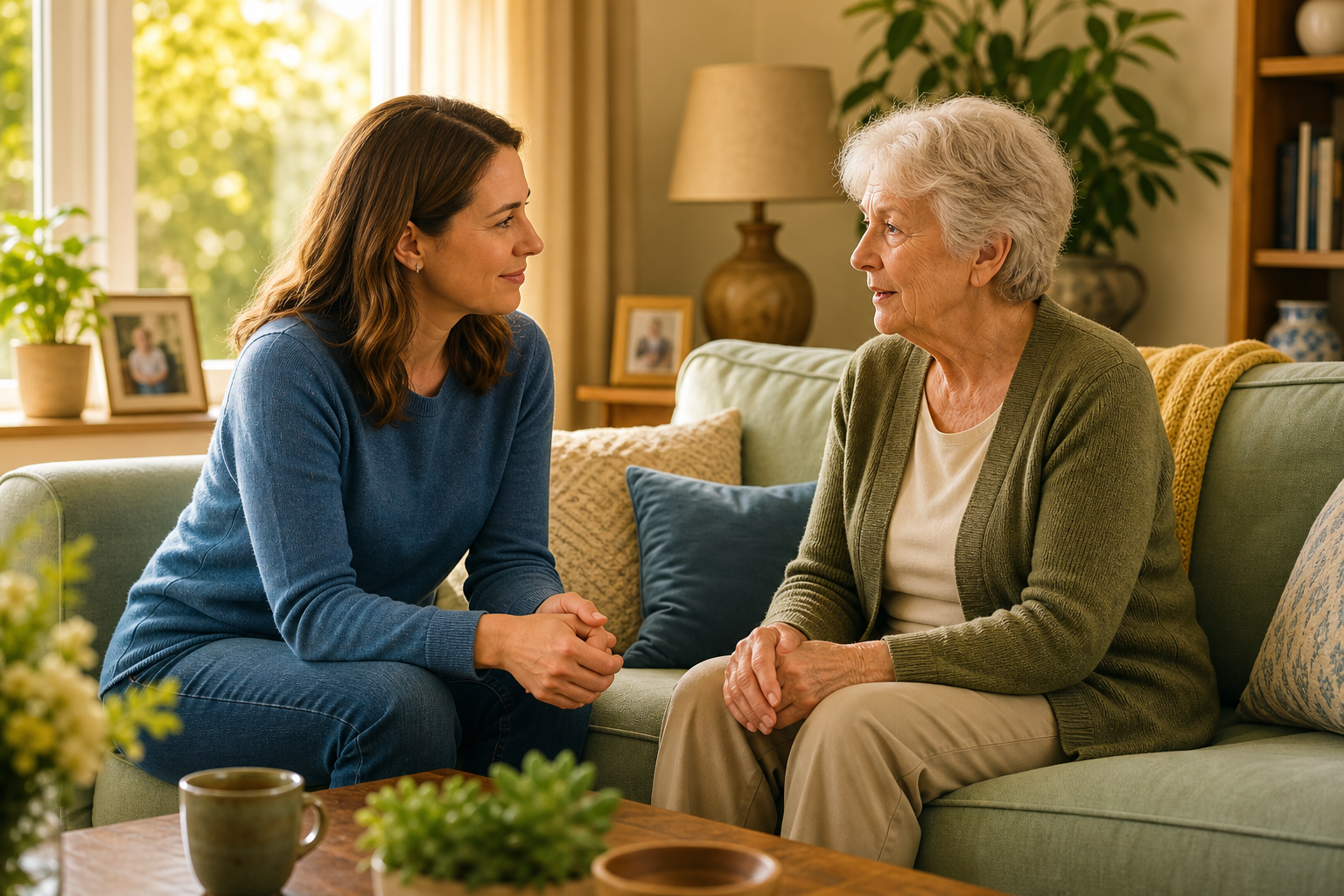
For a deeper exploration of communication strategies for fall-related conversations, see our guide on how to talk to your aging parent about fall risk and home safety. The present guide focuses specifically on the post-fall psychological context — addressing fear, shame, and withdrawal — while that guide covers broader communication strategies for home safety conversations.
Evidence-Based Programs That Address Both Body and Mind
For families who want a structured, group-based approach, A Matter of Balance is an evidence-based program specifically designed to reduce fear of falling and increase activity levels in older adults. Developed at the Roybal Center at Boston University, this 8-week program has been implemented in community settings across the country.
What A Matter of Balance offers:
- Group education sessions that help participants reframe their thinking about falls and fear
- Gentle exercises designed to improve strength, balance, and flexibility in a safe, supportive environment
- Peer support from other older adults who are dealing with the same fears
- Practical strategies for making the home safer and for getting up from a fall if one occurs
The program is typically offered through senior centers, Area Agencies on Aging, hospitals, and community organizations. To find a local session, families can contact their Area Agency on Aging or use the Eldercare Locator (1-800-677-1116), a public service of the U.S. Administration on Aging.
When to Seek Professional Help: Recognizing the Line Between Caution and Disability
Not every case of post-fall fear requires professional treatment. Many older adults recover their confidence naturally, especially with family support and a safe home environment. But there is a clear line between manageable caution and clinical disability, and crossing that line means it is time to bring in professional help.
Consider seeking professional evaluation if your loved one:
- Refuses to leave the house for any reason, including medical appointments
- Has stopped all physical activity, including walking from room to room
- Shows signs of depression — persistent sadness, loss of interest in previously enjoyed activities, changes in appetite or sleep
- Experiences panic symptoms when thinking about walking or moving — rapid heartbeat, shortness of breath, dizziness
- Has had more than one fall, or a fall that resulted in injury
- Expresses thoughts like "I'd rather die than go through that again" or "I'm never going to be safe in my own home"
The first professional to contact is the older adult's primary care provider. A single conversation can open the door to a therapist, a physical therapist, or both. For help identifying the right type of professional support — whether a therapist, occupational therapist, physical therapist, or geriatric care manager — see our service-matching guide.
The fall itself may have been a single event, but its psychological aftermath does not have to be a permanent condition. With the right combination of CBT, physical rehabilitation, family support, and evidence-based programs like A Matter of Balance, the downward spiral can be reversed — and the older adult can reclaim not just their physical safety, but their confidence and independence.
Related reading
Noticed something outdated or inaccurate on this page? Flag a correction. We review every report against CDC, NIA, and AARP HomeFit guidance before updating a page.
Part of the Fall Prevention section.