
STEADI: Intervene
Choosing Safe Hand Warmers for Elderly With Poor Circulation
An older adult with poor circulation or reduced sensation may not feel a hand-warmer burn until it's serious. Learn the temperature limits, barrier layers, certifications, and timers that make a warmer safe to use — and when warming cold hands is part of winter fall prevention.
Last verified: August 1, 2026.
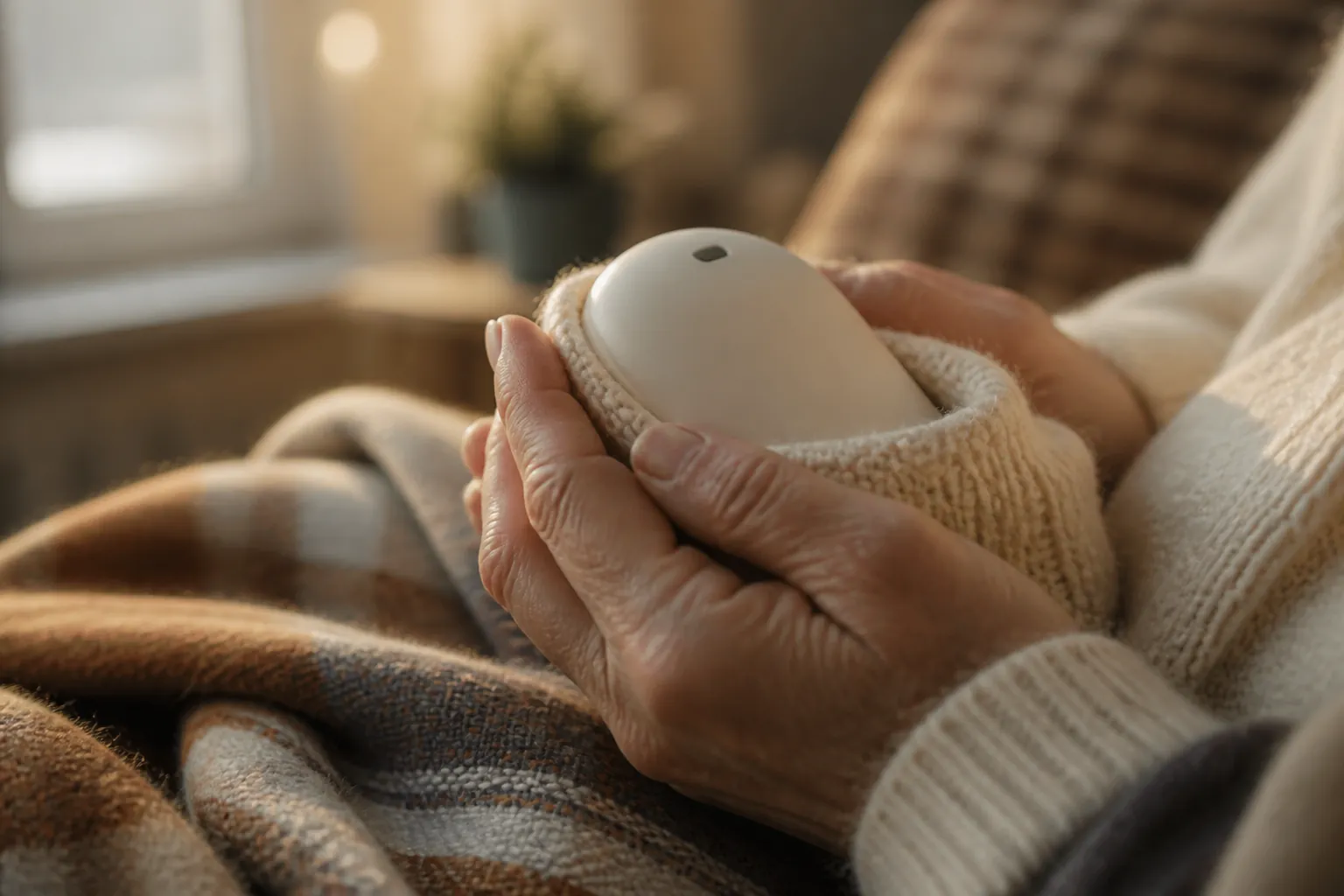
Safe hand warmers for older adults with poor circulation are not the ones that promise the highest heat or the longest runtime. For an older adult whose fingers are numb, stiff, or slow to warm, the safer choice is a warmer that stays low, stays covered, shuts off or gets timed, and can be checked by someone other than the person holding it.
Cold hands matter in winter safety because hands are how people grip walkers, railings, canes, keys, phones, door handles, and medication bottles. The CDC lists fumbling hands as one possible warning sign of hypothermia, and it identifies older adults with inadequate heating as a primary risk group in cold weather.[1] Mayo Clinic also notes that peripheral neuropathy can reduce sensation and is associated with balance loss and falling.[2] That does not prove that cold hands directly cause falls. It does mean cold, numb, poorly responsive hands belong in the same practical conversation as winter footing, lighting, footwear, and indoor temperature.
If the larger problem is a cold home, a storm outage, or possible hypothermia, a pocket-sized warmer is the wrong center of the plan. Use it as one small tool while also checking indoor heat, backup power, food, medication access, and a call-in plan; our winter storm safety checklist for seniors and power-outage guide are better places to handle that wider risk.
Cold hands can be a function problem before they are a comfort problem
A hand warmer can be useful when cold fingers make an older adult clumsy with a walker brake, slow to unlock a door, or hesitant to hold a stair rail. Warming the hands may support function, especially before going outside, after returning from a short errand, or while waiting in a chilly entryway.
The problem is that the same person who needs help warming up may be the person least able to judge when warmth has become unsafe. Poor circulation can slow recovery from cold. Neuropathy can make temperature changes and pain harder to feel on numb areas.[2] Raynaud’s can make fingers overreact to cold with color changes, numbness, or pain. Aging skin is also more fragile than younger skin, and wounds can be harder to manage once they happen.
So the caregiver’s question is not, “Will this feel warm enough?” It is, “Can this be used safely even if the user does not notice it getting too hot?”
The burn risk: heat plus time, on skin that may not warn in time
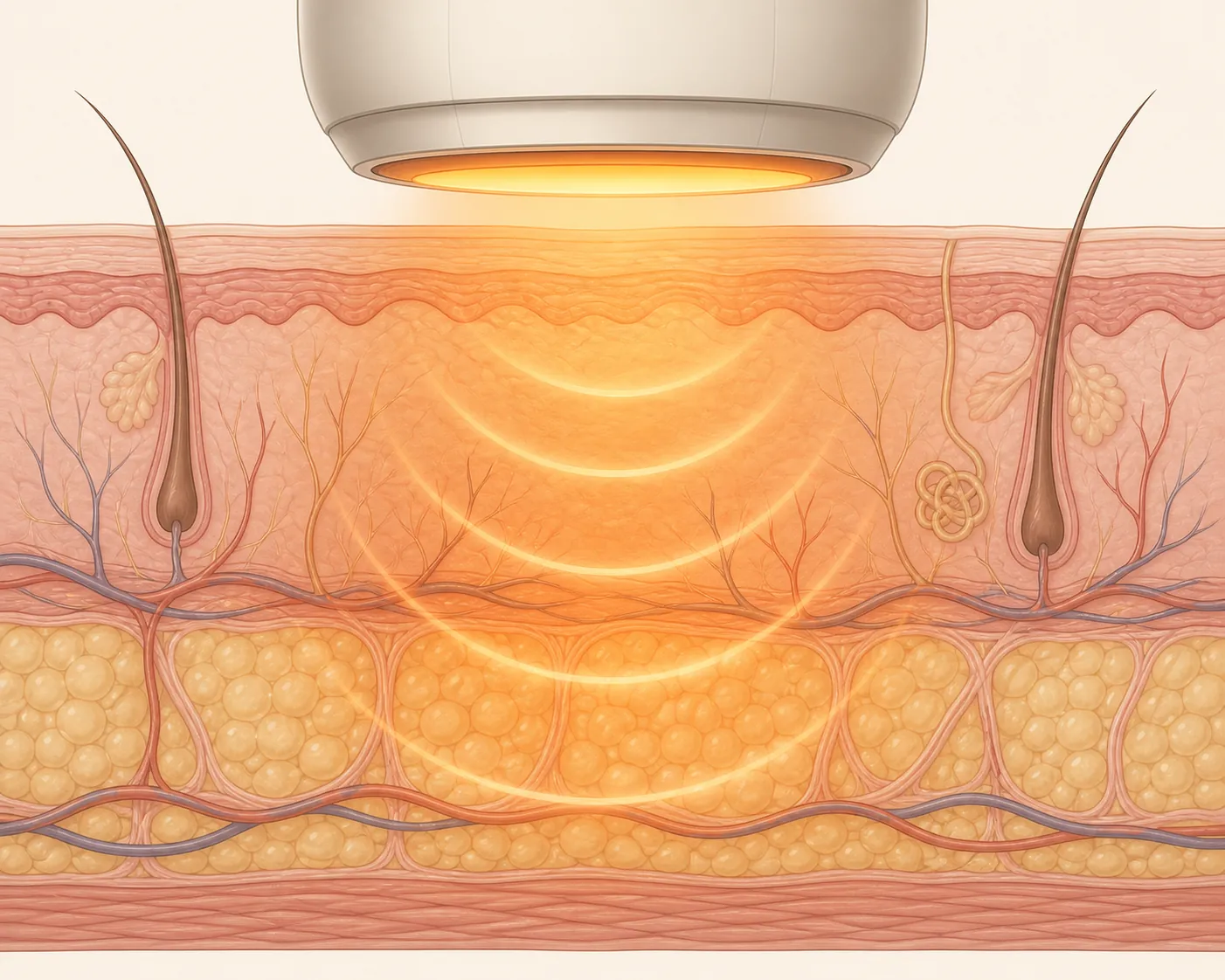
A low-temperature burn is easy to dismiss because the device may not feel painfully hot at first. That is exactly why it is dangerous. The University of Utah Burn Center explains that heating pads may reach about 120°F, and that heat plus time can still cause second-degree burns over a few hours. It also says older adults are the number one population seen for heating-pad burns because their skin is thinner and their circulation is poorer.[3]
Hand warmers are not heating pads, but the burn mechanism is similar enough to take seriously: a warm object is held close to skin, pressure keeps it in place, and time quietly does the damage. A person with full sensation may drop the warmer, shift it, or complain. A person with reduced sensation may keep holding it because it feels merely pleasant, or because it is tucked inside a glove and forgotten.
This is why “all-day heat” is not automatically a selling point for this user. Long runtime can be useful in an emergency kit, but long, uninterrupted contact with fragile or numb skin is the condition to avoid.
A safer warmer has controls you can verify
One practical temperature target is worth remembering: a Wirecutter-interviewed vascular surgeon, Danielle R. Bajakian, MD, advised that a hand warmer staying around 110–120°F and not above is safest.[4] Treat that as expert guidance, not a formal regulatory limit. It is still a better caregiving standard than choosing the model with the most dramatic maximum-temperature claim.
Surface temperature is not something to guess from the product photo. Wirecutter’s testing found examples with notably different measured temperatures, including an Ignik warmer at about 140°F, an OCOOPA UT3 PRO at about 136°F, and HotHands up to about 118°F.[4] Those examples do not make any one format automatically safe or unsafe for an older adult. They show why a caregiver should look for low settings, avoid bare skin, and not assume that “hand warmer” means “skin-safe for continuous contact.”
| Safety question | What to look for | Why it matters for poor circulation or reduced sensation |
|---|---|---|
| How hot does it get? | A low setting that stays around 110–120°F and does not exceed it in ordinary use | The user may not feel rising heat or pain soon enough to move the warmer. |
| Has the electrical safety been checked? | Third-party certification from an accredited testing laboratory, such as UL Solutions, Intertek, or CSA Group | Rechargeable products add battery, charging, overheating, and fire risks. |
| Can it be kept off bare skin? | A pouch, glove pocket, mitten compartment, cloth wrap, or other barrier layer | A barrier reduces direct contact and makes accidental pressure less intense. |
| Can use be time-limited? | Auto-off, a visible timer, or a caregiver-set phone timer | Comfort is not a reliable stop signal when sensation is reduced. |
| Can someone inspect the skin? | Easy removal from the glove or pouch, and a routine check after use | Redness, swelling, tenderness, or blistering may be noticed late. |
For rechargeable warmers, the U.S. Consumer Product Safety Commission advises using battery-powered consumer products that have been tested and certified by an accredited laboratory. It also warns against overnight charging, recommends disconnecting products once fully charged, and says to stop using a product if the battery is swollen.[5] Those instructions are not fussy extras. They are part of what makes a heat source acceptable around a person who may not notice early warning signs.
How to use a hand warmer without relying on sensation
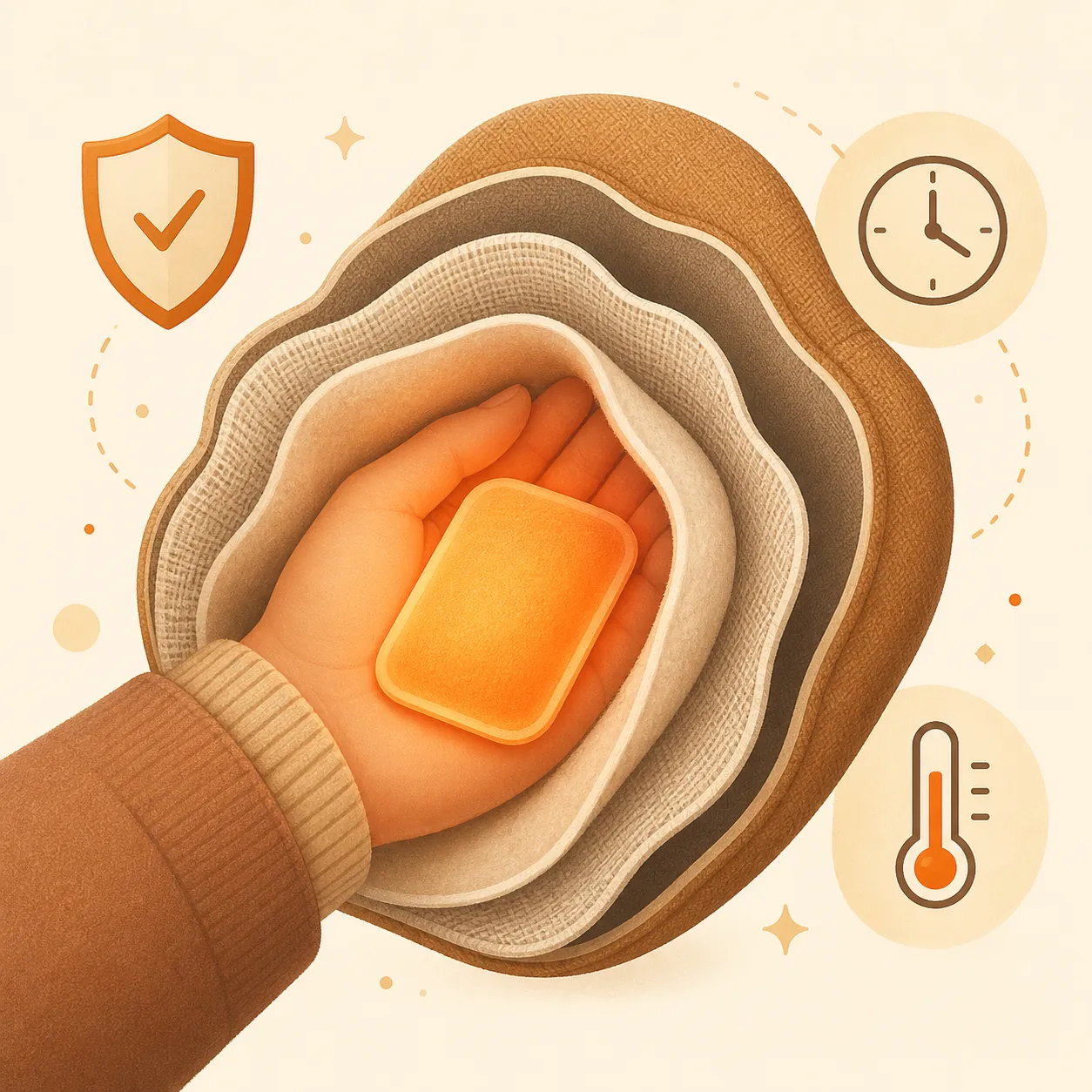
The safest routine is deliberately a little less convenient than holding a hot device in a bare palm. That inconvenience is the point. It puts temperature, time, and skin checks ahead of sensation.
- Start low. Use the lowest heat setting that helps. Do not begin on high to “warm up faster,” especially for someone with neuropathy, Raynaud’s, fragile skin, or a history of slow-healing wounds.
- Add a barrier every time. Put the warmer in its pouch, a glove pocket, a mitten compartment, or a folded cloth. Do not place it directly against bare skin.
- Set a short timer. Use the device’s auto-off if it has one, and set a separate phone or kitchen timer if it does not. The user’s comfort level is not enough.
- Check the skin after use. Look at the palm, fingertips, between fingers, and any area where the warmer pressed against the hand or wrist.
- Stop at the first warning sign. Redness that does not fade, swelling, new pain, tenderness, blistering, numbness that worsens, unusual device heat, odor, battery swelling, leaking, or charging trouble should end use.
- Keep warmers out of sleep routines. Do not use a hand warmer in bed, under blankets, or while napping. A sleeping person cannot reposition it or report discomfort.
For an older adult who insists the warmer “feels fine,” the skin check still matters. Neuropathy can hide temperature changes and pain.[2] A caregiver should trust the skin and the device behavior over the user’s heat rating.
The OCOOPA recall shows why this is a safety decision, not a cozy accessory decision
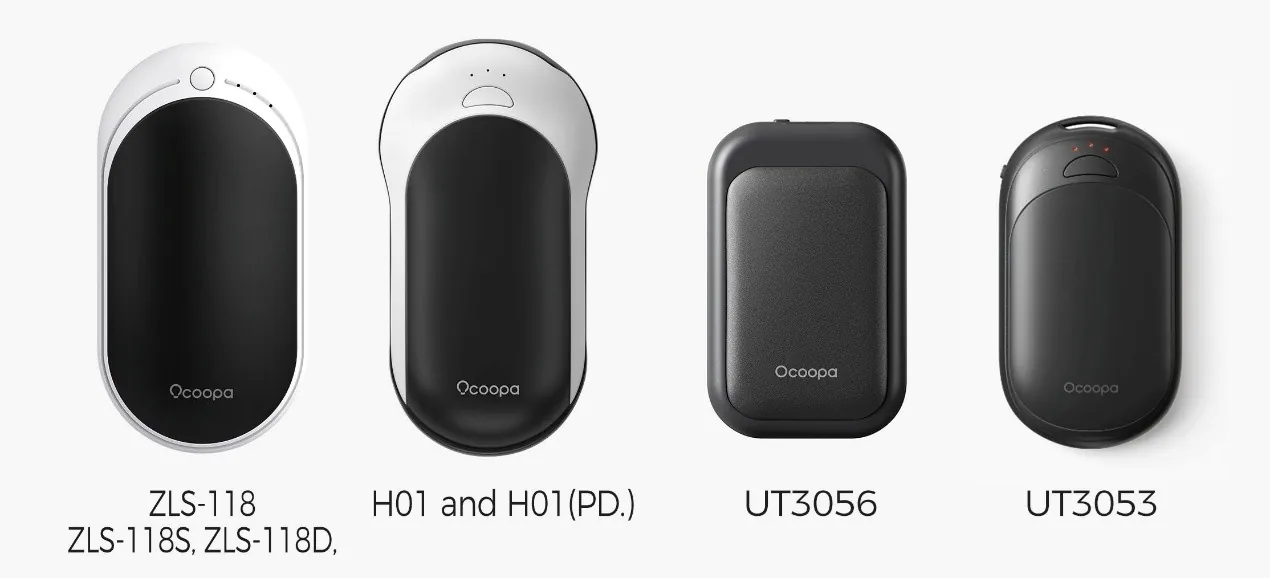
On July 30, 2026, the CPSC announced the recall of about 1.5 million OCOOPA rechargeable hand warmers because of fire and burn hazards. The recall reported 350 burn injuries and the death of an 83-year-old man in San Diego.[5]
That recall should not be twisted into “all rechargeable warmers are dangerous.” It should also not be waved away as a one-brand problem. The useful lesson is narrower and more practical: a rechargeable warmer has to be treated like a battery-powered heat device. Check the exact model, certification, charging instructions, battery condition, heat settings, and recall status before handing it to someone with reduced sensation.
If a device is missing clear labeling, has no credible certification mark, gets hotter than expected, smells odd, has a damaged cord, behaves inconsistently, or shows battery swelling, do not try to make it safe with supervision. Retire it.
Rechargeable, disposable, and microwaveable warmers all need the same test
Product format matters less than the safeguards around it. A rechargeable warmer may offer adjustable settings and auto-off, but it also brings battery and charging risks. A disposable air-activated warmer avoids charging, but it may keep producing heat for a long time and usually offers less control. A microwaveable warmer can be simple, but heating can be uneven and easy to overdo.
| Warmer type | What can be useful | Extra caution for older adults |
|---|---|---|
| Rechargeable electric | Adjustable heat, possible auto-off, reusable | Use only certified products; avoid overnight charging; stop if the battery swells, overheats, smells, or charges abnormally. |
| Disposable air-activated | No charging, simple for emergency kits or short outings | Do not place against bare skin; use a glove or pouch barrier; remove and check skin on a schedule. |
| Microwaveable | No lithium battery, often soft and easy to hold | Follow heating instructions carefully; test warmth through a barrier; avoid reheating repeatedly without checking temperature. |
For daily use by someone with poor circulation, the best format is usually the one the caregiver can control most reliably. If nobody will remember to set a timer, inspect the skin, or charge safely, choose the simpler option or skip the device for that situation.
Raynaud’s, poor circulation, and the rest of the warming plan
A hand warmer is not a full circulation plan. For Raynaud’s, Cleveland Clinic’s winter guidance emphasizes broader cold management, including keeping the whole body warm, using gloves or mittens, avoiding sudden cold exposure, and protecting hands from cold surfaces.[6] Those steps can reduce the temptation to compensate with a hotter device pressed into the hand.
For winter fall prevention, warm the person before warming only the fingertips: indoor heat, dry socks, layered clothing, warm drinks if appropriate, good lighting, clear walkways, and non-slip footwear all matter. A hand warmer can help at the margin, but it should not be asked to solve a cold room, a long outdoor wait, or an unsafe entryway.
When to stop warming and ask for medical guidance
Stop using the warmer and seek medical guidance if there is persistent redness, swelling, blistering, new pain, worsening numbness, open skin, drainage, a wound that is not healing, or any concern for a burn. Do the same if cold hands come with repeated color changes, sores, severe pain, one-sided symptoms, or a known neuropathy that has not been evaluated.
For an older adult with poor circulation or reduced sensation, the safest hand warmer is the one that stays low, certified, covered, timed, and checked. Not the hottest one. Not the one that lasts all day. The one that does not ask fragile skin to be the alarm system.
References
- Preventing Hypothermia. CDC.
- Peripheral neuropathy - Symptoms and causes. Mayo Clinic.
- Heating Pads Can Cause Second-Degree Burns. University of Utah Health. November 2018.
- The Best Hand Warmer. Wirecutter.
- OCOOPA Direct Recalls 1.5 Million Rechargeable Hand Warmers Due to Risk of Serious Injury or Death from Fire and Burn Hazards; One Death Reported; Imported by Shenzhen Street Cat Technology. U.S. Consumer Product Safety Commission. July 30, 2026.
- How To Manage Raynaud’s During the Winter. Cleveland Clinic.
Related reading
Noticed something outdated or inaccurate on this page? Flag a correction. We review every report against CDC, NIA, and AARP HomeFit guidance before updating a page.
Part of the Fall Prevention section.