
STEADI: intervene
How to Use Hand Warmers Safely with Poor Circulation
For an older adult with poor circulation, a hand warmer that feels comfortably warm can still cause a deep, painless burn. This guide explains which warmer types carry the most risk, the simple rules that prevent injury, and what to do right after a burn happens.
A hand warmer does not have to feel painfully hot to hurt an older adult’s skin. Low-temperature burns happen when modest heat stays against the same area long enough for tissue damage to build. The classic experimental threshold still matters in ordinary winter life: about one hour of exposure at 45°C, or 113°F, can cause cell necrosis under the skin [1].
That is the uncomfortable part of using hand warmers in older adults with poor circulation: comfort is not a dependable warning system. If circulation is poor, sensation is reduced, or the skin is thin and slow to heal, “it only felt warm” can be true and still not be safe.
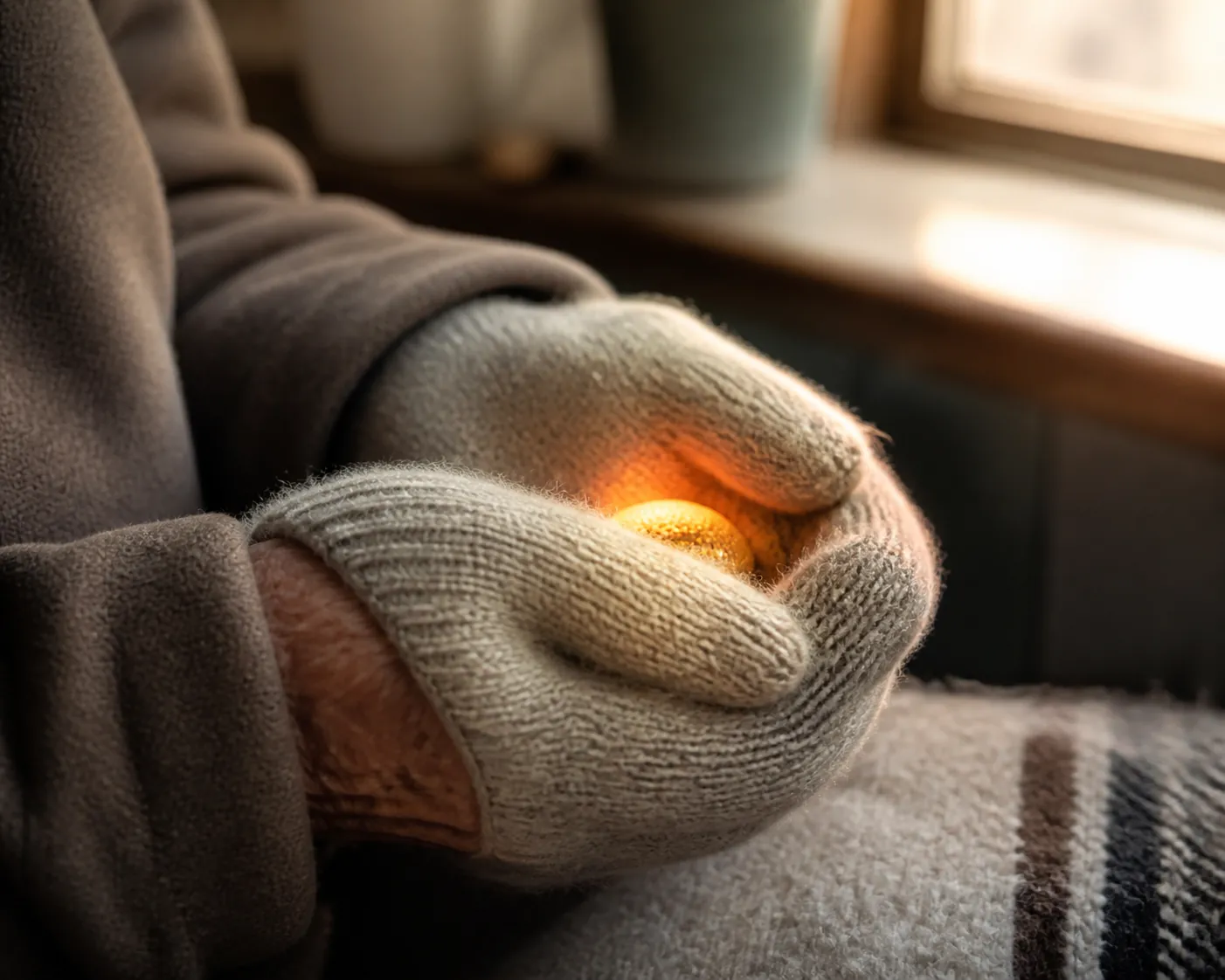
The danger became very concrete in 2026. On July 30, the U.S. Consumer Product Safety Commission announced the recall of about 1.5 million OCOOPA rechargeable hand warmers after 1,480 reports of overheating, 15 fires, 350 burn injuries, and “the death of an 83-year-old consumer in San Diego in February 2026.” The recalled models include UT3053, UT3056, ZLS-118, ZLS-118S, ZLS-118D, H01, and H01(PD), and the CPSC instructed consumers to stop using them immediately [2].
That recall is not a reason to pretend every hand warmer is the same. It is a reason to stop treating any small heat source as harmless because it fits in a pocket.
Why poor circulation changes the rules
Poor circulation can mean the hands are cold more often and recover warmth more slowly. It can also mean the skin and nerves do not report trouble quickly enough. Diabetes can reduce touch sensation, older skin is thinner, and healing is often slower; burn-prevention guidance for seniors specifically warns that these changes can make burns faster, deeper, and harder to recover from [3].
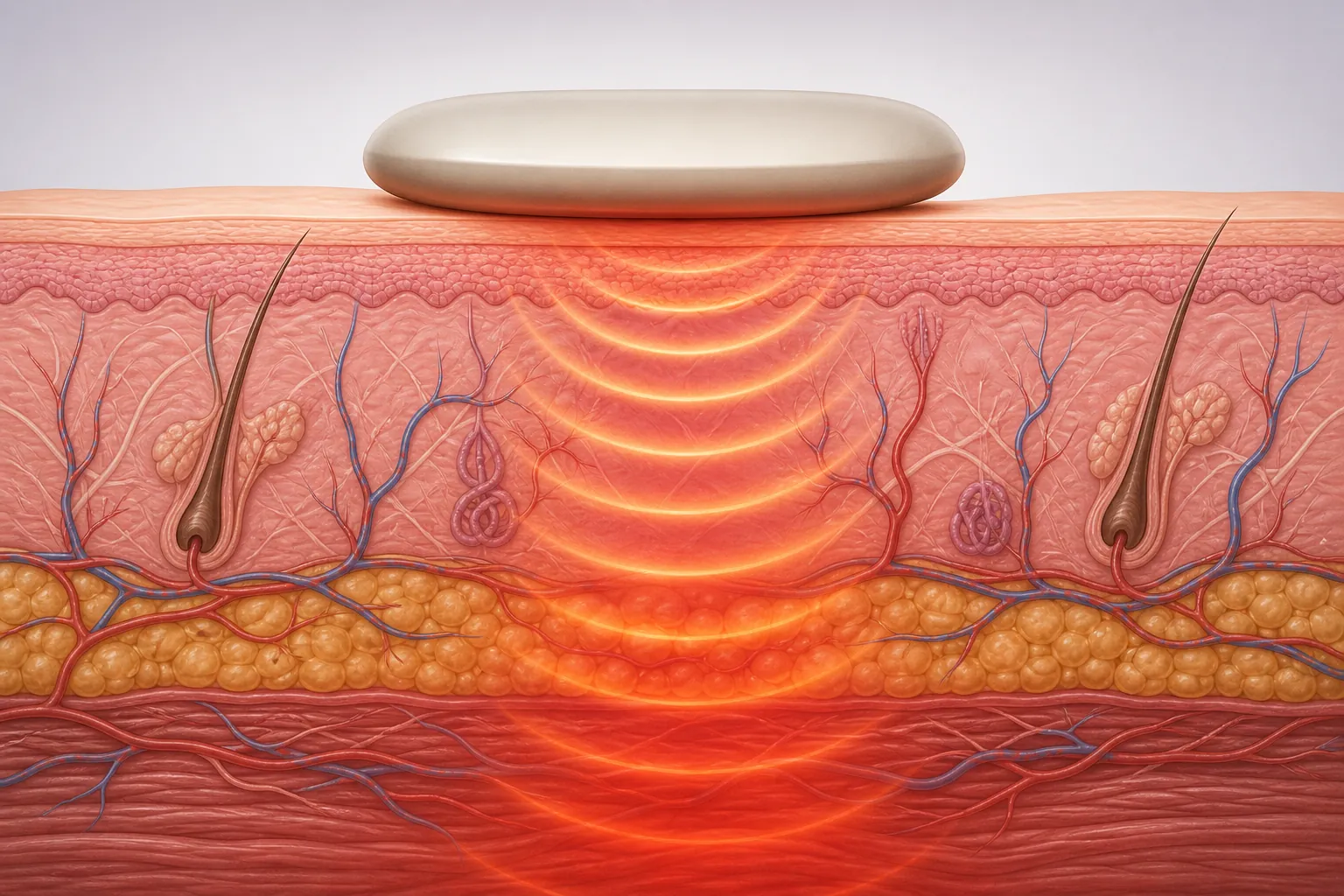
The same lesson shows up with other household heat sources. Burn centers have warned that heating pads can cause second-degree burns when heat is left against skin too long [4]. A hand warmer is smaller, but the habit can be the same: put heat on cold skin, forget it is there, and discover the injury later.
This is why asking, “Does it hurt?” is not enough. A safer question is visual and practical: “Has the warmer been in one place too long, and what does the skin look like now?”
The safe-use checklist
For an older adult with poor circulation, the routine should be simple enough to repeat when everyone is tired, the appointment is early, or the power is out.
- Put fabric between the warmer and the skin every time.
- Set a time limit before the warmer goes into a pocket, glove, lap blanket, or coat.
- Never use a hand warmer while sleeping.
- Check the skin by looking at it, not just by asking whether it hurts.
- Do not press, wrap, or trap the warmer tightly against the hand.
- Stop using recalled rechargeable warmers and treat charging as a fire-safety step.
- Store and dispose of warmers where a person with dementia, confusion, or poor judgment cannot misuse them.
1. Use a real barrier, not bare-skin contact
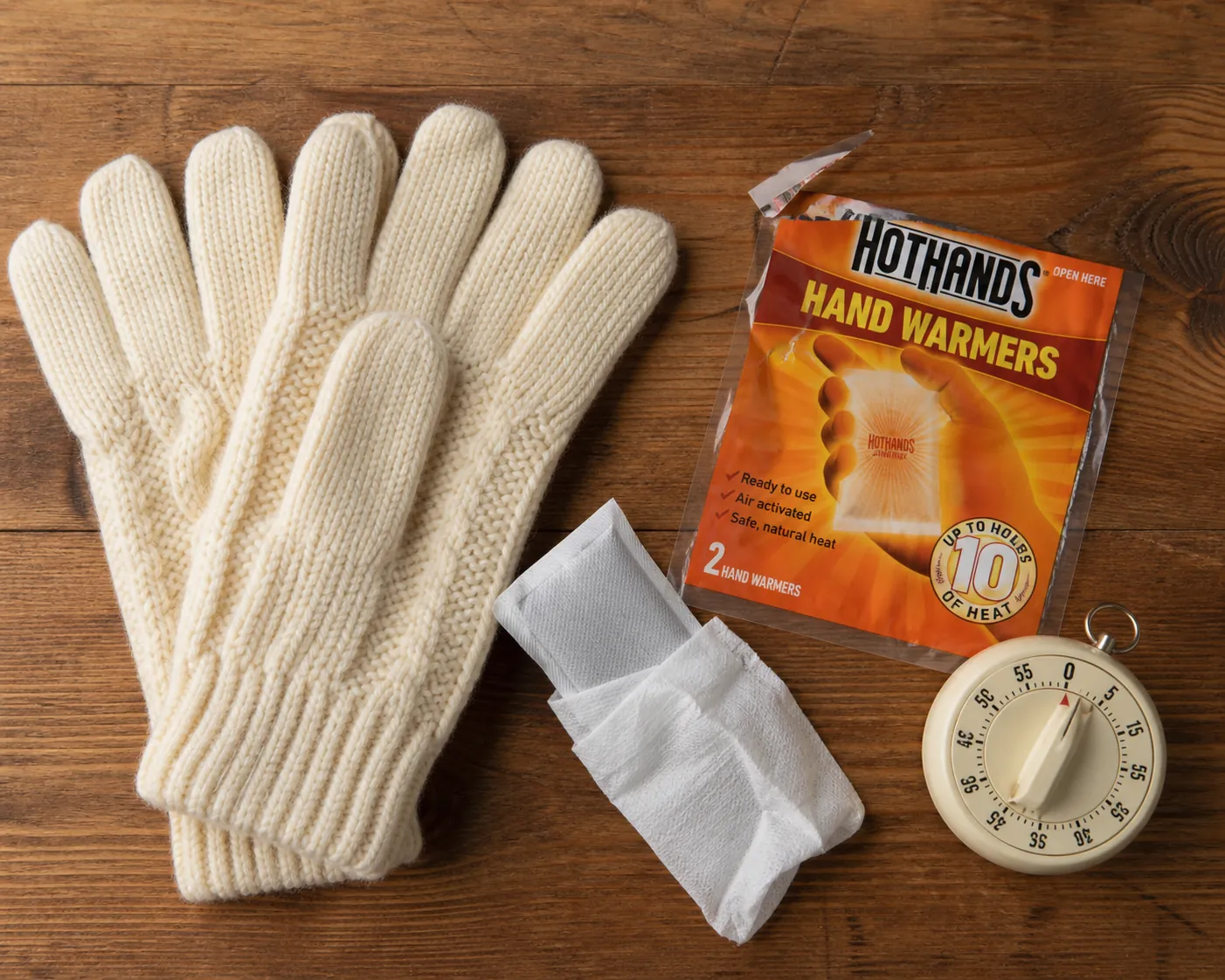
A barrier means a glove layer, sock, thin towel, cloth pouch, or the outside layer of a coat pocket. It does not mean holding a warmer directly in the palm until it “starts to feel too warm.” By the time that warning arrives, the skin may already have been exposed too long.
Manufacturer information for disposable HotHands warmers lists an average temperature of about 135°F and a maximum temperature up to 158°F. The same FAQ warns that people with sensitive skin, “especially young children, diabetics and the elderly,” may have reduced heat sensation and should follow instructions rather than use the product directly against the skin [5]. That warning is worth taking seriously because it names exactly the people most likely to underestimate the heat.
2. Put a time limit on “just for a little while”
Time is part of the injury. A warmer that is tolerable for a few minutes may not be tolerable after it sits in the same glove crease for an hour. Use a kitchen timer, phone alarm, watch alarm, or caregiver reminder. The exact limit should be more conservative for someone with diabetes-related sensation changes, peripheral artery disease, very thin skin, or a history of burns.
In everyday use, the safest pattern is rotation: warm the hands through fabric, remove the heat source, inspect the skin, and let the hand rest before using heat again. If a caregiver is setting up a winter outing, put the timer next to the warmer before leaving, not after everyone is already cold and rushing.
3. Never sleep with a hand warmer
Sleep removes the last safety check. The person cannot move the warmer away, notice a hot spot, loosen a tight glove, or tell a caregiver that something feels wrong. Hand warmers do not belong in bed, inside sleep socks, under a recliner blanket during a nap, or tucked beside an older adult who may doze off.
If cold bedrooms or outage conditions are the reason someone is reaching for hand warmers at night, solve the cold-exposure problem more broadly instead of sending a heat packet to bed. For planning before severe weather, see the winter storm safety checklist for seniors, the room-by-room guide to winter-proofing a parent’s home, and the power outage guide for an elderly person.
4. Check the skin, especially between fingers and over joints
A skin check means taking the warmer away and looking. Check the palm, fingertips, knuckles, spaces between fingers, and any place the warmer was pressed by a glove seam or pocket fold. Look for redness that does not fade, pale or waxy areas, swelling, tenderness, blisters, or a patch that looks different from the surrounding skin.
Caregivers should be careful with reassuring answers. An older adult may say it feels fine because it truly does not hurt, because neuropathy has dulled sensation, or because they are embarrassed that something so ordinary caused an injury. The hand tells you more than the answer.
5. Avoid pressure, tight wrapping, and trapped heat
A warmer stuffed into a tight glove is different from a warmer resting inside a loose outer pocket. Pressure keeps heat in one spot and may reduce circulation further. Tight elastic cuffs, compression gloves, recliner cushions, lap blankets, and folded bedding can all turn a small warmer into a fixed heat source.
For outdoor walks, put the warmer in a coat pocket or mitten with fabric between it and the hand, and make sure the person can drop it or remove the hand easily. If they cannot remove it without help, the setup is too restrictive.
Different warmers, different risks
The safest choice is not simply “electric” or “disposable.” Each type has a different failure pattern, and all of them still require a barrier layer, time limit, and skin check.
| Warmer type | Main concern for older adults with poor circulation | Practical rule |
|---|---|---|
| Rechargeable electric hand warmers | Overheating, burn injury, fire risk, charging risk, and recall status; the 2026 OCOOPA recall shows how serious this category can become [2]. | Check for recalls, stop using recalled models, do not charge unattended near bedding or soft furniture, and never use while sleeping. |
| Disposable air-activated warmers | Surface temperatures can be high enough to injure skin, especially with direct contact or long exposure; manufacturer information lists HotHands warmers up to 158°F [5]. | Keep in the pouch or behind fabric, do not place directly on skin, and discard when finished. |
| Reusable gel or crystallization warmers | They are still heat sources and may be hottest soon after activation or heating. | Let them cool to a comfortable level through fabric, set a timer, and inspect the skin. |
Rechargeable models deserve extra caution in homes with older adults because the hazard is not limited to skin contact. They are battery-powered devices that may be charged on counters, nightstands, recliners, or beds. After the 2026 recall, a winter safety routine should include checking the model number of any rechargeable warmer already in the house, not just buying a new one.
Disposable warmers deserve a different kind of respect. They may look low-tech, but manufacturer temperature ranges are well above the low-temperature burn threshold when contact is prolonged. The package may be paper-thin; the safety layer should not be.
When cold hands need more than a warmer
Persistent cold hands should not be dismissed as just aging. Cold hands can be associated with conditions such as Raynaud’s phenomenon, peripheral artery disease, hypothyroidism, anemia, or other circulation and nerve problems [6]. This article is educational, not medical advice; if an older adult’s hands are often cold, numb, painful, changing color, or slow to warm, involve a clinician before relying on hand warmers as the main solution.
Cold-weather planning also matters because people make riskier heat choices when they are uncomfortable. If a warmer is being used because the house is cold, drafts are bad, or storms are expected, pair the hand-warmer routine with broader winter preparation. The El Niño winter safety checklist for older adults is a useful place to think through heat, lighting, supplies, and fall prevention before a cold snap arrives.
If the skin looks burned
Remove the hand warmer right away. Cool the area under cool running water for about 20 minutes. Do not use ice, and do not rub on butter, oil, or ointments as a first response [7].
Call a clinician or seek medical care promptly if there is blistering, if the burn is larger than the person’s palm, or if it is on the hand, face, or over a joint. The threshold for calling should be lower in older adults because burns in later life are more likely to lead to admission and poor outcomes. In one Weill Cornell emergency department series of 459 burn patients age 60 and older, 53.6% were admitted, and 11.8% of admitted patients died [8].
Do not put the warmer back on the same area to “bring the feeling back.” Numb, red, blistered, or waxy-looking skin needs protection and assessment, not another round of heat.
Storage and supervision at home
Keep hand warmers in one known place, away from beds, recliner cushions, medication organizers, and snack baskets. In a household where someone has dementia or episodes of confusion, do not leave loose warmers where they can be opened, mouthed, slept on, stacked under blankets, or placed directly against fragile skin.
Used disposable warmers should be thrown away when cool. Rechargeable models should be charged on a hard surface, away from bedding and upholstered furniture, and removed from use immediately if they swell, smell, leak, overheat, or match a recalled model number.
Hand warmers are not forbidden. For an older adult with poor circulation, they simply have to be treated as controlled heat: fabric in between, time kept short, no sleeping, skin checked, recalled electric units removed, and burns cooled and assessed without delay.
References
- Low-temperature burns — PubMed Central.
- OCOOPA Direct Recalls 1.5 Million Rechargeable Hand Warmers Due to Serious Burn and Fire Hazards; Risk of Death; Sold on Amazon.com — U.S. Consumer Product Safety Commission, July 30, 2026.
- Safe Seniors — Allegheny Health Network.
- Heating Pads Can Cause Second-Degree Burns — University of Utah Health, November 2018.
- HotHands FAQ — HotHands.
- Cold Hands — Cleveland Clinic.
- First aid and treatment of minor burns — PubMed Central.
- Burn injuries in older adults — PubMed Central.
Related reading
Noticed something outdated or inaccurate on this page? Flag a correction. We review every report against CDC, NIA, and AARP HomeFit guidance before updating a page.
Part of the Fall Prevention section.