
Senior Storm Safety: A Fall-Proofing Checklist
Storms transform familiar rooms into new fall hazards for older adults. This phased checklist walks you through fall-proofing your senior's home before, during, and after severe weather—so you can act quickly and keep them safe.
When a storm is coming, the question is not only whether your parent has batteries, water, and a weather alert. It is where they will need to walk, stand, reach, turn, sit, take medication, shelter, and exit after the lights go out or the floor gets wet. A hallway that felt familiar yesterday can become a fall route tonight.
That matters because falls are already the leading cause of injury-related death among adults 65 and older in the United States; the CDC reports more than 3 million emergency department visits and more than 38,000 deaths from older-adult falls each year.[1] A storm does not create that risk from scratch. It adds darkness, noise, stress, cold or heat, wet flooring, blocked exits, and delayed help.
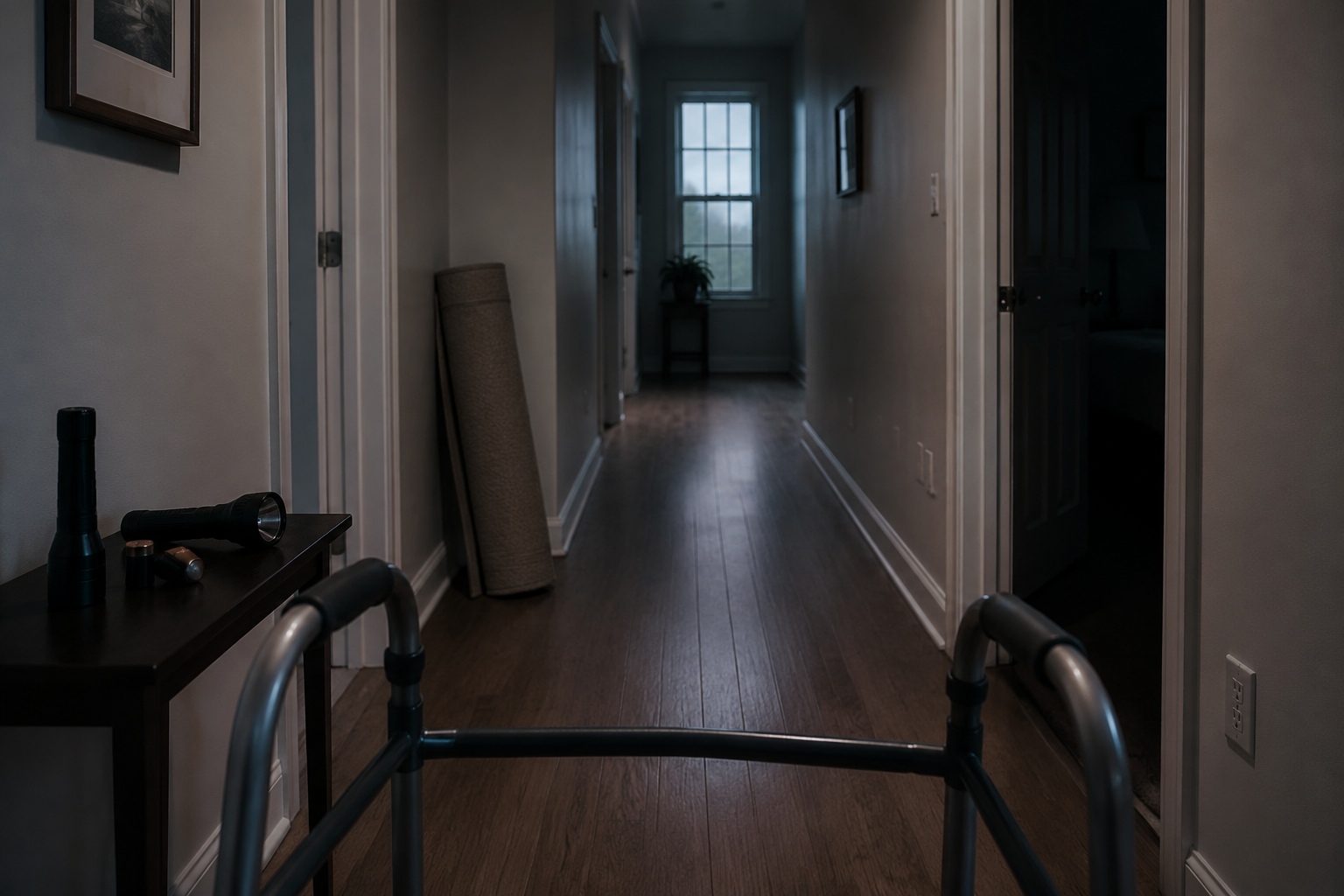
Use this as a working route through the home. Start where your parent sleeps, follow the path to the bathroom, then to the kitchen, the main sitting area, the shelter area, and the exit. If something is loose, dark, slippery, hard to reach, or in the way, fix that before you add another item to the emergency kit.
| When | Fall-proofing priority | Do first |
|---|---|---|
| Before the storm | Reduce the number of things your parent can trip on, reach for, or search for in poor lighting. | Clear paths, secure rugs and cords, stage lights, footwear, mobility aids, medications, and documents. |
| During the storm | Keep movement limited, lit, and predictable. | Stay in the clear shelter zone, use mobility aids, keep communication available, and maintain medication timing. |
| After the storm | Do not let cleanup become the fall hazard. | Inspect before walking, avoid wet debris and downed lines, check heat or cold stress, and confirm medication access. |
Before The Storm: Clear The Routes Your Parent Will Actually Use
Before the wind or rain arrives, do not start in the garage with the supplies bin. Start with your parent’s feet. Stand where they stand up from bed or a favorite chair. Look at the next few steps they would take if the power failed at 2 a.m.
Older adults using mobility aids may need extra attention here. In a national study of 2,256 adults ages 50 to 80, those using assistive devices were significantly less confident about handling power outages and severe weather than those not using them; the study did not include adults over 80, so it may not capture the full vulnerability of the oldest adults.[2]
Clear A Walking Path From Bed To Bathroom To Shelter
The safest storm path is not the shortest path on paper. It is the path your parent can follow while tired, worried, and using a cane or walker in dim light.
- Remove throw rugs from the bedroom, hallway, bathroom entrance, kitchen, and shelter area. If a rug must stay, secure it flat with non-slip backing or tape made for flooring.
- Move electrical cords, oxygen tubing, phone chargers, pet bowls, baskets, shoes, and small tables out of the main walking route.
- Open doors fully and check whether a walker can pass without catching on a hamper, plant stand, doorstop, or narrow rug edge.
- Place a stable chair with arms near the shelter area if your parent cannot stand for long. Avoid rolling chairs.
- Keep the bathroom route especially plain: non-slip mat secured flat, night-light or battery light in place, toilet paper within reach, no loose scale or laundry basket on the floor.
If your parent dislikes having things moved, make it a storm reset rather than a permanent judgment on the house. “Let’s roll this rug up until the storm passes” often lands better than “This rug is dangerous.” The floor still gets cleared.
Put Light Where Hands And Feet Need It
A flashlight in the junk drawer is not storm lighting. If your parent has to cross a dark room to find it, it is not part of the fall-prevention plan.
- Place flashlights or battery lanterns within reach of the bed, favorite chair, bathroom entrance, kitchen counter, shelter area, and exit.
- Use lights that can stand on a table or clip to a walker rather than requiring your parent to hold a flashlight while using both hands for balance.
- Test every light before the storm. Replace weak batteries now, not after the first outage.
- Keep charging cords off the floor. Tape them along a wall or move the charging station to a side table.
- If your parent uses night-lights, add battery backup lights where the plug-in versions will fail during an outage.
For a deeper blackout-specific setup, use the Power Outage Fall Prevention Checklist for Seniors alongside this storm pass. The point is not to own more lights. It is to remove the moment when your parent reaches, turns, and guesses.
Stage Mobility Aids Before They Are Needed
A cane leaning in the bedroom does not help if your parent shelters in the interior hallway. A walker parked by the front door does not help if they need the bathroom during a tornado warning. Put the aid where the next movement will happen.
- Place the walker, cane, rollator, or wheelchair in the route to the shelter area, not behind furniture.
- Check rubber tips, brakes, wheels, and grips. A worn cane tip on a wet porch or tile floor is not a small detail.
- Move a second cane or backup device near the bed or bathroom if one is available.
- Keep eyeglasses, hearing aids, dentures, and assistive items in one reachable place, because searching for them in low light creates its own fall risk.
The Red Cross specifically recommends that older adults prepare extra assistive items, including canes and eyeglasses, as part of emergency readiness.[3] In the home, that means those items should be reachable from the places your parent will actually sit, sleep, and shelter.
Create One Clear-Floor Shelter Zone
The shelter area should not become a pile of helpful supplies. If your parent needs to stand, turn, sit, or move a walker, the floor must stay open.
- Choose the safest available interior space for the expected hazard, then clear the floor wide enough for the mobility aid your parent uses.
- Place water, snacks, medications, a charged phone, a battery light, glasses, hearing-aid supplies, and a blanket on a table or shelf, not scattered on the floor.
- Add a stable chair with arms if your parent cannot sit safely on the floor.
- Keep pets contained or separated if they tend to weave around feet during noise and stress.
- Leave the exit route from the shelter zone visible and free of bins, bags, and extension cords.
If you are buying or replacing grab bars, non-slip mats, or emergency lighting, the home safety products guide can help you choose items that fit the home instead of adding more clutter.
Prepare The Exit Without Turning It Into A Storage Area
If evacuation becomes necessary, your parent should not have to step over the very supplies packed for evacuation.
- Clear the route from the main sitting area and bedroom to the door most likely to be used.
- Move shoes, umbrellas, packages, recycling, and plant pots away from the threshold.
- Place a go-bag on a chair, bench, or hook near the exit so it does not sit on the walking path.
- Check whether the walker or wheelchair can cross the threshold without catching.
- Keep keys, wallet, ID, insurance cards, and emergency contacts in a waterproof pouch that can be grabbed without searching.
The Red Cross recommends that older adults keep medical and emergency documentation portable and prepare a 30-day supply of medications when possible.[3] If your parent’s medications, devices, or conditions require more detailed planning, use a separate medical-needs plan rather than trying to solve it in the hallway at the last minute; the severe weather guide for elderly adults with medical needs goes deeper on that side of preparation.
Adjust For The Storm You Actually Face
The same fall-proofing route works across regions, but the last few details change with the hazard.
| If the threat is | Add this fall-prevention step |
|---|---|
| Winter storm or ice | Place non-slip footwear and ice grips near the exit, but do not encourage outdoor walking unless it is necessary and safe. |
| Heavy rain, hurricane, or flooding | Put towels and absorbent mats where water may be tracked in, and keep your parent away from wet entryways and flooded floors. |
| High wind | Move patio furniture, planters, and loose outdoor items before they become debris across steps or walkways. |
| Wildfire smoke with storm disruption | Limit unnecessary movement outdoors and use the air-quality fall-safety guidance if visibility, breathing, or fatigue may affect balance. |
For wildfire-smoke situations, see Protect Seniors from Falls When Air Quality Alerts Arrive. Poor air, fatigue, and hurried indoor-outdoor trips can change balance even when the floor itself has not changed.
During The Storm: Keep Movement Small, Lit, And Planned
Once the storm is underway, this is not the time to reorganize the house. The goal is to keep your parent in the safest cleared area and reduce unnecessary trips.
- Keep your parent in the clear-floor shelter zone or the safest available room for the current warning.
- Turn on the staged battery light before the room is fully dark, so they are not walking while adjusting to darkness.
- Have them use the cane, walker, rollator, or wheelchair even for short indoor trips. Tight spaces are not a reason to abandon the aid.
- Keep a charged phone, backup battery, or working landline within reach, not across the room.
- Maintain medication timing as closely as possible and write down missed or delayed doses for follow-up with a clinician or pharmacist.
- Avoid candles. Open flame adds a new hazard to a room where someone may already be moving slowly or reaching for support.
Power loss deserves special attention. In the same national study of adults ages 50 to 80, only 25% of those using electricity-dependent medical equipment reported having an alternative power source.[2] That figure is about equipment power, not fall prevention by itself, but it shows why an outage can quickly turn a manageable routine into a risky one.
If your parent must move during the storm, slow the sequence down: light first, glasses on, mobility aid in hand, path checked, then stand. That order can feel fussy until someone is trying to turn a walker around a coffee table in the dark.
After The Storm: Do Not Let The First Walk Become The Injury
After the sirens stop or the rain eases, everyone wants to look outside. For an older adult with a walker or a past fall, that first trip can be the dangerous one: wet thresholds, branches across steps, buckled rugs, broken pavement, and no power in the hallway.
Disaster mortality data show why this cannot be treated as ordinary cleanup. In the 2021 Texas winter storm, adults 60 and older accounted for 60% of the 246 deaths, with many deaths linked to falls, hypothermia from inability to move, and inaccessible supplies; after Hurricane Katrina, people 75 and older were about 6% of New Orleans’ population but 50% of fatalities.[4] Those figures do not mean every storm has the same pattern, but they do show how age, mobility, temperature, and access problems can compound fast.
Inspect Before Your Parent Walks
If you are nearby, do the first inspection yourself. If you are calling from elsewhere, ask your parent to stay seated while someone trusted checks the route, or have them describe only what they can see from a safe spot.
- Check the bedroom-to-bathroom path for water, shifted rugs, fallen objects, and failed lighting.
- Look at the main exit from inside before opening the door. Branches, ice, mud, or pooled water can be right at the threshold.
- Treat any downed power line as dangerous. Keep your parent away from the area and wait for official guidance.
- Do not let your parent step into standing water, especially if the power has been out or electrical damage is possible.
- Check steps, ramps, railings, and porch boards before anyone leans weight on them.
A wet towel dropped in a doorway, a rug kicked up by a pet, or a branch across one step can be enough. Cleanup can wait until the walking route is safe.
Watch Heat, Cold, And Fatigue As Fall Risks
No heat, no air conditioning, and poor sleep do not look like fall hazards at first. They become fall hazards when your parent stands too quickly, rushes to find supplies, or grows weak walking to the bathroom.
- Keep needed items close enough that your parent does not make repeated trips across the home.
- Encourage sitting for tasks that can be done seated, such as sorting medications, changing batteries, or making calls.
- Use blankets, cooling strategies, or relocation plans according to the actual condition in the home.
- Treat dizziness, confusion, unusual weakness, or shortness of breath as a reason to seek medical guidance, not as normal storm stress.
Generators add another post-storm danger. Keep generators outdoors and away from living areas according to local safety guidance, and do not route cords through walking paths. A cord that restores power to a lamp can still trip someone crossing the room.
Check Medication Access Before The Supply Runs Out
Medication problems after a storm often show up after the obvious danger has passed: the pharmacy is closed, the refrigerator was off, transportation is blocked, or the pill organizer no longer matches the schedule.
- Confirm which medications were taken, missed, delayed, or possibly spoiled.
- For refrigerated medications such as insulin, ask a pharmacist or clinician whether the medication is still usable after the outage.
- Call the pharmacy early if refills may be delayed by road closures, power loss, or delivery disruption.
- Keep the waterproof pouch with medication lists, prescriber names, pharmacy details, insurance information, and emergency contacts within reach until normal access returns.
- If your parent depends on powered medical equipment, oxygen, dialysis transport, or condition-specific evacuation planning, use the medical-needs guide and contact the appropriate healthcare team rather than improvising.
The house can look almost normal and still be a different house for an older adult after severe weather. Walk the route again before bedtime: bed to bathroom, chair to kitchen, shelter area to exit. Put the lights back within reach. Move the cords back to the wall. Keep the walker where the next trip begins. Storm safety for seniors becomes practical when it is a fall-prevention pass through the home before, during, and after the conditions change.
References
- Facts About Falls, CDC, Jan 2026.
- Disaster Preparedness and Response: The Special Needs of Older Americans, Disaster Medicine and Public Health Preparedness, 2020.
- Older Adults, American Red Cross.
- Disaster Resilience Tool Kit, AARP, 2022.
Related reading
Noticed something outdated or inaccurate on this page? Flag a correction. We review every report against CDC, NIA, and AARP HomeFit guidance before updating a page.
Part of the Fall Prevention section.