
How to Build a Fall Prevention Action Plan Using the CDC STEADI Framework
Learn how to create a comprehensive fall prevention action plan for an older adult by following the CDC's STEADI model — screen for risk, assess contributing factors, and intervene with evidence-based strategies beyond simple checklists.
After a parent falls, most families do the visible work first. They pick up the rug, move the lamp cord, order a shower chair, and walk through the house with a sharper eye than they had the day before. That work matters. A loose mat can be the thing that sends someone down. But a fall prevention plan built only around the house can miss the reason the fall happened.
More than 1 in 4 older adults falls each year, and fewer than half tell their doctor about it.[1] That second number is the quieter problem. A fall gets treated as a private household incident when it should start a coordinated conversation: what happened, what changed, what needs to be assessed, and who is going to follow through.
Falls are serious enough to deserve that structure. Among adults 65 and older, falls caused more than 38,000 deaths in 2021 and are the leading cause of injury death.[2] The point is not to frighten a family into buying every safety device in reach. It is to keep the first anxious weekend from becoming the whole plan.
If the fall just happened and there may be injury, confusion, new weakness, head impact, or worsening pain, the first step is medical attention, not home editing. For the immediate aftermath, the first 24 hours after an elderly parent falls is a better place to start. Once urgent concerns are handled, the work shifts from response to prevention.
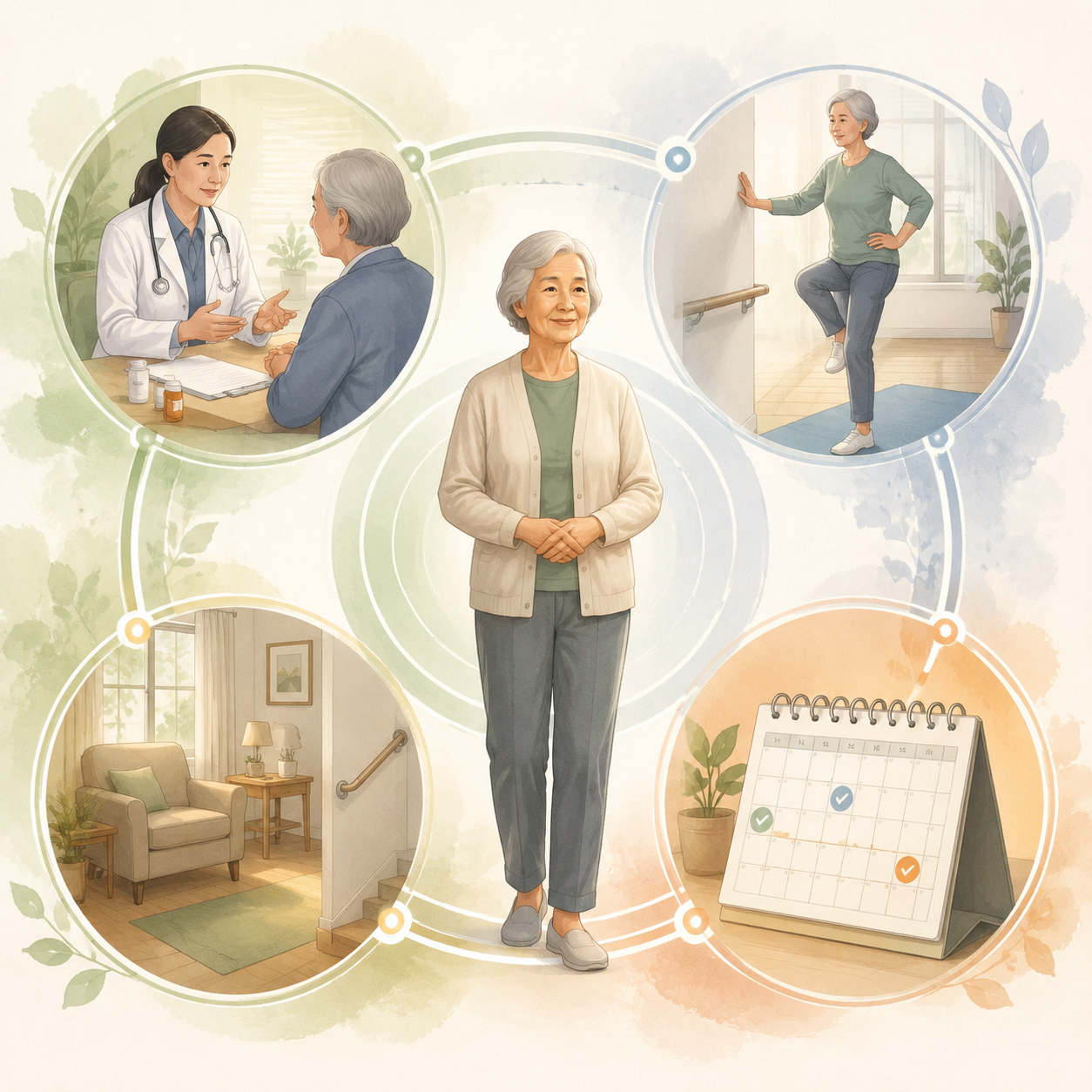
Use STEADI as the Spine of the Plan
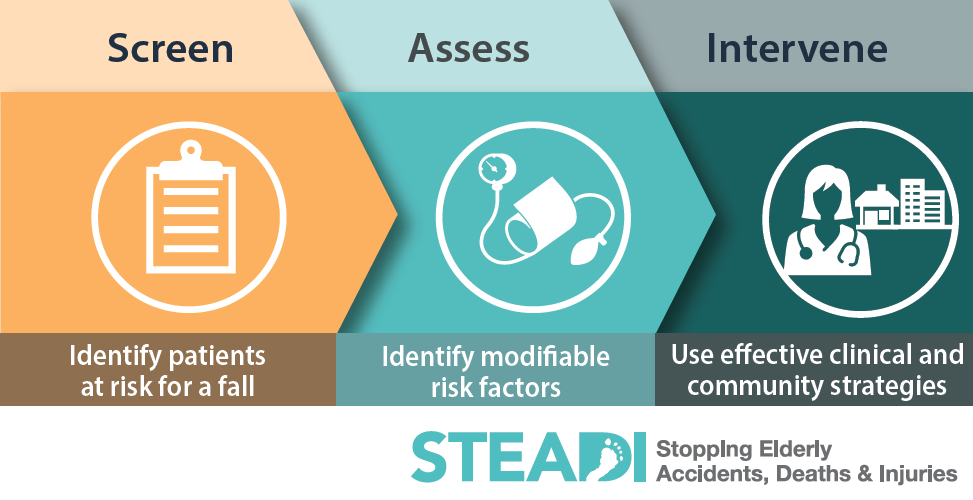
The CDC’s STEADI initiative, short for Stopping Elderly Accidents, Deaths & Injuries, organizes fall prevention into three actions: Screen, Assess, and Intervene.[3] In a clinic, that framework helps healthcare professionals identify fall risk and respond. At home, it gives caregivers a disciplined way to prepare for the clinical conversation without pretending to be the clinician.
| STEADI step | What the family can do | What belongs with healthcare providers |
|---|---|---|
| Screen | Document recent falls, near-falls, unsteadiness, fear of falling, and changes in daily activity. | Use or review validated screening questions and decide whether the older adult is at increased risk. |
| Assess | Bring medication lists, symptom notes, blood pressure concerns, vision or hearing changes, and mobility observations. | Evaluate medications, gait, balance, vision, hearing, orthostatic hypotension, and other contributors. |
| Intervene | Support exercise participation, safer routines, home changes, appointments, and follow-up. | Recommend or prescribe appropriate interventions, adjust medication plans when needed, and monitor progress. |
That division matters. A daughter can notice that her father grips the counter every morning after standing up. A son can see that his mother stopped walking to the mailbox. A spouse can report two near-falls in the bathroom that never made it into the medical record. Those observations are valuable, but they are not the same as diagnosing the cause or changing medications. A workable fall prevention plan keeps both truths in view.
Screen: Turn Worry Into Something the Doctor Can Use
Screening starts with a simple change in posture: stop asking only, “Is the house safe?” and start asking, “What evidence do we have that fall risk has changed?” The answer may come from a fall, but it may also come from wobbling while turning, using furniture for support, avoiding stairs, or becoming newly afraid of walking outside.
The CDC’s STEADI patient and caregiver resources include Stay Independent-style questions that help older adults and families identify fall risk factors such as previous falls, unsteadiness, worry about falling, and difficulty with mobility-related tasks.[4] Families can use those questions as preparation for an appointment. They should not use them as a private verdict.
A useful screening note is plain and dated. It says what happened, where it happened, what the older adult was doing, whether there was dizziness, whether they had just stood up, whether footwear or lighting played a role, whether a new medication had recently started, and whether there were injuries. Near-falls belong in the same note. So do changes in confidence, because fear can quietly shrink a person’s world before the next fall occurs.
For families who need a more concrete format, a fall prevention handout for seniors can help gather the first layer of information. If the fall was recent, a 72-hour prevention plan can keep the family from losing track of what has already been noticed and what still needs follow-up.
What to bring to the appointment
- A dated list of falls and near-falls, including what happened immediately before each event.
- A complete medication list, including prescriptions, over-the-counter medicines, sleep aids, supplements, and medications taken only as needed.
- Notes about dizziness, lightheadedness, faintness, new confusion, weakness, vision changes, hearing changes, foot pain, or changes in walking.
- Specific examples of avoided activities, such as stairs, bathing alone, walking outdoors, shopping, or getting up at night.
- The older adult’s own account of what they think happened and what they are worried about now.
That last item is not politeness. It changes the quality of the plan. An older adult who feels managed around may underreport symptoms, reject exercise, or quietly undo home changes that make the house feel less like theirs. Screening should make the concern visible without turning the person into a project.
Assess: Look for the Risks a Walkthrough Cannot See
Assessment is where fall prevention in older adults often gets too thin. The family has momentum after a fall, so the house receives attention. Meanwhile, the medication list sits on the counter, the dizziness on standing gets called “just getting older,” and no one asks whether vision, hearing, blood pressure changes, strength, or balance need a closer look.
Medication review deserves a central place in the appointment. Taking 4 or more medications significantly increases fall risk, and benzodiazepines are associated with a 44% increase in hip fracture risk.[5] That does not mean a family should stop a medication on its own. It means the prescriber or pharmacist needs a complete list and a clear reason to review it: a fall, near-fall, new unsteadiness, or new fear of moving around.
The medication conversation should include sleep medicines, anxiety medicines, antidepressants, blood pressure medications, pain medicines, antihistamines, and anything taken “only once in a while.” Those occasional pills are easy to leave out because they do not feel like part of the regular regimen. They can still matter, especially if they are taken at night, before bathing, before stairs, or before a long walk from bedroom to bathroom.
Orthostatic hypotension also belongs in the assessment conversation. Families often describe the clue before they know the term: “She gets dizzy when she stands,” “He has to pause before walking,” or “The fall happened right after getting out of bed.” A clinician can decide how to evaluate blood pressure changes from lying or sitting to standing and what else might be contributing.
Vision and hearing are not side issues. Poor contrast, depth perception problems, outdated glasses, and missed auditory cues can all change how safely someone moves through a familiar place. A parent may know every hallway in the house and still misjudge a curb, miss a pet underfoot, or fail to hear someone approaching from behind. Assessment should include whether eye and hearing care are current and whether changes have appeared since the last check.
Gait and balance assessment turns vague descriptions into something more useful. “Unsteady” can mean foot pain, leg weakness, neuropathy, poor footwear, fear, medication effects, low blood pressure, or a new neurological concern. The family’s job is to report what they see: shuffling, reaching for walls, trouble turning, difficulty rising from a chair, drifting to one side, or slowing down so much that normal errands become exhausting.
A good assessment does not always produce one neat cause. It may show several modest risks stacked together: a sedating medication, weaker legs after an illness, dim hallway lighting, rushed nighttime bathroom trips, and a parent who has stopped walking because they are afraid. That is exactly why STEADI is useful. It keeps the plan from chasing one obvious hazard while ignoring the rest.
Intervene: Combine Exercise, Home Changes, Medication Review, and Follow-Up
Intervention is where the family wants certainty, and the evidence is stronger in some places than in others. The U.S. Preventive Services Task Force recommends exercise interventions to prevent falls in community-dwelling adults 65 or older who are at increased risk, giving that recommendation a Grade B. It recommends that clinicians selectively offer multifactorial interventions, with a Grade C, because the net benefit is smaller and depends on the person’s circumstances.[6]
In practical terms, exercise should not be the optional nice-to-have after the house is fixed. Balance, strength, and gait work are often the part that changes the person’s capacity, not just the environment around them. The right program depends on health status, mobility level, access, transportation, motivation, and clinician guidance. Some families will need a referral to physical therapy; others may use community-based fall prevention classes or structured home exercise with professional input.
Families comparing program options can use an evidence-based fall prevention programs guide to understand the landscape without turning this decision into a research project. The better first question is usually not “Which named program is best?” It is “What level of supervision, balance challenge, and progression is safe for this person right now?”
Home modification still matters. The National Institute on Aging’s room-by-room guidance points families toward ordinary hazards: poor lighting, loose rugs, cluttered pathways, unsafe bathroom setups, unstable furniture, stairs without secure rails, and nighttime routes that are harder than they look in daylight.[7] Mayo Clinic’s fall prevention guidance also emphasizes practical home safety steps such as removing hazards, improving lighting, using assistive devices when appropriate, and wearing sensible shoes.[8]
The mistake is treating those changes as the whole answer. A grab bar can make bathing safer, but it will not correct dizziness after standing. Better lighting can reduce missteps, but it will not strengthen legs that have become deconditioned. A cleared hallway helps, but it will not resolve a medication combination that leaves someone sedated at 2 a.m.
Programs that address hazards in context can be more useful than a rushed family cleanup. The National Council on Aging notes that the Home Hazard Removal Program, or HARP, reduces both falls and home fall hazards.[9] That distinction is important: the goal is not a tidier house for its own sake, but fewer conditions that interact with an older adult’s actual mobility, routines, and risks.
For a focused home pass, a 30-minute family safety walkthrough can help families act without spending the whole weekend rearranging the house. Larger adaptations, especially when mobility is changing, may fit better with a broader plan for maintaining mobility at home.
Medication changes need ownership
Medication management is an intervention only when someone qualified owns the review. A caregiver can gather bottles, write down timing, ask whether a drug could increase dizziness or sedation, and request pharmacist or prescriber input. The caregiver should not quietly skip doses, halve tablets, or stop a medication because an article about falls made the risk sound obvious.
The same caution applies to supplements. Vitamin D is a common example. One clinical summary notes that 700 to 1000 IU per day may reduce falls by 19% after 2 to 5 months, but the USPSTF’s 2024 falls recommendation does not address vitamin D supplementation for fall prevention because that topic is under separate review.[5][6] A family can ask about vitamin D status and supplementation. It should not be presented as a stand-alone fall prevention fix.
Make the Plan Traceable
The plan has to survive ordinary life. After the first fall, relatives may be available, the house may be full, and everyone may agree that something must change. Three weeks later, the adult child is back at work, the parent is tired of being watched, and the medication question has disappeared into a portal message no one answered.
A traceable plan names the next action and the owner. It does not need to be elaborate. It needs to be clear enough that a busy family can see what is pending.
| Action | Owner | What completion looks like |
|---|---|---|
| Document falls, near-falls, and symptoms | Family caregiver or older adult | A dated note is ready for the clinician. |
| Schedule fall-risk discussion | Older adult, caregiver, or primary care office | Appointment or message specifically mentions fall risk, not just a general checkup. |
| Review medications | Prescriber or pharmacist | Medication list has been reviewed for fall-related risks and next steps are documented. |
| Assess gait, balance, blood pressure changes, vision, and hearing | Healthcare team | Needed exams, referrals, or follow-up tests are ordered or completed. |
| Start appropriate exercise or therapy | Clinician, physical therapist, community program, older adult | A realistic schedule exists and someone is tracking participation and tolerance. |
| Address home hazards | Family and older adult, with professional help when needed | Highest-risk routes and activities have been changed first. |
| Review progress | Older adult, caregiver, healthcare team | Falls, near-falls, confidence, and activity level are revisited. |
The follow-up column is the part families most often skip. Fall prevention is not finished when the grab bar is installed or the appointment is over. It is working only if the older adult is moving more safely, reporting fewer near-falls, tolerating the exercise plan, and not losing independence because everyone became afraid.
When Fear Starts Running the House
Fear after a fall is not overreacting. It can change how an older adult walks, where they go, and what they give up. A 2021 scoping review reported wide prevalence estimates for fear of falling, from 20% to 73%, reflecting differences in populations and methods rather than one simple rate for every older adult.[10]
The practical concern is whether fear is reducing activity. Less movement can mean less strength, less confidence, and more dependence. Families who want a deeper look at that pattern can read about how fear of falling leads to more falls. In the action plan, fear should be named without letting it become the final authority over every decision.
This is also where resistance can appear. A parent may refuse a cane because it feels like a public announcement. They may reject classes because they do not want to be grouped with people they see as frailer. They may quietly move the furniture back because the room no longer feels familiar. Those objections are not minor. A plan the older adult will not live with is not a plan for long.
When pushback becomes the barrier, the conversation may need to shift from safety instructions to dignity, control, and choice. The issue is covered more directly in why older adults avoid fall prevention programs. Here, the rule is simple enough: involve the older adult in the tradeoffs early, especially when changes affect privacy, appearance, or daily routines.
A Practical Sequence for the Next Two Weeks
A family does not need to master every fall prevention detail before acting. It needs a sequence that puts the right information in front of the right people.
- Write down what happened. Include the fall, near-falls, dizziness, recent illness, new weakness, changes in walking, and activities the older adult has started avoiding.
- Use CDC-style screening questions to organize the concern. Bring the answers to the appointment rather than relying on memory.
- Make the medical conversation explicit. Ask for fall risk assessment, medication review, and evaluation of blood pressure changes, gait, balance, vision, and hearing as appropriate.
- Fix the highest-risk home hazards first. Prioritize routes used when tired, rushed, carrying something, bathing, or getting up at night.
- Ask what exercise, therapy, or balance program is appropriate now. Match the plan to current ability, not to what the parent could do five years ago.
- Assign follow-up. Decide who checks appointment results, who updates the medication list, who helps with exercise logistics, and when the family will review falls or near-falls again.
That sequence is not a substitute for clinical judgment. It is a way to stop losing important clues between the kitchen table, the bathroom doorway, the pharmacy bag, and the exam room. Fall prevention in older adults works best when the home, the body, the medication list, and the follow-up plan are handled together.
References
- About Older Adult Fall Prevention — CDC
- Facts About Falls — CDC
- STEADI — CDC
- Patient & Caregiver Resources | STEADI — CDC
- Falls and Fall Prevention in Older Adults — StatPearls/NCBI
- USPSTF Recommendation: Falls Prevention — U.S. Preventive Services Task Force, June 2024
- Preventing Falls at Home: Room by Room — NIA/NIH
- Fall Prevention: Simple Tips — Mayo Clinic
- Get the Facts on Falls Prevention — NCOA
- Fear of Falling Scoping Review — MacKay et al., PMC
Related reading
Noticed something outdated or inaccurate on this page? Flag a correction. We review every report against CDC, NIA, and AARP HomeFit guidance before updating a page.
Part of the Fall Prevention section.