
What Symptoms Seniors Should Watch for After the Texas Egg Recall
If your elderly parent may have consumed recalled Texas eggs, learn which Salmonella symptoms to monitor and why rapid fluid loss from infection can create a hidden, preventable fall risk.
Start with the carton, not the headlines. The Texas egg recall that matters here involved Kenz Henz of Santa Fe, Texas, and Black Sheep Egg Company eggs recalled in October 2025 after FDA testing found Salmonella contamination. The FDA notice named eggs with UPC 86949400030 and best-by dates 10/11 through 10/14 and 10/16 through 10/17; reported Texas-area retailers included H-E-B, Kroger, Food King, and Arlan's Market in the Houston area.[1]
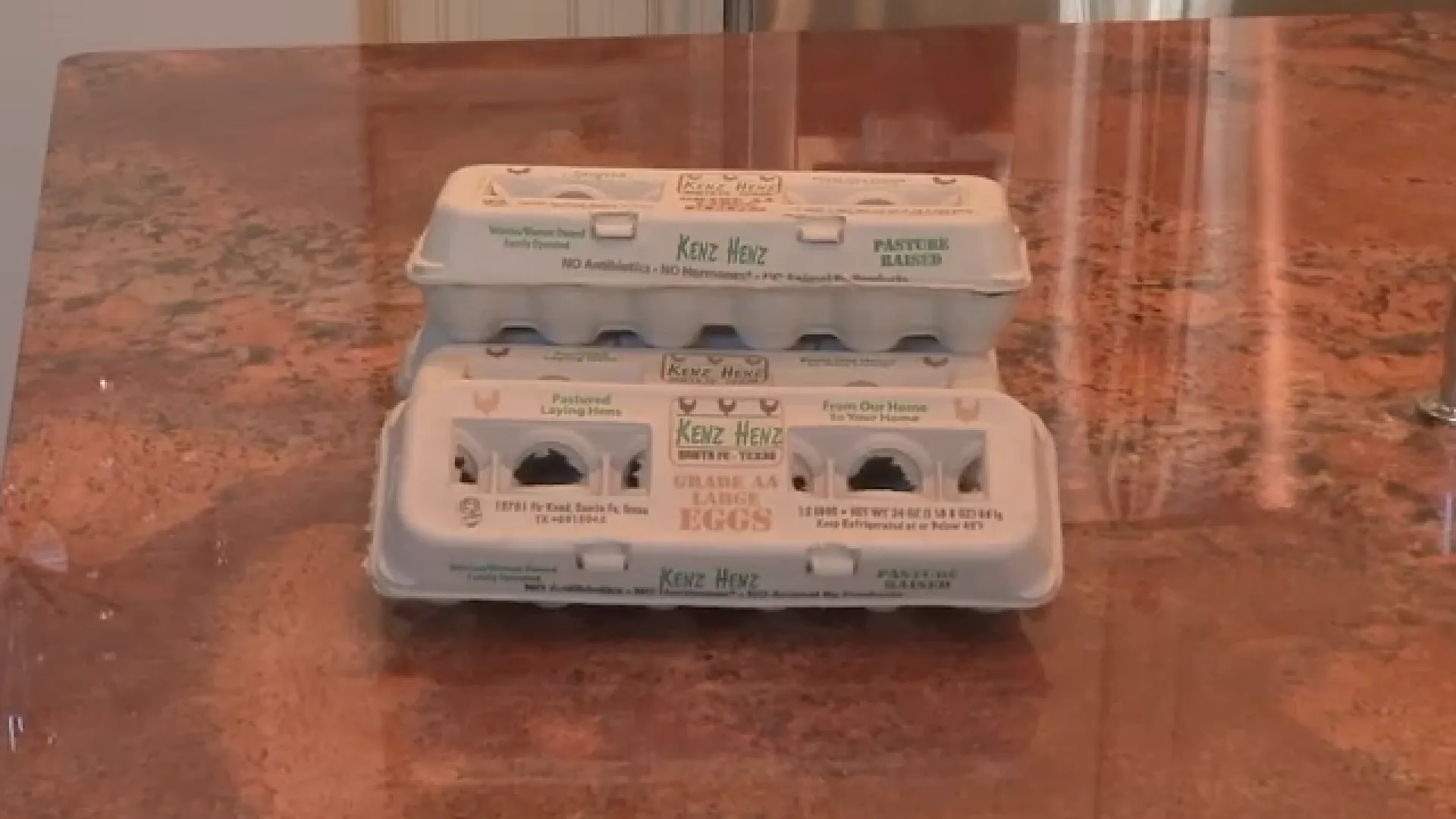
There is an important 2026 caveat. As of July 24, 2026, those recalled October 2025 eggs should be well past normal shelf life, and no newer 2026 Texas egg recall appeared in FDA or Texas DSHS recall materials. If you are looking at a current carton in a parent's refrigerator, check the Texas DSHS food alerts page or FDA updates rather than assuming an old recall still applies.[2]
Also keep the evidence straight: the FDA notice for the Kenz Henz recall said there were no confirmed illnesses reported at that time.[1] That does not make Salmonella harmless for older adults. It means the product details and the senior health risk have to be handled as two separate facts.
If the Eggs May Have Been Eaten, Mark the Clock
For Salmonella, the symptom window is usually 6 hours to 6 days after exposure.[3] That window is one of the most useful things a caregiver can write down, because it turns a vague worry into a watch period: when the eggs were eaten, when symptoms started, and whether the older adult is getting steadier or weaker.
| Household question | Why it matters |
|---|---|
| Were recalled eggs actually in the home? | A carton match changes the concern from general food-safety anxiety to a specific exposure question. |
| Were any eggs eaten, and on what day? | The 6-hour to 6-day window helps you decide when to watch most closely. |
| Is there diarrhea, fever, or stomach cramping? | These are classic Salmonella symptoms. |
| Is there sudden weakness, confusion, dizziness, or new unsteadiness? | In an older adult, these can be the signs that make an illness dangerous at home. |
| Is the bathroom path safe tonight? | Diarrhea and urgency can turn a manageable infection into a fall risk. |
The usual Salmonella pattern is diarrhea, fever, and stomach cramps. Nausea, vomiting, chills, headache, and blood in the stool can also occur.[3] Many people recover without antibiotics, but that ordinary-sounding sentence can be misleading when the person is 78, lives alone, takes a diuretic, and already has trouble getting to the bathroom at night.
The Symptoms Seniors Need Someone to Notice
The symptoms to watch for after possible exposure to recalled Texas eggs are not exotic: diarrhea, fever, abdominal cramps, vomiting, and signs of dehydration. What changes with age is the margin for error. CDC lists adults 65 and older among the groups more likely to get food poisoning and to have a more serious illness.[4] FoodSafety.gov gives the same practical warning for older adults, noting that aging can weaken immune response and that chronic conditions can increase vulnerability.[5]
One severity number is worth knowing, but it has to be used honestly. In a different 2025 egg-linked Salmonella outbreak, CDC reported that nearly 50% of adults 65 and older with lab-confirmed Salmonella were hospitalized.[6] That figure is not evidence that the Texas Kenz Henz recall caused hospitalizations. It is severity context: when Salmonella does reach an older adult, the consequences can be much bigger than a bad day in the bathroom.
Older adults can run into trouble faster for boring physiological reasons. They generally have less body water reserve than younger adults, thirst may not kick in as strongly, immune defenses may be less robust, stomach acid may be reduced, and chronic conditions can make recovery less forgiving.[4][5] Kidney disease, diabetes, immunosuppressing conditions or medicines, and medications that affect fluid balance can all make a stomach infection harder to ride out at home.
The warning signs I would not brush off in a senior are diarrhea that continues or is severe, fever with weakness, repeated vomiting, blood in the stool, dizziness on standing, a dry mouth, very little urination, or a sudden change in alertness. Mayo Clinic lists dehydration among Salmonella complications and advises medical care for severe symptoms, symptoms lasting more than a few days, high fever, bloody stools, or signs of dehydration.[3]
Confusion and sudden weakness deserve special attention. They are not proof of Salmonella, and they are not specific to this recall. But in an older adult, a sudden change in thinking, strength, or steadiness can be the first sign that an infection, dehydration, medication problem, or another acute issue is becoming unsafe. If a parent says, "I'm just tired," listen for the details: Can they stand up normally? Are they making sense? Did they get to the bathroom without holding the wall? Have they had diarrhea but did not think to mention it?
A Simple Watch List for the First Few Days
- Stool: new diarrhea, worsening diarrhea, blood, or diarrhea that is not letting up.
- Temperature: fever, chills, or feeling unusually hot or cold.
- Fluid status: dry mouth, dizziness, very dark urine, less urination, or inability to keep fluids down.
- Strength: new trouble standing, walking, transferring, or getting to the bathroom.
- Thinking: new confusion, unusual sleepiness, agitation, or not acting like themselves.
For a parent who lives alone, do not rely only on "Call me if you feel worse." A person with diarrhea may be embarrassed, may minimize it, or may not connect it to eggs from several days earlier. A short check-in works better when it asks concrete questions: How many times did you go to the bathroom? What did you drink since breakfast? Are you dizzy when you stand? Did you need to grab furniture to walk?
The Hidden Fall Risk Starts With Fluid Loss
Most recall coverage stops at throwing away the eggs. In a senior's home, the risk does not end at the trash can. If the eggs were already eaten and Salmonella symptoms start, the next problem may be dehydration. Diarrhea and vomiting remove fluid; fever can add more fluid loss; poor appetite and fatigue can reduce intake. Then the person stands up to hurry to the bathroom.
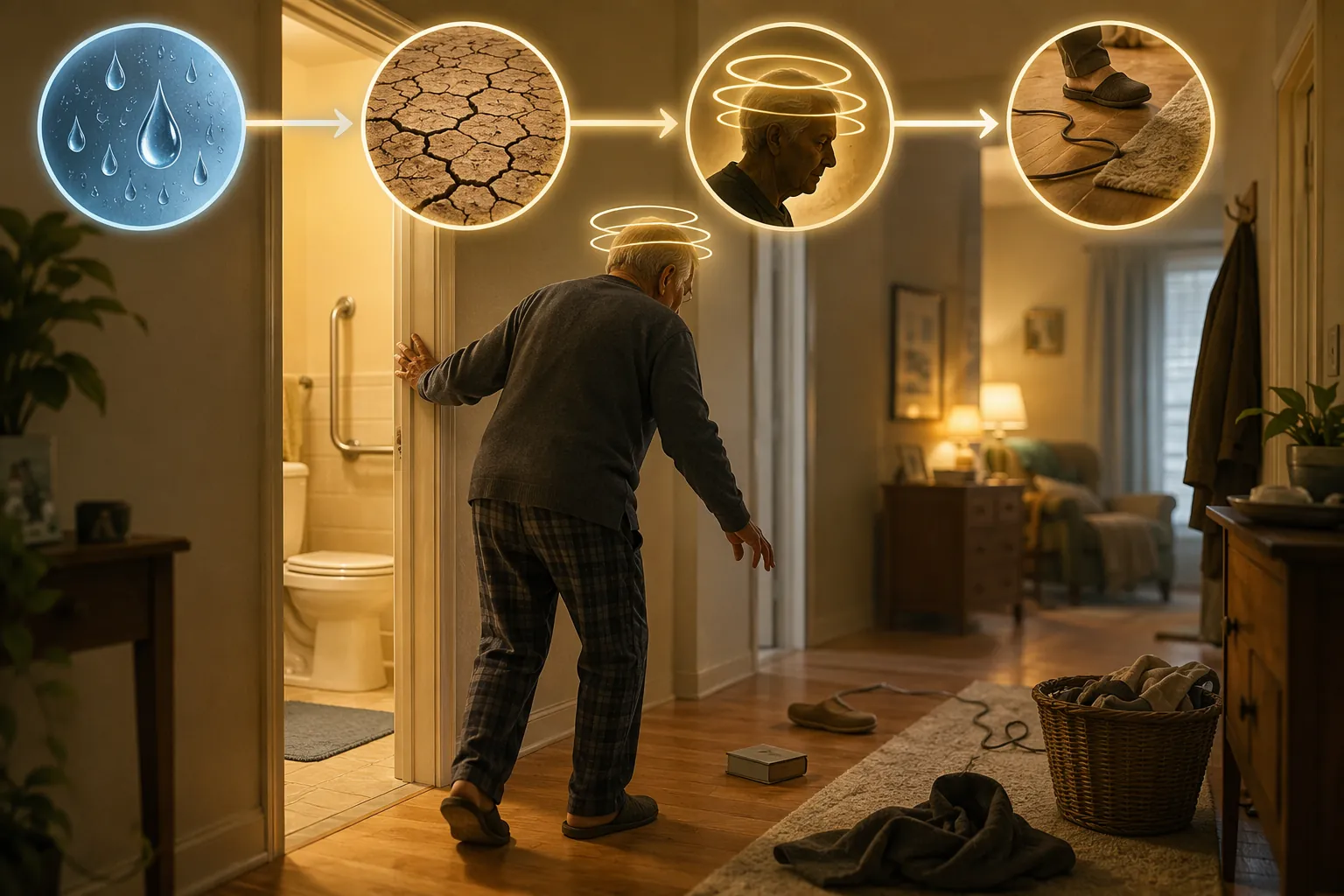
That is the pathway worth slowing down for: infection can cause fluid loss; fluid loss can become dehydration; dehydration can contribute to dizziness, weakness, orthostatic instability, urgent bathroom trips, and unsafe walking. This article is not claiming that FDA or CDC traced Texas recall cases to falls. It is connecting a known foodborne-illness complication with a known geriatric fall-risk factor.
The fall-risk side is not just a hunch. In a 2020 Mayo Clinic Proceedings study, Hamrick and colleagues found dehydration was associated with falls in older adults, with an odds ratio of 1.13. The same study reported that 37.9% of older adults in the sample were dehydrated at baseline, and loop diuretic use was associated with increased odds of falls or death, with an odds ratio of 1.26.[7] It was observational research, not a trial proving dehydration caused every fall, and the population may not perfectly represent every Texas household. Still, it supports taking dehydration seriously before a fall happens.
This matters because the first dangerous moment may not look dramatic. It may look like a parent shuffling faster than usual toward the bathroom, skipping the walker because the urge is sudden, standing up after several loose stools, or getting lightheaded in a hallway with poor lighting. The egg recall may have started the concern, but the bathroom trip is where the injury can happen.
If you want the broader planning version of this idea, the companion article Why Egg Recalls Deserve a Spot in Your Fall Prevention Plan covers how food recalls fit into a home fall-prevention routine.
What to Do at Home While You Are Watching
If recalled eggs may have been eaten, the home plan has two jobs: monitor for Salmonella symptoms and lower the chance that illness causes a fall. Neither job requires panic. Both require more than tossing the carton.
- Save the details: take a photo of the carton, UPC, best-by date, and where it was purchased before disposing of recalled eggs.
- Write down exposure dates: note the last day eggs were eaten and watch most closely for symptoms during the 6-hour to 6-day window.
- Check fluids plainly: ask what they drank, whether they kept it down, and when they last urinated.
- Make the bathroom route boringly safe: lights on, floor clear, footwear secure, walker within reach, phone nearby.
- Increase check-ins during active diarrhea: a morning call is not enough if symptoms are happening through the day or overnight.
Do not make a sick older adult prove they are safe by walking farther than necessary. If there is diarrhea, weakness, or dizziness, move essentials closer: water, phone, medications, glasses, a clean change of clothing, and any mobility aid. If nighttime bathroom trips are already risky, consider whether someone should stay nearby until the illness clearly improves.
The same dehydration-to-dizziness pathway shows up in heat illness and fall prevention. If your parent is also dealing with Texas heat, the dehydration margin is even thinner; the site's guide to extreme heat safety tips to prevent senior falls is useful for that part of the problem.
When to Call a Clinician or 911
Call a clinician promptly if an older adult has possible Salmonella exposure plus ongoing diarrhea, fever, vomiting, blood in the stool, signs of dehydration, significant weakness, or symptoms that are not improving. Mayo Clinic specifically flags severe symptoms, high fever, bloody stools, signs of dehydration, and illness lasting more than a few days as reasons to seek medical care.[3]
Call 911 if there is severe confusion, fainting, chest pain, trouble breathing, signs of stroke, inability to stand or walk safely, a serious fall, or dehydration that looks urgent, such as extreme weakness, very little urination, or inability to keep fluids down. If you are debating whether a newly confused or suddenly weak older adult is safe alone, treat that as a safety problem now, not a scheduling problem for tomorrow.
If a fall has already happened, shift from recall monitoring to injury triage. Use your usual emergency plan, and if available, go directly to the site's post-fall decision tree rather than trying to solve the egg question first.
A Caregiver's End Point
For the October 2025 Texas recall, confirm whether the specific Kenz Henz or Black Sheep eggs were ever in the refrigerator, and remember that those products are now old enough that a current carton needs a current DSHS or FDA check. If exposure is plausible, mark the date, watch for diarrhea, fever, cramps, vomiting, dehydration, confusion, and sudden weakness, and make the walking route to the bathroom safer while symptoms are active. The preventable harm may be the infection getting worse, the fall that follows dehydration, or both.
References
- FDA Advises Consumers, Retailers and Distributors Not to Eat, Sell, or Serve Recalled Black Sheep Egg Company Eggs, FDA.
- Texas DSHS — Food Alerts and Recalls, Texas DSHS.
- Salmonella infection, Mayo Clinic.
- People at Increased Risk for Food Poisoning, CDC.
- People at Risk: Older Adults, FoodSafety.gov.
- CDC — Salmonella Outbreak Linked to Eggs (June 2025), CDC.
- Dehydration and Falls in Older Adults: A Nationwide Study, Mayo Clinic Proceedings, 2020.
Related reading
Noticed something outdated or inaccurate on this page? Flag a correction. We review every report against CDC, NIA, and AARP HomeFit guidance before updating a page.
Part of the Fall Prevention section.