
STEADI: intervene
A Tornado Safety Checklist Designed for Seniors
Generic tornado checklists miss the specific vulnerabilities older adults face—mobility limitations, medication dependence, and elevated fall risk. This guide provides a dual-path checklist covering pre-season preparation and what to do the moment a warning is issued.
Most tornado advice is written as if everyone in the house can hear the warning, see the hallway, stand up quickly, grab shoes, manage stairs, and reach a basement in a few minutes. That is not how many older adults live. A tornado safety checklist for seniors has to start with the walk from the bed, recliner, bathroom, or kitchen to the shelter—not with an ideal shelter that the person cannot actually reach.
The CDC’s tornado guidance points people toward a basement or an inside room without windows on the lowest floor, which is sound advice when the route is usable. The problem comes when “lowest floor” means a steep stairway, a tight turn with a walker, or a basement door that is blocked by laundry baskets and a loose rug at the top step.[1]
The senior-specific version needs two paths: what is fixed ahead of time, and what happens when the warning is issued. The most important work is done before the sky turns ugly. The most dangerous minutes are still the minutes after the alert, when someone may be moving in low light, under stress, with hearing aids out, glasses on the nightstand, or a cane across the room.
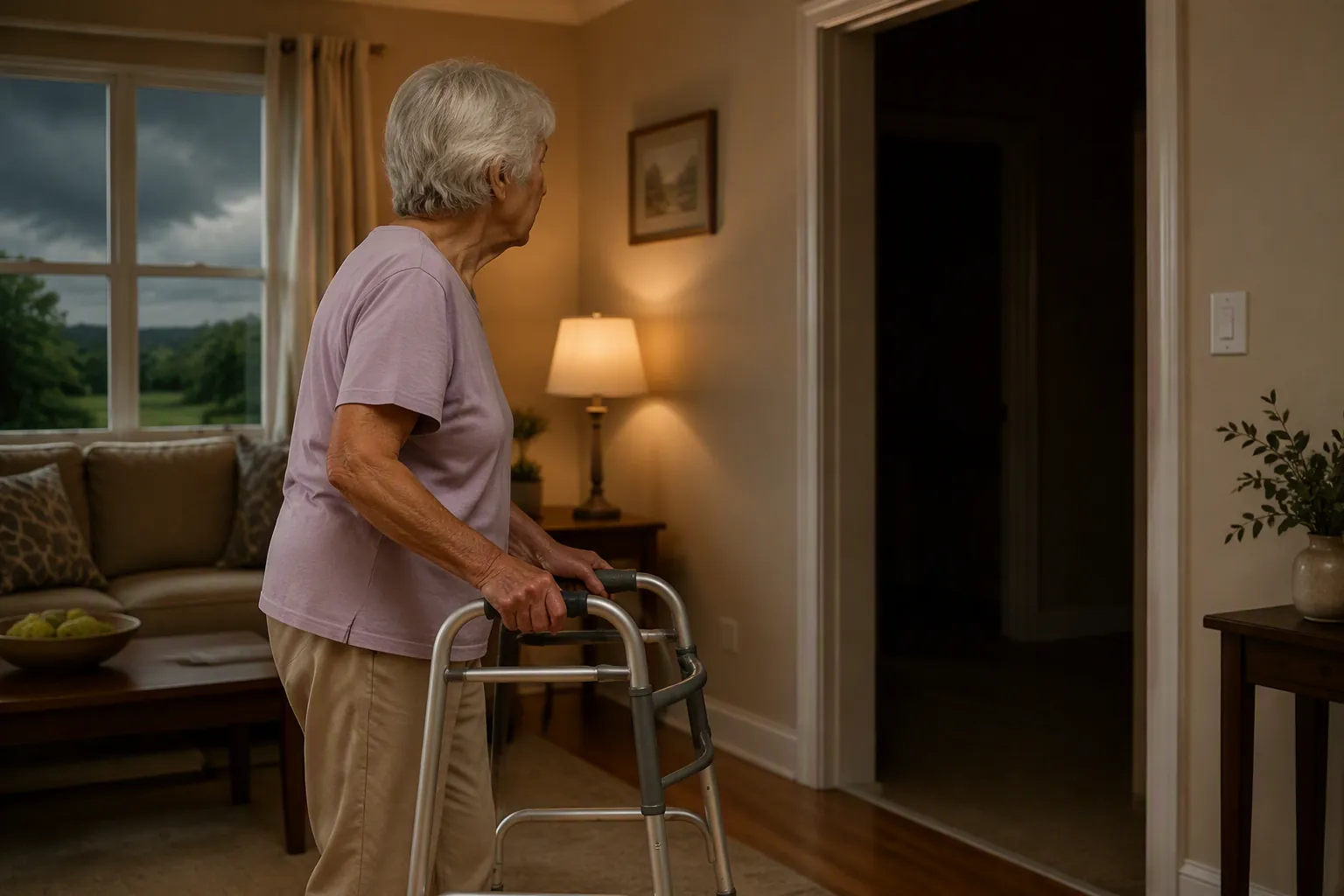
There is a reason this needs more than a generic checklist. United Spinal Association, citing the Partnership for Inclusive Disaster Strategies, states that people with disabilities are 2 to 4 times more likely to die or be injured in a disaster than people without disabilities.[2] That does not mean every older adult is disabled. It does mean that mobility, hearing, vision, medication dependence, and access to help are not side details in a tornado plan.
Fall risk belongs in the same conversation. The CDC reports that more than 1 in 4 older adults falls each year.[3] That statistic is not a tornado-evacuation statistic. It is still useful context for a warning at 2 a.m., when a person may be hurrying through a dark hallway, stepping over thresholds, or trying to descend stairs while frightened.
| Path | Main question | What it prevents |
|---|---|---|
| Plan ahead | Can the older adult reach a safer place with the supplies and help they need? | Last-minute stair decisions, missing medications, dead flashlight batteries, inaccessible shelter choices |
| Act now | What should happen in the first minutes after a tornado warning? | Rushing, falls, wasted time looking for items, moving toward an unreachable “best” shelter |
| After the storm | Can they stay put or move safely without stepping into new hazards? | Falls on debris, slick surfaces, poor lighting, downed lines, unnecessary wandering |
Plan ahead: choose the safest shelter the person can actually use
A basement may be the strongest option in many homes. It is not automatically the best plan for a senior who cannot descend stairs quickly or safely. For someone using a wheelchair, walker, cane, oxygen equipment, or poor night vision, the better plan may be an interior, windowless room on the lowest usable floor: a bathroom, hallway, closet, or small interior room that can be reached without a fall trap.
CDC guidance supports using a basement or inside room without windows on the lowest floor, while United Spinal Association specifically notes that a basement with steep stairs may be inaccessible and that a safe room or interior windowless room on the lowest floor may be safer for a wheelchair user.[1][2]
Do the shelter decision in daylight, when no one is scared and no siren is sounding. Walk the route at the person’s actual speed. If they use a walker, they use it during the test. If they need a handrail, glasses, hearing aids, or a light switched on, those needs become part of the plan.
- Pick one primary shelter location and one backup location. The backup matters if a door is blocked, a caregiver is not home, or the person starts from a different part of the house.
- Avoid a shelter route that depends on rushing down stairs. If stairs are unavoidable, decide who helps, where the person grips, and whether the timing is realistic.
- Clear the path now: remove loose rugs, cords, clutter, laundry baskets, pet beds, and furniture that narrows the route.
- Check thresholds. A small raised strip between rooms can stop a walker wheel or catch a slipper.
- Put a working light on the route. A plug-in night-light with battery backup is better than a flashlight no one can find.
- Make the shelter usable once the person arrives. Leave enough floor space for a walker, wheelchair, cane, oxygen tubing, caregiver, or pet carrier if needed.
If the senior lives in a mobile home
A mobile home needs a different level of planning. United Spinal Association reports that 43% of tornado deaths over the past 21 years occurred in mobile homes.[2] That is too large a share to treat “get to the hallway” as enough.
The safer shelter has to be identified before the warning: a nearby community storm shelter, a neighbor’s site-built home, a designated shelter at a senior community, or another accessible structure. The plan needs the same boring details that decide whether it works: who drives, how long it takes, whether the shelter is unlocked, whether a wheelchair can enter, and whether the older adult can get there before storms are close.
Be cautious with age-risk claims, but do not ignore the warning
Survive-A-Storm states that population-adjusted data show tornado fatality rates peaking among adults over 75, especially in July and August.[4] Because that claim is published by a storm-shelter company and the underlying study is not directly visible from the source, it should be treated as a caution flag rather than a number to build the whole plan around. The practical conclusion still holds: older adults should not be asked to improvise under a tornado warning.
Build the shelter-area kit around medications, mobility, and senses
The emergency kit for an older adult is not just bottled water and a radio. It should cover the things that make the person functional: medications, glasses, hearing aids, mobility aids, phone charging, and the ability to communicate if help is delayed.
The American Red Cross recommends that older adults keep at least a 30-day supply of medications and extra assistive items such as a cane or eyeglasses.[5] That recommendation is broader than tornado safety, but it applies cleanly here because tornadoes can cut power, block roads, damage pharmacies, or force someone to remain away from home.
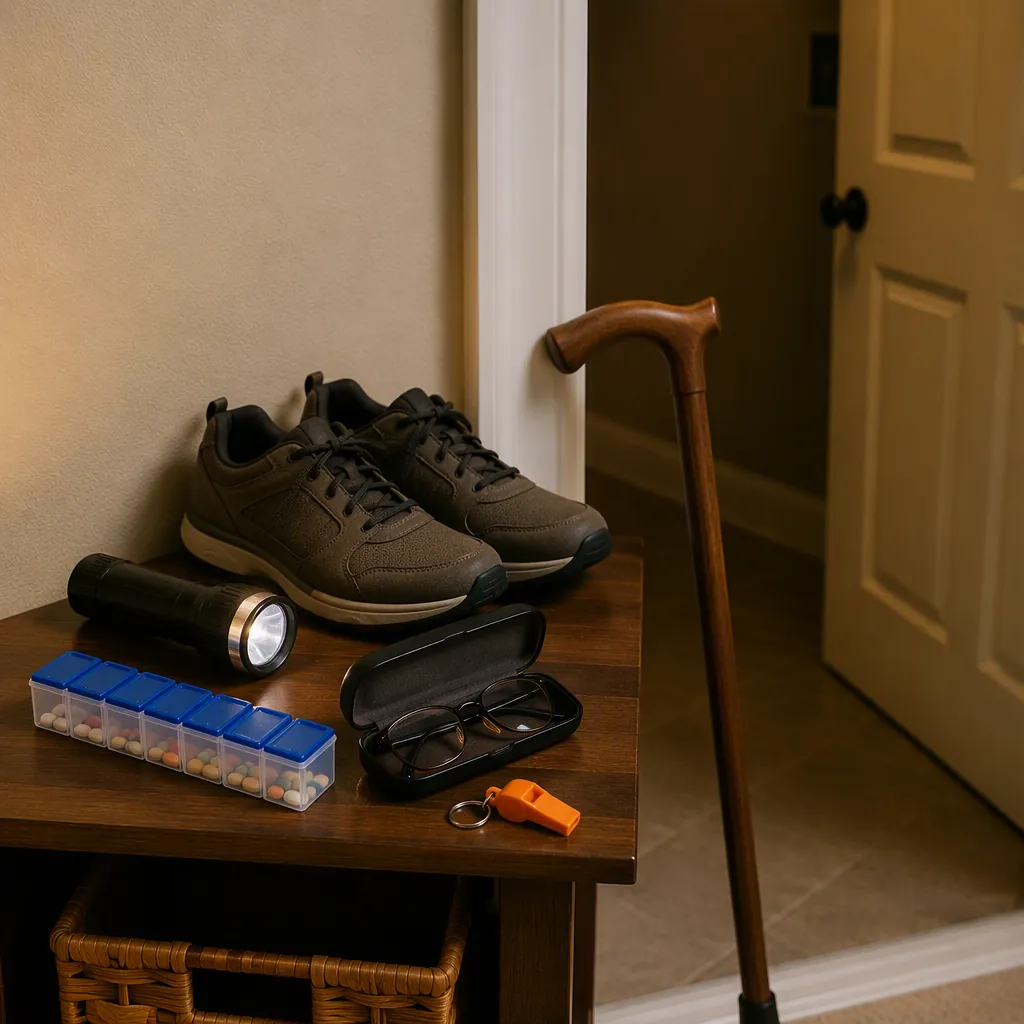
- Medication list: include drug names, doses, timing, allergies, prescribing doctors, pharmacy, and major diagnoses.
- Medication supply: keep the emergency supply current, not expired, and rotate it before it becomes forgotten shelf clutter.
- Glasses: keep a spare pair in or near the shelter area if possible. If there is only one pair, decide where it lives overnight.
- Hearing support: keep extra hearing-aid batteries or charging equipment where they can be reached. If the person removes hearing aids at night, do not assume they will hear an outdoor siren.
- Mobility support: keep the walker, cane, wheelchair, transfer belt, or rollator in the path—not across the room, not in the car, not behind a closed closet door.
- Footwear: place non-slip shoes or sturdy slippers beside the bed and near the usual evening chair. Bare feet and broken glass are a bad combination.
- Lighting: use a flashlight or lantern that is easy to turn on with stiff fingers. Check batteries at the start of tornado season.
- Communication: keep a charged phone, backup power bank, written contact list, and whistle in or near the shelter area.
- Comfort and medical extras: include incontinence supplies, oxygen-related backup planning, snacks appropriate for diabetes or other dietary needs, a small blanket, and copies of essential documents.
For a fuller supply list that covers longer outages, use How to Build a 72-Hour Senior Power Outage Safety Kit. The tornado kit should stay smaller and closer to the shelter path; the 72-hour kit can carry the broader power-outage load.
Set up alerts and check-ins before sirens are needed
Outdoor sirens are not a complete warning plan for a senior who may sleep without hearing aids, keep the television loud, have poor cell reception, or live alone. Ready.gov’s older-adult preparedness guidance emphasizes planning around individual needs and building a support network before emergencies happen.[6]
- Use more than one alert source: phone alerts, NOAA weather radio, local weather app, TV or radio, and a caregiver or neighbor notification.
- Test whether alerts are loud, visible, and understandable from the bedroom and the usual evening sitting area.
- For hearing loss, consider vibration, flashing-light alerts, or a caregiver call system rather than relying only on sound.
- For low vision, use large-print instructions and high-contrast labels on the shelter kit.
- Arrange a check-in chain: one person calls, one nearby person can knock, and one backup person knows what to do if there is no answer.
- Give trusted helpers the shelter location, door code or key plan if appropriate, medication list location, pet information, and emergency contacts.
The check-in should not begin after the siren if the safer shelter is somewhere else. For a mobile-home resident, a wheelchair user who needs help transferring, or someone with dementia, the call may need to happen when severe storms are forecast—not when the warning is already active.
The plan-ahead checklist
| Prepare before tornado season | Done? |
|---|---|
| Choose a primary accessible shelter: basement if safely reachable, otherwise an interior windowless room on the lowest usable floor. | |
| Choose a backup shelter for times when the person starts from the bedroom, bathroom, porch, kitchen, or garage. | |
| Walk the shelter route with the actual mobility aid and at the older adult’s real pace. | |
| Remove fall hazards from the route: rugs, cords, clutter, loose shoes, pet items, and furniture that narrows the path. | |
| Add lighting along the route and test it at night. | |
| Place sturdy shoes, glasses, hearing support, flashlight, phone charger, and mobility aid where they can be reached quickly. | |
| Prepare a small shelter kit with medication list, emergency contacts, water, whistle, backup batteries, power bank, and essential medical supplies. | |
| Maintain at least a 30-day medication supply when possible, following Red Cross older-adult preparedness guidance. | |
| Set up multiple alert methods that work for hearing, vision, and sleep patterns. | |
| Create a neighbor or caregiver check-in plan, including who acts if the person does not answer. | |
| For mobile homes, identify and practice getting to a safer shelter before storms are close. | |
| Review the plan at the start of tornado season and after any change in health, mobility, medication, or living arrangement. |
Act now: what to do when a tornado warning is issued
Once a warning is issued, the plan should get very plain. This is not the time to pack a bag, look for insurance papers, or argue about whether the basement is technically safer if the stairs are not manageable. Move to the safest accessible place and reduce fall risk on the way.
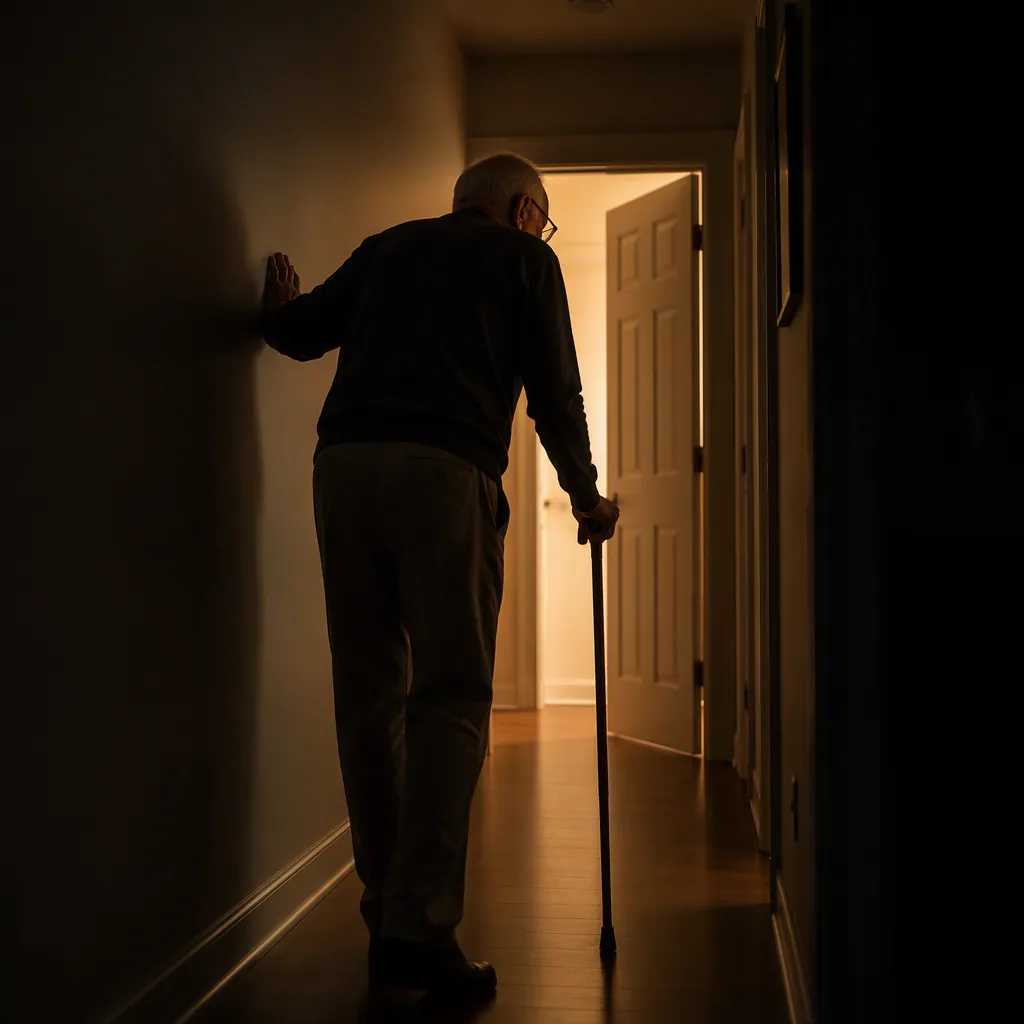
- Take the warning seriously and begin moving immediately. Do not wait to see the tornado.
- Turn on lights if it is safe to do so. If power is out, use the pre-positioned flashlight or lantern.
- Put on shoes and glasses if they are within reach. Do not cross the house looking for them if that delays shelter.
- Use the walker, cane, wheelchair, or other mobility aid. A warning is not the moment to “just hurry without it.”
- Move by the practiced route. Keep one hand available for a wall, rail, or caregiver support if needed.
- Avoid rushing on stairs. If the basement route creates a serious fall risk, use the planned interior room on the lowest usable floor.
- Bring the shelter kit only if it is already beside the route or in the shelter. Do not waste warning time searching cabinets.
- Once inside, get low if possible, protect the head and neck, and stay away from windows.
- Keep the phone, whistle, medication list, and mobility aid within reach while sheltering.
- Stay sheltered until reliable local information says the danger has passed.
The CDC tells people to go to a safe location right away during a tornado warning and to protect themselves from flying debris.[1] For an older adult, “right away” should still mean controlled movement. A fall on the way to shelter can create the emergency inside the emergency.
If the person is in bed, the first usable action may be sitting up slowly, putting both feet into shoes, grabbing glasses, and using the walker parked beside the bed. If the person is in the bathroom, the plan may be to move to the adjacent interior hallway rather than trying to cross the house. If the person is in a lift chair, the caregiver may need to know how long the chair takes to rise and whether backup power is available.
For more detail on low-light movement, footwear, wet floors, and post-storm footing, see How to Prevent Falls During a Severe Thunderstorm. The same fall-prevention habits matter during a tornado warning, but the timeline is shorter.
If the older adult cannot move to shelter without help
Some plans fail because everyone quietly assumes the senior will do the hardest part alone. If a person needs help transferring, walking, unlocking a door, hearing alerts, managing oxygen, or staying oriented, the tornado plan has to name the helper and the backup helper.
- If a caregiver lives in the home, practice the transfer and route before storm season.
- If the older adult lives alone, arrange a neighbor check-in that starts when storms are forecast, not after sirens.
- If the senior has dementia or confusion under stress, post a simple large-print instruction card at the bed, chair, and shelter entrance.
- If a wheelchair is used, confirm door width, turning space, floor clutter, and whether the chosen shelter allows the person to remain in the chair safely.
- If oxygen or powered medical equipment is used, include backup power and supplier contact information in the broader emergency plan.
Product-specific storm shelters can be useful for some households, but the first accessibility question is simpler than any brochure: can this person enter it quickly, safely, and repeatedly with the mobility they actually have? A shelter with steps, a heavy hatch, narrow entry, or no room for a wheelchair may look reassuring while still failing the person who needs it.
After the storm: stay careful when the pressure drops
The end of the warning does not make the house safe to walk through. The American Red Cross warns that tornadoes can leave hazards such as damaged buildings, downed power lines, broken glass, and debris.[7] For an older adult, that means the first trip out of the shelter should be slow, lit, and necessary.
- Do not walk around in the dark to “check damage” unless there is an immediate safety reason.
- Keep shoes on until floors are checked for glass, splinters, water, and debris.
- Use a flashlight before stepping into hallways, garages, porches, or yards.
- Avoid wet flooring, loose rugs, shifted furniture, and broken thresholds.
- Do not touch downed wires or objects in contact with them.
- Call or text the agreed check-in person before moving far from the shelter area.
- If the person feels dizzy, short of breath, weak, confused, or unsteady, stay seated and call for help.
This is where the communication plan earns its keep. The adult child, neighbor, or caregiver should know whether the senior is sheltered, whether medication or medical equipment is needed, and whether someone should come in person. A phone call that prevents one unnecessary walk through debris is not a small thing.
A final usability test
The checklist works only if it survives a real household test. Start from the bed. Start from the recliner. Start from the bathroom. Turn the lights down. Put the walker where it usually is. Ask whether the older adult can reach shelter with shoes, glasses, medication information, mobility support, and a way to call for help—without creating a new fall emergency on the way.
If the answer is no, the plan is not finished. Move the shelter location, clear the route, pre-position the supplies, change the check-in timing, or choose a safer accessible place outside the home before tornado season makes the decision for you.
References
- Stay Safe During a Tornado — CDC
- Tornado Preparedness for the Disability Community — United Spinal Association
- Facts About Falls — CDC
- Protecting Infants and Elderly During Tornadoes — Survive-A-Storm
- Emergency Preparedness for Older Adults — American Red Cross
- Older Adults — Ready.gov
- Tornado Safety Tips — American Red Cross
Related reading
Noticed something outdated or inaccurate on this page? Flag a correction. We review every report against CDC, NIA, and AARP HomeFit guidance before updating a page.
Part of the Fall Prevention section.