
Clinical term
Healthy Cooking for Seniors on a Budget Starts With Protein
Last verified 2026-08-05
If you are over 65 and trying to cook healthier without spending more, start with the question that gets missed too often: did today’s meals include enough protein?
That sounds less cheerful than “add more color to your plate,” but it is the kitchen question that can change the day. Toast and tea may feel like enough. A bowl of soup may look like lunch. A small plate may keep the grocery bill calm. But when protein keeps slipping out of breakfast, lunch, and dinner, the body has less support for maintaining muscle. For an older adult trying to keep getting out of a chair, carrying groceries, and walking steadily across the kitchen, that matters.
The shortfall is not rare. The National Council on Aging, citing the Dietary Guidelines for Americans 2020–2025, reports that nearly half of women and about one-third of men age 71 and older do not meet protein intake recommendations.[1] Harvard Health also describes a study of nearly 12,000 adults age 51 and older in which about 46% did not meet daily protein recommendations.[2]
The budget meal that looks fine may still miss protein
A senior’s budget kitchen often has plenty of “almost meals.” Crackers and cheese. Half a sandwich. Cereal. Soup from a can. A banana with coffee. None of these is automatically wrong. The problem is that they can fill the stomach without giving the body much protein, especially when appetite is smaller or cooking feels like a chore.
Protein is not a magic fall-prevention food. It does not replace balance work, safer footwear, medication review, vision care, or clearing the hallway rug that keeps curling at the corner. But inadequate protein can contribute to muscle loss and strength decline, and weaker muscles are one part of the fall-risk picture.
Harvard Health notes that untrained adults lose about 4 to 6 pounds of muscle per decade, and that sarcopenia affects nearly 50% of adults over age 80.[2] That is the reason protein belongs near the front of healthy cooking tips for seniors on a budget. Not because protein solves everything, but because it is one of the few daily kitchen levers that can support the muscle and strength older adults are trying hard not to lose.
How much protein is the starting point?
The baseline Recommended Dietary Allowance for protein is about 0.36 grams per pound of body weight per day.[2] That is a starting point, not a private prescription. Some older adults may need different targets because of medical conditions, appetite changes, recent illness, wounds, weight loss, or kidney disease. If kidney function is a concern, protein targets should be checked with a clinician or registered dietitian before making a deliberate increase.
For ordinary home cooking, the useful move is to translate the day’s target into meals. Many people do not miss protein because they never buy it. They miss it because most of it lands at dinner, while breakfast and lunch stay light. A plate of chicken at 6 p.m. does not fix a morning and afternoon built on toast, tea, and a few bites of leftovers.
| Body weight | Approximate daily protein at 0.36 g per pound | Kitchen meaning |
|---|---|---|
| 120 lb | About 43 g per day | Protein needs to show up more than once, not only at dinner. |
| 150 lb | About 54 g per day | A small breakfast plus a low-protein lunch can leave too much for evening. |
| 180 lb | About 65 g per day | Three modest protein anchors are usually easier than one large serving. |
The table is not meant to make anyone count grams forever. It is meant to expose the quiet gap. If breakfast has almost none and lunch has very little, dinner has to do too much work. That is when older adults who already have a smaller appetite are least likely to catch up.
Pick protein anchors before planning the rest of the plate
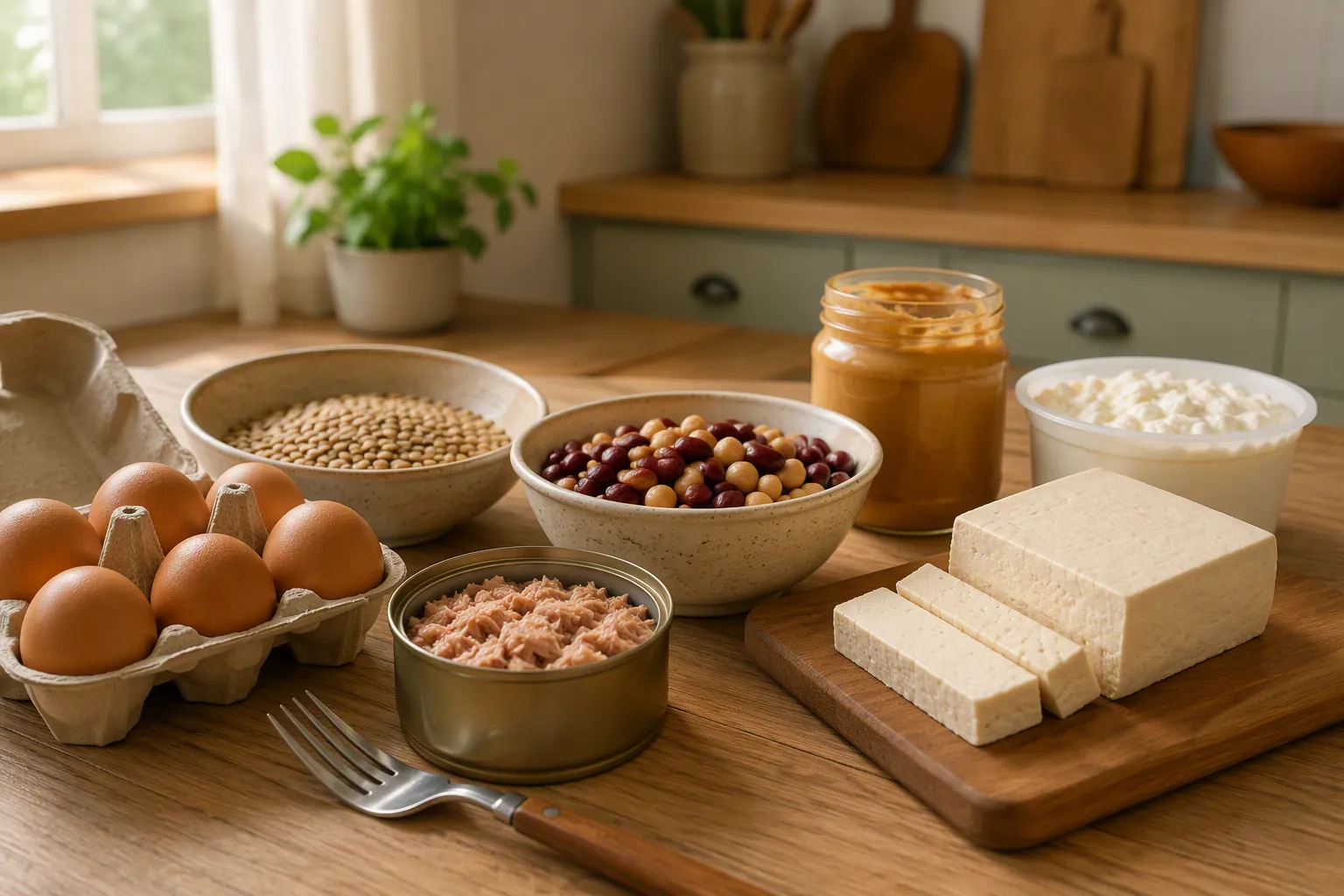
A protein anchor is the plain food that makes the meal count: eggs, beans, lentils, canned fish, peanut butter, cottage cheese, tofu, Greek-style yogurt, milk, chicken, or another food the person already accepts. The words “already accepts” matter. A budget plan fails fast when it fills the cart with foods an older adult has no intention of eating.
Start with two or three anchors that are cheap, familiar, and easy to prepare. Then repeat them without apology. Breakfast does not need to be inventive. Lunch does not need to look like a magazine bowl. The job is to make protein hard to skip.
- Eggs: useful for breakfast, egg salad, fried rice, soup, or a quick dinner when cooking energy is low.
- Beans and lentils: useful in soup, chili, rice bowls, pasta, tacos, or mashed on toast.
- Canned tuna, salmon, or sardines: useful for sandwiches, crackers, salads, patties, or a simple plate with vegetables.
- Peanut butter: useful when chewing, cooking, or appetite is a problem, though portions still matter.
- Cottage cheese or yogurt: useful for no-cook meals, snacks, or adding protein beside fruit or toast.
- Tofu: useful in soup, stir-fries, scrambled with eggs or vegetables, or added to noodles.
This is also where the budget case is strongest. AARP’s dietitian guidance notes that frozen or canned proteins can often cost 30% to 50% less than fresh.[3] That does not mean every canned food is the best buy or the best health choice. It means the freezer case and pantry shelf deserve a fair look before anyone assumes protein is too expensive.
Spread it across breakfast, lunch, and dinner
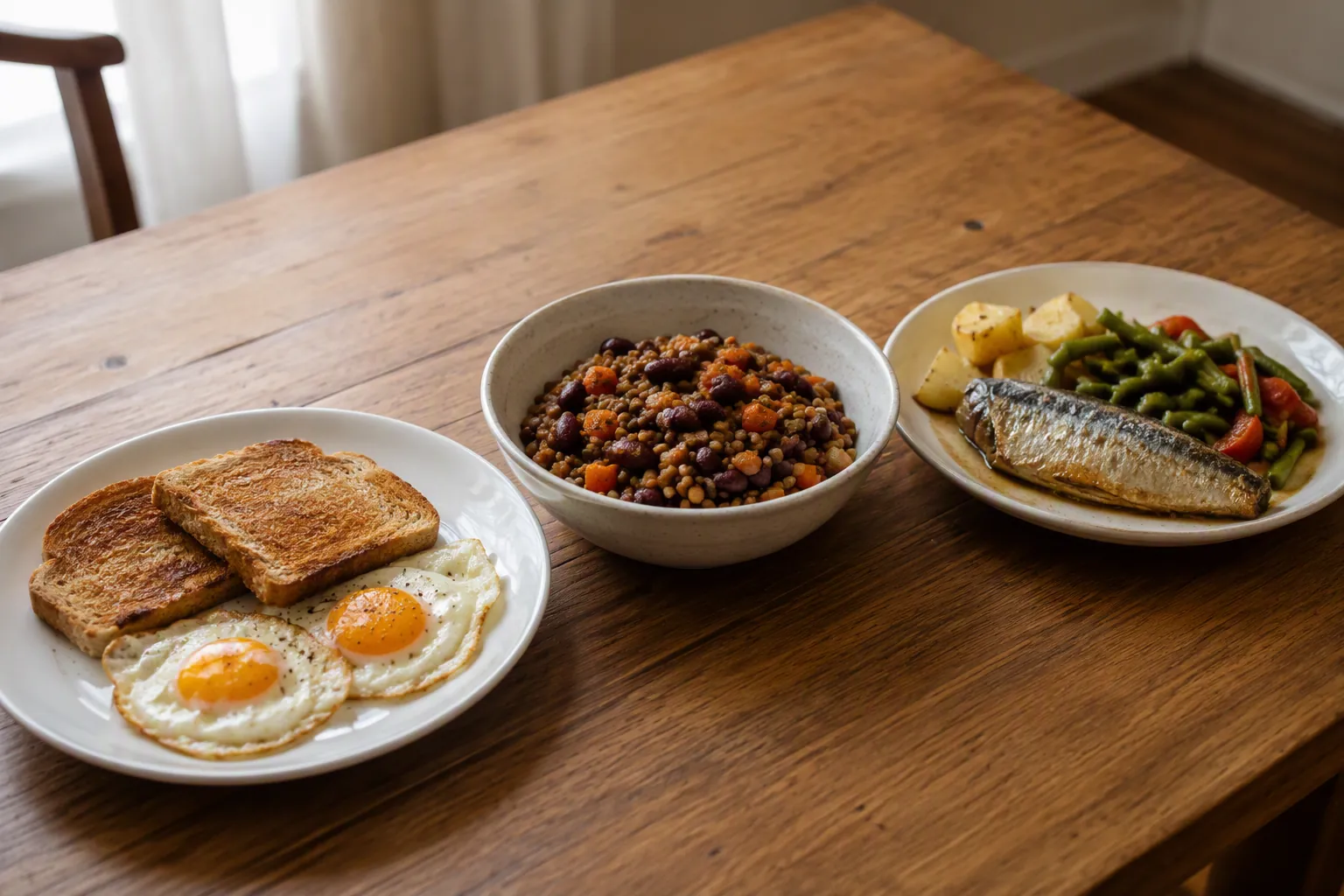
The easiest improvement is often breakfast. A senior who eats toast every morning may not want a lecture about vegetables at 8 a.m. Add an egg. Add cottage cheese. Add peanut butter. Add yogurt. The plate can stay familiar while the protein improves.
| If the usual meal is... | Make it more protein-forward by adding... |
|---|---|
| Toast and tea | An egg, peanut butter, cottage cheese, or yogurt |
| Oatmeal | Milk, yogurt, peanut butter, or a side of egg |
| Vegetable soup | Lentils, beans, tofu, chicken, or canned fish on the side |
| Crackers and cheese | Tuna salad, egg salad, hummus, or cottage cheese |
| Pasta | Beans, lentils, canned salmon, tofu, or leftover chicken |
| Rice | Egg, beans, tofu, canned fish, or lentils |
Lunch is where many older adults drift. A sandwich with only a thin smear of filling may not do enough. Soup may need beans or lentils added. Leftovers may need an egg on top. If appetite is small, a protein-containing snack can be more realistic than a larger meal: cottage cheese, yogurt, peanut butter on toast, hummus, a boiled egg, or tuna on crackers.
Dinner can stay simple. Beans and rice, lentil soup, scrambled eggs with vegetables, tuna patties, tofu with frozen vegetables, or a baked potato topped with cottage cheese can all be legitimate senior meals. The point is not to make cheap food look fancy. It is to stop letting the day end with protein still missing.
Use canned and packaged foods, but watch the sodium
The cheapest senior pantry can turn salty fast. Canned soup, canned beans, packaged rice mixes, deli meat, instant noodles, and some canned fish can push sodium up before anyone picks up the saltshaker. For an older adult managing blood pressure or heart disease, that is not a small detail.
The fix is not to ban the pantry. The fix is to shop and cook with a few guardrails:
- Choose no-salt-added or low-sodium canned beans when they are available and affordable.
- Drain and rinse canned beans before adding them to soup, rice, pasta, or salads.
- Look for water-packed canned fish when it fits the recipe and budget.
- Use plain frozen vegetables instead of sauced versions when sodium is a concern.
- Stretch salty prepared foods with unsalted ingredients: add lentils to soup, plain rice to chili, or frozen vegetables to packaged meals.
:strip_icc()/drain-and-rinse-canned-beans-final-1-3566cbae01bb46c79ec0f6d2ecb7e252.png)
Rinsing beans is the kind of small kitchen habit that does not require a new diet identity. It takes less than a minute, keeps the low-cost protein, and makes canned beans easier to use often.
Buying cheaply is different from eating enough
A pantry full of good buys does not help if the food stays unopened. This is where adult children and caregivers can be useful without turning the grocery trip into a scolding session. Instead of asking, “Why aren’t you eating better?” look for the bottleneck.
- Is the can opener hard to use?
- Are containers too heavy or lids too tight?
- Is chewing difficult?
- Does cooking feel unsafe because standing at the stove is tiring?
- Are leftovers being forgotten in the refrigerator?
- Has appetite changed enough that a medical visit is warranted?
The answer changes the meal plan. If standing is the problem, use microwave meals with added protein, hard-boiled eggs, cottage cheese, yogurt, canned fish, or slow-cooker soups. If chewing is the problem, softer proteins such as eggs, lentils, tofu, yogurt, cottage cheese, smooth peanut butter, or well-cooked beans may be easier. If memory or planning is slipping, it may be time to simplify the kitchen setup and watch for other signs that daily routines are changing; our guide to signs of cognitive decline in an aging parent’s home may help caregivers notice the wider pattern.
Food waste is part of the budget, too. AARP cites USDA estimates that the average American wastes about $370 worth of food per year.[3] For a senior on a fixed income, the cheaper meal is often the one that actually gets eaten: smaller containers, frozen portions, split packages, and repeat meals that match real appetite.
A simple protein-first grocery rhythm
Healthy budget cooking gets easier when the cart has a rhythm. Pick a few protein anchors, a few low-cost carbohydrates, and a few vegetables or fruits that the person will truly eat. Then keep seasonings and sodium in check.
| Cart category | Budget-friendly choices | How to use them |
|---|---|---|
| Protein anchors | Eggs, beans, lentils, canned fish, peanut butter, cottage cheese, tofu, yogurt | Put one at each meal or use as a protein snack. |
| Low-cost meal bases | Oats, rice, potatoes, pasta, whole-grain bread, tortillas | Use as the base, not the whole meal. |
| Vegetables and fruit | Frozen vegetables, canned tomatoes, cabbage, carrots, apples, bananas | Buy what will be eaten before it spoils. |
| Flavor without too much salt | Garlic, onion, vinegar, lemon juice, pepper, herbs, salt-free blends | Make beans, lentils, eggs, and tofu more appealing. |
Unit pricing helps when the larger package will be used. Harvard T.H. Chan School of Public Health gives the example of a 5-pound bag of rice costing about $0.80 per pound compared with about $1.59 per pound for a 1-pound bag.[4] That kind of savings is real only if storage space, lifting, and spoilage are not problems. A bargain that becomes clutter or waste is not a bargain.
The common worry is that healthier eating always costs much more. A 2013 BMJ Open meta-analysis, summarized by Harvard’s Nutrition Source, found that healthier dietary patterns cost about $1.48 more per day than less healthy patterns.[4] That is not nothing, especially on a fixed income. But it also means the difference is often smaller than people fear, and protein-first substitutions can be targeted: add lentils to soup, eggs to breakfast, beans to rice, or canned fish to lunch before rebuilding the whole grocery list.
Cheap meals that close the gap without much cooking
These are not recipes so much as dependable combinations. They are useful because they can be repeated, adjusted for sodium, and made from ordinary foods.
- Egg breakfast plate: eggs with toast and fruit, or eggs folded into leftover rice and frozen vegetables.
- Lentil soup: lentils simmered with canned tomatoes, carrots, onion, and low-sodium broth or water.
- Bean-and-rice bowl: rinsed beans over rice with frozen vegetables, salsa, vinegar, or herbs.
- Tuna or salmon toast: water-packed canned fish mixed with yogurt or a small amount of mayonnaise, served on toast or crackers.
- Cottage cheese plate: cottage cheese with fruit, toast, tomatoes, or a baked potato.
- Tofu soup: tofu cubes added to broth, frozen vegetables, noodles, or rice.
- Peanut butter oatmeal: oats made with milk, then topped with peanut butter and banana.
If the older adult eats very small portions, mini-meals may work better than three full plates. Half a sandwich with tuna, a boiled egg later, and yogurt in the evening may be more realistic than asking for a large lunch. The goal is not to win a perfect meal plan. The goal is to stop protein from disappearing unnoticed.
Food supports strength, but it does not replace strength work
Protein gives the body building material. Muscles still need to be used. For many seniors, the best pairing is protein adequacy plus safe resistance exercise, adapted to the person’s health, balance, and starting point.
If strength has already slipped, begin carefully. Our guide to safe strength training for seniors at home explains how to start without turning exercise into a fall hazard. For people who prefer to follow along, these senior workout videos for strength and balance can help make the routine more concrete.
Falls deserve the same honesty. Low protein can contribute to muscle loss and strength decline, and strength decline can raise risk. But fall prevention is broader than dinner. Medications, blood pressure changes, vision, foot pain, home hazards, dizziness, prior falls, and balance all belong in a STEADI-style risk review. If the food question has come up because walking looks less steady, use it as one doorway into a fuller fall-prevention risk-factor check.
For readers who want the muscle-loss side in more detail, our glossary pieces on telomere health and muscle loss in older adults and muscle recovery after a fall explain why adequate protein is one countermeasure, not the whole story.
When to get individual advice
A protein-first pantry plan is not medical care. It is a practical way to make everyday meals less likely to miss a basic need. Get individualized guidance from a clinician or registered dietitian if there is kidney disease, unexplained weight loss, poor appetite, trouble swallowing, recent hospitalization, wounds, diabetes concerns, heart failure, or any instruction to limit protein, fluid, potassium, phosphorus, or sodium.
For many seniors, though, the next right move is sitting in the kitchen already: check whether breakfast, lunch, and dinner each have a protein anchor. Use eggs, beans, lentils, canned fish, peanut butter, cottage cheese, tofu, and other low-cost staples the person will actually eat. Keep the sodium guardrails in place. Then pair that habit with strength work, home-safety checks, and clinical guidance when health conditions make the target uncertain.
References
- 5 Tips for Seniors Creating Healthy Meal Plans, National Council on Aging
- Muscle loss and protein needs in older adults, Harvard Health
- 25 Great Ways to Eat Healthy Without Breaking the Bank, AARP
- Strategies for Eating Well on a Budget, Harvard T.H. Chan School of Public Health
Browse more in the Glossary.