
Clinical term
Does Telomere Health Drive Muscle Loss in Older Adults?
Last verified 2026-08-04
Plain answer: telomere health appears to be part of the muscle-loss story
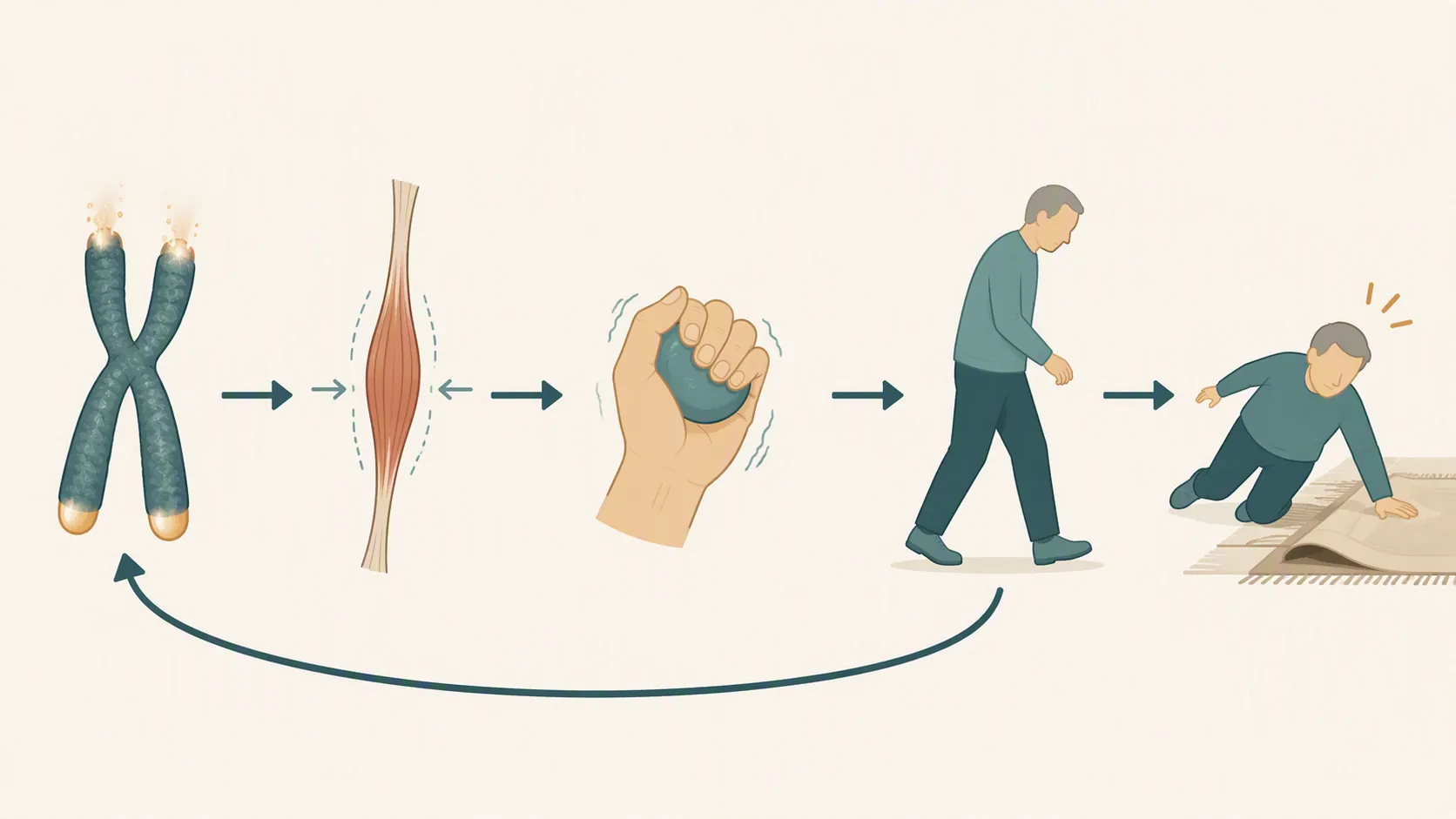
If an older adult is losing grip strength, rising more slowly from a chair, or walking with less confidence, telomere health may be one part of the biology underneath that change. The strongest current evidence does not say merely that short telomeres and weak muscles often show up together. A 2024 bidirectional Mendelian randomization study of more than 472,000 participants reported that shorter leukocyte telomere length causally reduced muscle mass and grip strength, and that slower walking pace may also shorten telomeres in the other direction [1].
That is a meaningful finding for fall prevention because muscle mass, hand grip, and walking speed are not abstract lab outcomes. Families see them when jars stay unopened, stairs become negotiable, and a hallway rug starts to look like a hazard. But the finding should not be read as a verdict. A cellular pathway is not the same as a fixed fate, and it is not a reason to buy telomere tests or “anti-aging” products before addressing the basics that actually move muscle function.
Quick glossary: what is a telomere?
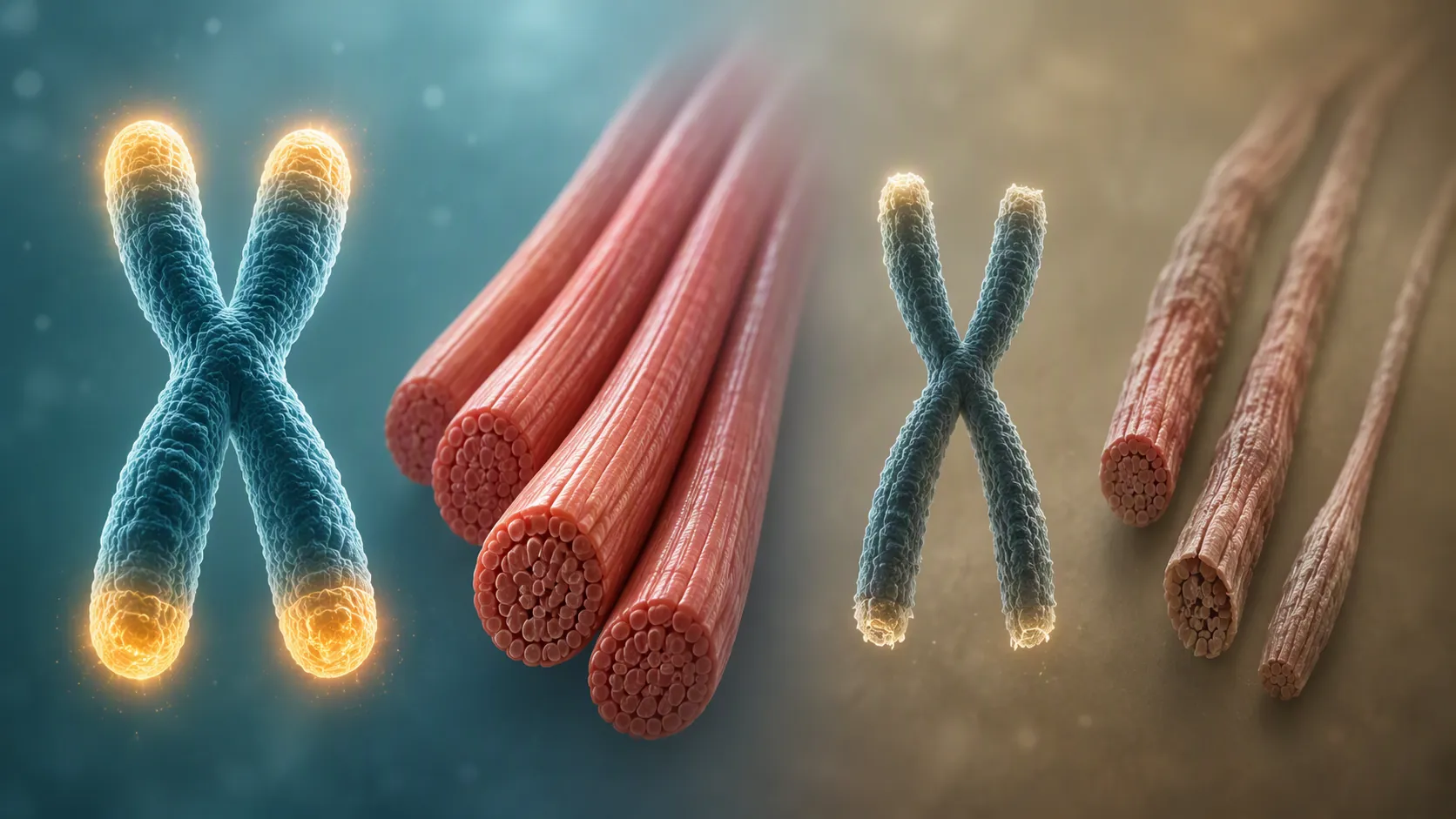
Telomeres are protective caps at the ends of chromosomes. Each time cells divide, telomeres tend to become shorter. When they become too short, cells may stop dividing normally, respond poorly to stress, or contribute to age-related tissue decline.
Most human studies measure leukocyte telomere length, or LTL, in white blood cells. That is not the same as directly measuring telomeres inside every muscle cell. It is a practical, widely used marker of biological aging and stress exposure, but it should not be treated as a personal “aging score” that tells a household what to do by itself.
Why the 2024 causal study matters
Many aging findings stop at association: people with one marker also tend to have another outcome. That can be useful, but it leaves an obvious problem. Are short telomeres helping drive muscle loss, or are illness, inactivity, nutrition problems, and other aging pressures causing both?
Mendelian randomization tries to get closer to causality by using genetic variants as a kind of natural sorting process. If genetic variants linked to shorter telomeres are also linked to lower muscle mass or weaker grip, that strengthens the argument that telomere length is contributing to the muscle outcome rather than simply traveling alongside it.
In the 2024 bidirectional Mendelian randomization study, shorter leukocyte telomere length was reported to causally reduce muscle mass, with an odds ratio of 1.053, and grip strength, with an odds ratio of 0.915 and p=0.005. The same study also found evidence in the reverse direction for walking pace: slower walking pace may causally shorten telomeres [1].
That last point matters in ordinary life. Weakness can reduce walking. Less walking can reduce activity. Lower activity can worsen strength, balance, appetite, and confidence. The telomere finding fits that loop without pretending telomeres are the only cause.
The restraint is important. The study drew heavily from UK Biobank and European-ancestry genome-wide association data, so the result may not generalize equally to every population [1]. It also does not mean a caregiver needs a telomere report before helping someone rebuild strength. It means that muscle decline has a biological aging component serious enough to take seriously, not a reason to give up.
Earlier sarcopenia research pointed in the same direction
An earlier exploratory study found that older adults with sarcopenia had significantly shorter telomeres in peripheral blood mononuclear cells than non-sarcopenic peers. The reported T/S ratio was 0.21 in the sarcopenia group versus 0.26 in the non-sarcopenia group, with p=0.01 [2].
That 2014 study was not the main proof of causality. It was smaller and exploratory. Its value is that it showed the pattern years before stronger genetic methods were applied: people with clinically meaningful muscle loss also showed shorter telomeres in immune cells.
How a cell-level signal can become a fall-risk problem
The plausible pathway is not hard to follow. Telomere shortening is connected with cellular stress, inflammation, oxidative stress, and changes in telomerase activity. Physical activity research also discusses satellite cells, the muscle-associated cells involved in repair and regeneration, as one possible bridge between aging biology and muscle function [3][4].
Studies of physical activity and telomeres add another piece, though the evidence is more mixed and often observational. Reviews describe older athletes as having longer telomeres than sedentary peers, and one review noted that moderate activity in the range of 991–2340 kcal per week may be associated with more favorable telomere length [4]. That does not prove every exercise plan lengthens telomeres in every older adult. It does make it biologically reasonable that movement, muscle loading, inflammation control, and telomere biology are connected.
The visible side of the problem is large enough without any chromosome language. Muscle loss is often described as progressing at about 1–2% per year after age 50, or 5–10% per decade, with acceleration after later old age; Tufts describes muscle decline as accelerating after 65 to 80, up to about 8% per decade [5][6]. Sarcopenia affects about 10–20% of older adults, roughly one-third of adults over 65 fall each year, and about 15% of falls cause fractures [7].
Those numbers should not be used to frighten people into inactivity. They explain why a small loss of grip, a slower gait, or a decision to stop walking outside can matter. Once someone begins avoiding movement, the fear-of-falling cycle can turn a reasonable caution into faster deconditioning.
What changes on Monday morning?
For most households, the telomere finding does not change the first steps. It changes the level of seriousness. Loss of strength is not just “normal aging” to shrug off, and it is not a supplement puzzle to solve before moving. It is a signal to look at resistance exercise, protein intake, fall history, medications, pain, vision, sleep, and any illness that may be reducing activity.
This article is general education, not personal medical advice. Major new weakness, repeated falls, unexplained weight loss, a sudden change in walking, or major nutrition changes should be discussed with a clinician, especially for people with kidney disease, diabetes, heart disease, neurologic conditions, or recent hospitalization.
| What you notice | Practical next step | Why it matters |
|---|---|---|
| Grip is weaker or daily tasks take more effort | Ask about strength assessment, physical therapy, and progressive resistance training | Grip strength is one of the sarcopenia-related traits linked to shorter telomeres in the causal study [1] |
| Walking pace has slowed | Check balance, gait, footwear, vision, pain, and safe ways to keep walking | The 2024 study found evidence that slower walking pace may also shorten telomeres [1] |
| Meals are smaller or protein is often missed | Build meals around protein rather than adding it as an afterthought | Older adults often need deliberate protein planning to support muscle maintenance [6] |
| Fear of falling is leading to less activity | Reduce hazards, add supervised exercise, and avoid letting caution become complete withdrawal | Inactivity can worsen strength and walking confidence |
Resistance training is the main muscle-preserving tool
Resistance training is the practical countermeasure with the clearest role in preserving or rebuilding muscle function. Reviews of resistance training in older adults describe programs using 2–3 sessions per week, 2–3 sets, 5–8 repetitions, and intensities around 50–80% of one-repetition maximum. The NSCA position statement cited in the review describes 2–3 sets of 1–2 exercises per major muscle group at 70–85% of one-repetition maximum [7].
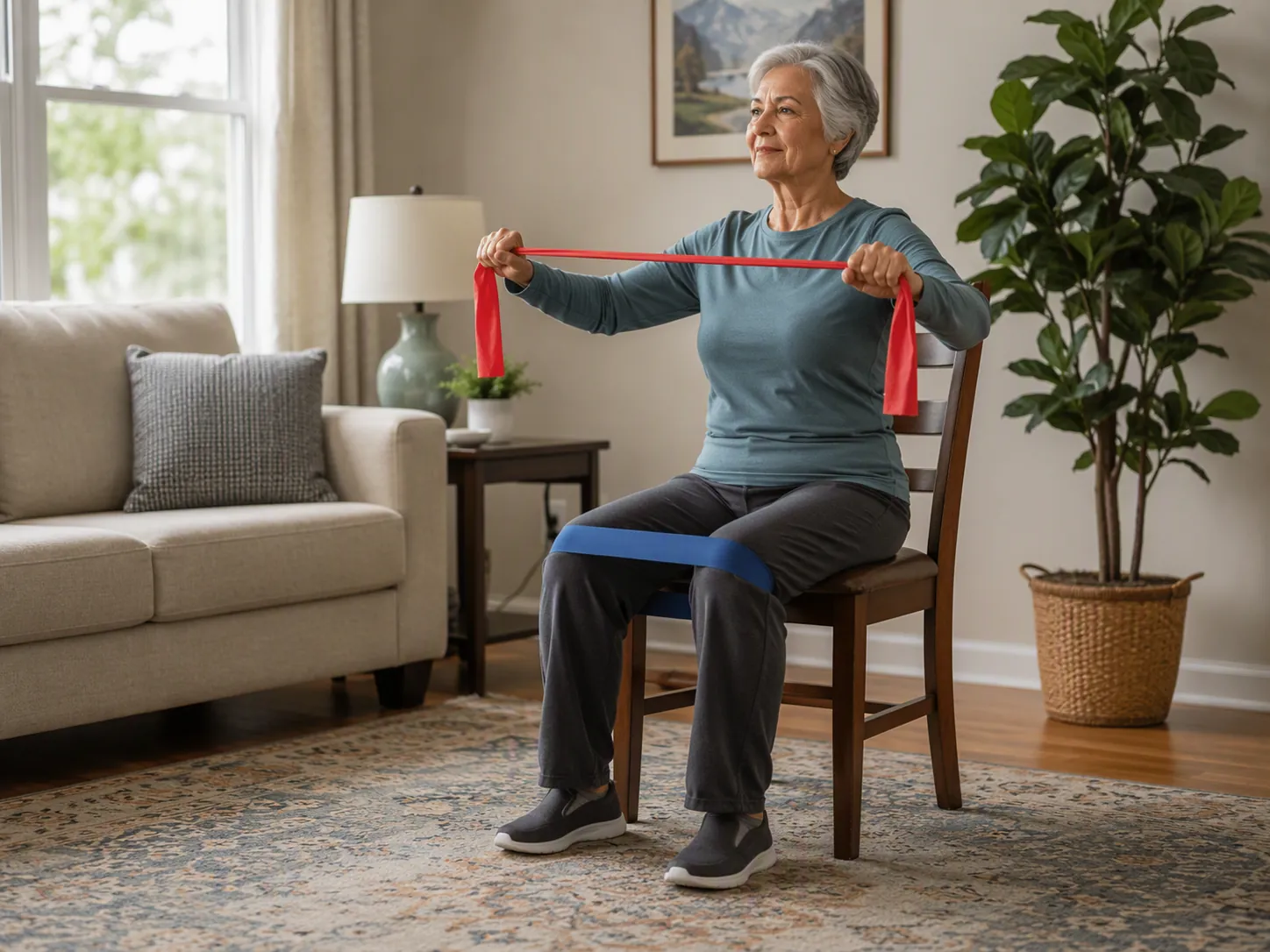
Those numbers are not a command to start heavy lifting unsupervised. For a frail older adult, the first useful version may be sit-to-stand practice from a sturdy chair, light resistance bands, wall push-ups, step-ups, or supervised machines. The point is progressive loading: the muscles need a reason to adapt.
When heavy loads are not tolerated because of pain, joint disease, or medical limits, a clinician or physical therapist may consider modified approaches. Blood-flow restriction training for seniors is one adjacent option to understand, but it should be treated as a supervised strength-building question, not a telomere treatment.
Protein has to be present often enough to matter
Muscle cannot respond well to training if meals do not provide enough building material. A practical protein range is 20–35 grams per meal, with a total daily target around 1.0–1.2 grams per kilogram per day, or roughly 70–80 grams per day for many older adults [6].
For caregivers, the useful question is often not “What is the perfect protein?” but “Which meal is currently too light?” Breakfast toast and coffee, soup without a protein source, or a small dinner after a long day may quietly leave the body short. For practical meal ideas, see high-protein meals for seniors on a budget.
Supplements are not the center of the telomere answer
There are no FDA-approved medications for sarcopenia, so the practical foundation remains exercise and nutrition rather than a prescription or a telomere-targeting pill [5]. That does not mean every supplement is useless. It means the evidence question should be kept narrow: does this product improve strength, function, intake, or safety for this person?
If supplement claims are already on the kitchen table, start with the evidence around aging muscle supplements. Creatine for seniors and muscle strength is a separate, more concrete question than whether a supplement can “fix telomeres.”
Does exercise actually protect telomeres?
The safest answer is: exercise is clearly useful for muscle, and it may support healthier telomere biology, but the telomere part is not settled enough to promise a measurable change in an individual person. A systematic review on muscular fitness and telomere length supports a relationship between better muscular fitness and telomere length, while broader physical activity reviews describe possible mechanisms such as telomerase activity, lower oxidative stress, lower inflammation, and preservation of muscle repair capacity [8][3].
Much of the exercise–telomere literature is observational or cross-sectional, and large randomized trials in older adults remain limited. Telomere measurement methods also vary, including qPCR, Southern blot, and T/S ratios, which means absolute values from one study should not be compared casually with another.
That uncertainty does not weaken the case for training. It simply keeps the promise honest. The reason to lift, push, stand, step, and eat enough protein is not that a household can watch telomeres lengthen on a report. The reason is that strength, walking speed, and fall confidence are modifiable.
What not to conclude from telomere research
- Do not treat telomere length as a personal report card. It is a biological marker, not a complete measure of health, strength, or future independence.
- Do not assume telomere testing is needed before acting. A slower walk, weaker grip, lower appetite, or recent fall already gives enough reason to assess strength and nutrition.
- Do not turn a causal finding into a single-cause story. Sarcopenia can involve inactivity, illness, inflammation, medications, pain, hormonal changes, low intake, and neurologic disease.
- Do not accept anti-aging claims just because they use cellular language. Readers comparing telomere claims with enzyme or longevity claims may also want the explainer on enzyme treatments said to reverse aging.
The useful takeaway
Telomere health and muscle loss in older adults are connected in a way that now looks partly causal, especially for muscle mass and grip strength. The evidence is still bounded by ancestry limits, measurement differences, and incomplete trial data on whether exercise reliably changes telomere length in older adults.
For care decisions, the path is still grounded: take major strength loss, falls, and nutrition changes seriously; involve a clinician when changes are sudden or severe; use resistance training and sufficient protein as the foundation. The cellular biology makes muscle loss more understandable. It does not make it untouchable.
References
- Leukocyte telomere length and sarcopenia-related traits: A bidirectional Mendelian randomization study — PMC, 2024
- Shorter Telomeres in Peripheral Blood Mononuclear Cells from Older Persons with Sarcopenia: Results from an Exploratory Study — Frontiers in Aging Neuroscience, 2014
- Physical activity and telomere length: Impact of aging and potential mechanisms of action — PMC
- Aging, Physical Exercise, Telomeres, and Sarcopenia — PMC
- Sarcopenia (Muscle Loss): Symptoms & Causes — Cleveland Clinic
- Muscle Loss in Older Adults and What to Do About It — Tufts
- A Review on Aging, Sarcopenia, Falls, and Resistance Training in Community-Dwelling Older Adults — PMC
- The Association Between Muscular Fitness and Telomere Length: A Systematic Review — PMC
Browse more in the Glossary.