
Glossary entry
How Much of the 2027 Social Security Increase You Keep After Medicare
Last verified 2026-07-31
This is not financial or legal advice. Medicare/Medicaid and benefits rules vary by state and change over time — verify current rules with your state Medicaid office or Area Agency on Aging.
Last verified: July 31, 2026. This article is for benefits-literacy and budgeting purposes only. It is not financial, tax, Medicare, or legal advice.
For seniors asking about the average monthly Social Security increase in 2027, the useful answer is not just the COLA percentage. As of late July 2026, AARP projects a 3.6% Social Security COLA for 2027, which would raise the average retired-worker benefit from about $2,084 to about $2,159, or roughly $75 more per month before deductions.[1] The Senior Citizens League projects a slightly higher 3.8% COLA, using an all-beneficiaries average that would rise from $1,938 to $2,011, or about $74 more per month.[2]
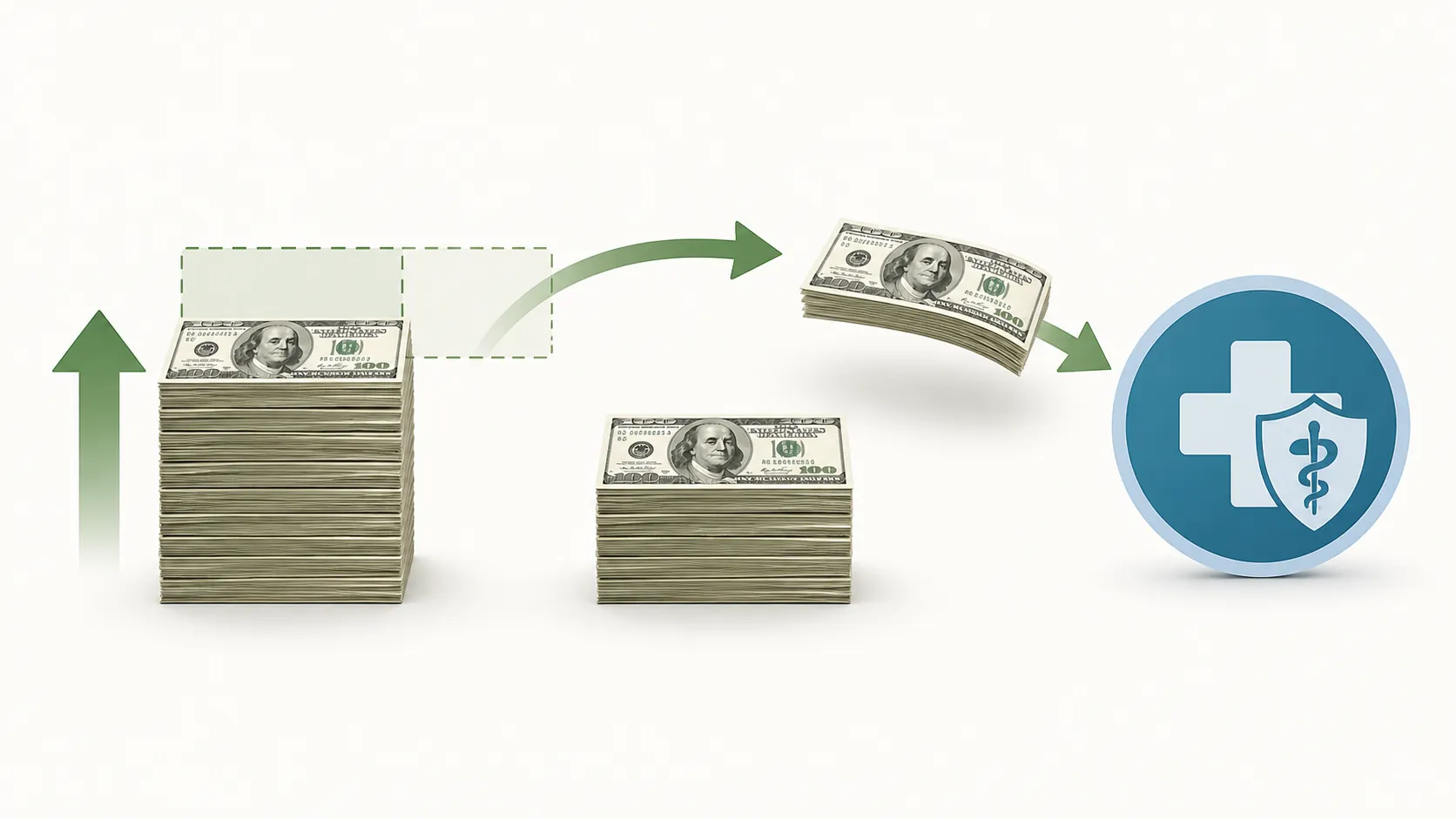
That is the paper increase. The bank-account increase may be smaller for people who have Medicare Part B premiums deducted from Social Security. The 2026 Part B premium is $202.90 per month, and the 2027 premium is currently estimated at about $221 per month, an increase of roughly $18.[3] If that estimate holds, an average senior seeing a $74 to $77 gross COLA increase might keep about $56 to $59 more per month after the Part B premium increase, before considering taxes, Part D, Medicare Advantage changes, drug costs, or other deductions.

The 2027 COLA Is Still a Projection
The official 2027 Social Security COLA has not been announced yet. Social Security calculates the COLA from third-quarter CPI-W data, and the official announcement is expected October 14, 2026, after the July, August, and September CPI-W numbers are complete.[1] Until then, the 3.6% and 3.8% figures are estimates, not final benefit amounts.
That distinction matters because a family budget can get distorted fast if a projected percentage is treated like a confirmed January deposit. A $2,000 monthly benefit and a $2,500 monthly benefit do not receive the same dollar increase, even with the same COLA percentage. And a person who pays the standard Part B premium from Social Security does not keep the same amount as someone who is not yet on Medicare or whose premiums are handled differently.
| Source | Projected 2027 COLA | Benefit base used | Estimated gross monthly increase |
|---|---|---|---|
| AARP | 3.6% | Average retired worker: about $2,084 rising to about $2,159 | About $75 |
| The Senior Citizens League | 3.8% | Average all beneficiaries: about $1,938 rising to about $2,011 | About $74 |
For a plain-language walkthrough of the formula itself, see how the 2027 Social Security COLA is calculated. The short version is that Social Security is not guessing at household budgets. It is following a CPI-W formula, and the CPI-W does not always match what older households actually buy.
What the Average Senior Might Keep After Part B
The cleanest way to look at the 2027 increase is to separate the gross COLA from the Medicare deduction. Using the current projections, the arithmetic looks like this:
| Estimate | Gross Social Security increase | Estimated Part B premium increase | Approximate net increase after Part B |
|---|---|---|---|
| AARP retired-worker projection | About $75 per month | About $18 per month | About $57 per month |
| The Senior Citizens League all-beneficiaries projection | About $74 per month | About $18 per month | About $56 per month |
| If using the broader rough range | About $74 to $77 per month | About $18 per month | About $56 to $59 per month |
That does not mean every senior will net $56 to $59. Someone with a lower benefit gets a smaller COLA in dollars. Someone with a higher benefit gets a larger one. Some beneficiaries pay income-related Medicare premium adjustments. Some have taxes withheld. Some have Medicare Advantage or Part D premiums that change separately. The table is a budgeting estimate for the average figures available now, not a personal benefit statement.
Still, the subtraction is the part many households need to do first. If a senior hears “3.8% increase” and mentally assigns the full amount to groceries, utilities, or a grab bar installation, the January deposit may feel like a mistake. It may not be a mistake. It may be the Part B premium taking its share before the money reaches the checking account.
Why the “Average” Number Changes From One Article to Another
The AARP and Senior Citizens League estimates are close, but they are not measuring the same average benefit. AARP’s example uses the average retired-worker benefit, while The Senior Citizens League uses the average for all beneficiaries.[1][2] That is why one projection can show a 3.6% COLA and about a $75 increase, while another shows a 3.8% COLA and about a $74 increase.
This is not just a footnote. Retired workers, disabled workers, survivors, spouses, and other beneficiaries can have different average monthly benefits. If one family member says, “The average increase is $75,” and another says, “No, it is $74,” they may both be reading accurately but from different bases.
For 2026, Social Security’s official fact sheet said the 2.8% COLA increased the average retired-worker benefit by $56 per month, from $2,015 to $2,071.[4] That official example is useful because it shows the same issue in a confirmed year: the percentage is only the first line. The dollar increase depends on the benefit amount it is applied to.
The Medicare Deduction Has Already Been Eating Into COLAs
The 2027 concern is not coming out of nowhere. The Center for Retirement Research at Boston College found that the 2026 Medicare Part B premium increase consumed more than 25% of that year’s 2.8% Social Security COLA.[3] It also found that Part B premiums reached 9.4% of the average Social Security benefit in 2026, the highest share in the data it reviewed.[3]
That is the precedent worth keeping on the refrigerator, not because 2027 is final, but because the pattern is familiar. A COLA can be real and still feel thin after health insurance costs rise. For a closer look at the prior-year version of this problem, see why the 2.8% Social Security COLA did not cover rising costs.
The Part B estimate also should be kept in its own labeled box. The 2026 standard Part B premium is known: $202.90 per month.[3] The 2027 figure of about $221 is still an estimate. CMS has not made the final 2027 Part B premium announcement as of this article’s last verification date.
Why Seniors Can Still Feel Behind in a COLA Year
A Social Security COLA is designed to protect purchasing power, but the index behind it does not perfectly reflect retiree spending. The Senior Citizens League estimates that Social Security benefits have lost 13.7% of buying power since 2010.[2] That figure helps explain why a senior can receive annual increases and still feel that the benefit buys less than it used to.
One reason is the difference between the CPI-W, which Social Security uses for COLAs, and the CPI-E, an experimental index that reflects older consumers more directly. In the figures cited by The Senior Citizens League, medical care carries a 6.9% weight in the CPI-W but an 11.3% weight in the CPI-E; housing carries a 41.9% weight in the CPI-W but a 48.1% weight in the CPI-E.[2] When medical care and housing take up more of an older household’s budget than the COLA formula assumes, the official increase can lag the bills on the kitchen table.
This is also why a COLA can be technically correct and practically disappointing. The calculation may follow the law, but the household still has to pay the premium, refill the prescription, keep the lights on, and decide whether a safety repair can wait another month. If you are comparing the COLA against home-safety expenses, this 2027 COLA and home-safety cost explainer looks at that narrower question.
What Is Driving the 2027 Estimate So Far
The 2027 COLA estimates are being shaped by inflation data available through June 2026. AARP reported that CPI-W rose 3.5% year over year in June 2026, with tariffs and energy price spikes tied to the Iran conflict contributing to the increase.[1] At the same time, Yahoo Finance described the broader inflation backdrop as cooling, which is one reason the final COLA is still uncertain rather than locked in at the current estimate.[5]
Historical comparisons can help set expectations, but they should not be mistaken for a forecast. AARP notes that the average COLA since 2001 has been about 2.6%, that the largest COLA was 14.3% in 1980, and that there were three zero-COLA years: 2010, 2011, and 2016.[1] Those facts show the range of past outcomes. They do not tell a household what the 2027 January deposit will be.
A Practical Way to Budget Before the Official Numbers Arrive
Until October, the safest budgeting method is to treat the gross COLA as a starting number, not spendable money. For a rough 2027 estimate, take the current monthly Social Security benefit, multiply it by about 3.6% to 3.8%, then subtract the estimated Part B premium increase of about $18 if the standard Part B premium is deducted from that benefit. Keep the result in pencil until both the Social Security COLA and Medicare premium are official.
- Use the benefit amount before Medicare deductions when estimating the gross COLA.
- Subtract the estimated Part B premium increase separately if Medicare Part B is deducted from the Social Security payment.
- Do not assume the average retired-worker number applies to survivors, spouses, disabled workers, or every household.
- Leave room for Part D, Medicare Advantage, tax withholding, and prescription changes, because those are not included in the simple Part B subtraction.
Medicare costs can also move outside the Part B premium. If prescription drug coverage is the next budget question, see how much more seniors may pay for Part D in 2027. If plan benefits are changing, what Medicare Advantage benefit cuts mean for seniors in 2027 may be the more relevant next page.
For now, the cleanest estimate is this: the projected 2027 Social Security increase is roughly $74 to $77 per month on paper for the average figures cited above, and roughly $56 to $59 per month after an estimated $18 increase in the standard Medicare Part B premium. The official 2027 COLA is not final until October 14, 2026, and the 2027 Part B premium is still an estimate. Spend from the net number, not the headline percentage.
References
- Social Security COLA 2027 Increase Estimate, AARP
- COLA Watch, The Senior Citizens League
- Higher Medicare Premiums Will Eat Up More Than 25 Percent of the Social Security COLA, Center for Retirement Research at Boston College
- 2026 Social Security Changes, Social Security Administration
- Social Security's 2027 COLA Estimate Is Out as Inflation Cools, Yahoo Finance
Browse more in the Glossary.