
Room checklist
CAPS vs. OT vs. Contractor: Why the Best Aging-in-Place Projects Use All Three
If you're planning home modifications for an aging parent, you don't have to choose between a CAPS, an occupational therapist, or a general contractor. This guide explains the collaborative workflow — OT assessment, CAPS design, contractor execution, and follow-up evaluation — that research shows reduces falls by up to 39%.
Why the "Who Should I Hire?" Question Is the Wrong One
When a parent has a fall or their mobility begins to decline, the immediate instinct is to find someone who can fix the house. You search online, encounter the term "Certified Aging-in-Place Specialist" (CAPS), read about occupational therapists (OTs), and remember that a general contractor builds things. The natural question becomes: which one of these professionals should I hire?
That framing assumes you have to pick one. The evidence and the experience of families who have been through this process suggest the opposite: the most effective aging-in-place projects are not led by a single professional but by a coordinated team working in a specific sequence. The question should not be "CAPS or OT or contractor?" but rather "how do I get these three professionals to work together in the right order?"
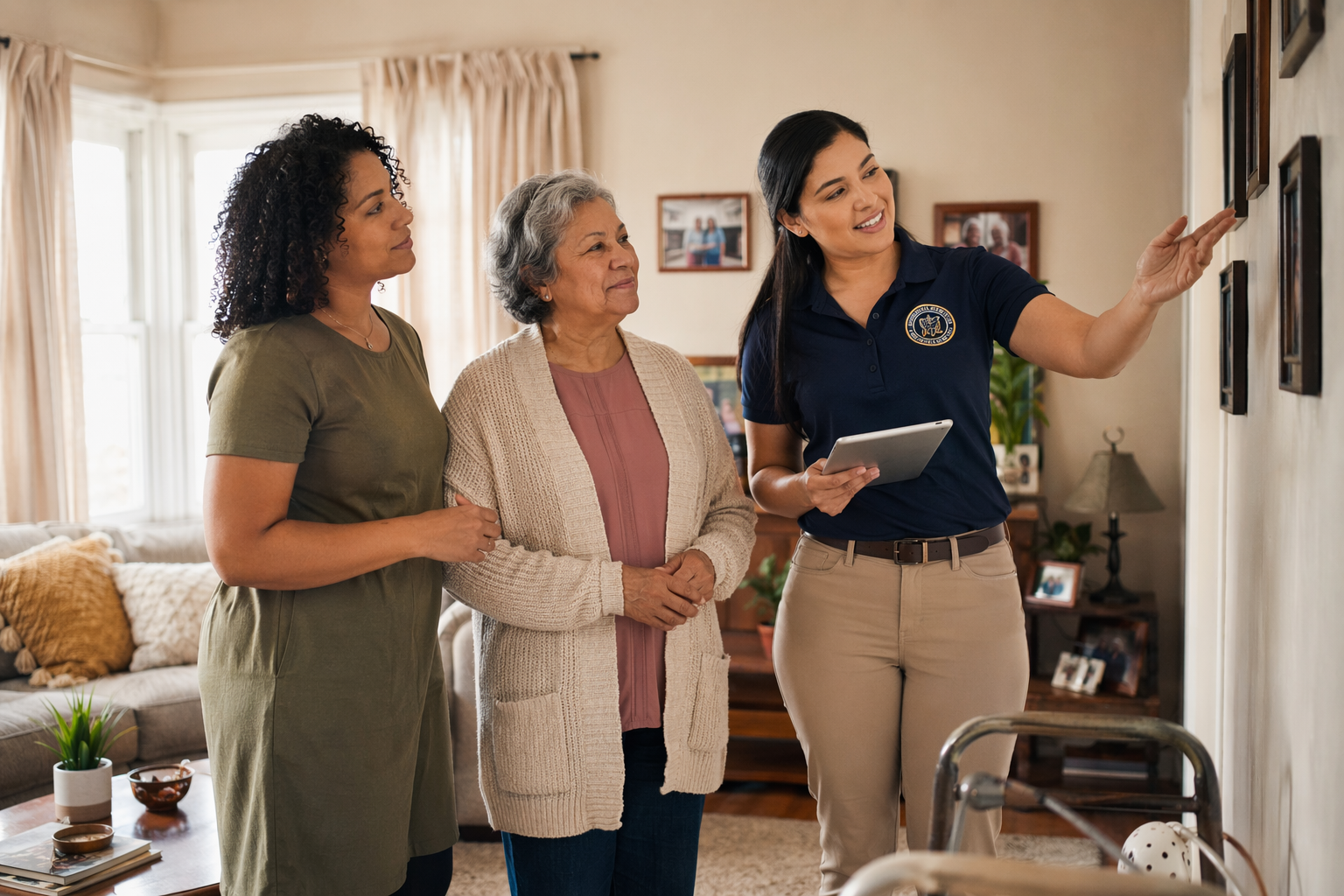
The Three Roles: What Each Professional Brings to the Project
Before discussing how they work together, it helps to understand what each professional does independently. The table below summarizes the core expertise, primary focus, and typical scope of work for each role.
| Professional | Core Expertise | Primary Focus | Typical Scope of Work |
|---|---|---|---|
| Occupational Therapist (OT) | Clinical assessment of functional capacity, mobility, and safety | The person — how they move, transfer, bathe, cook, and navigate their environment | Home safety evaluation, functional assessment, recommendations for modifications and adaptive equipment, follow-up evaluation |
| Certified Aging-in-Place Specialist (CAPS) | Design and construction knowledge specific to accessible, livable homes | The environment — how to modify the physical space to match the person's needs | Home assessment for accessibility, design plan, product selection, cost estimates, contractor coordination, project oversight |
| General Contractor (GC) | Construction execution, project management, trade coordination | The build — installing modifications safely, on time, and within budget | Bidding, permitting, hiring subcontractors, construction, final walk-through |
The CAPS credential, administered by the National Association of Home Builders (NAHB) in cooperation with AARP since 2002, is design- and construction-focused. CAPS professionals learn to assess a home for accessibility, recommend modifications such as grab bars, walk-in showers, widened doorways, and improved lighting, provide renovation cost estimates, manage contractors, and evaluate projects for safety and satisfaction. Many have backgrounds in home remodeling, health care, or home care.
An occupational therapist, by contrast, is a licensed clinician who evaluates the person's functional limitations — how they get in and out of the shower, whether they can safely step over a tub edge, how their balance holds up during a transfer. The OT's recommendations are clinical and person-specific. The CAPS professional then translates those clinical needs into a construction-ready design.
When One Professional Is Enough — and When You Need the Full Team
Not every project requires all three professionals. The complexity of the modification, the senior's health status, and the scope of the build determine who needs to be involved. Here is a scenario-based guide.
- Simple grab bar installation ($150–$400 per bar): A handyman or a CAPS professional working alone can handle this. If the senior has good balance and no complex medical issues, a CAPS can assess the wall structure, select the right bar, and install it. An OT is not strictly necessary, though a brief OT consult can confirm optimal placement.
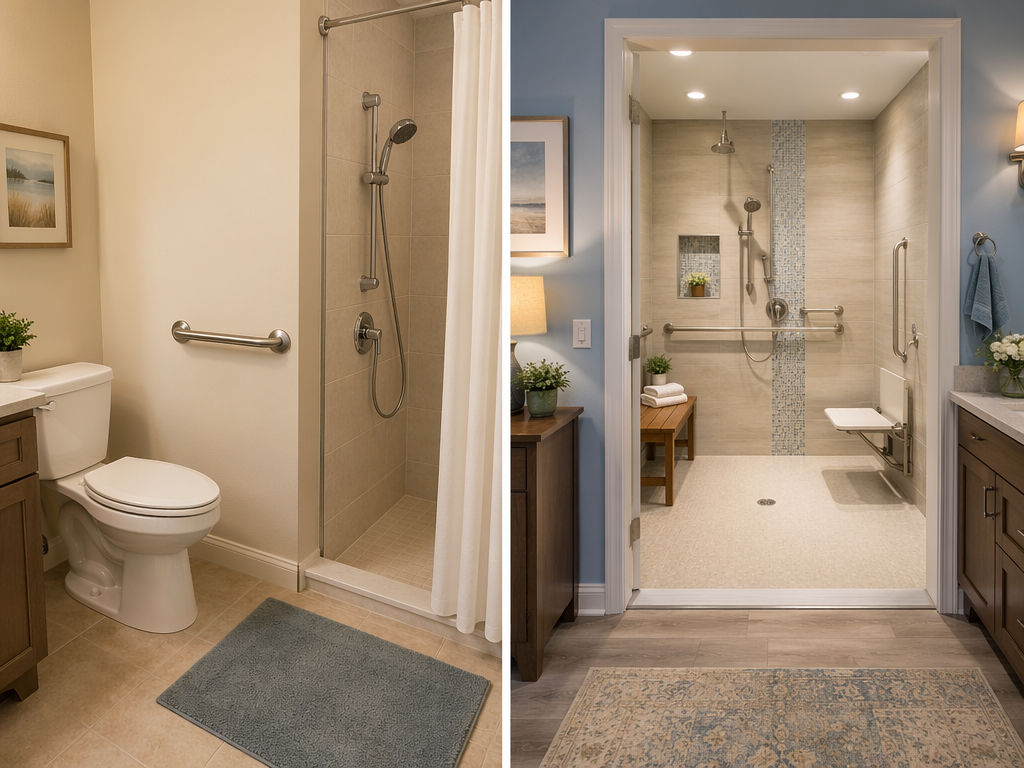
- Bathroom safety upgrade with walk-in shower ($8,000–$18,000): This is where the collaborative model becomes valuable. An OT assesses the senior's transfer ability and bathing routine. A CAPS designs the shower layout, selects the bench height, and specifies grab bar locations. A licensed contractor executes the structural work. Skipping the OT or CAPS in this scenario risks installing a beautiful shower that does not actually meet the person's needs.
- Dementia-specific home modifications: This is the strongest case for the full team. A 2025 systematic review of home modifications for aging in place found that modifications for dementia patients require gradual, familiar-environment-preserving approaches — expertise that neither a standard contractor nor a general OT alone may have. An OT with dementia care experience, a CAPS familiar with dementia-friendly design, and a contractor willing to follow a phased, low-disruption plan are all essential.
- Full-home aging-in-place remodel ($15,000–$60,000+): A comprehensive project involving widened doorways, a stair lift ($2,500–$18,000+), ramp installation ($1,500–$12,000+), and kitchen modifications (at least $15,000) demands the full sequence. The OT assessment ensures the modifications match the senior's current and anticipated needs. The CAPS design ensures the modifications are buildable and code-compliant. The contractor executes. A follow-up evaluation by the CAPS or OT confirms everything works as intended.
The Evidence-Backed Workflow: OT → CAPS → Contractor → Follow-Up
The ideal sequence for a complex aging-in-place project follows four distinct stages. Each stage builds on the one before it, and skipping a stage introduces risk — either that the modifications will not match the person's needs, that they will be installed incorrectly, or that they will go unused.
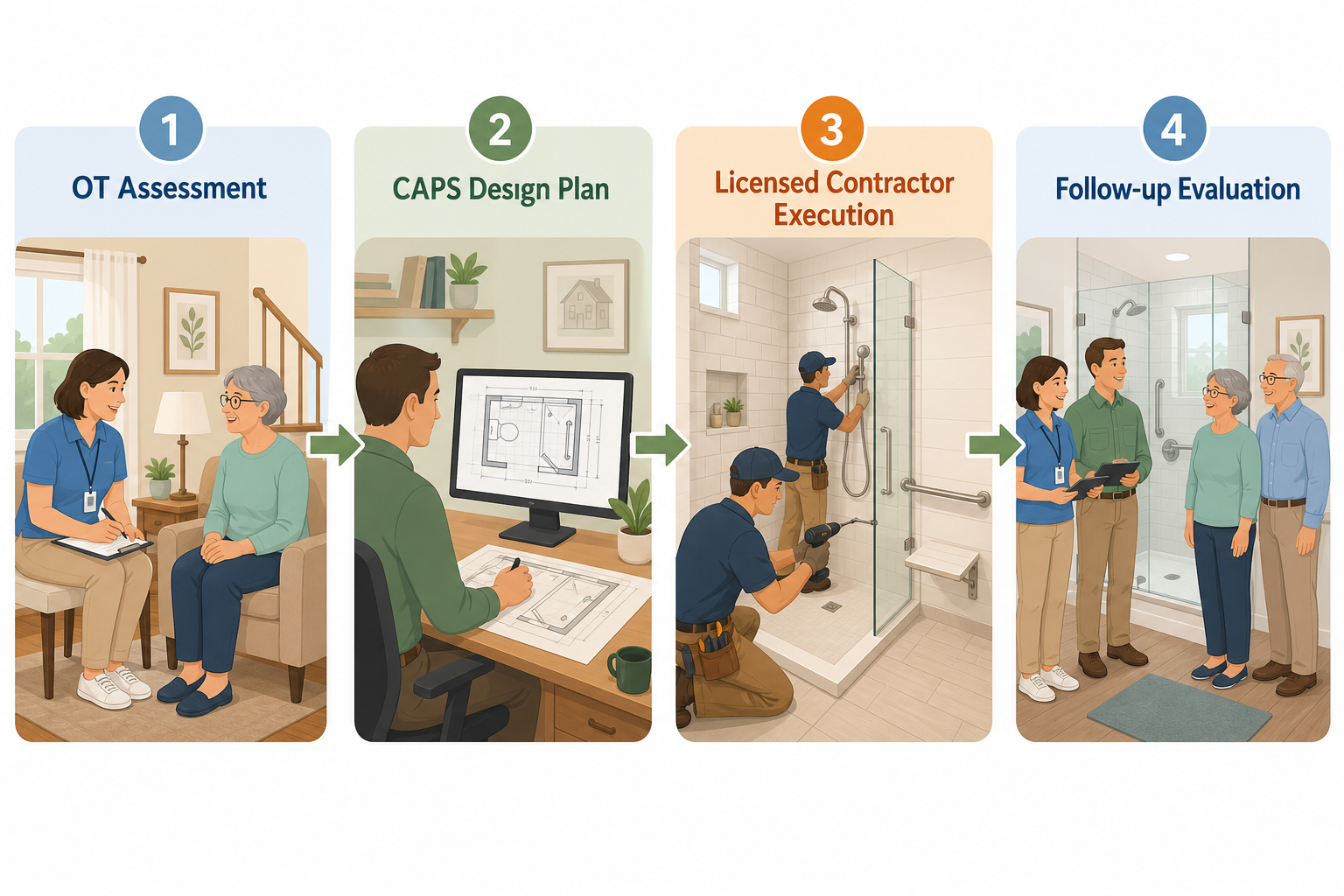
Step 1: Occupational Therapy Functional Assessment
The process begins with the person, not the house. An OT visits the home, observes the senior performing daily activities — getting out of bed, walking to the bathroom, stepping into the shower, using the toilet, preparing a meal — and identifies specific functional limitations and safety risks. The OT produces a written assessment with prioritized recommendations.
This step is critical because it grounds the entire project in the individual's actual needs rather than assumptions. A CAPS or contractor working without an OT assessment might install grab bars in locations that look correct but do not align with how the person actually moves.
Step 2: CAPS Design and Specification
With the OT's assessment in hand, a CAPS professional translates the clinical recommendations into a construction-ready design plan. This includes selecting specific products (grab bar type and finish, shower bench dimensions, doorway width), creating a layout that meets accessibility standards, estimating costs, and identifying any structural challenges.
The CAPS training specifically covers how to collaborate with allied professionals in the aging-in-place space, including OTs. A CAPS who regularly works with OTs will know how to read a functional assessment and ask the right follow-up questions.
Step 3: Licensed Contractor Execution
The CAPS design plan goes out for bids from licensed general contractors. The contractor handles permitting, subcontractor coordination, material procurement, and construction. The CAPS professional may serve as project manager or consultant during this phase, ensuring the installation matches the specifications.
This is where many projects go wrong. A contractor without CAPS training may install a grab bar into drywall without blocking, place a shower bench at the wrong height, or create a ramp that is too steep. The CAPS design prevents these errors before they happen.
Step 4: Follow-Up Evaluation
After construction is complete, the CAPS or OT returns to the home to evaluate whether the modifications are being used correctly and whether they meet the intended goals. This follow-up step is often skipped, but it is where the real value of the collaborative model shows up. The senior may need minor adjustments — a grab bar moved two inches, a shower chair swapped for a different model — that make the difference between a modification that gets used and one that gets ignored.
What the Evidence Shows
A 2025 systematic review of 20 studies on home modifications for aging in place found that 13 of the 20 studies (65%) confirmed the effectiveness of home modifications in fall prevention, functional independence, and cost savings. Among the most striking findings:
- Stark et al. (2017) conducted a randomized controlled trial that found OT-led home modifications led to a 39% reduction in falls with 80% adherence to the modifications.
- A UK longitudinal data-linkage study (Hollinghurst et al., 2022) of 657,536 older adults found that home adaptations reduced emergency fall admissions by 3% per quarter (odds ratio 0.97, p < 0.001).
- Bathroom modifications, grab bars, and stair railings were identified as the most impactful interventions across the studies reviewed.
Real-World Scenarios: How the Workflow Plays Out
To make the workflow concrete, here are two common scenarios showing how each professional contributes at each stage.
Scenario A: Post-Fall Bathroom Safety Project
An 82-year-old woman with mild balance issues fell getting out of the bathtub. Her daughter calls an OT for a home safety evaluation. The OT observes that her mother has difficulty lifting her leg over the tub wall and tends to reach for the towel rack for support — a dangerous habit. The OT recommends a walk-in shower with a built-in bench, a handheld shower head, and grab bars at specific heights and angles.
The daughter then hires a CAPS professional who reviews the OT's recommendations, measures the bathroom, and creates a design plan. The CAPS specifies a curbless shower pan, a foldable bench, and grab bars that meet ADA load requirements. The plan goes to a licensed contractor who demolishes the old tub, installs the new shower, and mounts the grab bars according to the CAPS specifications. After completion, the CAPS returns to verify the installation and the OT visits to ensure the mother can use the new shower safely.
A 78-year-old man with early-stage Alzheimer's has begun wandering at night. His wife is exhausted and worried. An OT with dementia care experience assesses the home and identifies several risks: the front door is easily visible from the bedroom, the bathroom has a dark hallway approach, and the kitchen stove has no automatic shut-off.
A CAPS professional designs modifications that preserve the familiar environment — a key requirement for dementia-friendly design — while adding safety features: a door alarm that does not look like a lock, motion-sensor night lights along the hallway path, a stove shut-off device, and contrasting color strips on the bathroom floor to guide the way. The contractor installs these modifications in phases to minimize disruption. The OT returns monthly to reassess as the disease progresses.
Questions to Ask When Vetting Each Professional
When you interview potential team members, use these questions to assess their experience with aging-in-place projects and their willingness to collaborate with other professionals.
For the Occupational Therapist
- Have you conducted home safety evaluations for older adults before? How many?
- Do you have experience with dementia-specific assessments?
- Have you worked with CAPS professionals or contractors on previous projects? Can you share an example?
- Will you provide a written report with prioritized recommendations that I can share with a CAPS or contractor?
- Do you offer follow-up visits after modifications are installed?
For the CAPS Professional
- How long have you held your CAPS certification, and how many aging-in-place projects have you completed?
- Do you regularly collaborate with occupational therapists? How do you incorporate their assessments into your designs?
- Can you provide a design plan with specific product specifications and cost estimates before I hire a contractor?
- Do you offer project oversight during construction, or do you hand off the plan to the contractor?
- Will you conduct a follow-up evaluation after the work is complete?
For the General Contractor
- Have you worked on aging-in-place or accessibility modifications before? Can you show me examples?
- Are you familiar with CAPS standards and ADA guidelines for residential modifications?
- Are you willing to work from a design plan provided by a CAPS professional and coordinate with an OT?
- Do you have experience with phased construction that minimizes disruption for an older adult living at home?
- Can you provide references from previous aging-in-place clients?
Next Steps: Building Your Collaborative Team
The key takeaway from this guide is simple: hire the team, not just the role. An aging-in-place project that involves an OT assessment, a CAPS design, a licensed contractor, and a follow-up evaluation is far more likely to result in modifications that are used, effective, and safe.
Here are your actionable next steps:
- Start with an OT assessment. Ask your parent's primary care physician for a referral to an occupational therapist who performs home safety evaluations. Medicare Part B may cover this service if it is deemed medically necessary.
- Find a CAPS professional. Use the NAHB directory to locate CAPS-certified professionals in your area. Look for someone who explicitly mentions collaboration with OTs in their service description.
- Request contractor bids with CAPS-informed specifications. Once you have a CAPS design plan, share it with at least three licensed contractors. Ask each to bid on the exact specifications — this allows you to compare apples to apples.
- Schedule a follow-up evaluation. Before the final payment is made, have the CAPS or OT return to verify the installation and ensure the modifications meet the senior's needs.
For a straightforward hiring comparison that covers the pros and cons of each role individually, see our separate guide: CAPS vs. General Contractor vs. OT: Who Should You Hire for Aging-in-Place Home Modifications?
Related reading
Need a professional assessment?
Find a CAPS-credentialed professional or local aging services through our outbound resource list — we never name or rank individual contractors.
Find Local HelpNoticed something outdated or inaccurate on this page? Flag a correction. We review every report against CDC, NIA, and AARP HomeFit guidance before updating a page.