
Room checklist
What Is a CAPS-Certified Aging-in-Place Specialist? A Complete Guide for Families
Only about 4% of U.S. homes are ready for aging in place. This guide explains what a CAPS-certified professional is, what they do, their training, typical costs, and how hiring one compares financially to moving to senior living — helping family caregivers and older adults make an informed decision.
Why Most Homes Aren't Ready for Aging in Place
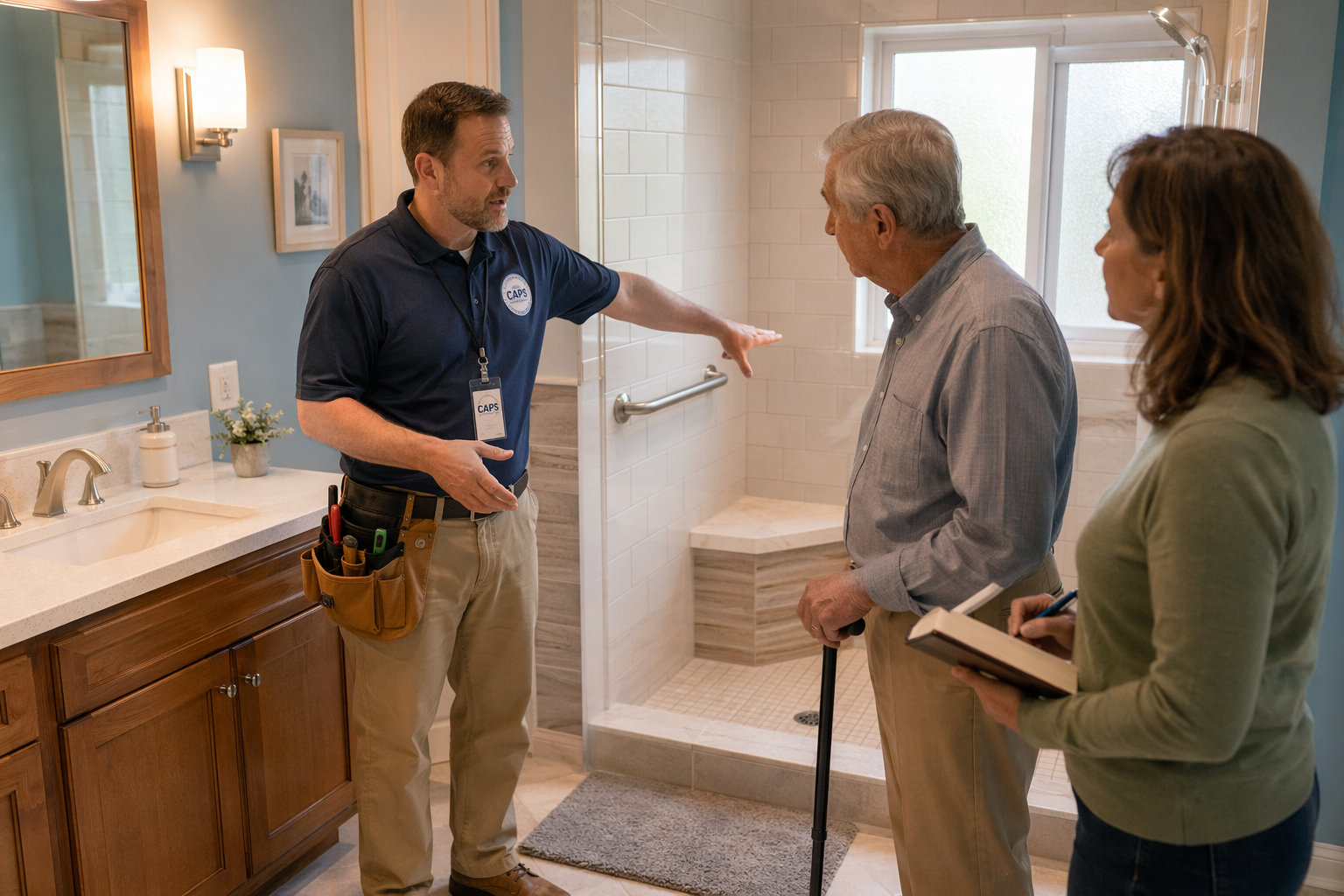
The gap between where older adults want to live and where they can safely live is staggering. According to a University of Michigan National Poll on Healthy Aging, 88% of adults aged 50 and older prefer to remain in their own homes as they age. Yet the housing stock tells a very different story. Amy Roberts, a CAPS-certified real estate professional, estimates that less than 4% of homes in the U.S. housing market are aging-in-place ready. A 2025 systematic review published in PMC corroborates this, citing U.S. Census Bureau data showing that fewer than 10% of American homes are adequately designed for an aging population.
This mismatch between desire and reality creates a critical need for expert guidance. A standard home — built for able-bodied adults in their 30s and 40s — becomes a landscape of hazards as mobility, balance, and strength change. Narrow doorways, high tub walls, slippery bathroom floors, and stairs without railings are not inconveniences; they are fall risks. The CDC reports that falls are the leading cause of injury among older adults, and the stakes are high: a single fall can trigger a cascade of hospitalizations, loss of independence, and a forced move to assisted living.
This is where a Certified Aging-in-Place Specialist (CAPS) enters the picture. Unlike a general contractor who builds to standard code, a CAPS is trained to see a home through the lens of aging — identifying hazards before they cause injury and recommending modifications that preserve independence without sacrificing aesthetics or resale value.
What Is a CAPS-Certified Aging-in-Place Specialist?
CAPS stands for Certified Aging-in-Place Specialist, a professional credential developed jointly by the National Association of Home Builders (NAHB) and AARP. The program launched in 2002 and was designed to address a specific gap in the construction and remodeling industry: the need for professionals who understand both the technical aspects of home building and the functional, safety, and lifestyle needs of older adults.
A CAPS is not simply a contractor who has taken a weekend workshop. The credential requires completing a three-course curriculum, passing a graduation application, signing a code of ethics pledge, and — for contractors — providing proof of liability insurance and workers' compensation. The training covers marketing and communication with older clients, universal design concepts, and specific construction details and solutions for aging-in-place modifications.
What sets a CAPS apart from a general contractor is their holistic approach. They are trained to collaborate with occupational therapists, physical therapists, nurses, designers, and financial planners. They understand that aging in place is not just about grab bars and ramps — it is about creating a home that supports changing needs over time, often through phased remodeling that respects the homeowner's budget and emotional attachment to their home.
What CAPS Professionals Do: From Assessment to Installation
The work of a CAPS-certified professional follows a structured process that goes far beyond swinging a hammer. It begins with a comprehensive home evaluation and extends through design, contractor coordination, and post-installation follow-up.
The Home Evaluation
A typical CAPS engagement starts with a personalized home evaluation. Gina Knight, a CAPS professional with Kastle Keeper, reports that a thorough evaluation with a written report and visuals costs approximately $500. During this assessment, the specialist walks through every room — bathroom, bedroom, kitchen, stairs, entryways, and exterior — identifying hazards and opportunities for improvement.
Key areas of focus during the evaluation include:
- Bathroom safety: Roll-in showers, grab bar placement, raised toilet heights, non-slip flooring, and adequate turning radius for a wheelchair or walker (minimum 5 ft x 5 ft).
- Entry and doorway access: Doorways should be at least 32 inches wide to accommodate a wheelchair or walker. Lever-style handles replace traditional doorknobs.
- Kitchen usability: Accessible counter heights, pull-out shelves, touchless faucets, and appliances with front-mounted controls.
- Stair and hallway safety: Secure railings on both sides, adequate lighting, and non-slip treads. Stair lifts or ramps may be recommended.
- Lighting and contrast: Increased lumens, motion-activated lights, and color contrast at edges and transitions to aid those with declining vision.
Recommendations and Phased Remodeling
After the evaluation, the CAPS provides a prioritized list of recommendations. Valerie Jurik-Henry, a CAPS professional, describes aging in place as a "five-legged table" that includes a livable home design, financial ability, healthcare services, transportation, and social engagement. The home modification plan addresses the first leg but is designed to support the others.
A key advantage of working with a CAPS is their ability to plan phased remodeling. Not every modification needs to happen at once. A family might start with bathroom grab bars and a walk-in shower, then add stair railings and improved lighting the following year, and plan for a stair lift or ramp when mobility declines further. The CAPS creates a master plan that allows families to invest incrementally without losing sight of the long-term goal.
Contractor Management and Follow-Up
Many CAPS professionals are themselves contractors who can perform the work directly. Others serve as consultants or project managers, overseeing the work of subcontractors to ensure it meets CAPS standards. In either case, the CAPS acts as a single point of accountability — from design through installation — which reduces the stress on families who are already managing the emotional and logistical demands of caregiving.
The Three-Course CAPS Curriculum: What the Training Covers
The CAPS credential requires completion of three core courses, typically offered over three days (9 a.m. to 5 p.m. each day). The curriculum is designed by NAHB and covers the full spectrum of skills needed to serve the aging-in-place market.
| Course | Focus Area | Key Topics |
|---|---|---|
| CAPS I: Marketing & Communicating with the Mature Market | Business development and client communication | Understanding the aging consumer, marketing strategies, building trust, and communicating effectively with older adults and their families. |
| CAPS II: Design Concepts for Livable Homes and Aging in Place | Universal design principles | Barrier-free design, visitability, human factors, ergonomics, and designing for changing abilities over time. |
| CAPS III: Details & Solutions for Homes and Aging in Place | Technical implementation | Specific construction details, common installation errors, product selection, budgeting, phased construction planning, and collaboration with allied professionals. |
The program has no formal prerequisites, which is why the credential attracts a diverse range of professionals. According to Steve Hoffacker, a CAPS instructor, typical backgrounds include:
- General contractors and remodelers
- Occupational therapists and physical therapists
- Registered nurses and home health aides
- Interior designers and architects
- Real estate agents
- Social workers and financial planners
This diversity is a strength. When you hire a CAPS, you are not just getting a contractor — you may be working with an occupational therapist who understands the biomechanics of a safe transfer, or a designer who knows how to make a home both accessible and beautiful. The credential signals a baseline of knowledge that crosses disciplinary boundaries.
How Much Does It Cost to Hire a CAPS?
The cost of working with a CAPS falls into two categories: the evaluation fee and the cost of the modifications themselves.
The Evaluation Fee
As noted, a comprehensive home evaluation from a CAPS typically costs around $500. This includes a room-by-room walkthrough, a written report with visual documentation, and a prioritized list of recommendations. Some CAPS professionals may apply this fee toward the cost of subsequent work if you hire them for the installation.
Common Modification Costs
Modification costs vary widely by region, home size, and the complexity of the work. The following ranges are based on industry data from CAPS professionals and remodeling sources:
| Modification | Typical Cost Range | Notes |
|---|---|---|
| Grab bars (3 bars, installed) | $150 | One of the most cost-effective fall prevention measures. |
| Walk-in shower (curbless, with bench) | $1,500 – $2,000 | Eliminates the need to step over a tub wall. |
| Walk-in tub | $5,000 – $7,000 | Includes a door, built-in seat, and hand-held shower. |
| Widened doorways (per doorway) | $200 – $2,000+ | Cost depends on whether the wall is load-bearing. |
| Touchless faucet | $150 – $275+ | Reduces the need for grip strength. |
| Non-slip flooring (per sq ft) | $1 – $4 (vinyl/laminate) | Replaces high-slip surfaces like polished tile. |
| Full kitchen remodel (accessible) | $15,000+ | Includes lowered counters, pull-out shelves, and accessible appliances. |
Funding Sources for Home Modifications
The cost of modifications can be offset through several funding programs. The USDA Section 504 Home Repair program offers loans up to $40,000 at 1% interest and grants up to $10,000 for low-income seniors. The Department of Veterans Affairs provides grant programs for eligible veterans and surviving spouses. Medicaid waivers in some states cover home modifications as an alternative to institutional care. For a comprehensive overview of these and other programs, see our guide to elder care assistance programs.
Home Modifications vs. Senior Living: A Financial Comparison
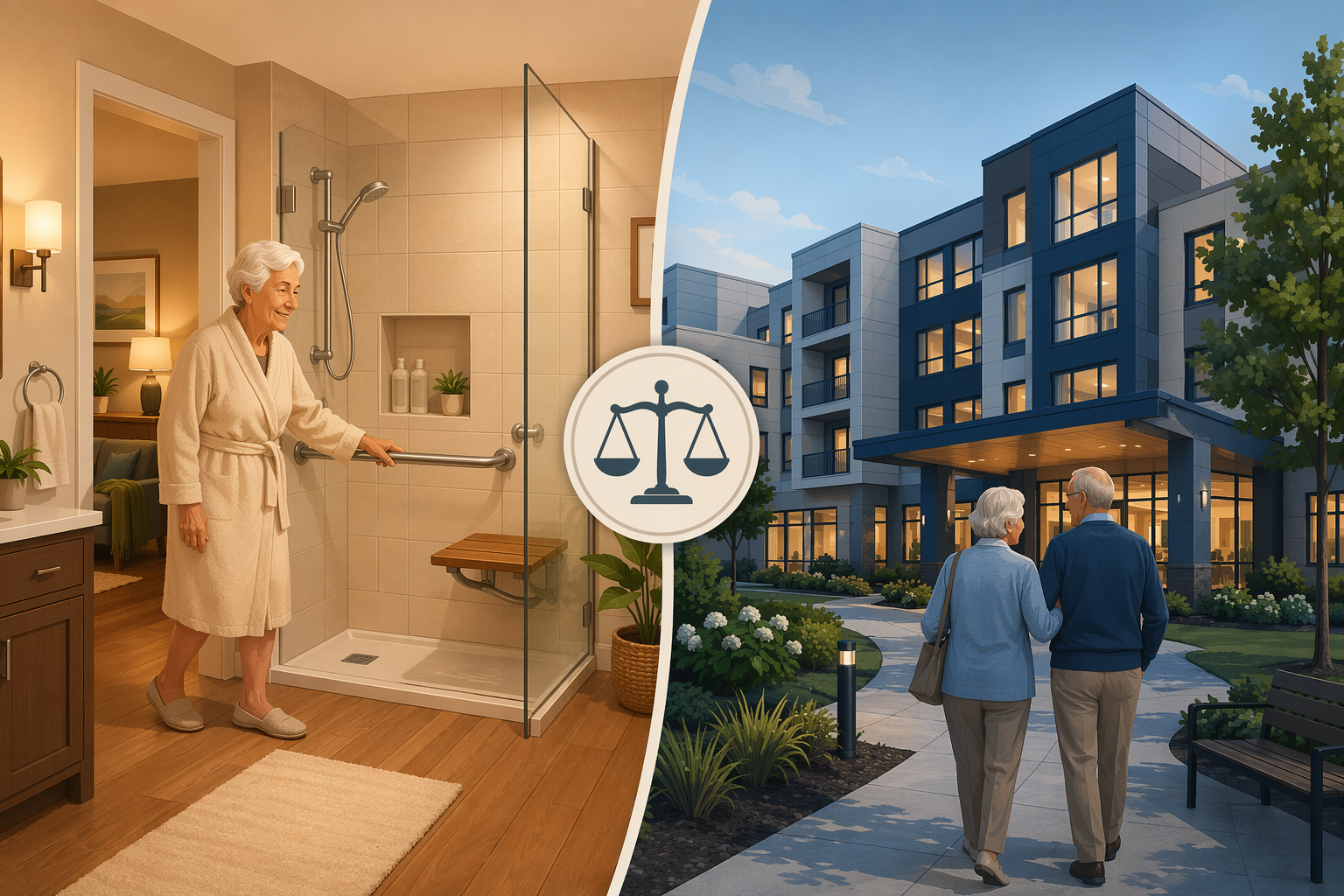
One of the most compelling arguments for hiring a CAPS and investing in home modifications is the financial comparison against senior living. The costs of facility-based care are recurring and substantial.
| Option | Monthly Cost Range | Nature of Cost |
|---|---|---|
| Independent senior living | $1,500 – $4,000 | Recurring monthly expense; no equity building. |
| Assisted living | $3,500 – $10,500 | Recurring monthly expense; no equity building. |
| Home modifications (one-time) | $500 (eval) + $2,000–$20,000+ (mods) | One-time investment; adds home value. |
A one-time investment of $10,000–$20,000 in home modifications can delay or eliminate the need for facility-based care. At an average assisted living cost of $5,000 per month, that investment pays for itself in 2–4 months. Even a more extensive $50,000 renovation is recouped within 10 months compared to assisted living costs.
The benefits extend beyond dollars. A 2017 randomized controlled trial by Stark et al., cited in the 2025 systematic review, found that home modifications reduced falls by 39%. A 2019 study by Carnemolla et al. showed that weekly care hours were reduced by 42% after modifications, and informal care (provided by family members) was reduced by 46%. A large-scale study by Hollinghurst et al. (2022, n=657,536) found that fall-related odds decreased by 3% per quarter after home adaptations were installed.
For a deeper dive into the full financial picture — including hidden costs like maintenance, property taxes, and healthcare — read our article on the hidden costs of aging in place in 2026. If you are weighing the decision after a specific incident like a fall, our decision guide for aging in place vs. assisted living after a fall can help you think through the trade-offs.
How to Find and Interview a CAPS Specialist
Finding a qualified CAPS professional is straightforward. The NAHB maintains a searchable directory of certified specialists on its website. You can search by location and verify that the credential is current.
Once you have identified candidates, the interview process is critical. A CAPS certification is a baseline, but experience and communication style matter. Here are the questions you should ask:
- "How long have you been CAPS-certified, and how many aging-in-place projects have you completed?" Look for someone with several years of experience and a portfolio of similar projects.
- "Can you provide references from past clients, particularly those with similar needs?" Speaking directly to other families can reveal how well the specialist communicates and manages projects.
- "Do you carry liability insurance and workers' compensation?" This is a requirement for CAPS certification, but always verify directly.
- "How do you approach phased remodeling? Can you create a master plan that allows us to do work over several years?" A good CAPS will have a clear process for prioritizing and sequencing work.
- "Do you work with occupational therapists or other healthcare professionals?" Collaboration with allied professionals is a hallmark of the CAPS approach.
- "Can you provide a detailed written estimate that breaks down materials, labor, and timeline?" Transparent pricing is a sign of a professional operation.
To verify a specialist's certification, you can contact NAHB directly or use their online credential verification tool. Ask to see their CAPS certificate and check the expiration date. Annual renewal with continuing education is required, so a current certification indicates the specialist has stayed up to date.
Why CAPS Certification Matters vs. a General Contractor
A general contractor can install a grab bar. A CAPS-certified professional knows where to place it for optimal leverage, what type of wall anchoring is needed for the user's weight, and how to coordinate the installation with other modifications planned for the future. The difference is not in the tool — it is in the training and perspective.
The CAPS curriculum specifically addresses common installation errors, universal design principles, and the human factors that make a modification truly useful rather than merely code-compliant. A CAPS understands that a 36-inch-wide doorway is not just about wheelchair clearance — it is about making the home feel open and accessible for everyone, including visitors with strollers or temporary injuries.
That said, a CAPS is not always the right choice for every project. For a simple, single modification like installing a single grab bar, a licensed general contractor may be perfectly adequate. The value of a CAPS becomes clear when you are planning a comprehensive retrofit — multiple rooms, phased work over years, or modifications that need to accommodate a progressive condition like Parkinson's or Alzheimer's.
Ultimately, the decision to hire a CAPS comes down to complexity and risk. If the goal is to create a home that supports safe, independent living for a decade or more, the specialized training of a CAPS is an investment that pays for itself — in reduced fall risk, lower caregiving costs, and the peace of mind that comes from knowing the work was done right.
Related reading
- How Much Does a CAPS Specialist Cost? A Family Budget Guide for Home Modifications
- CAPS vs. Other Aging-in-Place Certifications: Which Credential Should You Trust for Your Parent’s Home Modifications?
- The Evidence for Aging-in-Place Home Modifications: What Research Says About Fall Prevention, Independence, and Cost Savings
Need a professional assessment?
Find a CAPS-credentialed professional or local aging services through our outbound resource list — we never name or rank individual contractors.
Find Local HelpNoticed something outdated or inaccurate on this page? Flag a correction. We review every report against CDC, NIA, and AARP HomeFit guidance before updating a page.