
Glossary entry
Elder Care Assistance Programs: The Complete Guide to Federal, State, and Local Benefits for Seniors and Family Caregivers

The $58 Billion Gap: Why Most Eligible Seniors Never Get the Help They Deserve
Here is a number that should stop every family caregiver cold: an estimated $58 billion in government benefits goes unclaimed each year by older adults who are eligible for them. That is not a rounding error. It is the gap between what the system was designed to deliver and what families actually receive.
The National Council on Aging (NCOA) has tracked participation rates across the major federal programs, and the numbers are sobering. In 2023, only 40% of eligible older adults were enrolled in Supplemental Security Income (SSI), representing roughly 3.6 million people who qualified but did not receive benefits. Participation in Medicare Savings Programs (MSPs) stood at just 49%, meaning 6.6 million eligible seniors missed help with their Part B premiums. And only 38% of eligible adults aged 65 and older participated in the Supplemental Nutrition Assistance Program (SNAP), leaving 9.1 million older adults without food assistance they could have received.
The individual impact is not abstract. Consider the case of Harry, a 68-year-old Maine resident who, with help from a Benefits Enrollment Center, discovered he and his wife qualified for multiple programs they had never heard of. The result: $7,175 in annual savings — money that stayed in their household instead of going to medical bills, food, and utilities. Harry is not unusual. He is the rule. The system is simply not designed to enroll people automatically.
Why does this happen? The reasons are structural, not personal. Programs are administered by different agencies — Social Security, CMS, USDA, the VA, state Medicaid offices — each with its own application form, eligibility criteria, and renewal schedule. There is no single portal that says, "You qualify for these five programs. Here is how to apply." Families are expected to navigate this maze on their own, often while managing a recent diagnosis, a hospitalization, or the slow realization that a parent can no longer manage independently.
This guide takes a different approach. Instead of listing programs alphabetically, it centers on the problem of unclaimed benefits and provides a systematic method for identifying, applying for, and combining the programs that fit your family's specific situation. The goal is not to turn you into a benefits expert. It is to give you a repeatable process — one that has already saved families like Harry's thousands of dollars a year.

Federal Programs: The Foundation of Elder Care Assistance
Federal programs form the backbone of elder care assistance in the United States. They cover health care, income support, food, utilities, and — in some cases — direct payments to family caregivers. Understanding what each program does, and more importantly, what it does not do, is the first step toward building a complete support package.
Medicare: Health Coverage with Important Gaps
Medicare is the federal health insurance program for people aged 65 and older and for certain younger individuals with disabilities. It is divided into parts, each covering different services:
| Part | What It Covers | 2026 Cost Notes |
|---|---|---|
| Part A (Hospital Insurance) | Inpatient hospital stays, skilled nursing facility care (limited), hospice, some home health care | Premium-free for most (40+ work quarters); $311/month (reduced) or $565/month (full) for those without |
| Part B (Medical Insurance) | Doctor visits, outpatient care, preventive services, medical equipment, some home health | $202.90/month standard premium; $283 annual deductible |
| Part D (Prescription Drug Coverage) | Outpatient prescription drugs through private plans | Average $34.50/month; deductibles up to $615; out-of-pocket cap $2,100 in 2026 |
| Medicare Advantage (Part C) | Combines Parts A, B, and often D through private insurers; may include dental, vision, hearing | Max out-of-pocket for in-network services: $9,250 in 2026 |
For families managing dementia, the GUIDE Model is a newer option worth knowing about. Launched July 1, 2024, and running through 2032, this Medicare demonstration program provides a 24/7 support line, caregiver training, and respite care for people with dementia and their caregivers. It is not available everywhere, but it represents a shift toward recognizing that caregiver support is part of health care.
Two programs can help lower Medicare costs for low-income seniors: Medicare Savings Programs (MSPs) pay Part B premiums ($2,434.80 annually in 2026) and sometimes deductibles and coinsurance, while Extra Help (Low-Income Subsidy) assists with Part D costs. As noted above, roughly 1.25 million people receiving Extra Help also qualify for but are not enrolled in an MSP — a missed opportunity worth thousands of dollars per year.
For a deeper breakdown of each Medicare part and what it covers, see our Medicare Definition for Caregivers guide.
Medicaid: The Long-Term Care Safety Net (State by State)
If Medicare is the health insurance layer, Medicaid is the long-term care layer — and it is fundamentally different in two ways. First, it is means-tested: you must meet strict income and asset limits, which vary by state. Second, it is state-administered: what is covered in California may not be covered in Texas, and the application process is different in every state.
Medicaid covers what Medicare does not: long-term custodial care in nursing homes, and — through Home and Community-Based Services (HCBS) waivers — personal care, homemaker services, and adult day health care delivered at home or in the community. These waivers are the primary mechanism by which Medicaid pays for in-home care, including, in many states, care provided by a family member.
For married couples, spousal impoverishment protections prevent the healthy spouse from having to deplete all assets before the other spouse can qualify for Medicaid. The Program of All-Inclusive Care for the Elderly (PACE) combines Medicare and Medicaid funding for frail older adults who are eligible for nursing home care but want to remain at home — providing medical, social, and long-term care services through a single team.
VA Benefits: Programs That Can Pay Family Caregivers
For veterans and surviving spouses, the Department of Veterans Affairs offers some of the most generous elder care assistance programs available — including several that can directly pay family members for providing care.
| Program | What It Provides | Key Eligibility |
|---|---|---|
| Program of Comprehensive Assistance for Family Caregivers (PCAFC) | Monthly stipend, health benefits (CHAMPVA), respite care, mental health services, travel, and training for the caregiver | Veteran must have a serious service-connected injury or illness (including some dementia cases); caregiver must be a family member or live-in caregiver |
| Aid and Attendance | Monthly cash allowance added to a VA pension to pay for long-term care, including care provided by family members | Veteran or surviving spouse needs help with ADLs, is bedridden, in a nursing home, or has significantly reduced eyesight |
| Housebound Benefit | Monthly cash allowance for veterans who are substantially confined to their home | Veteran has a single permanent disability rated 100% and is housebound |
| Veteran-Directed Care (VDC) | Flexible budget to hire caregivers of the veteran's choice, including family members; managed with counselor assistance | Pilot program in 42 states plus DC and Puerto Rico; eligibility varies by location |
The VA also offers respite care to give family caregivers a break, and the Veteran-Directed Home and Community-Based Services program (related to VDC) allows veterans to manage their own budget for personal care, adult day health care, and home modifications. To start, contact the VA pension management center or your local VA medical center's social work department.
SSI, SNAP, and LIHEAP: Income, Food, and Energy Assistance
Beyond health care, three federal programs address basic needs that become harder to meet as health care costs rise:
- Supplemental Security Income (SSI): Provides monthly cash payments to seniors (65+) and people with disabilities who have very limited income and resources. The average annual value for an older adult is $8,574.36 ($714.53/month). As of April 2026, 2.5 million SSI recipients were over 65, representing 34% of all SSI recipients. SSI enrollment often triggers automatic eligibility for Medicaid and SNAP.
- Supplemental Nutrition Assistance Program (SNAP): Formerly food stamps. The average monthly benefit for an older adult living alone is $188 ($2,256 annually). Special rules apply for households with seniors: some assets are excluded, and medical expenses can be deducted from income when calculating eligibility.
- Low-Income Home Energy Assistance Program (LIHEAP): Helps with heating and cooling costs. The Weatherization Assistance Program can also make energy-saving home improvements at no cost, saving an estimated $300/year on utility bills.
These programs are often overlooked because they are not "elder care" in the medical sense. But for a senior living on a fixed income, an extra $714 in cash and $188 in food assistance per month can be the difference between staying at home and moving to a facility.
Older Americans Act Programs: The Overlooked Safety Net
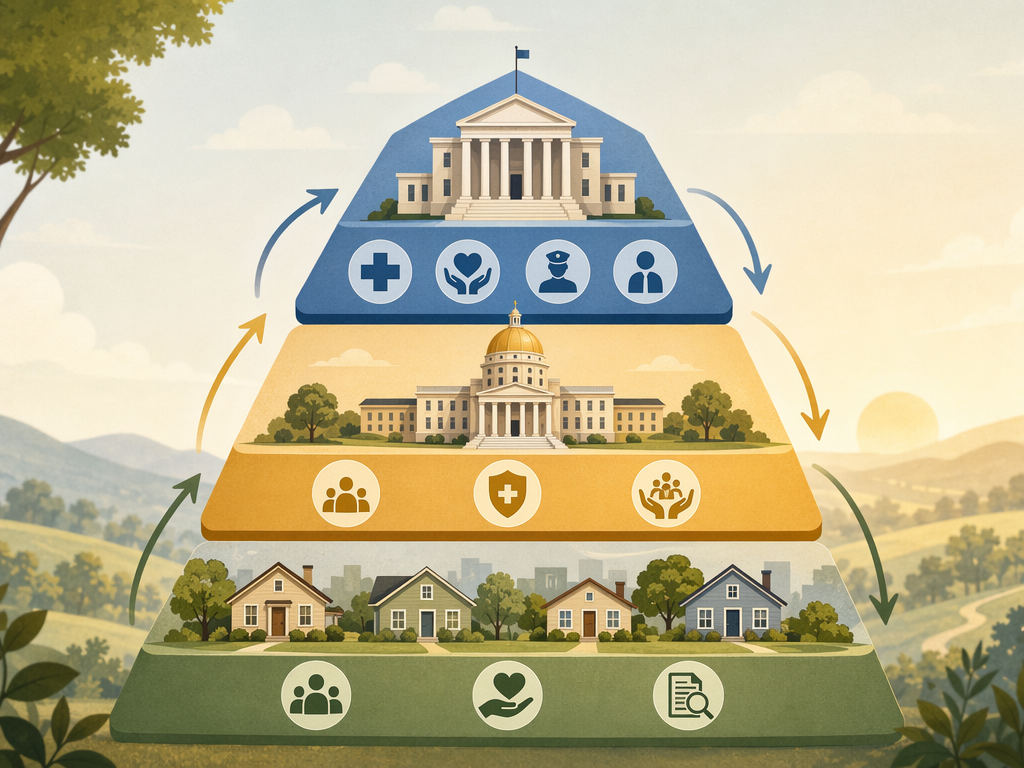
The Older Americans Act (OAA) funds a network of community-based services that are less well-known than Medicare or Medicaid but directly address the daily challenges of aging at home. These programs are delivered through local Area Agencies on Aging (AAAs), which exist in every community and are the single most useful resource most families have never heard of.
The major OAA program categories include:
- Supportive Services: Transportation, homemaker assistance, chore services, adult day care, legal assistance, and case management. These are the services that help seniors remain independent without requiring a medical diagnosis.
- Nutrition Services: Includes both congregate meals (served at senior centers) and home-delivered meals (Meals on Wheels, reachable at 888-998-6325). No means test is required — anyone 60+ can participate, though donations are encouraged.
- National Family Caregiver Support Program (NFCSP): Provides grants to AAAs to offer caregiver information, counseling, support groups, training, and respite care. This is the primary federal program specifically designed to support family caregivers, not just the care recipient.
- Falls Prevention Programs: Evidence-based programs like Tai Chi for Arthritis and Stepping On, offered through AAAs and senior centers, help reduce fall risk — the leading cause of injury among older adults.
- Preventive Health Services: Health screenings, immunizations, chronic disease self-management workshops, and health promotion programs.
For FY27 (the federal fiscal year beginning October 1, 2026), the House appropriations bills propose level-funding for most OAA programs, with slight increases for Nutrition, Native American, and Elder Rights programs. The Senior Community Service Employment Program (SCSEP), which provides part-time job training for low-income seniors, is again proposed for elimination. These proposals are not final — a continuing resolution with level-funding is expected when FY27 begins — but they signal the ongoing fragility of the aging services infrastructure.
State and Local Entry Points: Where to Start in Your Community
The federal programs described above are administered locally. That means your first phone call should not be to Washington, DC — it should be to an organization in your parent's community. Four entry points are particularly important:
- Area Agencies on Aging (AAAs): The front door to OAA programs. AAAs provide information and referral, case management, caregiver support, nutrition services, and benefits counseling. They can also connect you to local options counseling, which helps families understand the full range of care options — not just what is covered by insurance.
- Aging and Disability Resource Centers (ADRCs): Also called "No Wrong Door" systems, ADRCs provide a single entry point for information about long-term services and supports, regardless of income or insurance status. They are designed to eliminate the need to call multiple agencies.
- State Health Insurance Assistance Programs (SHIP): Free, unbiased counseling on Medicare, Medicare Advantage, Part D, Medigap, and Medicare Savings Programs. SHIP counselors are trained to help you compare plans, understand coverage gaps, and apply for low-income subsidies. This is the single best resource for Medicare-related questions.
- Long-Term Care Ombudsman: Advocates for residents of nursing homes, assisted living facilities, and board-and-care homes. They investigate complaints, mediate disputes, and provide information about residents' rights. If your parent is already in a facility or you are considering one, the Ombudsman is a critical ally.
To find your local AAA, ADRC, or SHIP, use the Eldercare Locator at 800-677-1116 or visit eldercare.acl.gov. This free service, funded by the Administration for Community Living, connects you to your local aging network with a single phone call or website search.
Program Locator Tools: Your Free Navigation Toolkit
Before you start filling out applications, use these free screening tools to identify which programs your family member may qualify for. They are the bridge between knowing programs exist and actually applying.
| Tool | What It Does | Best For |
|---|---|---|
| Eldercare Locator (800-677-1116) | Connects you to local AAAs, ADRCs, SHIP, and other aging services by zip code | First step for any family caregiver who does not know where to start |
| NCOA BenefitsCheckUp (benefitscheckup.org) | Free online screening tool for 2,500+ federal, state, and private benefits; generates a personalized report of programs you may qualify for | Identifying all potential benefits in one place before applying |
| USA.gov Benefit Finder (usa.gov/benefit-finder) | Official government tool that screens for federal benefits across multiple agencies | A secondary check after BenefitsCheckUp to ensure no federal program is missed |
BenefitsCheckUp is particularly powerful because it covers not just federal programs but also state and local benefits, including prescription drug assistance, utility discounts, and property tax relief. The tool asks about income, assets, medical expenses, and location, then produces a list of programs with estimated benefit amounts and application instructions. It is maintained by NCOA and updated regularly to reflect program changes.
Recent Policy Context: What the FY27 Budget Means for Families
As of June 2026, the federal budget for FY27 (starting October 1, 2026) is under consideration. The House appropriations bills propose the following for aging services:
- Most OAA programs (Supportive Services, Nutrition, Caregiver Support, Preventive Health, Native American services, Aging Network Support) are proposed at level-funding — the same amount as the previous year, which effectively means a cut when adjusted for inflation.
- OAA Nutrition, Native American, and Elder Rights programs would see slight increases.
- The Senior Community Service Employment Program (SCSEP) is again proposed for elimination. This program provides part-time job training for low-income seniors aged 55+.
- CDC falls prevention programs would receive +$1 million, a modest increase that reflects growing awareness of fall-related injury costs.
- SHIP (Medicare counseling) is proposed at level-funding, and LIHEAP would see an increase.
A Step-by-Step Action Plan for Families: From Confusion to Enrollment
Knowing that programs exist is not the same as getting enrolled. The following six-step plan is designed to move you from confusion to action, one step at a time.
Step 1: Assess Current Needs and Costs
Before you can match programs to needs, you need a clear picture of what those needs are. Make a list of:
- Medical costs: premiums, deductibles, copays, prescriptions, medical equipment
- Personal care needs: help with bathing, dressing, eating, toileting, mobility
- Daily living support: meal preparation, housekeeping, transportation, shopping
- Home safety: grab bars, ramps, stair lifts, lighting, fall hazards
- Caregiver support: respite, counseling, training, support groups
If you are new to caregiving, our Getting Started as a Family Caregiver guide provides a structured framework for this assessment.
Step 2: Find Your Local Aging Network
Call the Eldercare Locator at 800-677-1116 or visit eldercare.acl.gov. Give them the zip code of the person who needs care. Ask for:
- The local Area Agency on Aging (AAA) contact
- The local SHIP office for Medicare counseling
- The local ADRC or "No Wrong Door" entry point
- The Long-Term Care Ombudsman for your area
Write down the names, phone numbers, and hours of each. These are your primary contacts for everything that follows.
Step 3: Run a BenefitsCheckUp Screening
Go to benefitscheckup.org and complete the screening for your family member. Have their income, assets, and monthly expenses handy. The tool will generate a personalized report listing programs they likely qualify for, with estimated benefit amounts and application instructions. Print this report — it becomes your roadmap.
Step 4: Prioritize Applications by Urgency and Eligibility
Not all programs need to be applied for at once. Prioritize based on:
- Immediate financial impact: MSPs (saving $2,434/year on Part B premiums), SSI ($8,574/year), SNAP ($2,256/year)
- Health care access: Medicaid (if eligible), VA health benefits, Extra Help for prescriptions
- Daily living support: OAA nutrition and supportive services through the AAA
- Caregiver support: NFCSP respite and counseling through the AAA
Start with the programs that have the highest financial return and the simplest applications. MSPs and SNAP are often easier to apply for than Medicaid or VA benefits, which require more documentation.
Step 5: Get Help with Applications
You do not have to do this alone. Benefits Enrollment Centers — funded by NCOA and local partners — provide free, one-on-one assistance with benefit applications. SHIP counselors can help with Medicare-related applications. Your local AAA can help with OAA program enrollment and may have benefits counselors on staff. If your parent is a veteran, the local VA medical center's social work department can assist with VA benefit applications.
For families who feel completely lost, our Help for Elderly Parents: A 5-Step Roadmap provides a structured first-steps guide that complements this benefits-focused approach.
Step 6: Combine Programs for Maximum Coverage
The most effective elder care assistance packages combine multiple programs. A senior might receive:
- Medicare Part A and B for hospital and medical coverage
- An MSP to pay the Part B premium ($2,434/year saved)
- Extra Help for prescription drug costs
- SSI for monthly cash assistance ($8,574/year)
- SNAP for food assistance ($2,256/year)
- OAA nutrition services (Meals on Wheels or congregate meals)
- NFCSP respite care through the local AAA
- LIHEAP for energy assistance
Combined, these programs can be worth $13,000–$15,000 or more per year — and that is before accounting for Medicaid long-term care coverage or VA benefits, which can add tens of thousands more. The key is not to view each program in isolation but as part of an integrated support system.
The system is fragmented. The applications are tedious. The eligibility rules are confusing. But the alternative — leaving $58 billion on the table while your family struggles to pay for care — is worse. Start with one phone call to the Eldercare Locator. That single step has saved families thousands of dollars and countless hours of confusion. It can do the same for yours.
Browse more in the Glossary.