
Room checklist
How to Find, Vet, and Hire a Certified Aging-in-Place Specialist
This guide walks family caregivers through the process of finding, interviewing, and hiring a Certified Aging-in-Place Specialist (CAPS), including where to verify credentials, what questions to ask, and red flags to avoid — helping you make informed decisions and avoid costly mistakes.
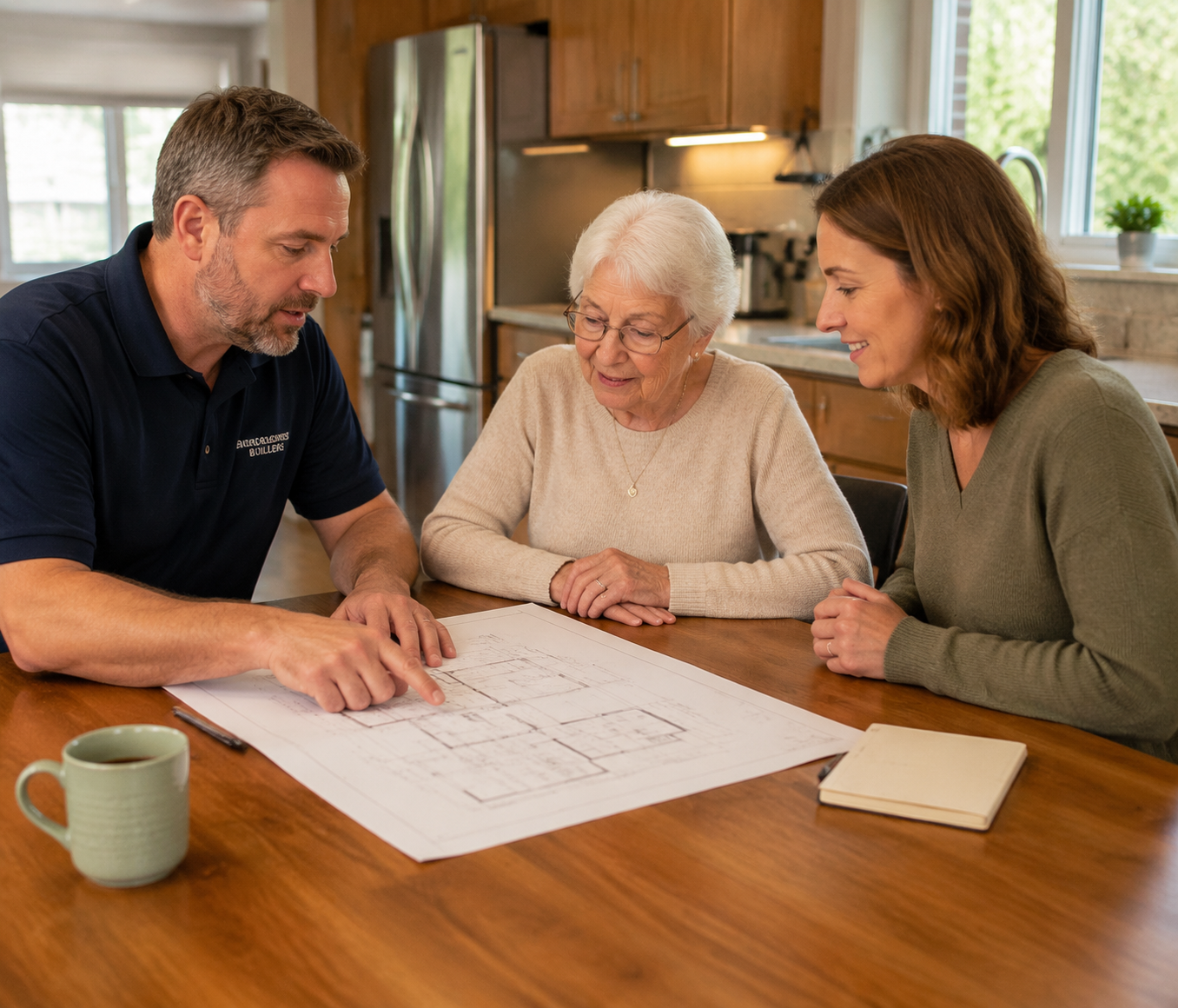
Once you are already looking at contractor websites, referral lists, and search results, the question is no longer whether your parent’s home needs attention. The question is whether the person you hire can connect the work to the way your parent actually moves, transfers, remembers, reaches, bathes, and gets through the house at night. A certified aging in place specialist can be part of that answer, but the credential is only the beginning of the hiring process.
A CAPS hire should be vetted differently from a standard remodeling hire. You still need licensing, insurance, references, workmanship, and a clear contract. On top of that, you need evidence that the person understands aging-in-place risks well enough to avoid turning a safety project into an expensive guess.
What the CAPS credential does—and does not—tell you
The Certified Aging-in-Place Specialist designation is administered by the National Association of Home Builders. NAHB describes CAPS as a program for professionals who want to serve older adults and people who want to remain in their homes as their needs change. The program was developed with AARP and launched in 2001.[1]
To earn the designation, candidates complete three courses: Marketing & Communicating with the Aging Client, Design Concepts for Livable Homes and Aging in Place, and Details & Solutions for Livable Homes and Aging in Place. NAHB also says the designation is open to remodelers, general contractors, occupational therapists, interior designers, architects, and other professionals; there are no prerequisites before taking the required courses.[2]
That makes CAPS useful, but not magical. It tells you the person completed a specific aging-in-place education track. It does not tell you whether the person is licensed to perform construction in your state, carries workers’ compensation coverage, installs grab bars correctly, understands dementia-related wandering risk, or will come back when a threshold edge becomes a problem. NAHB requires CAPS designees to renew annually with four hours of continuing education, which is worth verifying, but that requirement is not a substitute for checking the actual work.[2]
The stakes are not small. Pew Research Center reported in February 2026 that 93% of adults ages 65 and older live in their own homes, and 60% say they want to remain there while receiving care; the survey included 2,582 U.S. adults.[3] At the same time, the U.S. Census Bureau has reported that only 10% of U.S. homes are equipped for safe aging in place.[4] That gap is where rushed decisions happen.
Start with verified places to search
The cleanest first stop is NAHB’s CAPS directory, which is searchable by location and specialty.[5] Do not treat a website badge, a social media claim, or a line in a brochure as verification. Use the directory to confirm that the person is currently listed, then ask the candidate to provide the name under which the designation is held and any certificate or designation details they use in their business materials.
If your search results are thin, widen the circle carefully. Local Home Builders Association chapters may know which remodelers in the area carry CAPS. Occupational therapists may have worked with home modification professionals on discharge planning or mobility changes. Area Agencies on Aging may be able to point you toward local home safety resources. Care.com also notes CAPS as a role families may encounter when planning aging-in-place changes.[6]
This is also the right moment to be clear about what kind of professional you are trying to hire. A CAPS may be a contractor, designer, occupational therapist, architect, or consultant. If you are still deciding whether the job calls for a CAPS, an occupational therapist, or a general contractor, use a comparison resource such as CAPS, Occupational Therapist, or General Contractor before asking for bids.

Use the first call to screen, not to hire
The first phone call is not the place to explain every detail of your parent’s decline or agree to a start date. It is a screening call. You are trying to find out whether this person belongs on the shortlist and whether they slow down enough to understand the risk.
Ask these questions before scheduling an assessment:
- Are you currently listed in the NAHB CAPS directory, and under what name should I search?
- What is your professional role on this project: consultant, designer, contractor, occupational therapist, architect, or another role?
- If construction is involved, what license applies, and can you provide proof of liability insurance and workers’ compensation coverage?
- Have you completed projects for clients with needs similar to my parent’s, such as walker use, bathroom transfers, dementia, post-surgery recovery, stair difficulty, or nighttime fall risk?
- Will you provide a written assessment, written scope of work, or both before work begins?
- Can you provide references from similar projects, not only general remodeling clients?
Several aging-in-place hiring guides recommend asking about credential status, insurance, references, similar experience, budget handling, and follow-up before choosing a specialist.[7][8][9] Those categories sound ordinary until a family skips one. A loose grab bar, a ramp with the wrong slope, or a beautiful bathroom that still leaves no safe transfer space is not a paperwork problem. It is a daily hazard.
Credential questions should be direct
A legitimate CAPS should not act offended when you ask for verification. The clean version sounds simple: “I’m checking every candidate through the NAHB directory. What name should I search, and is your CAPS designation current?” If the person says the directory is unnecessary, the certificate is old, the office handles that, or you should just trust the logo, pause the process.
If a company advertises CAPS expertise, ask who on the project actually holds the designation. A salesperson with CAPS training is not the same as a project manager with CAPS training, and neither is the same as the subcontractor who installs the bathroom fixtures. You do not need every person on site to carry the credential, but you should know who is applying the aging-in-place judgment and who is accountable for the finished design.
Licensing and insurance still matter
CAPS is not a construction license. If the specialist is performing or managing construction, ask for the license that applies in your state or municipality, proof of general liability coverage, and workers’ compensation coverage when workers will be on site. If the person is acting only as a consultant, ask how they coordinate with licensed contractors and whether their recommendations become a written scope that contractors can bid on.
This is not nitpicking. Aging-in-place work often touches bathrooms, stairs, entries, flooring transitions, lighting, doorways, and sometimes structural or electrical work. The credential may help the person notice what matters. The license and insurance help protect the household when work is actually performed.
Ask about your parent’s actual condition, not “senior safety” in general
The weakest interviews stay abstract. The stronger ones force the candidate to talk about the person who lives in the home. A parent using a walker needs different clearances than a parent who forgets to turn on lights. A spouse recovering from hip surgery may need a short-term transfer setup that changes later. Someone who grabs towel bars because they are within reach needs a different conversation than someone planning a full bathroom remodel.
Use condition-specific prompts:
- For mobility limitations: “How do you evaluate turning space, doorway width, flooring transitions, and the route from bedroom to bathroom?”
- For bathroom transfers: “How do you decide placement for grab bars, seating, handheld showers, and toilet support?”
- For dementia: “What changes do you consider for lighting, contrast, doorways, appliance access, and confusing layouts?”
- For post-surgery recovery: “How do you separate urgent temporary changes from permanent remodeling?”
- For stairs and entries: “How do you evaluate whether a ramp, rail, stairlift, or alternate entrance is appropriate?”
- For nighttime fall risk: “Do you look at the bedroom-to-bathroom path, lighting controls, flooring, thresholds, and medication-related timing?”
A good answer does not have to sound like a lecture. It should show that the candidate asks follow-up questions before recommending products. If the first answer to every problem is a walk-in tub, a stairlift, or a package price, you may be hearing a sales process rather than an assessment process.

Know the stop signs before you get pressured
Families often call after a fall, a hospital discharge, or a sudden decline. That urgency is real. It is also when the wrong professional can move fastest. Treat these as practical stop signs:
- The person claims CAPS status but cannot be found in the NAHB directory or will not give enough information to verify it.
- They want to start construction before seeing how your parent uses the home.
- They offer only a vague estimate instead of a written scope that says what will be installed, where, and by whom.
- They cannot explain licensing, insurance, subcontractors, or who is responsible for correcting problems.
- They refuse references from similar aging-in-place projects.
- They push a product or package before asking about mobility, cognition, transfers, medications, caregiving routines, or the main route through the home.
One red flag does not always mean bad intent. It may mean the person is a fine remodeler but not the right fit for this project. The outcome is the same: do not hand them the safety decisions unless the missing pieces are resolved in writing.
Compare candidates on process, not charm
After two or three screening calls, compare the candidates in the same categories. This keeps the most confident voice from automatically becoming the safest choice.
| What to compare | What a stronger answer looks like |
|---|---|
| CAPS verification | Currently listed or otherwise clearly verifiable through NAHB, with the actual designee identified |
| Professional role | Clear distinction between consultant, contractor, designer, OT, architect, salesperson, and installer |
| Condition-specific experience | Examples that resemble your parent’s mobility, cognitive, recovery, transfer, stair, or fall-risk situation |
| Assessment method | Plans to observe the home, routes, barriers, and daily routines before proposing major work |
| Written documentation | Provides a written assessment, scope, estimate, contract, change-order process, and follow-up expectations |
| Construction protections | Provides applicable license information, insurance, workers’ compensation, and subcontractor details |
References deserve more than a quick call. Ask what problem the project was supposed to solve, whether the final work matched the written scope, whether the specialist handled surprises clearly, and whether anything had to be adjusted after the older adult used the modification. A reference who says “the bathroom looks beautiful” is helpful. A reference who says “my father can now transfer safely from the toilet at night” tells you something closer to the point.
What the engagement should look like after you choose someone
Once you select a CAPS candidate, the work should move through a visible sequence: assessment, plan, bids or proposal, construction, and final walk-through. The exact order can vary when the CAPS is a consultant rather than the contractor, but the family should not be left guessing who is deciding what.
The home assessment
Aging in Place Directory reports that home safety assessments from an aging-in-place specialist often cost $300 to $1,000, with consultation rates commonly listed at $75 to $200 per hour.[10] Treat those as planning benchmarks, not guaranteed 2026 prices. Region, travel, project complexity, written deliverables, and professional role can change the fee.
During the assessment, the specialist should look at the routes your parent actually uses: entry to living space, bedroom to bathroom, kitchen access, laundry, stairs, garage, driveway, and any place where a caregiver helps with transfers. If your parent can safely participate, the specialist should watch how they move rather than relying only on family descriptions.
Bring the practical details: recent falls, discharge instructions if relevant, assistive devices, vision or hearing concerns, dementia behaviors, medication timing that affects nighttime bathroom use, and who provides hands-on help. If an occupational therapist, physical therapist, or discharge planner has already made recommendations, share them. The CAPS does not need to replace clinical judgment to use clinical information well.
The written plan or scope
The written output should be specific enough that another qualified person could understand it. “Improve bathroom safety” is not a scope. “Install two properly anchored grab bars at specified locations, replace slick flooring with a slip-resistant surface, add night lighting along the bedroom-to-bath path, and remove the raised threshold at the bathroom entrance” is closer to something you can evaluate.
If the assessment identifies many possible modifications, separate urgent safety items from nice-to-have upgrades. For help deciding what to address first after the assessment, use a prioritization guide such as Where to Start: A Prioritization Framework for Aging-in-Place Home Modifications. A room-by-room guide can help you understand common modification categories, but the hired professional still has to fit the recommendations to the person and the house.
Bids, products, and cost ranges
If construction is involved, the bid should identify materials, model numbers when relevant, labor, permits if applicable, subcontractors, exclusions, payment schedule, and change-order rules. A CAPS consultant may prepare recommendations that you then take to contractors. A CAPS contractor may provide both the assessment and the proposal. Either way, do not let the assessment disappear into a lump-sum quote.
Published modification cost examples can help you recognize the scale of a project, but many commonly cited figures are from 2019 through 2023 and should not be treated as current fixed pricing. Estimates such as $100 to $300 for installed grab bars, $5,000 to $15,000 for a walk-in tub, or $3,000 to $5,000 for a stairlift appear in older aging-in-place cost discussions, but actual pricing depends on region, materials, labor, structural conditions, and scope.[10] Use ranges to ask better questions, not to force a contractor into a number that no longer matches the market.
Funding information needs the same caution. Some programs change annually, and manufacturer funding guides may emphasize products they sell. NerdWallet has reported that the VA Specially Adapted Housing grant reaches $126,526 for FY2026, but families should verify current eligibility and amounts against official VA materials before planning around that figure.[11]
Construction and communication
Before work starts, the contract should state who is responsible for scheduling, site protection, access to the home, cleanup, permits, inspections, product substitutions, delays, and final approval. If your parent will remain in the home during work, ask how the crew will keep usable routes open and how they will communicate disruptions to a person with hearing loss, memory loss, or anxiety around strangers.
For larger projects, ask for checkpoints before walls are closed, fixtures are permanently placed, or thresholds are finished. It is cheaper and safer to catch a placement problem before the work is complete. If the CAPS is not the contractor, ask whether they will review the work during construction or only at the end.
The final walk-through
The final walk-through should test the modification against the original problem. Have your parent use the route, fixture, ramp, rail, lighting, or transfer setup if it is safe for them to do so. If a caregiver assists, test the caregiver’s position too. A bathroom change that works only when no one is helping is not finished.
Keep a punch list in writing. Include missing items, placement concerns, rough edges, lighting gaps, threshold problems, product manuals, warranties, and who to call if something loosens or fails. Do not release final payment until the contract terms and punch-list expectations are satisfied.
A defensible hiring decision
You are in a safer position when you can say five things plainly: the CAPS credential was verified; the candidate has relevant experience with your parent’s situation; licensing, insurance, and role boundaries are clear; the assessment or scope is written; and the contract includes how the work will be checked at the end.
That process may feel slower than hiring the first confident person who answers the phone. It is still faster than repairing a project that never matched the person it was supposed to protect.
References
- Certified Aging-in-Place Specialist (CAPS), National Association of Home Builders.
- How to Earn Your CAPS, National Association of Home Builders.
- Most Older Americans Want to Stay in Their Homes as They Age, Pew Research Center, February 2026.
- Old Housing, New Needs: Are U.S. Homes Ready for an Aging Population?, U.S. Census Bureau.
- Find a Certified Aging-in-Place Specialist, National Association of Home Builders.
- Aging in Place: The Role of a Certified Aging in Place Specialist, Care.com.
- What to Ask Before Hiring an Aging-in-Place Specialist, Aging in Place Directory.
- 10 Frequently Asked Questions for Certified Aging-in-Place Specialists, Right at Home.
- How to Find a Certified Aging-in-Place Specialist, Medical Care Alert.
- How Much Does It Cost to Hire an Aging-in-Place Specialist?, Aging in Place Directory.
- VA Specially Adapted Housing Grants: What to Know, NerdWallet.
Related reading
Need a professional assessment?
Find a CAPS-credentialed professional or local aging services through our outbound resource list — we never name or rank individual contractors.
Find Local HelpNoticed something outdated or inaccurate on this page? Flag a correction. We review every report against CDC, NIA, and AARP HomeFit guidance before updating a page.