
Room checklist
How generic drug tariffs raise senior medication costs and fall risk
Proposed tariffs on generic drugs add cost pressure that could lead seniors to skip doses, a known fall risk factor. This guide explains the connection and offers steps caregivers can take now to protect medication adherence and home safety.
- Room
- bathroom
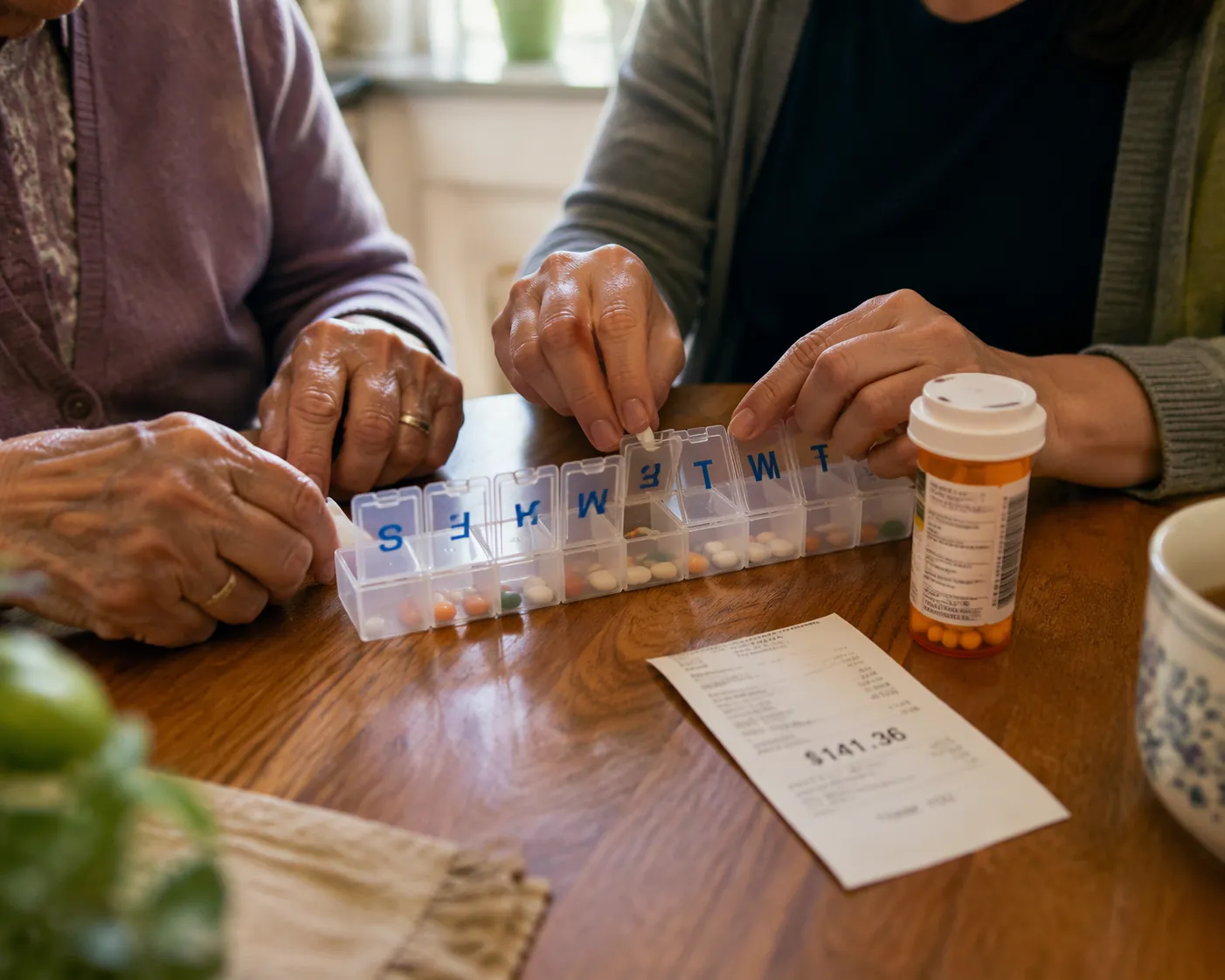
The first warning sign is often small: a parent says they are “making the pills last,” waits a few extra days before refilling, or comes home from the pharmacy with only part of what the doctor prescribed. That is where the question of how generic drug tariffs affect senior medication costs stops being a trade-policy story and becomes a fall-prevention story.
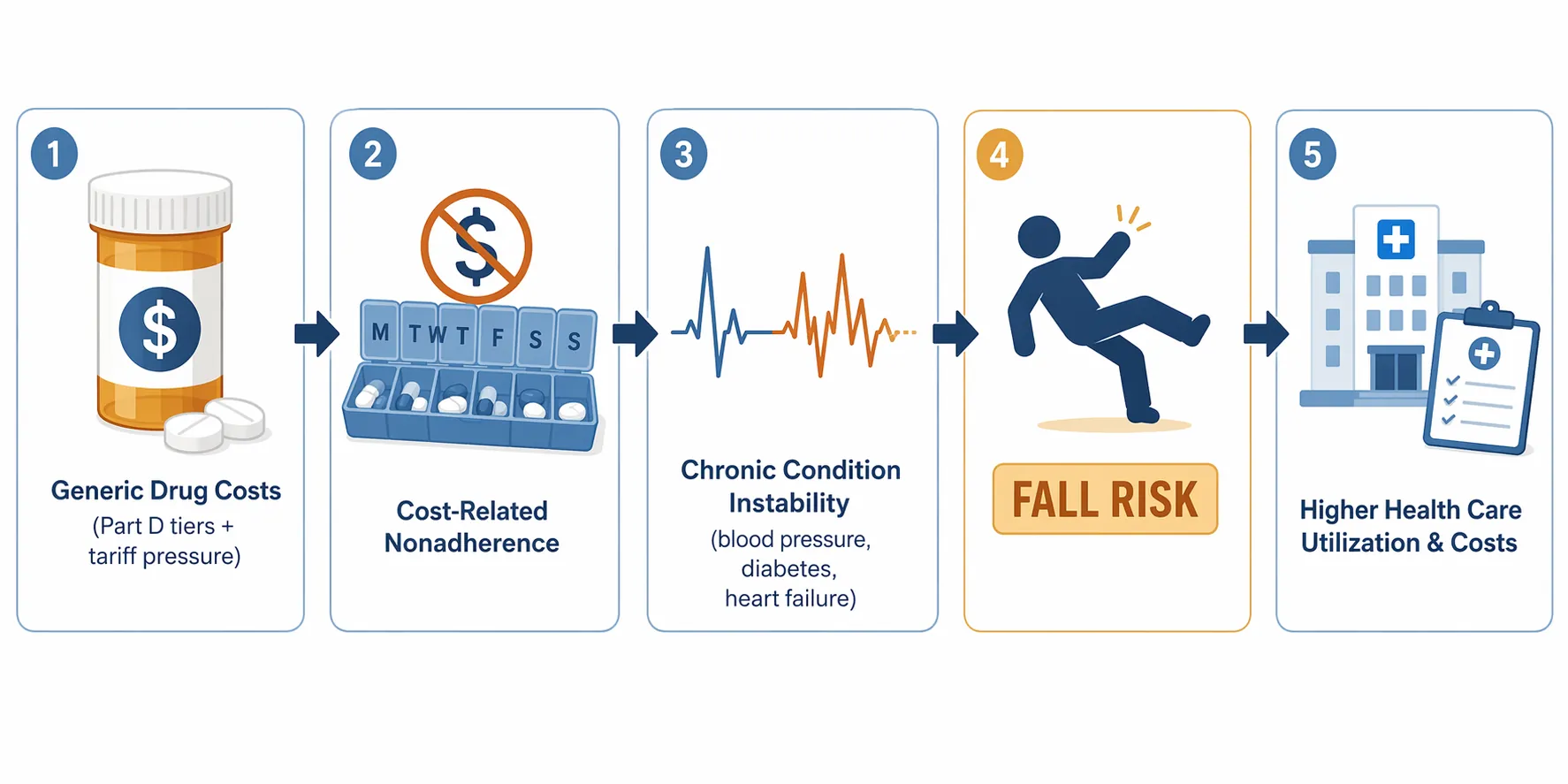
The chain is not mysterious, but it needs to be stated carefully. Tariff pressure can raise the cost of imported generic drugs if those costs are passed through the supply chain. Higher out-of-pocket costs are associated with seniors skipping, delaying, or stretching medications. Skipped medications can destabilize conditions that matter for balance, gait, dizziness, blood pressure, vision, neuropathy, and strength. That does not mean tariffs directly “cause falls.” It means cost pressure can break medication adherence, and medication nonadherence is one of the risk pathways caregivers should watch.
There is also no reason to panic-buy prescriptions in Q3 2026. As of April 2, 2026, generic drugs were exempt from pharmaceutical tariffs for at least 12 months, while a proposed 100% tariff rate for generics is scheduled for August 2028 with a two-year ramp. The policy landscape can still change, but the exemption creates a planning window, not a free pass to ignore the issue.[1]
The problem already exists before tariffs arrive
Generic drugs are supposed to be the affordable part of the medication list. In many ways, they are: the Association for Accessible Medicines reports that average generic prices have been falling, with an average generic prescription price of $17. The catch is at the pharmacy counter. The same analysis, using AAM/Avalere data, found that 57% of generic drugs in Medicare Part D are placed on non-generic tiers, where the patient may face higher copays than the word “generic” suggests.[2]
That tier placement matters because families do not pay an average price; they pay the amount printed on the receipt for this refill, at this pharmacy, under this plan, in this coverage phase. A drug can be inexpensive in the national pricing conversation and still feel expensive to an older adult on a fixed monthly budget. When that happens, the person most likely to notice may not be the prescriber. It may be the adult child filling the pill organizer on Sunday night.
This is why blaming a parent for “not taking their medicine” misses the point. Among Medicare beneficiaries age 65 and older, studies using Medicare Current Beneficiary Survey data have found that 14% to 20% report cost-related medication nonadherence. That includes behaviors such as skipping doses, taking smaller doses, delaying fills, or not filling a prescription because of cost.[3]
A caregiver may hear it as a practical excuse: “I still had some left,” “I do not need that one every day,” or “The pharmacy said it was more this time.” Those sentences are not a medication plan. They are a signal to slow down and find out whether the prescription, the plan formulary, the pharmacy price, or the refill routine has changed.
Why a skipped refill can show up as a fall risk
Medication adherence affects fall risk through the conditions those medications are meant to control. The evidence should not be overstated: research has found that poor medication adherence may be associated with falls, not that every missed pill causes a fall.[4] But the pathway is serious enough that caregivers should treat cost-related dose-skipping as part of fall-risk screening.
Blood pressure medications are a good example because both undertreatment and overtreatment can create trouble. If a parent skips doses, blood pressure may run high or fluctuate. If they take pills irregularly and then restart them all at once, dizziness or lightheadedness may appear. Standing up from bed, turning in the bathroom, or stepping off a curb becomes riskier when the body is not responding predictably.
Diabetes medications create another route. Poor glucose control can contribute to weakness, blurred vision, dehydration, neuropathy, and fatigue. Neuropathy is especially unforgiving in the home: the foot does not feel the floor clearly, the edge of a rug disappears under the toes, and a quick nighttime trip to the bathroom becomes less forgiving.
Heart failure medications can affect fluid balance, shortness of breath, swelling, and stamina. Statins do not usually enter family conversations about falls, but they are part of the cardiovascular risk picture and are heavily generic. SSRIs can matter because some older adults experience dizziness, sleep changes, or balance-related side effects, and abrupt changes in use can be clinically important. None of these medications should be stopped, restarted, split, or substituted without the prescriber or pharmacist involved.
| Medication group caregivers should notice | Why cost-related skipping can matter for falls | What to ask before changing anything |
|---|---|---|
| Antihypertensives | Blood pressure swings, dizziness, lightheadedness, or orthostatic symptoms can affect standing and walking. | Has the parent skipped doses, doubled up after missing doses, or felt dizzy when standing? |
| Diabetes drugs | Poor glucose control can contribute to weakness, blurred vision, dehydration, fatigue, or neuropathy. | Is the medication being taken as prescribed, and are glucose readings or symptoms changing? |
| Heart failure drugs | Fluid shifts, shortness of breath, swelling, and fatigue can affect endurance and balance. | Has the parent delayed refills because of cost or changed diuretic use to avoid bathroom trips? |
| Statins | They are often generic and part of broader cardiovascular risk management. | Is cost causing the parent to stop a preventive drug without discussing alternatives? |
| SSRIs | Dizziness, sleep changes, and abrupt medication changes can affect stability in some older adults. | Has the parent changed the dose or stopped because the refill cost changed? |
What tariffs could add to the Part D problem
The tariff debate is partly about who absorbs the added cost. Some tariff supporters argue that middlemen and existing margins could prevent the full cost from reaching patients. That argument deserves to be acknowledged, especially because the prescription-drug supply chain already has rebates, tiers, preferred pharmacies, and plan design sitting between the manufacturer and the person at the counter.
Independent policy analyses are less comforting. Brookings has warned that pharmaceutical tariffs are likely to raise drug costs rather than cleanly achieve their manufacturing goals, and peer-reviewed analysis in the Journal of Managed Care & Specialty Pharmacy has similarly described tariffs as a cost pressure likely to move through the drug supply chain.[5][6] That does not let anyone predict the exact copay for a parent’s lisinopril, metformin, sertraline, or atorvastatin in 2028. It does make the risk plausible enough to plan around.
The production-cost gap also explains why this issue is not imaginary. A USC Schaeffer Center estimate cited in the tariff debate found a 42% production-cost gap between U.S. production and Indian or Chinese suppliers.[7] If imported generics become more expensive and domestic production remains costlier, the question becomes where that difference lands: manufacturer margins, wholesalers, plans, pharmacies, taxpayers, or patients. Caregivers do not need to solve that chain to recognize the household risk.
The Yale Budget Lab scenario is useful only if kept in its lane. It projected that a 25% pharmaceutical tariff would add about $600 per year per household. That is not the same as the current Q3 2026 situation, where generic drugs have a temporary exemption, and it is not the same as the proposed future 100% generic tariff schedule. It is a scenario showing that tariff pass-through could become visible at the household level, not a current bill sitting in the mailbox.[8]
The $2,100 Part D cap helps, but it does not fix the refill moment
In 2026, Medicare Part D has a $2,100 annual out-of-pocket cap, a major protection for people with high prescription costs.[9] It can prevent catastrophic annual spending. It can also make a difficult year less financially dangerous for someone taking expensive drugs.
But the cap does not erase every point-of-sale shock. A parent can still encounter a copay they did not expect, decide to wait until the next Social Security check, or leave one prescription behind because the total basket is too high. The fall-risk problem often begins before the annual cap does its work: it begins when the refill is delayed, the dose is stretched, or the family does not realize the pill organizer has empty spaces for the wrong reason.
Families managing cancer drugs, diabetes drugs, inhalers, heart medications, or several chronic-condition prescriptions at once may need to understand the cap alongside plan rules, pharmacy networks, and assistance programs. For a deeper look at the 2026 cap in a high-cost treatment context, see Cancer Treatment Options for Seniors on Medicare in 2026.
A caregiver’s medication-cost check
The most useful work during the exemption window is ordinary and unglamorous: compare the medication list with the pill bottles, compare the bottles with the pharmacy receipts, and compare the receipts with the Part D plan’s formulary. This is not about turning a family caregiver into a pharmacist. It is about finding the places where cost quietly changes behavior.
- Ask directly, without scolding: “Have you skipped any doses or waited to refill anything because of cost?”
- Look for partial fills, late refills, old bottles with pills remaining, or a weekly organizer that does not match the prescription directions.
- Call the Part D plan or check the formulary to see whether a generic is sitting on a higher tier, whether a preferred pharmacy lowers the copay, or whether mail order changes the price.
- Ask the prescriber whether there is a lower-cost formulary option, but do not substitute or split tablets unless the clinician confirms it is appropriate.
- Ask the pharmacist to review timing, dizziness warnings, duplicate therapies, and whether any medication changes could affect balance or blood pressure.
The conversation can be awkward because many older adults do not want to admit they cannot afford something, or they worry that an adult child will take over. If the first answer is “I’m fine,” it may help to talk about the pharmacy process rather than the parent’s behavior. The issue is not character. It is whether the current plan, pharmacy, and prescription list still work together.
When resistance is part of the pattern, the same approach used for other health conversations can help: reduce blame, ask what is getting in the way, and make the next step small enough to accept. For more support with that kind of conversation, see 7 reasons aging parents ignore medical advice and how to help.
Cost help belongs in the fall-prevention plan
Medication affordability is not separate from home safety. If a parent is skipping a blood pressure medication, delaying a diabetes refill, or changing a diuretic because they fear the bathroom trip, the fall-prevention plan is incomplete until the medication problem is addressed.
Start with the help that can change the monthly refill decision. The Part D Low-Income Subsidy, state pharmaceutical assistance programs, local benefits counseling, and Area Agency on Aging referrals can all be worth checking. These programs are not always obvious from the pharmacy counter, and many families do not look until after a missed refill has already become a health event. For a broader benefits starting point, use Government Benefit Programs for Seniors: A Categorized Guide or the Area Agency on Aging roadmap.
Diabetes deserves special attention because the medication-cost conversation can become complicated quickly, especially when a newer brand-name drug sits next to older generics on the same list. If cost is pushing a parent to stretch diabetes medication, do not improvise. Use the prescriber and pharmacist, and review options such as affordable Ozempic alternatives for seniors with diabetes as a conversation starter, not a substitute for medical advice.
Pair the pillbox check with the house check
Once medication cost is on the radar, the home needs a second look. A loose bathroom rug is more dangerous when blood pressure is unstable. A dim hallway matters more when glucose swings affect vision or energy. Stairs are less forgiving when a parent is dizzy after restarting a medication they had skipped for a week.
- Bathroom: remove loose rugs, add grab bars where needed, improve night lighting, and check whether urgent bathroom trips are linked to medication timing.
- Bedroom: make sure the route from bed to bathroom is clear, lit, and free of cords, shoes, laundry, or low furniture.
- Stairs: check railings, contrast on step edges, clutter, and whether the parent avoids stairs on days they feel weak or dizzy.
- Entryways: look for uneven thresholds, wet leaves, poor lighting, unstable handholds, and places where the parent carries bags while off balance.
- Medication area: keep the current list, pharmacy number, prescriber contacts, refill dates, and notes about dizziness or missed doses in one place.
For help deciding which home changes are worth doing first, use Home Modifications That Actually Prevent Falls. The goal is not to remodel the whole house because tariffs may happen later. The goal is to protect the places where a medication lapse would have the fastest consequence.
Use the exemption window before the pillbox feels it
Generic drug tariffs are not currently hitting generic prescriptions in the way families may fear, because the temporary exemption runs through at least April 2027. But existing Part D tiering already makes some generics more expensive than expected, and the scheduled 2028 pressure is close enough to justify preparation.
A realistic monitoring plan is simple: review the medication list, ask about skipped or stretched doses, check formulary tiers and pharmacy prices, screen for LIS or state help, involve the prescriber and pharmacist before any medication change, and update the parts of the home where dizziness, weakness, neuropathy, or poor lighting could turn a medication problem into a fall.
References
- Drugmakers face 100% tariff unless they cut prices or produce drugs in US, Reuters, April 2, 2026
- Generic Prices Are Falling, But Seniors Are Paying More for Generic Drugs, Association for Accessible Medicines
- Cost-Related Medication Nonadherence and its Risk Factors among Medicare Beneficiaries, PMC
- Poor Adherence to Medications May Be Associated with Falls, PMC
- Will pharmaceutical tariffs achieve their goals?, Brookings
- The consequences of pharmaceutical tariffs in the United States, JMCP/PMC
- Trump plans 100% tariffs on imported generic drugs. Here's what experts say, CBS News
- Yale Budget Lab pharmaceutical tariff projection, Yale Budget Lab
- 3 Big Medicare Prescription Drug Changes Coming in 2026, AARP
Related reading
Need a professional assessment?
Find a CAPS-credentialed professional or local aging services through our outbound resource list — we never name or rank individual contractors.
Find Local HelpNoticed something outdated or inaccurate on this page? Flag a correction. We review every report against CDC, NIA, and AARP HomeFit guidance before updating a page.