
Room checklist
Habitat for Humanity Aging in Place Program: A Complete Guide to Free Home Modifications for Seniors
This guide explains how Habitat for Humanity's Aging in Place program works — who qualifies, what modifications are covered, how to apply, and what to expect from the process. Written for adult children and older adults exploring safe, affordable home modifications.
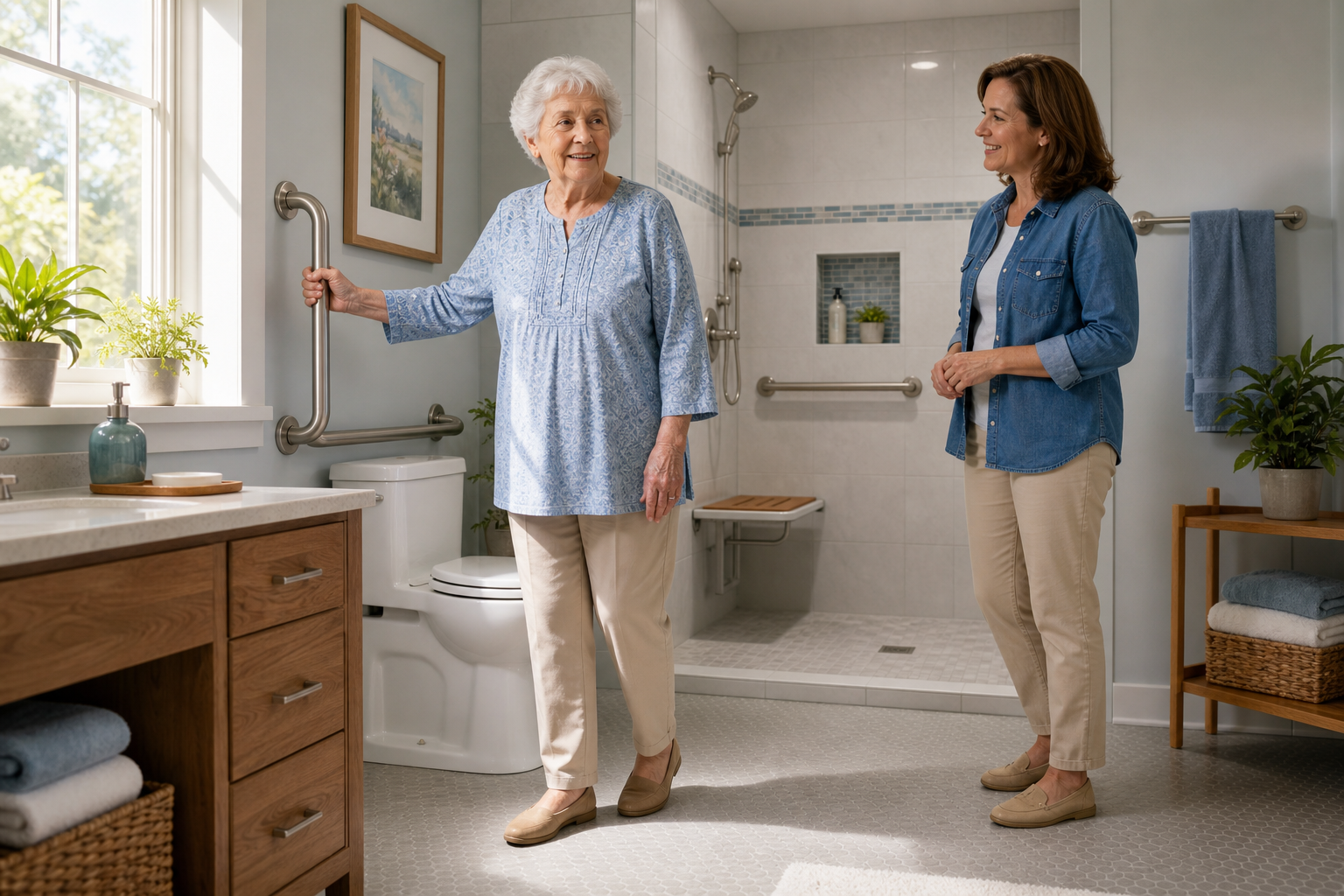
What Is Habitat for Humanity's Aging in Place Program?
Habitat for Humanity's Aging in Place (AIP) program is a nationwide initiative designed to help low-income seniors remain safely in their own homes as they age. The program addresses a growing crisis: by 2030, 20% of the U.S. population will be 65 or older, and more than 19 million older adults are currently living in homes that are in disrepair or ill-equipped to safely meet their needs, according to Habitat for Humanity.
Unlike Habitat's well-known homeownership model, the AIP program focuses on critical home repairs and accessibility modifications — not new construction. It provides free home safety assessments and, for qualifying homeowners, free or deeply subsidized modifications such as grab bars, walk-in showers, wheelchair ramps, and roof repairs.
A critical distinction that families must understand from the outset: this is a nationally branded program but it is administered locally by individual Habitat affiliates. Eligibility criteria, covered services, funding availability, and application processes vary significantly by location. The national organization provides general guidelines, but your experience will be shaped entirely by your local affiliate's capacity and rules.
The Housing Plus Model: Two Assessments for Safer Aging at Home
What sets Habitat's AIP program apart from many other home repair programs is its integrated assessment approach, called the Housing Plus model. Instead of simply sending a contractor to evaluate the house, the program pairs two distinct evaluations:
- A functional health assessment conducted by a health or human services professional. This assessment focuses on the homeowner's activities of daily living (ADLs) — bathing, toileting, dressing, cooking, and moving through the home. The goal is to identify where the person's physical limitations create safety risks or barriers to independence.
- A home repair evaluation conducted by a Habitat construction specialist. This assessment identifies the structural and environmental changes needed to address the risks identified in the first assessment — from loose carpeting and poor lighting to missing handrails and unsafe stairs.
This two-assessment structure ensures that modifications are matched to the person's actual functional needs, not just to a generic checklist. For example, a functional assessment might reveal that a homeowner has difficulty standing from a seated position, leading the construction team to install a raised toilet and grab bars in the bathroom — modifications that a standard home inspection alone might not prioritize.
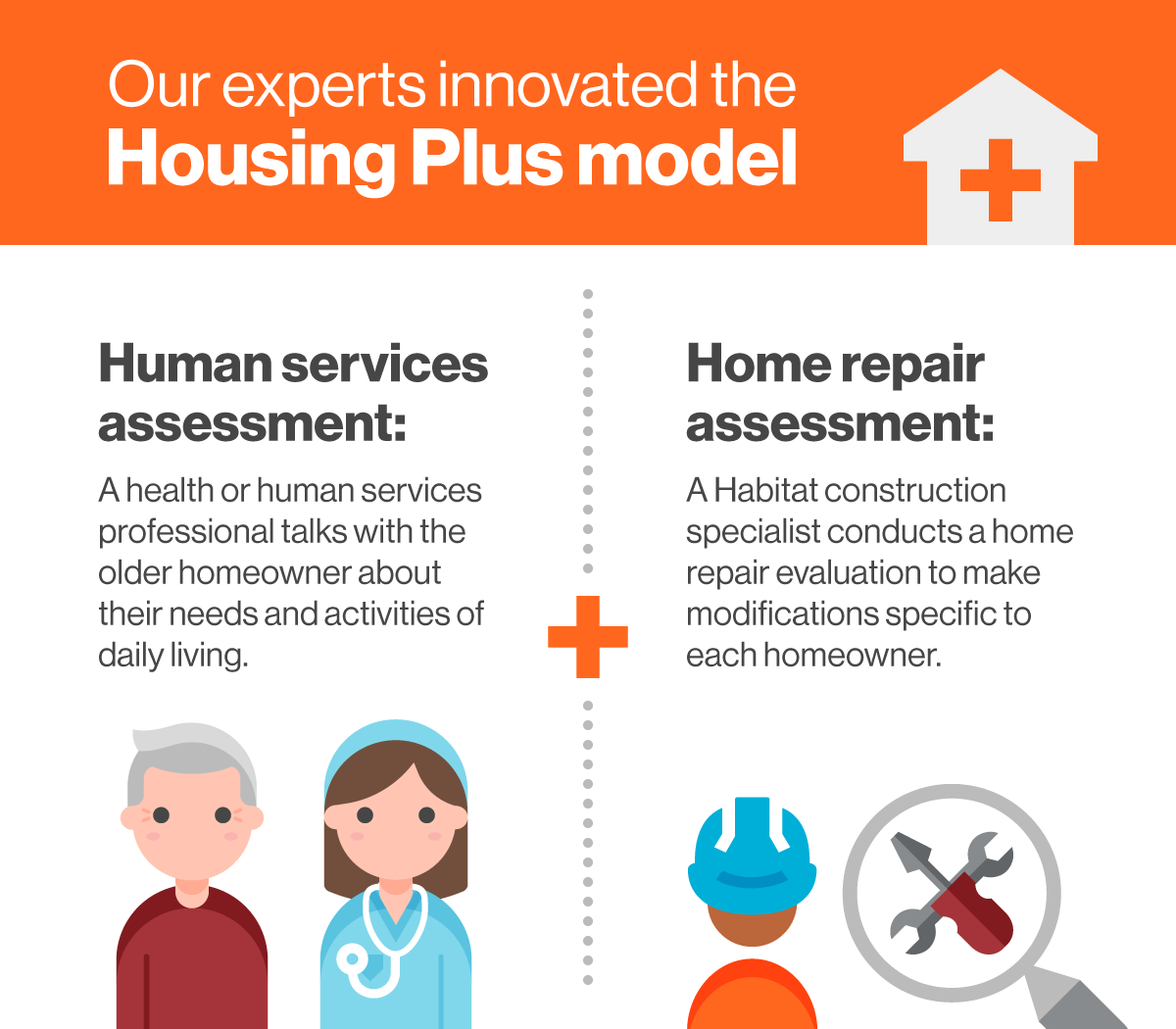
The Oswego County Habitat for Humanity in New York, for instance, uses this exact model: an initial assessment of daily living activities by a health or human services professional, followed by a second home repair evaluation. This integrated approach is designed to increase independent living, reduce symptoms of depression, and improve motivation — leading to reduced medical costs while also lessening the burden on caregivers and families.
Who Qualifies? Eligibility Requirements by Affiliate
Eligibility for Habitat's AIP program is not uniform. Each local affiliate sets its own criteria within broad national guidelines. However, most affiliates share a common set of baseline requirements:
- Age: Typically early- to mid-60s and older. Some affiliates set the minimum at 60, others at 62, and a few may serve homeowners as young as 55.
- Income: In general, Habitat seeks to partner with those who are considered low-income. The most common threshold is income at or below 80% of the area median income (AMI).
- Homeownership: You must own and live in the home full-time. The home must be your primary residence.
- Financial standing: You must have current homeowner's insurance and not be behind on property taxes.
- Location: You must live within the affiliate's designated service area.
To illustrate how much these criteria can vary, consider two real examples:
| Criteria | Habitat for Humanity of Greater Memphis | Topeka Habitat for Humanity |
|---|---|---|
| Minimum age | 62 | 60 |
| Income limit (1 person) | $31,900 | Varies (≤80% AMI) |
| Income limit (2 people) | $36,450 | Varies (≤80% AMI) |
| Residency requirement | Inside Memphis city limits | Shawnee County |
| Application method | Call-in hotline on scheduled date | Contact affiliate directly |
A practical challenge that families should be aware of: at high-demand affiliates, application windows can fill within minutes. Memphis Habitat, for example, uses a call-in hotline on a scheduled date, and all available slots are typically filled within minutes. This means preparation is essential — you need to know the application date in advance and be ready to act immediately.
What Modifications Are Covered — and What Is Not
Habitat's AIP program covers a wide range of interior and exterior modifications designed to improve safety, accessibility, and energy efficiency. The specific list varies by affiliate, but the following categories are commonly included:
Interior Modifications
- Grab bars and safety bars in bathrooms and hallways
- Walk-in shower stalls with shower seats
- ADA-compliant raised toilets and sinks
- Lever-style door handles (easier to operate than round knobs)
- Improved lighting in dark areas, hallways, and stairways
- Floor repairs, including fixing loose carpet and installing slip-resistant flooring
- Handrails on both sides of stairways
- Energy efficiency projects (e.g., weatherization, insulation)
Exterior Modifications
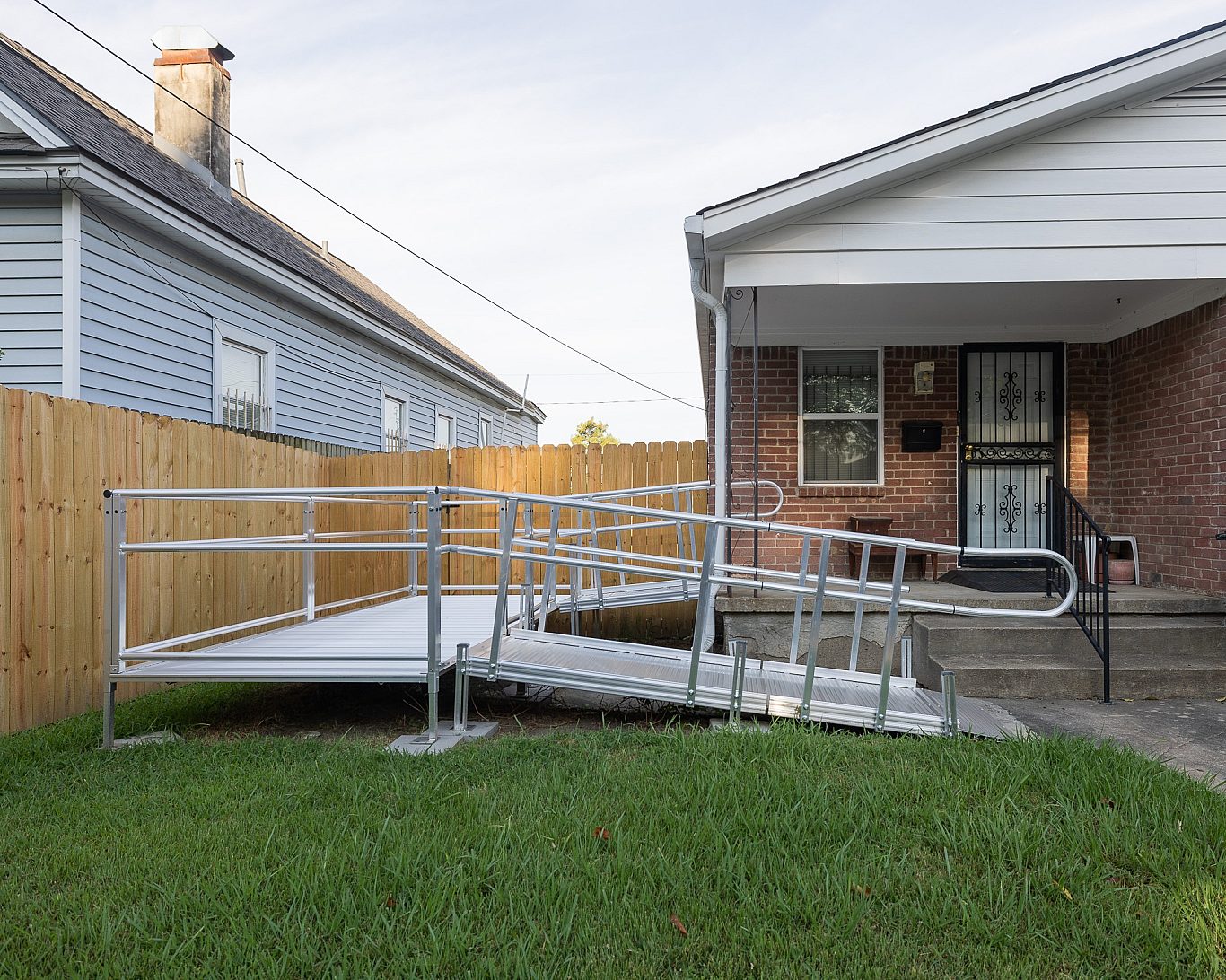
- Wheelchair ramps at entrances
- New roofs
- New siding and paint
- Porch and deck repairs
- Rails and handrails for exterior steps
What Is Not Covered
Equally important is understanding what the program does not cover. Generally excluded:
- Cosmetic work: Painting, landscaping for aesthetic purposes, and non-essential upgrades are not covered.
- Rental properties: The homeowner must own and occupy the home.
- Condos, townhomes, and mobile homes: Some affiliates exclude these property types, though policies vary.
- New construction or additions: The program focuses on repairs and modifications within the existing footprint.
How the Application Process Works: From Call-In to Completion
The application process for Habitat's AIP program is not a simple online form. It is a multi-step process that requires patience, preparation, and persistence. Here is what to expect:
- Find your local affiliate. Use Habitat for Humanity's affiliate locator on their national website to identify the affiliate serving your area. This is your single point of contact.
- Learn the application process. Each affiliate has its own system. Some use call-in hotlines on specific dates (like Memphis), while others accept applications on a rolling basis. Contact the affiliate to learn their specific process and timeline.
- Prepare your documents. Have proof of income, homeownership, homeowner's insurance, and property tax status ready. Some affiliates also require a copy of your deed.
- Apply during the designated window. For affiliates using call-in systems, be prepared to call repeatedly on the designated date. Slots at high-demand affiliates fill within minutes.
- Home assessment. If your application is accepted, the affiliate will schedule the two-part Housing Plus assessment: the functional health assessment and the home repair evaluation.
- Approval and contractor assignment. If the assessment confirms eligibility and need, the affiliate assigns a Habitat-approved contractor to perform the work.
- Inspections and completion. Multiple inspections are conducted during and after the work to ensure quality and safety. The process from application to completion can take several months.
Cost Structure: Free Grants With a 5-Year Deed Restriction
One of the most attractive features of Habitat's AIP program is its cost structure. Many affiliates provide modifications as a grant with no upfront cost to the homeowner. However, this grant is typically secured by a deed restriction — a legal agreement recorded on the property title.
Here is how it works at affiliates like Memphis Habitat: the value of the modifications is treated as a grant, and a 5-year deed restriction is placed on the property. Each year that the homeowner continues to live in the home, 20% of the grant is forgiven. After five years, the restriction is fully released, and the homeowner retains full ownership with no repayment obligation.
Not all affiliates use this exact structure. Some may offer modifications at a reduced cost rather than completely free. The key point: ask your local affiliate about their specific cost structure and any deed restrictions before proceeding.
For families exploring other funding options alongside Habitat, our guide on paying for aging in place home modifications covers grants, loans, and assistance programs from other sources.
The CAPABLE Model: How Health Services Enhance Home Repairs
Some Habitat affiliates have adopted an enhanced version of the AIP program called CAPABLE (Community Aging in Place, Advancing Better Living for Elders). Developed by the Johns Hopkins School of Nursing, CAPABLE integrates a registered nurse, an occupational therapist, and a Habitat handy worker into a single 4-5 month program.
The results from CAPABLE are striking. According to Habitat's published data from a study with a 24-month follow-up:
- Participants' confidence in not falling increased by 15%.
- Depressive symptoms were reduced by 30%.
- The average health care savings per participant was $22,120 over 24 months.
Topeka Habitat, for example, offers CAPABLE through a partnership with Midland Care. The program is free and runs 4-5 months, integrating an occupational therapist, registered nurse, and Habitat handy worker to address both mobility and holistic healthcare needs.
For a full exploration of the CAPABLE model, including detailed outcomes and how it differs from the standard AIP program, see our dedicated article on Habitat for Humanity's CAPABLE Program.
How to Find Your Local Habitat Affiliate and Get Started
Taking the first step is the hardest part, especially since there is no central application portal. Here is a practical action plan:
- Go to habitat.org and use the "Find Your Local Habitat" tool. Enter your zip code or city to identify the affiliate serving your area.
- Visit the affiliate's website and look for "Aging in Place," "Senior Home Repair," or "Critical Home Repair" programs. Not all affiliates use the same name for their AIP program.
- Call or email the affiliate directly. Ask specific questions: What is the minimum age? What are the income limits? What is the application process? Is there a waitlist? Are there deed restrictions?
- Prepare your documentation in advance. Have proof of income, homeowner's insurance, property tax receipts, and a copy of your deed ready before you apply.
- If the affiliate uses a call-in application system, mark the date on your calendar and be prepared to call repeatedly. Consider asking a family member or friend to help if you are not comfortable with phone systems.
If you are an adult child helping a parent navigate this process, our guide on signs your aging parent needs home help can help you assess whether the AIP program — or another type of support — is the right fit for your family's situation.
The impact of these modifications on real lives is profound. Walter, 81, had his first indoor shower after Southern Crescent Habitat for Humanity transformed a room into a bathroom, eliminating his need to use an outhouse. Anna Bowlby, who lived in her home for 65 years, received a wheelchair ramp from Habitat Portland Region after breaking her pelvis and five ribs; she used the ramp as physical therapy, walking it 50 times a day. These stories illustrate what the program makes possible: not just safer homes, but restored dignity and independence.
Related reading
Need a professional assessment?
Find a CAPS-credentialed professional or local aging services through our outbound resource list — we never name or rank individual contractors.
Find Local HelpNoticed something outdated or inaccurate on this page? Flag a correction. We review every report against CDC, NIA, and AARP HomeFit guidance before updating a page.