
Room checklist
How to Find and Vet a CAPS-Certified Contractor: 10 Questions to Ask Before Hiring
A step-by-step guide for family caregivers who need to hire a CAPS-certified aging-in-place specialist quickly and safely. Covers using the NAHB directory, verifying credentials, and a 10-question interview framework to avoid common hiring mistakes.

Why a CAPS-Certified Contractor Is Worth the Extra Vetting Step
The numbers are stark: only about 10% of U.S. homes are considered "aging ready" — meaning they lack a step-free entry, a first-floor bedroom and bathroom, or basic accessibility features. Meanwhile, 93% of adults 65 and older live in their own homes and want to stay there. That gap between desire and readiness is where a Certified Aging-in-Place Specialist (CAPS) comes in.
But here is the uncomfortable truth: the CAPS designation alone does not guarantee that a contractor is the right fit for your specific project. A specialist who excels at bathroom remodels may have limited experience with stair lifts. A contractor with an OT background may approach a project differently than one who comes from general construction. The credential proves they have completed the NAHB training curriculum and pledged to a code of ethics — it does not prove they have done your exact job before.
This guide is built for the crisis-driven reader: the adult child who needs to hire someone quickly after a parent's fall or a sudden mobility decline, but who cannot afford to make a costly mistake. We will walk through the three-step vetting process — directory verification, license and insurance checks, and a 10-question interview framework — so you can move fast without cutting corners.
Step 1: Start with the NAHB CAPS Directory
The National Association of Home Builders (NAHB) maintains the official online directory of CAPS-certified professionals. This is the only authoritative source for verifying that someone holds an active credential. If a contractor claims to be CAPS-certified but is not listed here, that is an immediate red flag.
Here is how to use the directory effectively:
- Go to the NAHB CAPS directory page and search by your zip code or city.
- Look for an active listing with current contact information. Some listings may include specialty areas (e.g., bathroom modifications, kitchen accessibility, whole-home design).
- Cross-reference the name and business name against the contractor's website or business card. Scammers have been known to use the names of legitimate CAPS holders.
- Note whether the listing mentions a background in construction, occupational therapy, design, or another field. This matters because CAPS professionals come from diverse backgrounds — a contractor may approach a project differently than an OT.
The directory is also useful for finding multiple candidates in your area. Most families should interview at least three CAPS professionals before making a decision.
Step 2: Verify License, Insurance, and Workers' Compensation
The NAHB requires all CAPS credential holders who work as contractors to carry specific protections. These are not optional — they are conditions of maintaining the certification. Before you schedule a consultation, ask for copies of the following documents:
- General liability insurance — This covers property damage or injury that occurs during the project. Ask for a certificate of insurance and verify it is current.
- Workers' compensation insurance — If the contractor has employees, this covers medical costs if a worker is injured on your property. If the contractor is a sole proprietor, they may be exempt in some states, but you should still ask.
- Valid business license — Requirements vary by state and municipality. Check with your local licensing board to confirm the contractor's license is active and in good standing.
Do not rely on verbal assurances. A legitimate CAPS contractor will provide these documents without hesitation. If they hesitate, make excuses, or claim they are "covered under a friend's policy," move on.
Step 3: Ask These 10 Questions Before You Sign Anything
Once you have confirmed the contractor is listed in the NAHB directory and has the required insurance and licensing, it is time for the interview. These 10 questions are designed to uncover experience level, project management style, and potential hidden costs. Use them as a checklist during your phone or in-person meeting.
| Question | Why It Matters | What to Listen For |
|---|---|---|
| 1. How many aging-in-place projects similar to mine have you completed in the past two years? | Experience with your specific modification type (e.g., bathroom remodel vs. stair lift installation) is more important than total years in business. | A specific number and examples. Vague answers like "dozens" are a red flag. |
| 2. Can you provide a detailed, itemized written estimate? | Itemized estimates allow you to compare bids apples-to-apples and avoid surprise charges for materials, labor, permits, and disposal. | A clear breakdown by line item. Estimates that lump everything into one number make it hard to spot padding. |
| 3. Are you licensed and insured as required by the NAHB? | Even though you verified documents in Step 2, asking directly confirms the contractor is transparent about their credentials. | A direct "yes" followed by an offer to share the documents again. |
| 4. Do you coordinate with occupational therapists or other healthcare professionals? | For complex mobility needs, a CAPS who works with an OT can ensure modifications are tailored to the senior's specific functional limitations. | Examples of past collaboration. If the contractor says they never work with OTs, consider whether your project requires that level of input. |
| 5. What is the expected timeline from start to completion? | Knowing the timeline helps you plan for disruption — especially if the modification involves a bathroom or kitchen that the senior uses daily. | A realistic range (e.g., 2–3 weeks for a bathroom remodel) with an explanation of factors that could cause delays. |
| 6. Can the work be completed in phases to spread out costs? | Many families cannot afford a full remodel at once. Phased work allows you to prioritize the most critical modifications first. | A clear yes or no, and an explanation of how phasing would affect the overall timeline and cost. |
| 7. Who will be on-site each day? Will you be supervising personally? | The person you interview may not be the person doing the work. Knowing who will be on-site helps you set expectations for communication and quality. | The contractor's name and role, plus the names and roles of any crew members or subcontractors. |
| 8. How do you handle permits and inspections? | Permits are often required for structural modifications like widening doorways or installing a stair lift. A reputable contractor will handle this process. | A clear explanation of which permits are needed, who pulls them, and how inspections are scheduled. |
| 9. What warranty do you offer on materials and labor? | Warranties protect you if something goes wrong after the project is complete. Industry standard is at least one year on labor. | A written warranty policy. Avoid contractors who say "we stand behind our work" without putting it in writing. |
| 10. Can you provide references from clients aged 65+ who had similar work done? | References from senior clients are more relevant than references from general remodeling projects. They can speak to how well the contractor accommodated mobility needs and communication preferences. | At least three references with contact information. Call them and ask about the contractor's punctuality, cleanliness, and follow-through. |
Take notes during the interview. Compare answers across candidates. The goal is not to find a contractor who says "yes" to everything — it is to find one whose experience, communication style, and project approach align with your family's needs and budget.
Red Flags: When to Walk Away
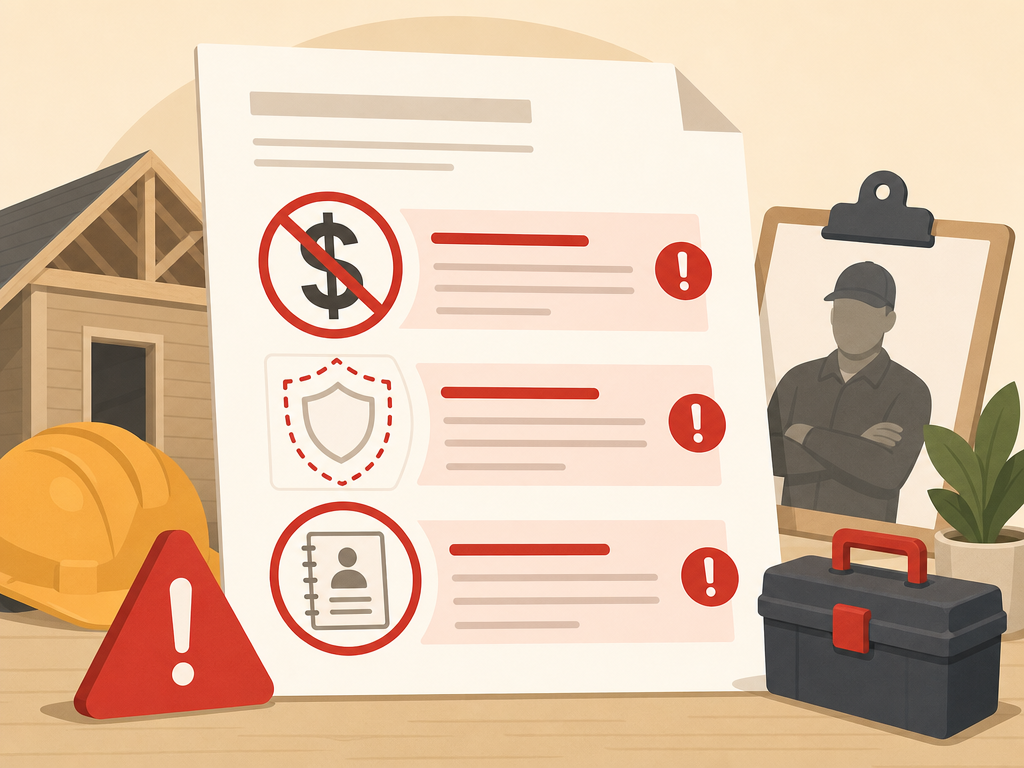
Some warning signs are non-negotiable. If a contractor exhibits any of the following behaviors, do not proceed — even if they are listed in the NAHB directory.
- Demands more than 30% of the total cost as an upfront payment. Industry standard is a small deposit (10–20%) with the balance due upon completion or at agreed milestones.
- Provides only a vague, one-line estimate. A professional CAPS should give you a written, itemized estimate that breaks down materials, labor, permits, and any subcontractor fees.
- Cannot or will not provide proof of insurance or a valid business license. This is a requirement of the NAHB credential — there is no excuse for not having these documents ready.
- Is not listed in the NAHB online directory. If they claim to be CAPS-certified but are not in the directory, they may have let their credential lapse or may be misrepresenting their qualifications.
- Refuses to share references or provides only references from non-senior clients. For aging-in-place work, you need to hear from families who have been through the same process.
- Cannot explain how their modifications will address your parent's specific mobility needs. A good CAPS should be able to connect each recommendation to a functional limitation — for example, explaining why a grab bar at a specific height reduces fall risk during transfers.
Falls are the leading cause of injury among older adults, and home modifications are one of the most effective ways to prevent them. Hiring the wrong contractor can delay critical safety improvements or, worse, create new hazards. If something feels off, trust your instinct and keep looking.
What a CAPS Home Evaluation Should Include
Before any work begins, a CAPS-certified professional should conduct a thorough home evaluation. This is not a quick walkthrough — it is a systematic assessment of the home's current accessibility and the senior's functional needs. A proper evaluation typically costs between $250 and $500 and results in a written report with visuals.
Here is what a quality evaluation should include:
- A room-by-room assessment of hazards and barriers — including doorway widths, threshold heights, bathroom layout, stair conditions, and lighting adequacy.
- Specific, prioritized recommendations tied to the senior's mobility limitations. For example: "Install a 36-inch grab bar at a 45-degree angle next to the toilet to assist with sit-to-stand transfers."
- A written report with diagrams or photos showing the proposed modifications. This helps you visualize the changes and serves as a reference during the construction phase.
- A cost estimate for each recommended modification, with options for phasing if the full scope is not immediately affordable.
- A timeline estimate for the work, including any permit requirements that could affect the schedule.
If a CAPS professional offers to do an evaluation but cannot provide a written report with visuals, or if the evaluation feels rushed and superficial, consider it a red flag. The evaluation is the foundation of the entire project — it should be thorough enough that you feel confident in the recommendations.
Your Next Steps After Hiring
Once you have selected a CAPS-certified contractor and signed a contract, the project moves into the execution phase. Here is what to expect and how to stay involved:
- Permit process: The contractor should handle all permit applications. Ask for a copy of the approved permits before work begins. This protects you if an inspector later questions the work.
- Communication plan: Establish a regular check-in schedule — daily or weekly, depending on the project's complexity. Know who to call with questions or concerns.
- Timeline expectations: The contractor should provide a start date and an estimated completion date. Be prepared for minor delays due to material availability or weather, but flag any significant deviations immediately.
- Final walkthrough: Before making the final payment, walk through the completed work with the contractor. Test every modification — open doors, use grab bars, operate the stair lift. Confirm that everything matches the written scope of work.
For a deeper look at one of the most common and high-stakes modification projects, read our Bathroom Remodel for Elderly Parents: A Family Caregiver's Crisis Guide from Fall to Finish. It walks through the entire process from the moment of a fall to the final inspection, with practical advice for managing the emotional and logistical challenges along the way.
Related reading
Need a professional assessment?
Find a CAPS-credentialed professional or local aging services through our outbound resource list — we never name or rank individual contractors.
Find Local HelpNoticed something outdated or inaccurate on this page? Flag a correction. We review every report against CDC, NIA, and AARP HomeFit guidance before updating a page.