
10 Signs It’s Time for Memory Care: A Practical Transition Guide for Families
This guide helps adult children recognize the specific behavioral and safety markers that signal when a parent with dementia needs memory care, and provides a structured plan for making the transition with less guilt and trauma.
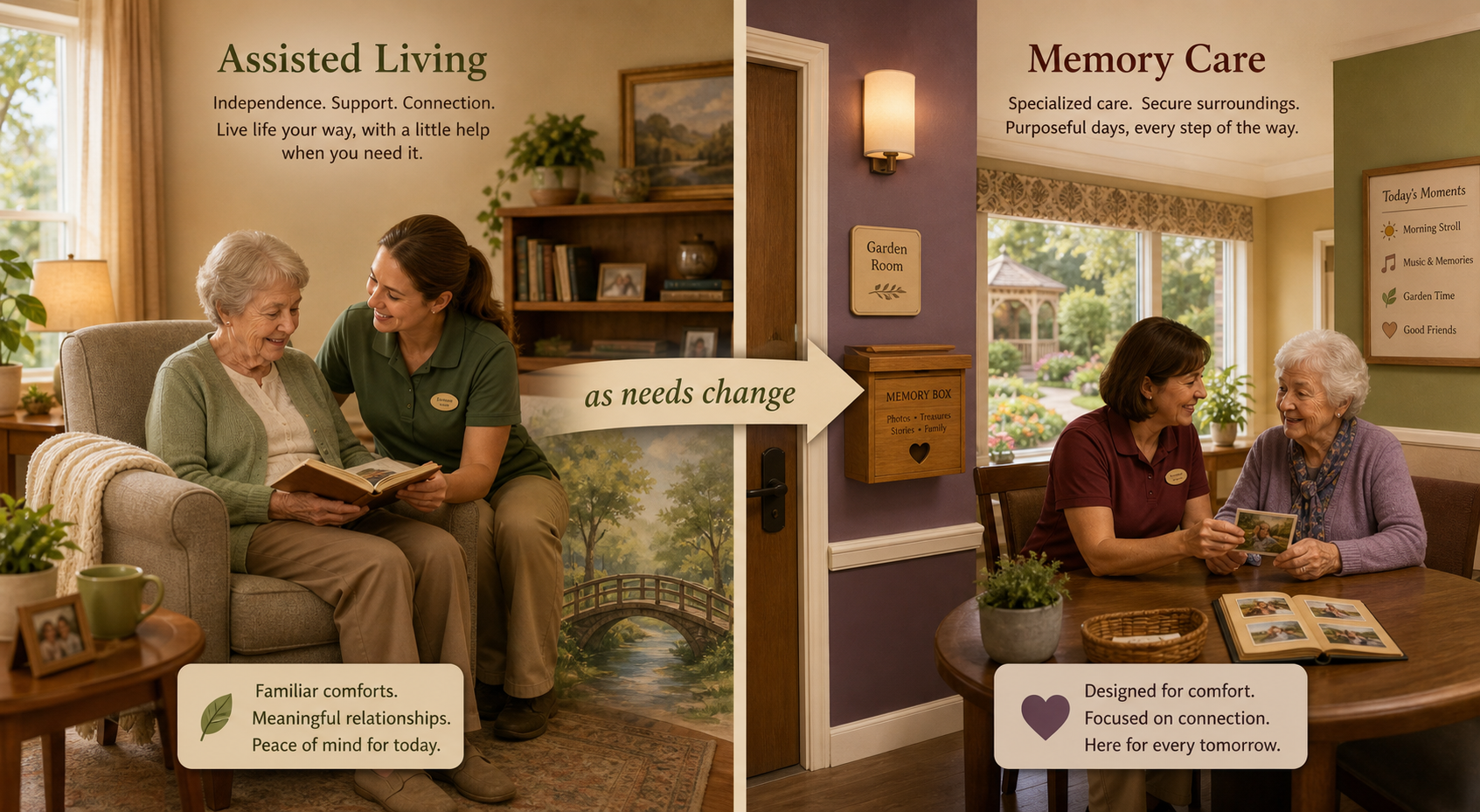
Why the Memory Care Decision Is Uniquely Difficult
Making the decision to move a parent with dementia to a memory care community is often described as the hardest moment in the caregiving journey. It is a decision layered with guilt, fear, and a profound sense of loss of control. You may feel you are breaking a promise to keep your loved one at home, or that you are somehow giving up. These feelings are not a sign of failure; they are a sign of deep love and commitment.
This guide is designed to help you move past the emotional paralysis and focus on what matters most: your parent's safety and well-being, and your own ability to continue providing care without sacrificing your health. This article focuses specifically on the threshold for memory care, building on our general signs article which covers a broader range of senior living options. Here, we address the dementia-specific triggers that signal a need for a secure, specialized environment.
10 Evidence-Based Signs It’s Time for Memory Care
The most common trigger for a move to memory care is not a specific cognitive test score, but a series of escalating safety incidents and care challenges that home care can no longer manage. Below are ten specific markers. If several of these sound familiar, it is time to begin a serious evaluation of memory care options.
1. Safety Incidents: Wandering and Falls
Wandering is one of the most dangerous behaviors in dementia. A person may leave the house and become lost, disoriented, and vulnerable to weather, traffic, or injury. Falls are equally serious; the CDC reports that falls are a leading cause of injury among older adults, and for someone with dementia, a fall can lead to a rapid decline. When you cannot guarantee your parent's physical safety at home, it is the clearest signal that a secure environment is needed. According to A Place for Mom, 88% of memory care communities are secure facilities, and 41% feature a dedicated wandering management system.
2. Decline in Personal Hygiene
When a parent stops bathing, brushing their teeth, or changing clothes without significant resistance or distress, it is a sign that they can no longer manage these activities of daily living (ADLs) independently. Resistance to help with bathing is especially common in dementia and can be emotionally exhausting for a family caregiver. Memory care staff are trained in techniques to provide personal care with dignity and minimal distress.
3. Medication Mismanagement
Forgetting to take medications, taking them at the wrong time, or double-dosing is a serious health risk. This is especially dangerous for individuals managing chronic conditions like diabetes, heart disease, or high blood pressure. If you cannot reliably supervise medication administration, a memory care community with 24/7 nursing oversight is a safer option.
4. Caregiver Burnout
Your own health is a critical data point. If you are experiencing chronic exhaustion, irritability, sleep deprivation, or neglecting your own medical needs, you are experiencing caregiver burnout. This is not just a sign that you need a break; it is a sign that the level of care required has exceeded what one or even several family members can sustainably provide. Many families try 24-hour home care before realizing that memory care is the appropriate next step. You can read more about that comparison in our 24-hour care vs. memory care decision guide.
5. Aggression or Significant Behavioral Changes
Aggression, agitation, paranoia, or hallucinations can make home care unsafe for both the caregiver and the person with dementia. WebMD notes that one of the key signs is when a family caregiver begins to worry about their own safety due to aggressive behaviors. Memory care staff receive specialized training to de-escalate these situations without resorting to medication or restraint. A Place for Mom reports that 52% of memory care communities offer services specifically to address anxiety, aggression, and agitation.
6. Social Withdrawal and Loss of Engagement
A person with dementia may lose interest in hobbies, social activities, and even family interactions. This withdrawal can accelerate cognitive and functional decline. Memory care communities provide structured, dementia-appropriate activities and social engagement throughout the day, which can help maintain a sense of purpose and connection.
7. Malnutrition and Weight Loss
Forgetting to eat, refusing food, or being unable to prepare meals leads to significant weight loss and nutritional deficiencies. This is a common but serious sign. Memory care communities provide three meals a day in a supervised setting, often with staff who can assist with feeding and ensure adequate nutrition.
8. Progression of Incontinence
As dementia progresses, bowel and bladder incontinence becomes more common. Managing incontinence at home is physically demanding and can lead to skin breakdown, infections, and a loss of dignity for the person. Memory care staff are trained to manage incontinence with scheduled toileting, prompt changing, and skin care protocols.
9. Severe Sleep Disruption and Sundowning
Sundowning — increased confusion, agitation, and restlessness in the late afternoon and evening — can be exhausting for caregivers. When a parent is awake and wandering at night, the caregiver gets no rest, leading to a cycle of exhaustion and burnout. For a deeper understanding of this behavior and how to manage it, see our article on sundowning and nighttime safety.
10. Inability to Manage Finances
Missing bill payments, falling for scams, or making uncharacteristically poor financial decisions are early signs of cognitive decline that often worsen. While this alone may not necessitate memory care, combined with other signs, it indicates a loss of executive function that makes independent living unsafe.

The Transition Process: From Touring to Move-In Day
Once you have recognized the signs, the next step is to take action. A structured transition process can significantly reduce trauma for both you and your parent. Here is a step-by-step guide.
How to Tour and Evaluate Memory Care Communities
Not all memory care communities are created equal. When touring, focus on these memory-care-specific features, which go beyond a standard assisted living checklist.
| Feature to Evaluate | Why It Matters | What to Look For |
|---|---|---|
| Dementia-trained staff | Staff need specialized skills to manage behaviors like wandering, aggression, and sundowning without resorting to medication. | Ask about initial and ongoing training hours. A Place for Mom reports 79% of memory care communities provide specialized memory care training for staff. |
| Security and wandering management | Prevents elopement and keeps residents safe. | 88% of memory care communities are secure facilities; 41% have a wandering management system. Look for keypad exits, enclosed courtyards, and door alarms. |
| Specialized activities | Engagement slows cognitive decline and improves quality of life. | Ask if activities are designed for memory loss. 76% of communities are specifically designed to accommodate residents with memory loss. |
| Staff-to-resident ratio | Higher ratios mean more personalized care and quicker response to needs. | Ask for the ratio during the day and at night. Lower ratios are better for dementia care. |
| Approach to behavioral challenges | A good community will have a non-pharmacological approach to managing agitation and anxiety. | 52% of communities offer services to address anxiety, aggression, and agitation. Ask how they handle a resident who is having a difficult day. |
The Value of Trial Stays
Many memory care communities offer short-term respite or trial stays. This is an invaluable tool. A trial stay allows your parent to experience the environment, routines, and staff before a permanent move. It can also help you assess whether the community is a good fit. Frame it as a "vacation" or "help for me" to reduce resistance. About 80% of assisted living communities also offer memory care on-site, which can make a trial stay and eventual transition less traumatic, as the person is already familiar with the setting.
Move-In Day Strategies
The first few days in a new environment can be disorienting for someone with dementia. A thoughtful move-in plan can ease the transition.
- Bring familiar items: Decorate the room with their favorite quilt, photos, a familiar chair, and familiar scents. This creates a "home base" they can recognize.
- Gradual introduction: If possible, visit the community several times before move-in day. Have lunch there, attend an activity, and meet the staff.
- Communicate with staff: Share your parent's life story, preferences, triggers, and calming strategies with the care team. The more they know, the better they can support your parent.
- Stay for the first few hours: Help them unpack, have a meal together, and then leave calmly. A long, tearful goodbye can increase anxiety.
How to Talk to a Parent Who Doesn’t Understand They Need Memory Care
One of the most painful aspects of dementia is anosognosia, or the lack of insight into one's own condition. Your parent may genuinely believe they are fine and that you are overreacting or betraying them. Arguing with this belief is futile and will only cause distress for both of you. The goal of the conversation is not to convince them, but to reduce their resistance and distress.

Here is a compassionate conversation framework:
- Use “I” statements: Instead of "You need help," say "I am worried about your safety, and I need help to feel okay." This frames the move as something you need, not a failing on their part.
- Focus on safety and help: Frame the memory care community as a place where they will be safe and get help, not as a place they are being sent to. "This place has people who can help you if you feel confused at night."
- Avoid arguing: If they say "I'm fine," do not argue. Acknowledge their feeling and redirect. "I know you feel fine. I love you and I just want to make sure you are safe."
- Involve a trusted third party: A doctor, geriatric care manager, or social worker can be a powerful ally. A recommendation from a doctor often carries more weight than a family member's plea.
- Consider a trial stay framed as a respite: "Mom, I am really exhausted and need a break. Could you stay at this nice place for a week to help me out?" This can be a less threatening entry point.
Emotional Preparation: What to Expect in the First 30–90 Days
The first month after a move is often the hardest. It is common for a person with dementia to experience a "settling in" phase that includes increased confusion, resistance, or even attempts to leave. This is not necessarily a sign that the placement is wrong; it is a normal reaction to a new environment.
Here is what you can expect and how to navigate it:
- Initial resistance (Days 1–14): Your parent may be angry, confused, or ask to go home. This is normal. Visit frequently but keep visits short and positive. Communicate with staff about what is working and what is not.
- Gradual adjustment (Weeks 3–6): Most people begin to settle into a routine. You may notice improvements in sleep, nutrition, and mood. The structured environment and 24/7 support often lead to better outcomes than home care could provide.
- Managing your own guilt: You will likely feel a mix of relief and grief. This is normal. The relief comes from knowing your parent is safe. The grief comes from the loss of the role you had. Allow yourself to feel both without judgment.
- Signs the placement is working: Improved sleep, better appetite, increased social interaction, reduced agitation, and a decrease in your own stress levels are all positive indicators.
Resources for Families Making the Memory Care Decision
You do not have to navigate this alone. These trusted resources can provide guidance, support, and local information.
- Alzheimer’s Association 24/7 Helpline: Call 800-272-3900. This free service offers confidential support, crisis assistance, and information on local resources. They can help you think through the decision and find support groups.
- Eldercare Locator: Call 800-677-1116 or visit their website. This public service of the U.S. Administration on Aging connects you to local agencies that can help with housing, transportation, and legal assistance.
- State Medicaid HCBS Waivers: Medicaid does not typically cover room and board in memory care, but many states offer Home and Community-Based Services (HCBS) waivers that can help pay for long-term care services. Check your state's specific rules, as eligibility and availability vary significantly.
- National Institute on Aging (NIA): The NIA provides a framework for choosing a long-term care facility, including a checklist to use when visiting communities. Their resources are reviewed by experts and are a reliable source of information.
Making the decision to move a loved one to memory care is an act of profound love and responsibility. It is not giving up; it is choosing a safer, more supportive environment for them and a more sustainable path for you. Use this guide as a starting point, lean on the resources available, and trust that you are making the best decision you can with the information you have.
Related reading
Noticed something outdated or inaccurate on this page? Flag a correction. We review every report against CDC, NIA, and AARP HomeFit guidance before updating a page.
Part of the Fall Prevention section.