
When Your Parent Wanders at Night: Understanding Sundowning and Building a Nighttime Safety Plan
A practical guide for adult children caring for a parent with dementia who experiences nighttime confusion, wandering, or agitation. Learn what sundowning is, how to manage it with non-drug strategies, how to make the home safer at night, and when professional overnight care becomes the right next step.
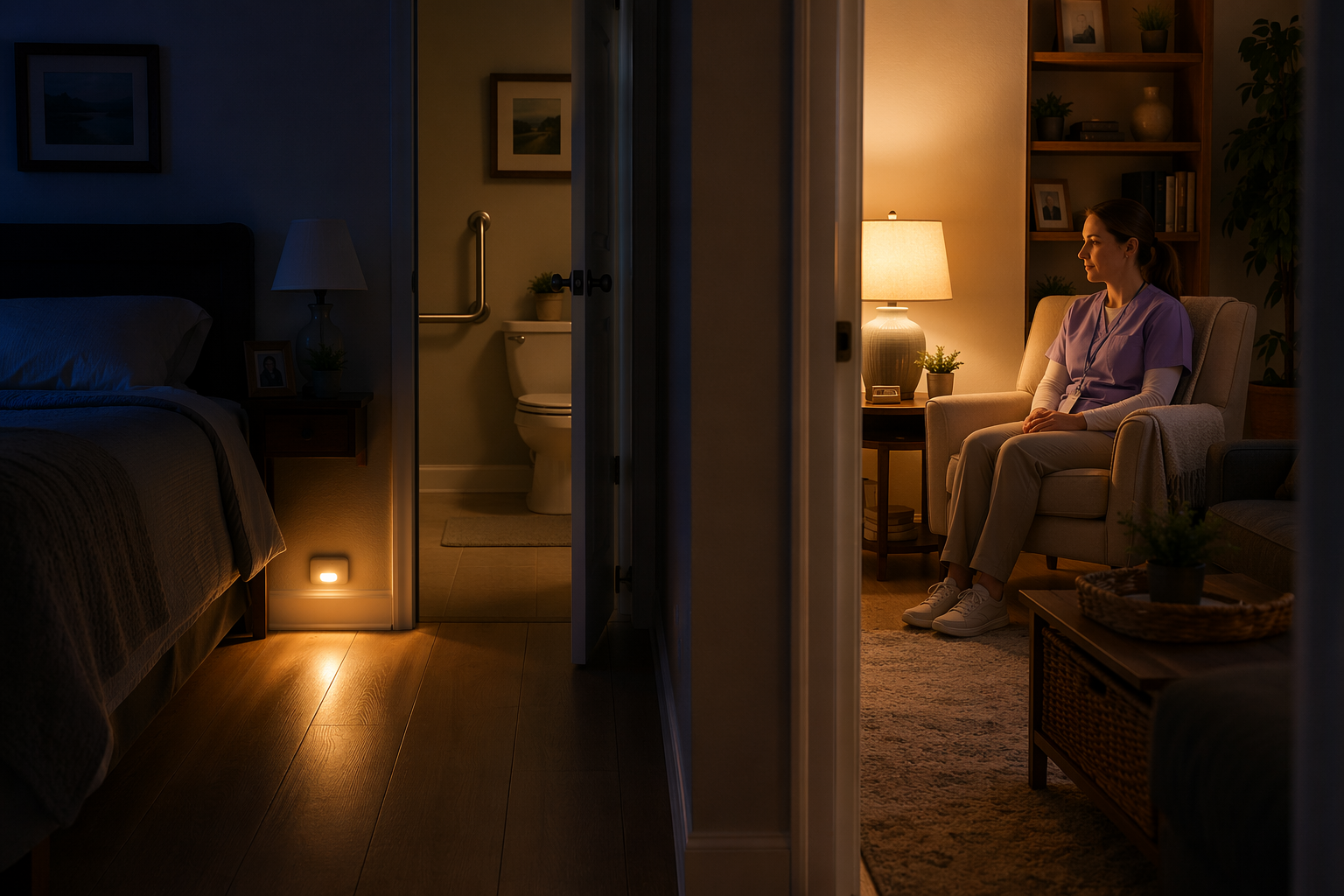
What Is Sundowning and Why Does It Happen?
If your parent with dementia becomes increasingly confused, restless, or agitated as the sun goes down, you are witnessing a phenomenon known as sundowning. The Alzheimer's Association defines sundowning as increased confusion that people living with Alzheimer's and dementia may experience from dusk through night. It is not a disease itself but a set of symptoms that emerge from a combination of neurological and environmental factors.
Understanding the triggers is the first step toward managing them. According to the Alzheimer's Association, the most common contributors include:
- Mental and physical exhaustion after a full day of activity, which lowers the brain's ability to cope with confusion.
- Low lighting and increased shadows that can distort familiar spaces and create frightening illusions.
- Disruption of the internal body clock (circadian rhythm), which is common in Alzheimer's disease due to damage to the part of the brain that regulates sleep-wake cycles.
- Overstimulation from a busy household, loud television, or multiple conversations during the day.
The National Institute on Aging (NIA) adds that sundowning can also be triggered by unmet needs such as hunger, thirst, pain, or the need to use the bathroom. The key insight for caregivers is this: sundowning is not a behavioral problem to be stopped. It is a symptom to be managed by addressing its root causes.
Why Nighttime Is Dangerous for a Person with Dementia
Nighttime is not just unsettling for a person with dementia — it is genuinely dangerous. The combination of disorientation, poor lighting, and physical urgency creates a perfect storm for serious injury.
Falls are the leading cause of traumatic brain injury (TBI) in older adults. The CDC reports that more than one out of four adults aged 65 and older falls each year, resulting in approximately 3 million emergency department visits and 1 million hospitalizations annually. When you add nighttime confusion to the equation, the risk multiplies. Research cited by the Active Surveillance Patients International blog indicates that 20–30% of all senior falls happen at night, and up to one in four involve a nighttime trip to the bathroom.
The specific dangers your parent faces at night include:
- Disorientation in the dark: A person with dementia may not recognize their own bedroom, mistake a closet for a bathroom, or become frightened by shadows. This confusion can lead to rushed, unsteady movement and a fall.
- Elopement (wandering away from home): Nighttime wandering is one of the most frightening behaviors for families. A person with dementia may dress and attempt to "go home" or "go to work," walking out an unlocked door into the cold or traffic.
- Bathroom accidents and nocturia urgency: Frequent nighttime urination (nocturia) affects a large percentage of older adults. A study of 491 older adults recovering from hip fractures found that nighttime falls affected 20.4% of those without nocturia but rose to 40.6% among those with severe nocturia symptoms. The urgency to reach the bathroom, combined with grogginess and poor lighting, is a direct path to a fall.
Non-Drug Strategies to Reduce Sundowning and Nighttime Agitation
Both the Alzheimer's Association and the National Institute on Aging recommend non-drug approaches as the first line of defense against sundowning. These strategies work best when implemented consistently and started before the sundowning window begins — typically in the late afternoon.
Daytime Foundations That Protect the Evening
What happens during the day directly affects how your parent fares at night. The following daytime habits build a foundation for better evenings:
- Morning sunlight exposure: Spending time outside in natural light during the morning helps regulate the body's internal clock. Even 15–20 minutes of morning sunlight can improve nighttime sleep quality and reduce evening confusion.
- Consistent daily routine: A predictable schedule for meals, activities, and rest reduces anxiety and confusion. The brain with dementia relies on routine to feel safe.
- Physical activity: Gentle exercise during the day — a short walk, chair yoga, or simple stretching — reduces restlessness and promotes better sleep. Avoid over-scheduling, which can lead to exhaustion.
- Limit late-day napping: Long naps in the late afternoon can disrupt the sleep-wake cycle. If your parent needs a nap, keep it early in the day and limit it to 30–45 minutes.
Evening Strategies to Calm the Sundowning Window
As dusk approaches, shift the environment and activities toward calm and predictability:
- Serve a lighter evening meal: Offer the largest meal at lunch and a lighter dinner in the early evening. Heavy meals close to bedtime can cause discomfort and disrupt sleep.
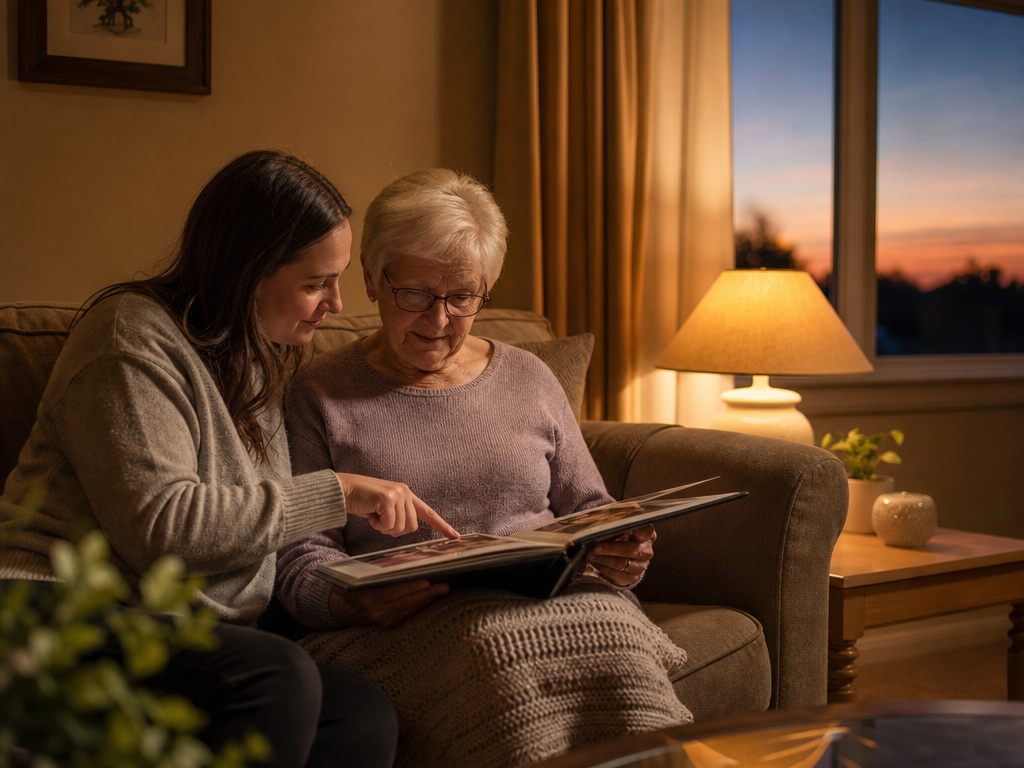
- Reduce stimulation after dinner: Turn off the television, dim harsh overhead lights, and avoid loud or chaotic environments. Instead, engage in quiet, soothing activities like looking at photo albums, listening to soft music, or folding laundry together.
- Keep the home well-lit in the evening: While you want to reduce stimulation, complete darkness is not helpful. Use warm, even lighting to minimize shadows that can cause fear and confusion.
- Avoid caffeine and alcohol late in the day: Both substances can worsen agitation and disrupt sleep. Offer caffeine-free beverages in the afternoon and evening.
- Create a comforting environment: Keep well-loved objects and photos visible. Play soothing music at a low volume. The NIA recommends reducing noise and clutter to create a calming home setting.
These strategies are not a quick fix. They work cumulatively. Many families see meaningful improvement within one to two weeks of consistent implementation. However, for some individuals with advanced dementia, even the best non-drug strategies may not be enough to prevent dangerous nighttime behaviors.
Home Safety Modifications for a Safer Night
While you work on reducing sundowning through routine and environment, you also need to make the physical space safer for the times when confusion does occur. These modifications are designed to prevent falls, detect wandering, and alert you when your parent is moving around.
Essential Nighttime Safety Modifications
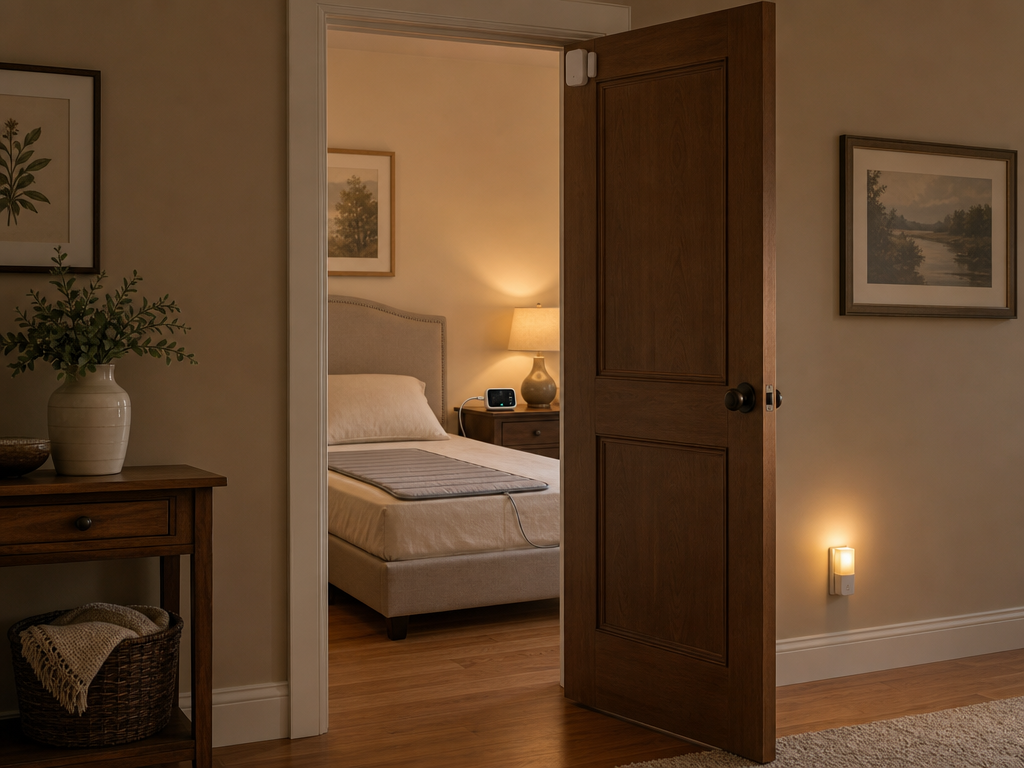
- Motion-sensor nightlights: Install them along the path from the bedroom to the bathroom. They automatically illuminate when your parent stands up, reducing the risk of tripping in the dark. Place one in the bathroom as well, angled to avoid glare.
- Door alarms and smart home wandering detection: Wireless sensors placed on exterior doors can alert you with a chime or a smartphone notification when a door is opened. Some systems can also be set to trigger a recorded voice message ("It's nighttime, please stay inside") or automatically lock the door.
- Bed pressure sensor pads: A thin pad placed under the bottom sheet detects when your parent gets out of bed and sends an alert to a caregiver's monitor or smartphone. This is especially useful if you are sleeping in a different room.
- Remove trip hazards: Loose rugs, electrical cords, and clutter should be removed from the bedroom-to-bathroom path. Even a small throw rug can cause a fall when stepped on by unsteady feet.
- Secure exterior doors: Use slide bolts or keyed locks placed high or low on the door — out of the line of sight — to prevent easy exit. Some families use childproof knob covers. Always ensure you can exit quickly in an emergency.
For a more detailed guide on preventing wandering, see our Dementia Wandering Safety Plan for Caregivers at Home.
When Home Strategies Aren't Enough: Signs It's Time for Overnight Care
There comes a point in many dementia care journeys when the family's best efforts are no longer sufficient to keep the person safe at night. This is not a failure. It is a normal progression of the disease, and recognizing it early can prevent a crisis.
Hillary Wootton, business operations manager at Homewatch CareGivers, notes that sleepless nights and safety concerns are two of the most common reasons families seek overnight care. The following signs indicate that home strategies alone may no longer be adequate:
- Repeated falls or near-misses: If your parent has fallen at night — even once without serious injury — the risk of a more severe fall is high. One out of 10 falls results in an injury that causes the older adult to restrict their activities for a day or more or seek medical attention (CDC).
- Caregiver sleep deprivation affecting your health: If you are waking multiple times per night to check on your parent, you are accumulating a sleep debt that impairs your judgment, patience, and physical health. The Family Caregiver Alliance estimates that caregiver depression affects approximately 20% of family caregivers — a conservative figure that rises with sleep deprivation.
- Successful elopement attempts: If your parent has managed to leave the house at night, even once, the next attempt could be more dangerous. Wandering is unpredictable and can happen even with locks and alarms in place.
- Escalating agitation that doesn't respond to non-drug strategies: If your parent's sundowning is becoming more intense or lasting longer despite your best efforts at routine and environmental management, professional support may be needed.
If you are unsure whether it is time, our guide to recognizing the red flags for overnight care can help you evaluate your situation more systematically.
Types of Overnight Care for Dementia: What to Look For
Not all overnight care is the same. For a person with dementia who experiences sundowning, the type of care you choose matters significantly.
There are two main models of overnight care:
| Care Model | How It Works | Best For |
|---|---|---|
| Sleeping night care | The caregiver sleeps during the shift (typically up to 8 hours) but is available if the senior wakes or needs help. | Seniors who sleep through most of the night but need occasional assistance for toileting or repositioning. |
| Waking night care | The caregiver remains awake throughout the shift, actively monitoring the senior, providing redirection during sundowning episodes, assisting with toileting, and preventing falls. | Seniors with active sundowning, frequent wandering, or high fall risk. This is the recommended model for dementia-related nighttime confusion. |
For dementia-related sundowning, waking night care with dementia-specific training is almost always the appropriate choice. A trained overnight caregiver does more than just "watch" your parent. They actively manage the environment: using redirection techniques when agitation starts, assisting with bathroom trips to prevent falls, and maintaining a calm, reassuring presence that can itself reduce sundowning symptoms.
For a deeper look at what overnight dementia care involves and how to choose a provider, see our companion article Overnight Care for Elderly Parents with Dementia.
What Overnight Care Costs and How to Plan for It
Cost is often the biggest concern for families considering overnight care. While prices vary by location and provider, the following ranges provide a realistic starting point for budgeting.
| Care Type | Typical Cost Range | Notes |
|---|---|---|
| Sleeping night care (12-hour shift) | Approximately $200 per night | Caregiver sleeps up to 8 hours; available for occasional needs. |
| Waking night care (12-hour shift) | Approximately $250 per night | Caregiver remains awake; actively monitors and manages sundowning. |
| Live-in care (24-hour) | $200–$350 per day | Includes overnight; caregiver has scheduled sleep breaks. |
Agency vs. independent caregiver: Agency caregivers typically cost 20–30% more than independent caregivers. However, agencies handle background checks, provide training and worker's compensation insurance, manage payroll taxes, and offer backup coverage if the primary caregiver is unavailable. For dementia care, where reliability and training are critical, the extra cost is often justified.
For a broader framework on hiring home help and understanding costs, see our Senior Home Services: A Practical Decision Framework.
Related reading
Noticed something outdated or inaccurate on this page? Flag a correction. We review every report against CDC, NIA, and AARP HomeFit guidance before updating a page.
Part of the Fall Prevention section.