The Silent Pain Crisis: How to Recognize and Manage Pain in a Nonverbal Loved One with Late-Stage Alzheimer's
stage guidelate-stage stageReviewed: 2026-06-13
The Silent Pain Crisis: How to Recognize and Manage Pain in a Nonverbal Loved One with Late-Stage Alzheimer's
If your loved one with late-stage Alzheimer's is agitated, withdrawn, or crying out, it may be untreated pain. This guide teaches family caregivers how to use the PAINAD scale and the ALTAR framework to recognize hidden pain, find its source, and get effective relief.
By Editorial Team
late-stage Alzheimer's
BPSD
dementia communication
hospice and end-of-life
pain management
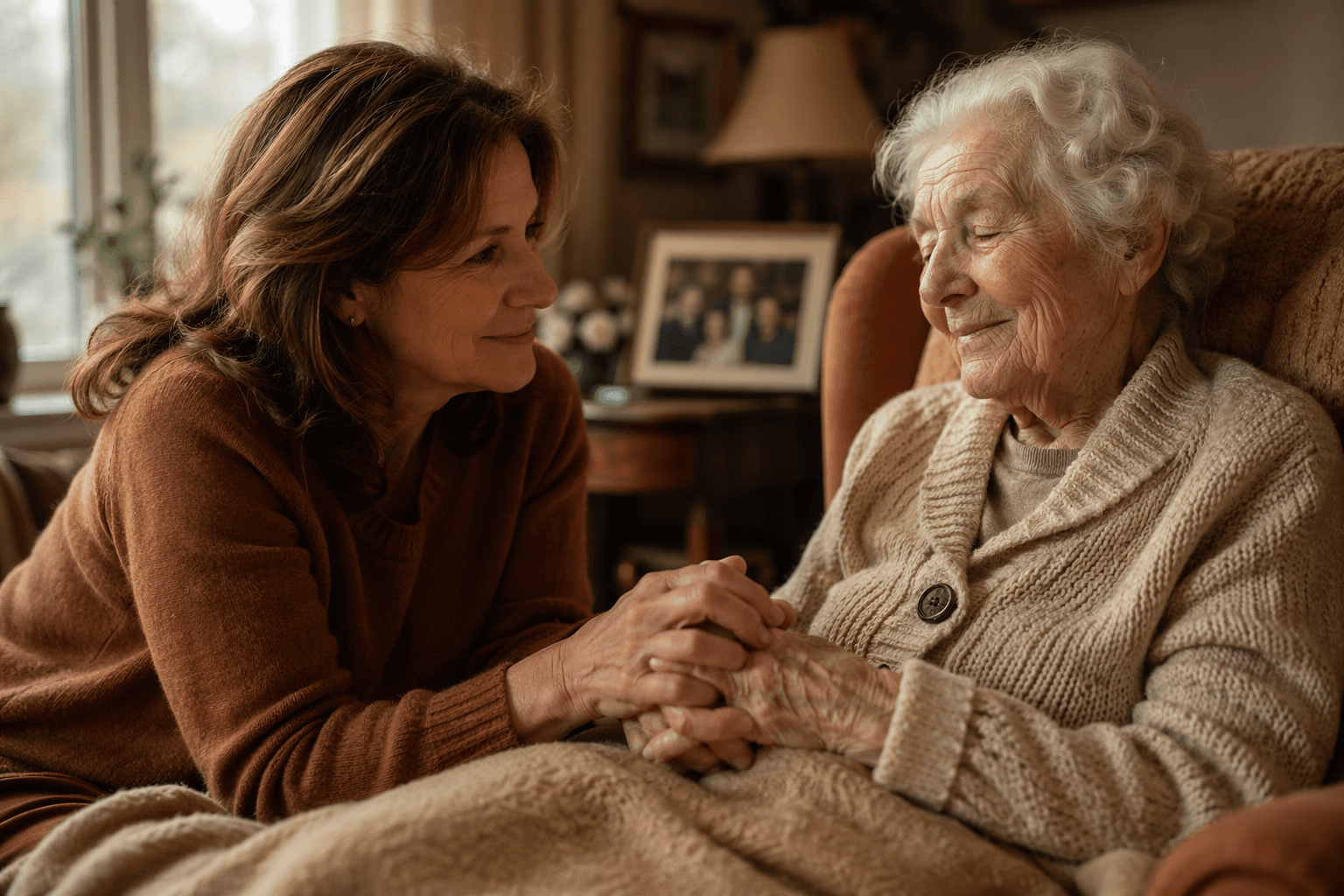
Comfort through connection: gentle touch can be a powerful pain signal and a source of relief.
Why Pain Is Overlooked in Late-Stage Alzheimer's
If your loved one can no longer say "this hurts" or point to where the pain is, you are facing one of the most difficult challenges in late-stage Alzheimer's care. The numbers are stark: between 50% and 80% of patients with moderate to severe dementia experience pain every single day, according to the Mayo Clinic Health System. Yet this pain is routinely missed and undertreated.
Three distinct factors create this blind spot. First, Alzheimer's disease itself produces a mask-like facial expression that flattens the usual pain signals — the furrowed brow, the drawn mouth, the wince. Second, the person has lost the cognitive ability to self-report. They cannot tell you where it hurts, what kind of pain it is, or that they need help. Third, research suggests that the neuroinflammation driving the disease may actually amplify pain perception, meaning the person may be suffering more than their outward appearance suggests.
The result is a silent crisis. Pain that would be treated immediately in a verbal patient goes unaddressed for days, weeks, or months. And because the person cannot tell you, the pain comes out in other ways — through behaviors that are often misread as aggression, anxiety, or the disease "getting worse."
The Pain–Behavior Link: Why Agitation, Aggression, and Withdrawal May Be Pain Signals
When a person with late-stage Alzheimer's cannot use words, their body and behavior become their language. The Alzheimer's Association notes that pain can manifest as anxiety, agitation, trembling, shouting, and sleeping problems. The Mayo Clinic adds that untreated pain also drives screaming, cursing, striking out, withdrawal, fatigue, and disturbed sleep — and that patients often become more alert and settled after pain is treated.
This is the pain–behavior link, and understanding it changes everything. Instead of asking "Why is she so agitated?" you learn to ask "What is her body trying to tell me?"
Agitation or restlessness: The person cannot get comfortable. They may rock, pace (if still mobile), or repeatedly shift position.
Aggression or striking out: Pain that builds without relief can trigger a fight response. A person who never hit before may suddenly swing at you during a transfer or bath.
Moaning, groaning, or crying out: The National Institute on Aging (NIA) describes these as common pain expressions in the final stages of Alzheimer's.
Withdrawal and fatigue: The person may sleep more, refuse to engage, or seem "shut down." This is often mistaken for disease progression when it is actually pain-related exhaustion.
Guarding a body part: Sitting in an unusual position, refusing to move one arm or leg, or grimacing when touched in a specific area.
If you are seeing evening agitation in particular, pain may be an underlying trigger. Our guide on managing sundowning in dementia offers additional strategies for addressing late-day distress, but always start by ruling out pain first.
Using the PAINAD Scale: A Simple Tool You Can Use Today
The PAINAD scale (Pain Assessment in Advanced Dementia) was developed specifically for people who cannot self-report pain. It is validated for clinical use, and critically for family caregivers, it requires no medical training to apply. The Mayo Clinic Health System explicitly notes that the PAINAD scale is "easy to learn by people without medical training."
The scale evaluates five observable domains. For each domain, you assign a score of 0 (normal), 1 (mildly abnormal), or 2 (moderately to severely abnormal). The total score ranges from 0 to 10. A score of 4 or higher strongly suggests pain is present and should be addressed.
The PAINAD scale: a five-domain observational tool for assessing pain in advanced dementia. Total score of 4 or higher indicates significant pain.
Domain
Score 0 (Normal)
Score 1 (Mild)
Score 2 (Moderate to Severe)
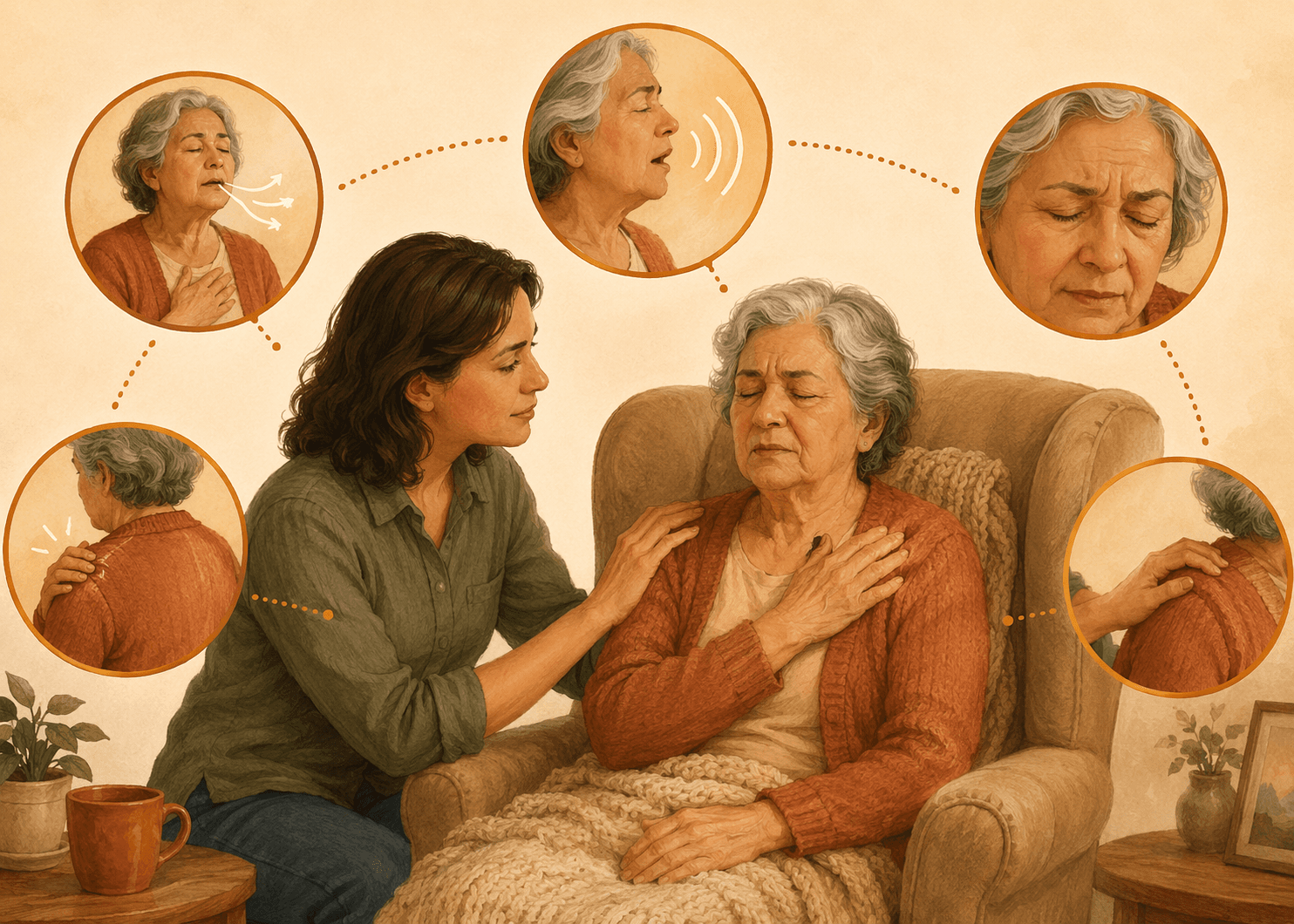
Breathing
Normal, relaxed breathing
Occasional labored breathing, short periods of hyperventilation
Noisy labored breathing, long periods of hyperventilation, Cheyne-Stokes respirations
Negative Vocalization
None
Occasional moan or groan, low-level speech with a negative or disapproving quality
Repeated troubled calling out, loud moaning or groaning, crying
Facial Expression
Smiling or neutral expression
Sad, frightened, or worried expression; furrowed brow
Facial grimacing
Body Language
Relaxed posture
Tense, distressed pacing, fidgeting
Rigid, fists clenched, knees pulled up, pulling or pushing away, striking out
Consolability
Content, no need to console
Distracted or reassured by voice or touch
Unable to console, distract, or reassure
To use the PAINAD scale, simply observe your loved one for two to five minutes during a moment of rest or activity. Score each domain based on what you see and hear. Do not worry about being perfect — the act of systematically looking is itself a powerful step toward recognizing pain.
The five PAINAD domains in practice: breathing, vocalization, facial expression, body language, and consolability.
The ALTAR Framework: A Step-by-Step Approach for Caregivers
The PAINAD scale tells you whether pain is likely present. The ALTAR framework, also recommended by the Mayo Clinic Health System, gives you a practical daily routine for finding the source and doing something about it. ALTAR stands for Anticipate, Look, Treat, Avoid comparisons, Revisit.
Anticipate: Assume pain is present until proven otherwise. Given the 50–80% prevalence, start every care interaction — bathing, dressing, transferring — with the expectation that your loved one may be in pain. This shifts your mindset from reacting to behaviors to preventing them.
Look: Conduct a systematic body check. Run your hands gently over their body while speaking in a calm voice. Feel for warmth, swelling, or tension. Look for redness, broken skin, or unusual positioning. Check their mouth for sores or ill-fitting dentures. Use the PAINAD scale to get a baseline score.
Treat: Start with non-medication comfort measures (covered in detail below). If those do not bring the PAINAD score down within 30–60 minutes, consider whether medication is needed and contact the healthcare team.
Avoid comparisons: Your own pain experience is not a reliable guide. A condition you would rate as a 2 out of 10 might be excruciating for someone with Alzheimer's due to altered pain processing in the brain. Never dismiss a potential pain signal because "it doesn't look that bad."
Revisit: Pain changes throughout the day. Reassess after any intervention, after repositioning, and at regular intervals. A PAINAD score that drops after a comfort measure confirms that pain was the cause. A score that stays high tells you to try something else or call the doctor.
The ALTAR framework turns pain recognition from a vague worry into a concrete, repeatable process. Print it out. Keep it near your care station. Use it daily.
Common Hidden Sources of Pain in Late-Stage Alzheimer's
Some pain sources are obvious — a fall, a visible cut. But in late-stage Alzheimer's, the most common sources of pain are hidden. They develop gradually, inside the body, and the person cannot tell you they are happening. Here are the six most frequently overlooked sources, based on clinical guidance from the NIA, the Alzheimer's Association, and hospice providers.
Contractures: When a person stops moving their limbs freely, muscles and tendons shorten and freeze the joint in a bent position. This is intensely painful, especially during passive range-of-motion exercises or bathing. Look for limbs that cannot be fully extended and watch for grimacing or guarding during care.
Pressure sores (bedsores): The NIA emphasizes that repositioning every two hours is critical to prevent pressure sores. These develop on the sacrum, heels, elbows, and shoulders. Check these areas daily for red or purple spots that do not blanch (turn white) when pressed. Stage 3 and 4 pressure sores are a hospice-qualifying condition per VITAS Healthcare guidelines.
Dental issues: Cavities, abscesses, and ill-fitting dentures are extremely common and almost never self-reported. Look for refusal to eat, touching or pulling at the mouth, bad breath, or visible swelling along the jawline. Check the mouth weekly with a penlight.
Old surgical sites: Healed surgical scars can become painful due to nerve entrapment or scar tissue. Ask family members about past surgeries — hip replacements, knee surgeries, abdominal procedures — and watch for guarding or withdrawal when those areas are touched.
Urinary tract infections (UTIs): UTIs are a leading cause of sudden behavioral change in dementia. The Alzheimer's Association lists pale or flushed skin, dry pale gums, feverish skin, and swelling as physical signs to watch for. A UTI can cause severe abdominal and back pain that presents as agitation or aggression.
Arthritis: Osteoarthritis is nearly universal in this age group. Even if your loved one never complained about arthritis before, the pain is still there. Look for stiffness, reluctance to move certain joints, and guarding during transfers.
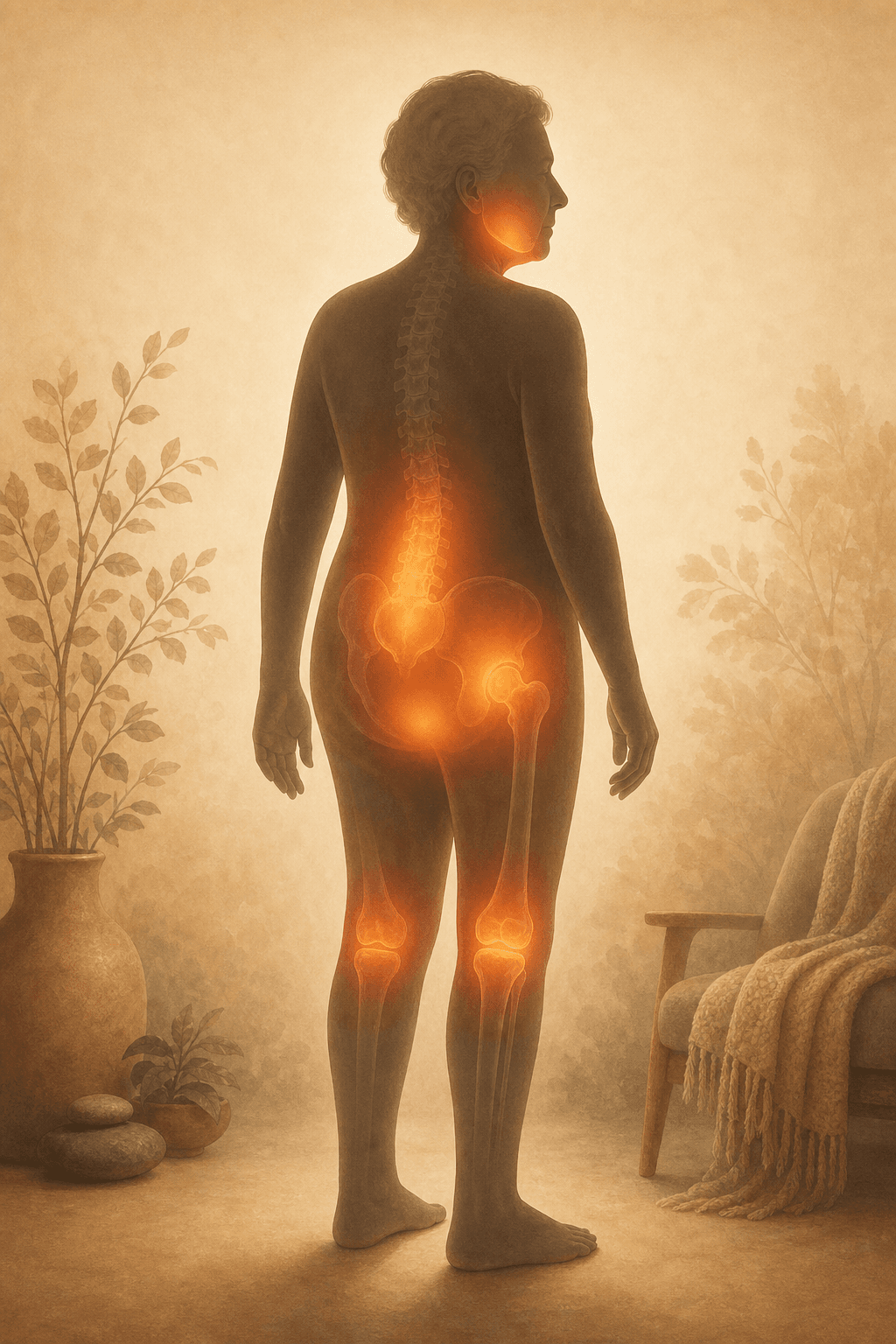
Common hidden pain locations in late-stage Alzheimer's: jaw/mouth, hips/lower back, knees, sacrum, and lower abdomen.
Non-Medication Comfort Measures You Can Provide at Home
Before reaching for a pill bottle, start with comfort. The Mayo Clinic Health System and the NIA both emphasize that non-pharmacologic interventions are first-line strategies for pain management in dementia. They can be used alongside medication and often reduce the amount of medication needed.
Repositioning: The NIA recommends repositioning every two hours to prevent pressure sores and relieve joint pain. Use pillows, wedge cushions, and specialty mattresses to support natural body alignment. A small change in position can bring dramatic relief.
Gentle massage: Massage the skin with unscented lotion, as recommended by the NIA. Focus on the back, shoulders, hands, and feet. Use slow, firm strokes — not light tickling — and watch for signs of relaxation (slower breathing, softening of facial muscles).
Music therapy: Familiar music from the person's young adult years can reduce agitation and provide comfort. The Mayo Clinic lists music therapy as an evidence-based non-medication intervention. Play it softly in the background during care or when the person seems distressed.
Aromatherapy: Lavender and other calming scents can reduce anxiety and pain-related agitation. Use a diffuser or a few drops on a cloth near the pillow — never directly on the skin.
Environmental adjustments: Bright lights, loud noises, and cold rooms can amplify pain perception. Dim the lights, reduce background noise, and keep the room at a comfortable temperature. The NIA notes that even in advanced stages, a person may benefit from white noise or nature sounds.
When and How to Request Pain Medication from the Healthcare Team
When comfort measures are not enough, medication is appropriate and necessary. But many family caregivers struggle to get their concerns taken seriously. Here is how to advocate effectively.
Bring data, not opinions: Doctors respond to documentation. Bring your PAINAD scores, behavior logs, and a list of comfort measures you have tried and their effects. The Mayo Clinic Health System advises writing down questions and documenting pain levels with time of day, position, and mood.
Name the suspected source: "I think she has a UTI because she is suddenly agitated and has a low-grade fever" is more actionable than "She seems uncomfortable." Use the hidden sources list above to guide your hypothesis.
Ask about medication types: Non-opioid options (acetaminophen, topical NSAIDs) are typically tried first. If those are insufficient, opioids may be appropriate for severe pain, especially in hospice-eligible patients. The Mayo Clinic notes that untreated pain causes withdrawal and fatigue, and patients often become more alert after pain is treated — meaning appropriate medication can actually improve quality of life.
Do not accept dismissal: If a provider says "It's just the disease," gently push back. Reference the 50–80% prevalence statistic and the PAINAD scores you have recorded. You are not asking for sedation — you are asking for appropriate pain management.
Documenting Pain for Doctor Visits: What to Track and How
Good documentation is the single most powerful tool you have for getting your loved one the right treatment. The Mayo Clinic Health System recommends documenting pain levels with time of day, position, and mood. Here is a simple framework you can start using today.
Pain documentation framework for doctor visits. Track for at least 3–5 days before an appointment to establish a clear pattern.
What to Record
How to Record It
Why It Matters
Date and time
Write the exact time of day
Pain often follows daily patterns — morning stiffness, evening worsening
PAINAD score
Score 0–10 using the five domains
Provides an objective, repeatable measure the doctor can track over time
Behavior observed
Describe what you saw (moaning, guarding, agitation)
Connects the score to real-world symptoms
Position and activity
What was the person doing? (sitting, being transferred, after eating)
Identifies positional or activity-related pain
Comfort measure tried
What did you do? (repositioned, massaged, played music)
Shows the doctor what has already been attempted
Effect of comfort measure
Did the PAINAD score go up, down, or stay the same?
Confirms or rules out pain as the cause of the behavior
Keep a simple notebook or use a notes app on your phone. You do not need to write paragraphs — a few lines per observation is enough. The goal is to walk into the doctor's office with a clear, data-backed picture of what is happening.
How Untreated Pain Increases Caregiver Stress — and What to Do About It
The pain–behavior cycle does not just hurt your loved one — it takes a direct toll on you. The Alzheimer's Association Facts and Figures report for 2026 found that 59% of dementia caregivers report high to very high emotional stress. When you are dealing with daily agitation, aggression, or withdrawal that you cannot explain or relieve, that stress compounds rapidly.
You may feel frustrated, exhausted, or even resentful. You may question whether you are doing something wrong. These feelings are not a sign of failure — they are a sign that the current approach is not working, and that pain may be the missing piece of the puzzle.
When you start using the PAINAD scale and ALTAR framework, two things happen. First, your loved one's pain gets addressed, which often reduces the very behaviors that were causing you the most stress. Second, you regain a sense of control. Instead of reacting to behaviors, you are systematically investigating and solving a problem. That shift alone can reduce your stress level significantly.
Start small. Pick one tool from this guide — the PAINAD scale, the ALTAR framework, or the documentation log — and use it for three days. See what changes. You may be surprised at how much your loved one was trying to tell you, and how much relief is possible when you finally listen.


Comments
Join the discussion with an anonymous comment.