
Caregiver decision guide
What to Do During an Earthquake Swarm as a Senior
This guide explains how older adults with mobility limitations — using canes, walkers, wheelchairs, or bedbound — can safely apply adapted Drop-Cover-Hold On protocols during an earthquake swarm. It covers the unique risks of repeated shaking and the critical uncertainty that distinguishes swarms from single earthquakes.
When shaking starts during an earthquake swarm, an older adult who cannot safely get to the floor should not be urged to “just drop.” The safer first move is the version of Drop-Cover-Hold On that fits the body and the device already in use: lock the wheels if there are wheels, cover the head and neck, and hold on until the shaking stops. Earthquake Country Alliance gives specific adaptations for people using wheelchairs, walkers, canes, and beds; the CDC’s standard instruction remains Drop, Cover, and Hold On, but the point is to adapt that instruction before the first ten seconds are gone.[1][2]
That distinction matters more during a swarm because the next shaking episode may arrive after everyone is tired, frightened, or halfway through cleaning up. The plan has to be repeatable, not heroic.
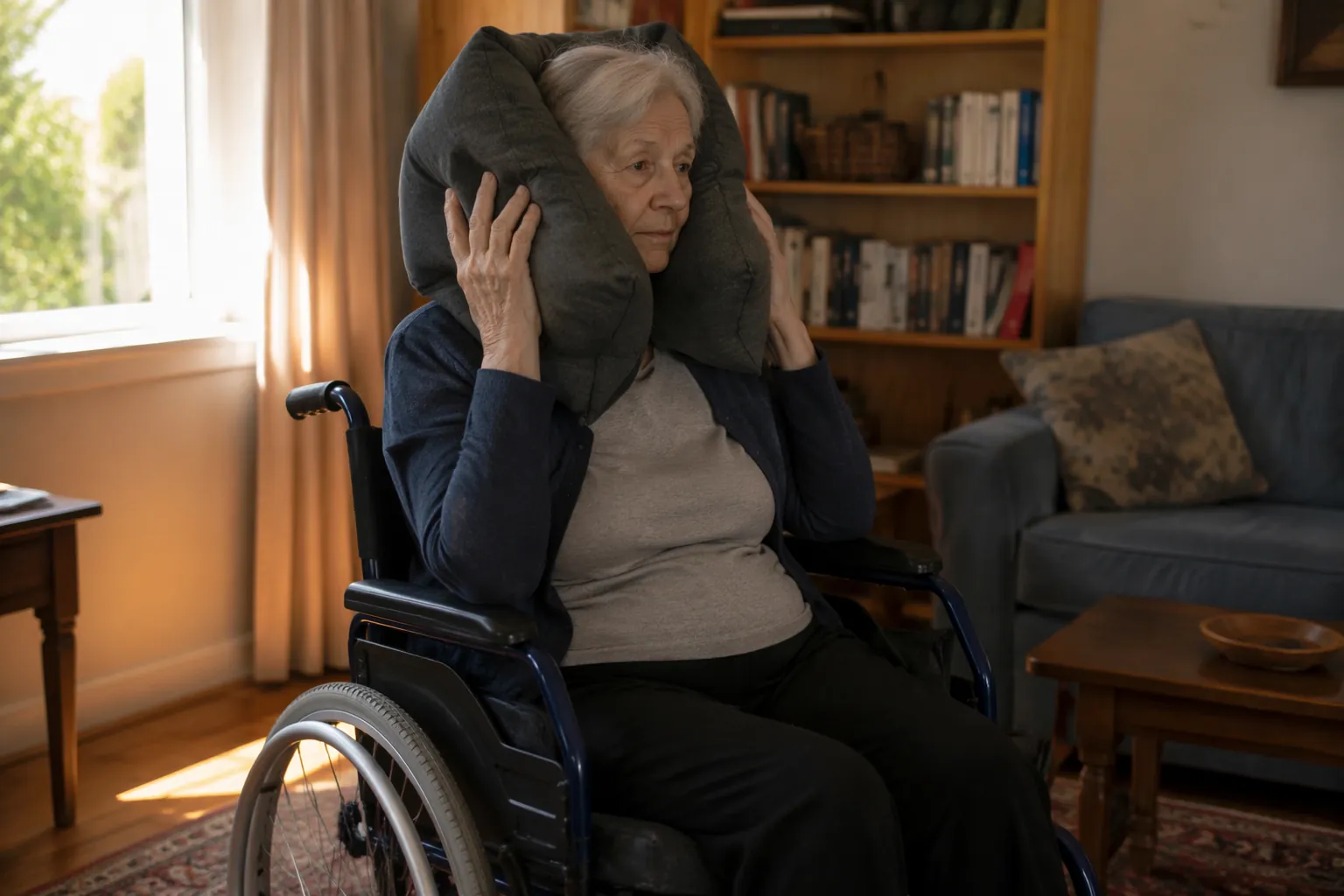
The First Seconds: Match the Action to the Mobility Aid
A caregiver can make the instructions short enough to practice. The older adult does not need a geology lesson in the moment. They need one memorized response for the chair, walker, cane, or bed they are actually using when the room begins to move.
| Situation when shaking starts | Safer adapted action |
|---|---|
| Using a wheelchair or rollator-style walker with brakes | Lock the wheels, cover head and neck, hold on |
| Using a standard walker without wheels or with limited braking | Stay with the walker if it is stable, get low only if already safe to do so, cover head and neck, hold on |
| Using a cane | Sit down if a chair is immediately reachable; otherwise stay as stable as possible and cover head and neck |
| Already in bed | Stay in bed, cover head and neck with a pillow or bedding, and hold on |
The table is deliberately plain. During shaking, “move across the room,” “transfer to the floor,” and “go find a doorway” are not good instructions for many frail older adults. The task is to reduce falls and protect the head and neck where the person is, using whatever stable cover or padding is already within reach.
Wheelchair Users: LOCK, Cover, Hold On
For a wheelchair user, the adapted protocol is not Drop-Cover-Hold On. It is LOCK-Cover-Hold On: lock the wheels, cover the head and neck, and hold on until the shaking stops.[1] Those first two words should be practiced together. If the person has to think through the brake location for the first time during shaking, the plan is already too late.
- Lock both wheels if the chair has manual brakes and the hands can reach them safely.
- Stay seated. Do not attempt a transfer to the floor, couch, toilet, or bed while the ground is moving.
- Cover the head and neck with the arms, a pillow, a folded jacket, or anything soft already within reach.
- Hold on to the chair frame or another stable part of the wheelchair, not to a rolling table, loose tray, or nearby shelf.
If the wheelchair is near a sturdy table or desk, the person may be able to angle closer only if that movement is immediate and safe. If not, they should not spend the shaking trying to travel. A locked chair with head and neck protection is better than an unlocked chair rolling toward “better” cover.
Caregivers should set up the room so the wheelchair position already has options: a pillow on the chair, brakes that are easy to operate, and a clear space away from tall unsecured furniture. If the person uses oxygen, tubing and tanks need special attention so that the equipment does not become a tripping or impact hazard during shaking; home-care guidance for reduced mobility specifically calls out securing oxygen tanks and reducing hazards from furniture and equipment.[6]
Walker Users: Lock Wheels if Present, Then Protect the Head
Walker users are often told to “drop” as if the walker disappears once the floor moves. It does not. The walker may be the only thing preventing an immediate fall. Earthquake Country Alliance includes adapted guidance for walker users: lock wheels if the walker has them, cover the head and neck, and hold on.[1]
For a rollator or wheeled walker, the first practiced motion is brake-hand-brake: both hands go to the brakes, lock them if possible, then one arm or both arms protect the head and neck. If the walker has a seat and the person is already close enough to sit without turning or stepping, sitting may be safer than standing. If sitting requires backing up, pivoting, or searching for the seat latch during shaking, do not make that the plan.
For a standard walker, the instruction is different. There may be no wheels to lock. The person should keep the walker steady, avoid stepping across the room, and cover the head and neck as much as balance allows. A caregiver can place a sturdy chair near the usual walking path so “sit and cover” is possible without a transfer across open space.
This is where fall-prevention habits become earthquake habits. Clear floor paths, fewer loose rugs, reachable lighting, and stable furniture reduce the number of decisions a person has to make when the shaking starts. The same practical thinking behind helping an older adult stay safe and steady during severe weather applies here: steadiness has to be built into the room before the emergency.
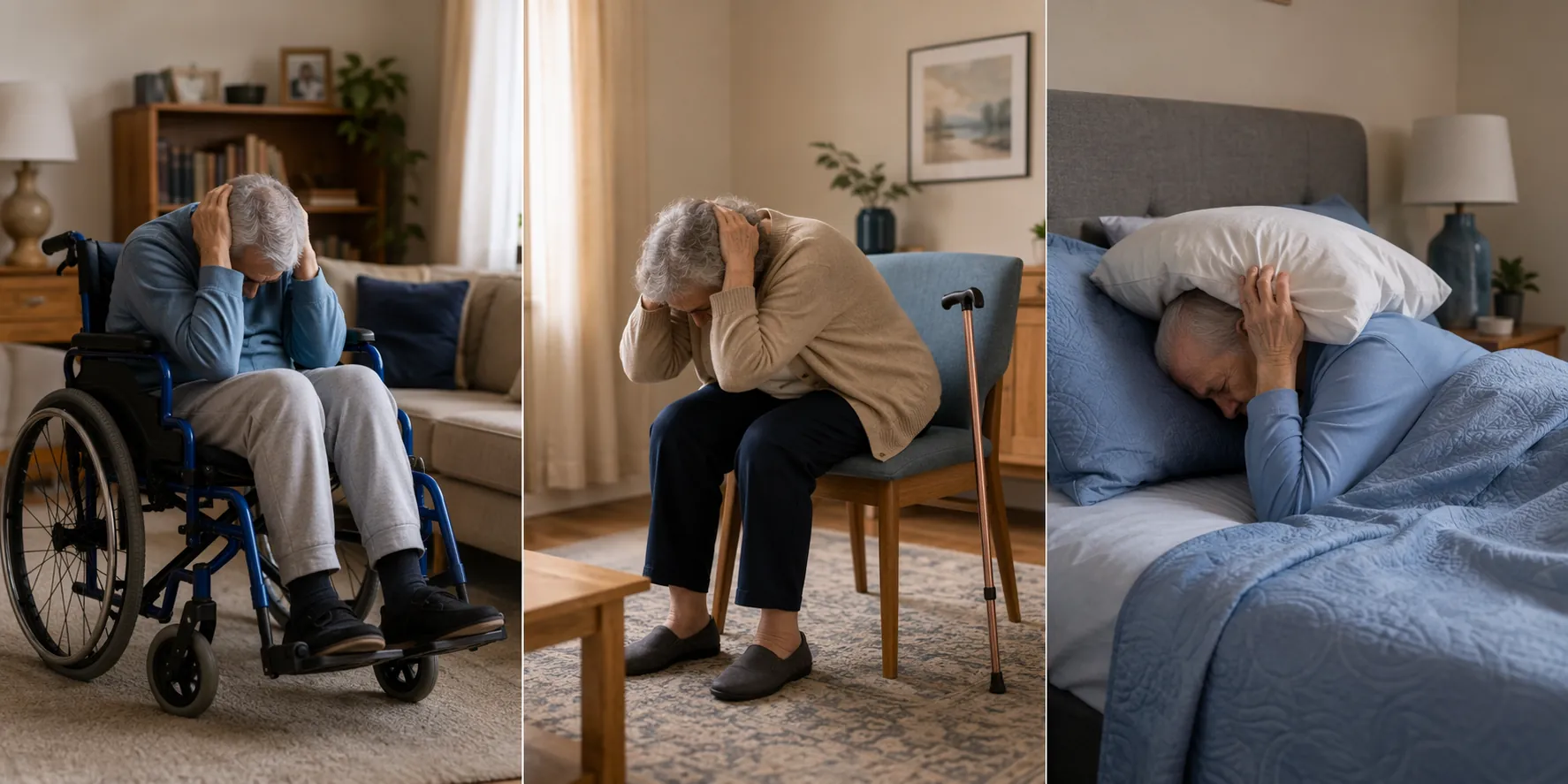
Cane Users: Sit if the Chair Is Right There
A cane helps with balance, but it does not give enough support for a safe, controlled drop to the floor during shaking. If a sturdy chair is within one or two natural movements, the cane user should sit, cover the head and neck, and hold on. If the chair is across the room, the safer instruction is not “hurry.” It is to stay as stable as possible, move away from nearby glass or objects only if that can be done without rushing, and protect the head and neck.
The cane itself should not become the plan. A person trying to manage a cane, reach for a chair, and cover the head all at once may end up doing none of them well. Caregivers can help by placing sturdy chairs in the places where the person already pauses: beside the bed, near the kitchen table, close to the bathroom entrance, and along a hallway if space allows.
Bedbound Seniors: Staying in Bed Can Be the Safer Choice
If an older adult is already in bed when shaking starts, the safer adapted response is usually to stay there, cover the head and neck with a pillow or bedding, and hold on.[1] Trying to transfer from bed to wheelchair, commode, or floor during shaking creates its own injury risk.
The bed area should be prepared as if this response will be used more than once. Keep a pillow reachable with either hand if possible. Move heavy framed pictures, shelves, lamps, and unsecured medical equipment away from the head of the bed. If the person uses oxygen, keep the tank secured and the tubing routed so a caregiver is not stepping into a snare while trying to check on them after shaking stops.[6]
This is also the place to be honest with family members. “Stay in bed and cover up” can sound too simple, so people are tempted to add a transfer. During active shaking, extra movement is not automatically extra safety.
What the Swarm Changes
An earthquake swarm is a sequence of earthquakes in a local area within a relatively short period, without a clear mainshock-aftershock pattern. The USGS also states the harder part plainly: “the end of seismic activity cannot be predicted,” and it is uncertain whether a larger earthquake will follow.[3]
That uncertainty is the reason swarm advice should not sound like a one-time checklist. After one shaking episode ends, a caregiver may be tempted to move the older adult quickly, start cleaning, or return equipment to its usual but less safe position. Sometimes that is necessary. But during a swarm, the interval between events should be treated as working time: reset the brakes, put the pillow back within reach, clear the fallen objects from walking paths, check medications and oxygen, and rehearse the same adapted response again.
California readers have had recent reminders that swarms are not abstract. The Los Angeles Times reported on earthquake swarms rattling parts of California in 2025 and 2026, including public concern about what such activity means for larger earthquakes.[4] That news color should not be turned into prediction. The useful lesson is narrower: repeated shaking keeps household readiness from being a “someday” project.
Between Shaking Episodes, Prepare the Room the Person Actually Uses
The best preparation is not a perfect kit in a closet the older adult cannot reach. Ready.gov tells older adults to plan for their individual needs, including medications, medical supplies, assistive devices, and support networks.[5] For a caregiver, that means placing critical items where the person can get them without a risky transfer.
- Put a pillow, light blanket, or soft head-covering item within reach of the wheelchair, favorite chair, and bed.
- Keep a flashlight, phone, charger or backup power source, glasses, hearing aids, and essential medications in reachable locations.
- Secure tall furniture, heavy televisions, shelves, oxygen tanks, and other equipment that could fall or slide.
- Clear walker and wheelchair paths after each shaking episode before asking the older adult to move.
- Write the adapted action in large print: “LOCK. COVER. HOLD ON.” or “STAY IN BED. COVER HEAD AND NECK.”
Medication readiness deserves the same discipline used in other disasters. If the household already keeps a smoke-season or power-outage medication plan, use that structure here too; the same supply-management logic in a wildfire smoke preparedness checklist for chronic conditions can help caregivers think through refills, equipment, and backup contacts before a swarm stretches over time.
Rehearse Without Making It a Drill No One Can Perform
Practice should be short and specific. A wheelchair user practices reaching both brakes and bringing a pillow or forearm to the head. A walker user practices locking the rollator brakes and deciding whether the nearby chair is close enough to sit safely. A cane user practices sitting in the nearest sturdy chair and covering the head. A bedbound person practices pulling a pillow over the head and neck without waiting for help.
Caregivers should also practice their own restraint. During shaking, protect yourself first. If you are thrown to the floor or struck by an object while trying to cross the room, you may not be able to help afterward. Once the shaking stops, check your own footing, watch for broken glass and blocked paths, then assist with transfers, medication, oxygen, or evacuation if needed.
For homes already adapting rooms around tremor, stiffness, freezing, or balance problems, earthquake preparation belongs in the same conversation. A Parkinson’s home safety checklist can be a useful companion for identifying furniture placement, walking paths, and room-by-room hazards that also matter during shaking.
What This Plan Can and Cannot Do
Adapted earthquake protocols reduce risk; they do not erase it. They cannot guarantee protection from falling objects, structural damage, panic, blocked exits, or the injury risk that comes with urgent transfers after the shaking stops. They also cannot tell a family when a swarm is over or whether a larger earthquake will follow; USGS is explicit that this uncertainty remains.[3]
What the plan does give an older adult is a usable first response when ordinary Drop-Cover-Hold On is not physically possible: lock what rolls, stay seated when dropping is unsafe, stay in bed when transferring is more dangerous, cover the head and neck, and hold on until the shaking stops.
References
- Step 5: Drop, Cover, and Hold On, Earthquake Country Alliance
- Stay Safe During an Earthquake, Centers for Disease Control and Prevention
- What is an earthquake swarm?, U.S. Geological Survey
- Earthquake swarms rattle California. What it means for the Big One, Los Angeles Times, 2025-12-22
- Older Adults, Ready.gov
- Earthquake Safety With Reduced Mobility, Midnight Sun Home Care
Questions to bring to a clinician or OT
This is not medical, legal, or a family's final decision — only a framework. Bring these questions to a clinician, occupational therapist, or your local Area Agency on Aging.
Find Local HelpRelated reading
Noticed something outdated or inaccurate on this page? Flag a correction. We review every report against CDC, NIA, and AARP HomeFit guidance before updating a page.