
Caregiver decision guide
The Emotional Side of Bathing Assistance: Preserving Dignity for Your Parent and Yourself
This guide helps family caregivers navigate the emotional weight of providing bathing assistance to an elderly parent or spouse. It offers dignity-preserving techniques, communication scripts, and coping strategies to address role reversal, discomfort, and the need for boundaries.
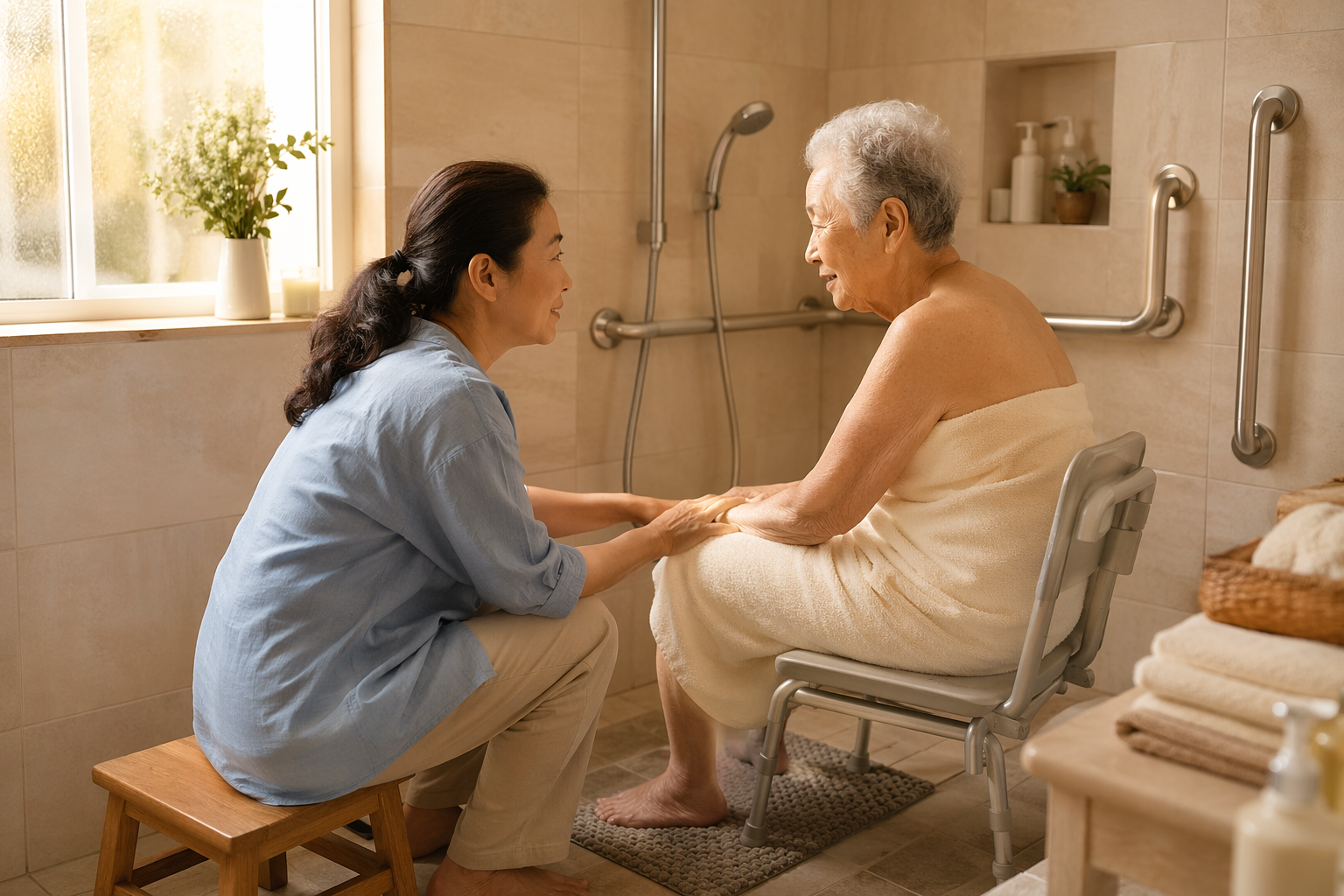
Why Bathing Assistance Feels So Hard (and Why That’s Normal)
If the thought of helping your parent or spouse bathe makes your stomach tighten, you are not alone. Bathing assistance consistently ranks among the top three most difficult daily activities caregivers help with, alongside toileting and transferring, according to the Caregiver Action Network. The difficulty rarely comes from a lack of equipment knowledge or safety checklists. It comes from the emotional weight of the moment.
You are confronting role reversal — the parent who once bathed you now needs you to perform that same intimate task. You may feel awkward, sad, or even a sense of loss. Spousal caregivers face a different but equally heavy burden: washing a partner you have known as an equal, now dependent on you for basic care. These feelings are not a sign that you are doing something wrong. They are a sign that you are human.
Acknowledging your discomfort is not weakness — it is the foundation for providing better care. When you suppress your own feelings, you are more likely to rush through the task, avoid eye contact, or use a clipped tone that your loved one will pick up on. They may interpret your discomfort as rejection or anger, which can increase their own anxiety and resistance.
The goal of this guide is not to make bathing assistance easy. It is to make it manageable — by giving you specific techniques, scripts, and permission to set boundaries that protect both your loved one's dignity and your own emotional health.
Dignity-Preserving Techniques That Put Your Loved One in Control
The single most effective way to reduce distress during bathing is to preserve your loved one's sense of control and dignity. When a person feels exposed, vulnerable, or infantilized, resistance is a natural response — not a personal rejection of you.
Cover what you are not washing. Keep a large bath towel or bath blanket draped over your loved one's lap and chest throughout the bath. Lift it only to wash the area underneath, then replace it immediately. The Caregiver Action Network recommends this as a core dignity-preserving technique. It reduces the feeling of exposure and gives the person a physical boundary they can hold onto.
Let them do what they can. Even if your loved one can only manage one small task, let them do it. Hand them a washcloth and ask them to wipe their arms or face. The Alzheimer's Association suggests giving the person something to hold — a washcloth, a sponge, or even the shampoo bottle — to give them a role in the process. This small act of participation preserves a sense of agency and reduces the feeling of being passively handled.

Explain each step before you do it. A person who cannot see what is coming next may feel ambushed. The Family Caregiver Alliance recommends giving step-by-step instructions: "I'm going to wash your left arm now. Then I'll dry it and cover it back up." This is especially important for someone with dementia, who may have depth perception problems that make stepping into water genuinely frightening.
Use no-rinse products when full bathing is refused. Research cited by the Alzheimer's Association shows that regular, thorough use of a no-rinse soap product with warm, wet towels is equally effective for hygiene when a full bath or shower is refused. Keep a bottle of no-rinse cleanser and a stack of soft washcloths ready. This approach reduces the time your loved one spends exposed and minimizes the sensory overwhelm of running water.
Adjust the water and pressure before they step in. For someone with dementia, the "sting" of shower water can feel like a threat, according to the Family Caregiver Alliance. Set the shower to its softest pressure setting. Fill the tub with only 2 to 3 inches of water before the person gets in, or let them sit in the empty tub and fill it afterward. A person who is already seated and comfortable is far less likely to panic.
What to Say: Communication Scripts for Bathing Assistance
The words you choose can either invite cooperation or trigger resistance. The goal is to frame bathing as a shared, neutral activity — not something being "done to" your loved one.
- Use normalized, activity-focused language. Instead of "I need to wash you now," try "Let's freshen up" or "Let's wash up." The Alzheimer's Association specifically recommends saying "Let's wash up" instead of "Let's take a bath." This small shift frames the activity as a routine part of the day, not a medical procedure.
- Offer real choices. "Do you want to bathe now or in 15 minutes?" "Would you prefer a bath or a shower?" "Should we use the blue soap or the green one?" The Alzheimer's Association emphasizes that giving the person choices restores a sense of control. Even small decisions matter.
- Use the "watch-me" technique. If your loved one is hesitant, demonstrate the action on yourself first. Wet your own arm, apply soap, and rinse. The Alzheimer's Association notes that this modeling technique can reduce fear and confusion, especially for someone with dementia who may have forgotten the sequence of steps involved in washing.
- Respect gender preferences. The Caregiver Action Network advises being sensitive to whether your loved one would be more comfortable with a caregiver of a specific gender. If you are a daughter helping your father, or a son helping your mother, acknowledge the potential awkwardness directly: "I know this feels strange. I want to make sure you're comfortable. If you'd prefer, we can ask your home health aide to help with this part."
- Persuade with a reason. The Alzheimer's Society suggests linking bathing to a positive upcoming event: "Let's freshen up before your granddaughter visits this afternoon" or "A warm bath will help your muscles feel better before bed." This gives the activity a purpose beyond hygiene.
Setting the Scene: Privacy and Comfort Protocols
The physical environment of the bathroom can either amplify or reduce your loved one's sense of vulnerability. A cold, bright, echoey room with a hard tile floor feels exposed. A warm, dim, quiet room with soft towels feels safe. You can change the room without changing the fixtures.
- Close the door and draw the curtain or blinds. This sounds obvious, but in the rush of caregiving, it is easy to leave the bathroom door ajar. A closed door signals that this is a private moment, not a task being performed in a semi-public space.
- Warm the room before undressing. Turn on a space heater or run hot water in the sink for a few minutes before your loved one enters. The Family Caregiver Alliance notes that a cold bathroom can trigger resistance, especially in someone with dementia who may already feel vulnerable. A warm room reduces the shock of undressing.
- Use large towels for coverage. Have two or three large bath towels ready before you start. Use one to cover the person while undressing, a second to keep on their lap during the bath, and a third for drying. The Caregiver Action Network recommends providing a towel to keep on the lap throughout the bath, lifting it only as needed. This simple protocol dramatically reduces the feeling of exposure.
- Do not rush. Set aside at least 30 minutes for bathing, even if the actual washing takes 10. Rushing communicates that you are uncomfortable and want the task over with. Your loved one will pick up on this energy and may become anxious or resistant. Move slowly, speak calmly, and build in pauses.
- Keep the water temperature safe. The Caregiver Action Network advises setting your water heater to a maximum of 120°F (49°C) to prevent scalding. Older skin burns faster and heals slower. Test the water with your wrist or elbow before your lovedone gets in.
These protocols do more than protect physical comfort. They send a clear message: "You are safe here. This is a private, respectful space. I am not rushing you." For a person who feels vulnerable, that message is as important as the washing itself.
Coping as a Caregiver: Boundaries, Burnout, and Permission to Get Help
You cannot pour from an empty cup. This cliché persists because it is true, and nowhere is it more true than in the context of providing intimate personal care. Bathing assistance is physically and emotionally demanding. If you are doing it every day without support, you will eventually burn out.
Set clear boundaries about what you can and cannot do. You are allowed to decide that you can help with washing up and toileting but not with full baths. You are allowed to decide that you can bathe your loved one three days a week but need the other days covered by someone else. The Caregiver Action Network explicitly encourages setting boundaries and practicing self-care to prevent burnout. These are not signs of failure — they are signs of self-awareness.
Consider the hybrid model. Many families find success handling daily washing themselves while having a professional home care aide visit a couple of times per week for more thorough bathing, according to the Caregiver Action Network. This model gives you the manageable daily routine while ensuring your loved one gets a proper bath or shower on a regular schedule. It also gives you permission to step back from the most demanding task without feeling like you are abandoning your role.
| Caregiver Situation | Recommended Approach | Why It Works |
|---|---|---|
| Adult child providing daily bathing assistance | Handle daily washing (face, hands, perineal care) yourself; hire a home health aide for 1-2 full baths per week | Reduces your physical and emotional load while ensuring thorough hygiene; preserves your relationship as child, not full-time attendant |
| Spousal caregiver bathing a partner | Use no-rinse products and towel baths on most days; schedule professional help for full baths | Minimizes the role-reversal discomfort of full exposure; keeps the intimate partner relationship separate from the caregiving task |
| Long-distance caregiver coordinating from afar | Arrange for a home health aide or adult day program with bathing services; visit for emotional support, not hands-on care | Avoids the stress of providing intimate care during short visits; ensures consistent hygiene without your physical presence |
| Caregiver experiencing burnout symptoms | Pause hands-on bathing immediately; transfer all bathing to professional care until you recover | Prevents resentment and compassion fatigue; your loved one receives care from someone who is not emotionally depleted |
Recognize the warning signs of burnout. If you find yourself dreading bath time, feeling irritable or resentful toward your loved one, skipping your own meals or sleep, or withdrawing from friends and activities, these are red flags. The Caregiver Action Network emphasizes that self-care is not optional — it is a prerequisite for sustainable caregiving.
When to Bring in Professional Help
There is a difference between "I could use a break" and "I cannot do this anymore." Both are valid reasons to bring in professional help, but the second one is urgent. Here are the clearest signs that it is time to hand over bathing assistance to a trained professional.
- You are experiencing caregiver burnout. If you have any of the burnout warning signs listed above — especially irritability, resentment, or withdrawal — stop providing hands-on bathing immediately. Your emotional state will affect the quality of care and your relationship with your loved one.
- Safety is a concern. If your loved one is unsteady on their feet, has had a recent fall, or you are struggling to support their weight during transfers, you need professional help. A home health aide is trained in safe transfer techniques. An occupational therapist can assess the bathroom setup and recommend equipment like grab bars, shower chairs, or transfer benches that reduce fall risk.
- Bathing resistance is escalating. If your loved one is becoming aggressive, crying, or refusing to bathe despite your best efforts at communication and dignity preservation, a professional may have better luck. Home health aides are trained in de-escalation techniques and have the emotional distance that family caregivers lack.
- You need a sustainable long-term plan. Caregiving is a marathon, not a sprint. If you are the sole provider of bathing assistance, you will eventually burn out. Building a team — a home health aide for 2-3 baths per week, an adult day program that offers bathing services, or an occupational therapist for a one-time assessment — is not giving up. It is building a system that can last.
Professional options include:
- Home health aide (HHA) or personal care aide (PCA): Trained to assist with bathing, dressing, and personal hygiene. Can visit 1-3 times per week for thorough bathing while you handle daily washing.
- Adult day services: Many adult day centers offer bathing services as part of their program. Your loved one gets a supervised bath in a safe environment, plus social engagement, while you get a break.
- Occupational therapy (OT) assessment: An OT can evaluate your bathroom setup, recommend specific equipment, and teach both you and your loved one safe transfer and bathing techniques. This is a one-time investment that can prevent falls and reduce anxiety for years.
For a practical guide to the safety equipment and fall prevention strategies that complement this emotional approach, see our Bathing Assistance for Elderly: A Fall Prevention and Equipment Guide for Family Caregivers. If your loved one has dementia and is specifically refusing to bathe, our guide on Dementia Bathing Refusal offers dementia-specific strategies that go beyond the general techniques covered here.
Questions to bring to a clinician or OT
This is not medical, legal, or a family's final decision — only a framework. Bring these questions to a clinician, occupational therapist, or your local Area Agency on Aging.
Find Local HelpRelated reading
- The Emotional Toll No One Warns You About: Why Caring for an Aging Parent Affects Women and Men Differently — and How to Protect Your Mental Health
- Personal Care for Elderly Parents: A Caregiver's Guide to Bathing, Dressing, Grooming, and Hygiene with Dignity
- Is It Time for Companion Care? A Practical Guide for Spotting the Signs and Starting the Conversation
Noticed something outdated or inaccurate on this page? Flag a correction. We review every report against CDC, NIA, and AARP HomeFit guidance before updating a page.