
Caregiver decision guide
$58 Billion Left on the Table: The Benefits Programs Most Seniors Qualify for But Never Claim (2026 Update)
An estimated $58 billion in federal benefits goes unclaimed by eligible older adults every year. This guide helps adult children identify the three highest-impact programs — SNAP, SSI, and Medicare Savings Programs — and provides a step-by-step action plan for checking eligibility and applying in 2026.
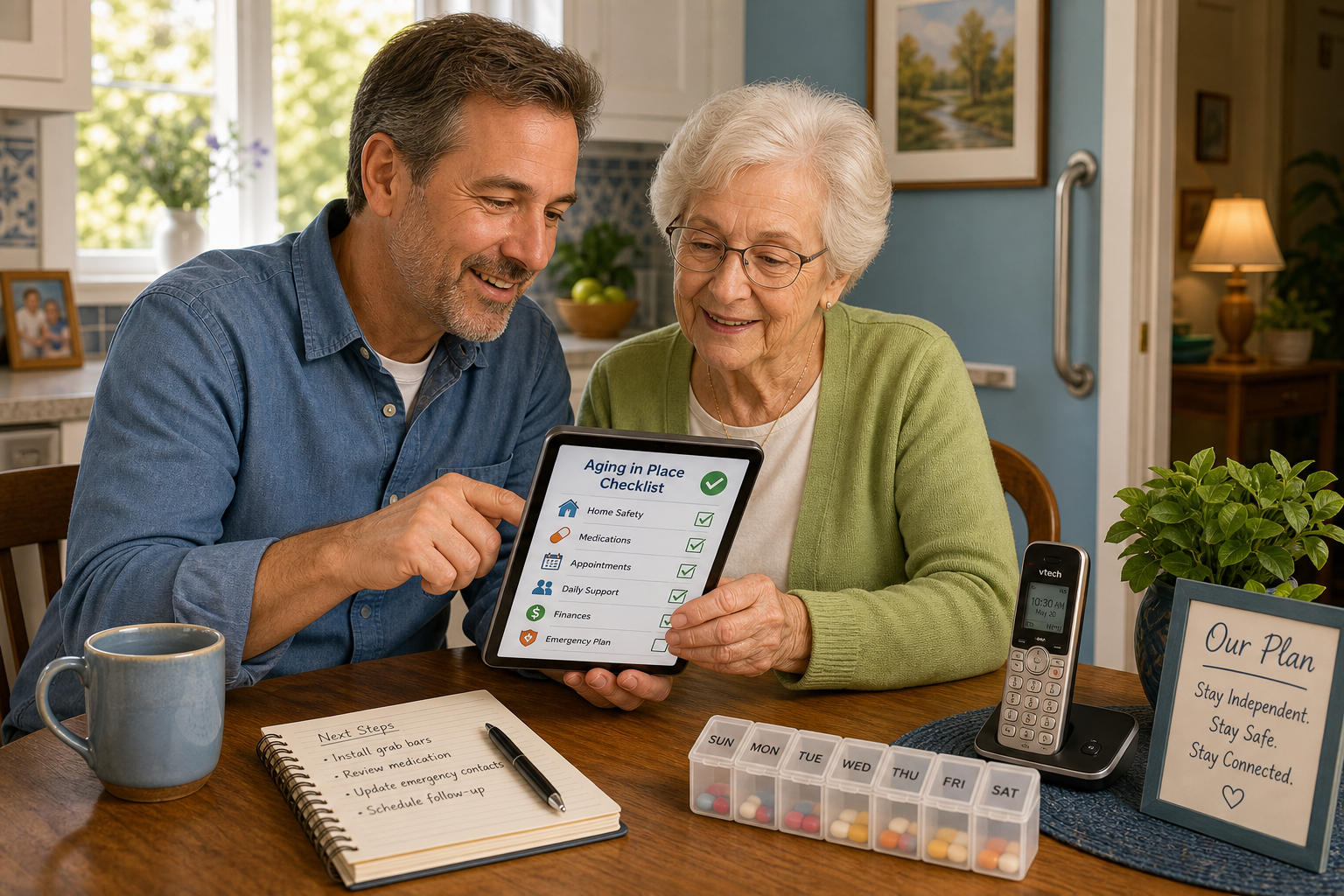
The $58 Billion Gap: Why So Many Seniors Miss Out on Benefits They've Earned
Every year, an estimated $58 billion in federal benefits goes unclaimed by older adults who are legally entitled to them. That is not a rounding error. It is more than the entire annual budget of the National Institutes of Health, and it represents a lifeline that never reaches the people it was designed to support.
According to an analysis by the National Council on Aging (NCOA) conducted with the Urban Institute using 2023 data, approximately 9.2 million eligible older adults are not enrolled in the three programs that account for the bulk of this gap: the Supplemental Nutrition Assistance Program (SNAP), Supplemental Security Income (SSI), and Medicare Savings Programs (MSPs). The consequences are measurable. The U.S. Census Bureau's Supplemental Poverty Measure found that 15% of adults aged 65 and older lived in poverty in 2024, a rate higher than the national average of 12.9%.
If you are an adult child managing a parent's finances, you have likely encountered this problem without realizing it. Your parent may be skipping meals to afford medication, or struggling to pay a utility bill, or telling you they are "fine" when the pantry is nearly empty. The benefits exist. The money has been appropriated by Congress. The challenge is a failure of awareness and navigation, not a shortage of resources.
The stakes are not just financial. NCOA research conducted with the LeadingAge LTSS Center found that older adults earning $20,000 per year or less live 9 years fewer than those earning $120,000 or more. Accessing these benefits is not about getting a discount — it is about closing a gap in life expectancy that is driven by economic insecurity.
Program #1: SNAP — $2,256 Per Year in Food Assistance Left on the Table
The Supplemental Nutrition Assistance Program (SNAP) is the nation's first line of defense against hunger, yet it is dramatically underused by older adults. According to NCOA data, only 38% of eligible adults aged 65 and older are enrolled. For a senior living alone, the average monthly benefit is $188, which adds up to $2,256 per year in assistance for purchasing groceries.
Why do so many eligible seniors skip SNAP? NCOA research identifies several recurring reasons:
- Stigma: Many older adults view SNAP as "welfare" and feel ashamed to use it, even when they are struggling to afford food.
- Complexity: The application process can be confusing, especially for someone who does not use a computer or has limited mobility.
- Misconception about eligibility: Many seniors assume that owning a home or having a small pension disqualifies them, when in fact SNAP uses net income and asset limits that many retirees meet.
There is also a hidden benefit to SNAP enrollment that is rarely discussed. In many states, receiving SNAP automatically qualifies a household for the Low-Income Home Energy Assistance Program (LIHEAP) and can trigger categorical eligibility for other state-level assistance programs. One application can open the door to multiple forms of support.
Program #2: SSI — Up to $8,574 Per Year in Cash Assistance for Low-Income Seniors
Supplemental Security Income (SSI) is one of the most misunderstood programs in the federal benefits system. It is not Social Security. SSI is a needs-based cash assistance program administered by the Social Security Administration, designed to help people aged 65 and older, as well as blind or disabled individuals, who have very limited income and resources.
The participation rate among eligible older adults is just 40%, meaning roughly 3.6 million eligible seniors are not receiving the cash assistance they qualify for. As of April 2026, over 2.5 million recipients over age 65 were already enrolled, with an average monthly payment of $714.53 — that is $8,574.36 per year in cash that can be used for rent, utilities, transportation, or any other basic need.
The real power of SSI, however, lies in its cascading effects. In most states, SSI enrollment automatically qualifies the recipient for Medicaid. It also often triggers automatic eligibility for SNAP and, in some states, for home- and community-based services waivers that can pay for in-home care. One SSI application can unlock an entire ecosystem of support.
The most common barrier to SSI enrollment is the misconception that "others need it more." Many older adults who grew up during an era of self-reliance feel uncomfortable accepting cash assistance. The reality is that SSI is an earned social insurance program, and the eligibility criteria are strict enough that those who qualify genuinely need the help.
Program #3: Medicare Savings Programs — Saving $2,434+ Per Year on Part B Premiums Alone
Medicare Savings Programs (MSPs) are perhaps the most impactful underutilized benefit for older adults. These programs, administered by state Medicaid agencies, help pay Medicare premiums, deductibles, and coinsurance for low-income beneficiaries. Despite their value, only 49% of eligible older adults are enrolled, leaving an estimated 6.6 million eligible individuals without this critical support.
At a minimum, MSPs cover the Medicare Part B premium, which in 2026 is $202.90 per month. That is $2,434.80 per year in savings — and for the highest level of MSP (QMB), the program also covers Part A and Part B deductibles, coinsurance, and copayments. There are four levels of MSP, each with different income limits and coverage scopes:
| MSP Level | What It Covers | Who It Helps |
|---|---|---|
| QMB (Qualified Medicare Beneficiary) | Part A & B premiums, deductibles, coinsurance, and copays | Seniors with income at or below 100% of the Federal Poverty Level (FPL) |
| SLMB (Specified Low-Income Medicare Beneficiary) | Part B premium only | Seniors with income between 100% and 120% of FPL |
| QI (Qualifying Individual) | Part B premium only | Seniors with income between 120% and 135% of FPL; funded by limited federal allocation |
| QDWI (Qualified Disabled and Working Individuals) | Part A premium only | Disabled individuals under 65 who have returned to work and lost premium-free Part A |
Enrolling in an MSP also triggers automatic qualification for the Part D Low-Income Subsidy (Extra Help), which covers most of the cost of prescription drug coverage and significantly reduces copayments. This is a double benefit: the MSP saves on premiums, and Extra Help saves on medications. Together, these two programs can save a senior thousands of dollars per year.
Why Eligible Seniors Don't Enroll — and How to Overcome the Barriers
NCOA research has identified four primary barriers that prevent eligible older adults from enrolling in the benefits they qualify for. Understanding these barriers is the first step to overcoming them.
- Lack of awareness: Many seniors and their families simply do not know these programs exist. A 2024 survey by the University of Michigan found that one in three older adults (34%) reported feeling isolated, and that isolation often correlates with a lack of information about available resources.
- Assumption that applications are too complicated: The paperwork for SNAP, SSI, and MSPs can be daunting, especially for someone managing multiple health conditions or cognitive decline. The fear of getting it wrong keeps many from starting.
- Not knowing how or where to apply: Even motivated seniors often do not know which agency to contact. Is it the Social Security Administration? The state Medicaid office? The local Area Agency on Aging? The answer varies by program and state.
- Believing others need help more: This is the most emotionally complex barrier. Many older adults who grew up during the Depression or post-war era internalized a strong ethic of self-reliance. They see accepting benefits as taking from someone who "needs it more," even when they themselves are struggling.
For each barrier, there is a practical counter-strategy. Awareness can be addressed by running a simple online screening tool. Complexity can be outsourced to a trained benefits counselor. Confusion about where to apply can be resolved with a single phone call. And the "others need it more" belief can be reframed: these programs are funded by taxes that seniors paid throughout their working lives. Claiming them is not taking — it is accessing what was set aside.
Real Story: How One Family Found $7,175 in Annual Savings
Statistics are abstract. A real story makes the difference concrete. NCOA documented the case of Harry, a 68-year-old who suffered a brain injury. His wife left her job to care for him, and the family's income dropped sharply. They did not know where to turn.
Through a Benefits Enrollment Center (BEC) operated by Legal Services for the Elderly in Maine, a counselor helped Harry apply for two programs: SNAP and a Medicare Savings Program (QMB level). The results were transformative:
- The QMB reinstated Harry's Part B coverage, which had lapsed due to non-payment of premiums.
- QMB covered his Medicare copays and coinsurance, eliminating out-of-pocket costs for doctor visits and hospital stays.
- QMB enrollment automatically qualified Harry for Part D Extra Help, slashing his prescription drug costs.
- SNAP provided $188 per month for groceries, reducing the family's food budget strain.
Total annual savings: $7,175. That is not a theoretical maximum. That is what one family actually saved by working with a trained counselor for a few hours.
Harry's case is not unique. NCOA also documented the stories of Ron, who received prescription assistance through the NCOA Benefits Helpline, and Ms. Brito, whose SSI was reinstated, unlocking Medicaid, SNAP, and MSP coverage. These are not edge cases — they are the norm for the millions of seniors who are eligible but not enrolled.
Your Step-by-Step Benefits Audit: How to Check Eligibility and Apply Today

The following action plan is designed for an adult child who wants to help a parent check eligibility and apply for the three programs described above. Each step is concrete and can be completed in a single afternoon.
- Run a free screening using NCOA's BenefitsCheckUp tool. This nationwide online tool asks a series of questions about income, assets, age, and state of residence, then generates a personalized report of which benefits the senior likely qualifies for. It is free, confidential, and takes about 15 minutes.
- Call the Eldercare Locator at 800-677-1116. This national hotline, operated by the Administration for Community Living, connects callers to their local Area Agency on Aging. The AAA can provide personalized benefits counseling and application assistance.
- Find a Benefits Enrollment Center (BEC). There are over 90 BECs across 40 states and territories, offering free, private, one-on-one benefits enrollment help. These centers are staffed by trained counselors who know the application processes for SNAP, SSI, MSPs, and other programs. To find the nearest BEC, use the NCOA BEC locator or call the Eldercare Locator.
- Gather required documents. Before applying, collect: proof of income (Social Security award letter, pension statements, bank statements), proof of assets (bank account statements, investment account statements), proof of identity (state ID or driver's license), and proof of residence (utility bill or lease agreement). Having these ready will streamline the application process.
- Apply in order of cascading benefits. Start with SSI (if eligible), because SSI enrollment triggers Medicaid and often SNAP. Then apply for MSPs, which trigger Extra Help for Part D. Finally, apply for SNAP if not already covered. This order maximizes the cascading effects.
For a deeper understanding of how to navigate the broader aging resource system, see our guide on how to navigate the aging and disability resource system. For a comprehensive overview of all federal, state, and local benefits, read our complete guide to elder care assistance programs.
Next Steps: Building a Long-Term Financial Care Plan
A one-time benefits audit is a powerful start, but financial needs change over time. A parent's income may decrease as they stop working or lose a pension. Benefits rules change. New programs are created. The most effective approach is to revisit eligibility annually, especially after major life events such as a hospitalization, a move to a new state, or the death of a spouse.
Here are three habits to build into your caregiving routine:
- Set a calendar reminder for January of each year to re-run the BenefitsCheckUp screening. Benefits income limits are adjusted annually for inflation, and your parent may qualify for a program they did not qualify for the year before.
- Keep a folder (physical or digital) with your parent's income documents, asset statements, and ID. When a new benefit opportunity arises, you will not have to scramble to find paperwork.
- Stay informed about changes to the Older Americans Act and Medicare. The KFF noted in June 2025 that HHS restructuring may dissolve the Administration for Community Living, which could affect how programs are administered. Subscribe to updates from NCOA or your local Area Agency on Aging to stay ahead of changes.
For a broader view of financial assistance options available to family caregivers, including state-specific programs and tax credits, see our guide on financial assistance for caregivers of aging parents. And for help understanding how Medicare, Medicaid, and private pay interact, read our family guide to paying for senior health care services.
The core message of this guide is simple: $58 billion in benefits goes unclaimed every year because people do not know the programs exist, assume the applications are too hard, or believe others need the help more. None of these reasons are true. The programs exist. The applications can be navigated with free help. And the benefits are there for the people who qualify — including your parent.
Start today. Run the screening. Make the call. Find a counselor. The money is waiting.
Questions to bring to a clinician or OT
This is not medical, legal, or a family's final decision — only a framework. Bring these questions to a clinician, occupational therapist, or your local Area Agency on Aging.
Find Local HelpRelated reading
Noticed something outdated or inaccurate on this page? Flag a correction. We review every report against CDC, NIA, and AARP HomeFit guidance before updating a page.