6 Signs Your Aging Parent Needs a Sitter — A Decision Guide for Family Caregivers
Worried about a parent living alone but unsure if it's 'time' to hire a sitter? This guide outlines six concrete, observable warning signs — from social withdrawal to safety concerns — and explains how a senior sitter can address each one, helping you make a confident, informed decision.
By Editorial Team
new caregiver
first steps
daily routines
care coordination
elderly sitting services
📄
A printable version of this guide is available. Use your browser's print function (Ctrl+P / ⌘P) to save or print.
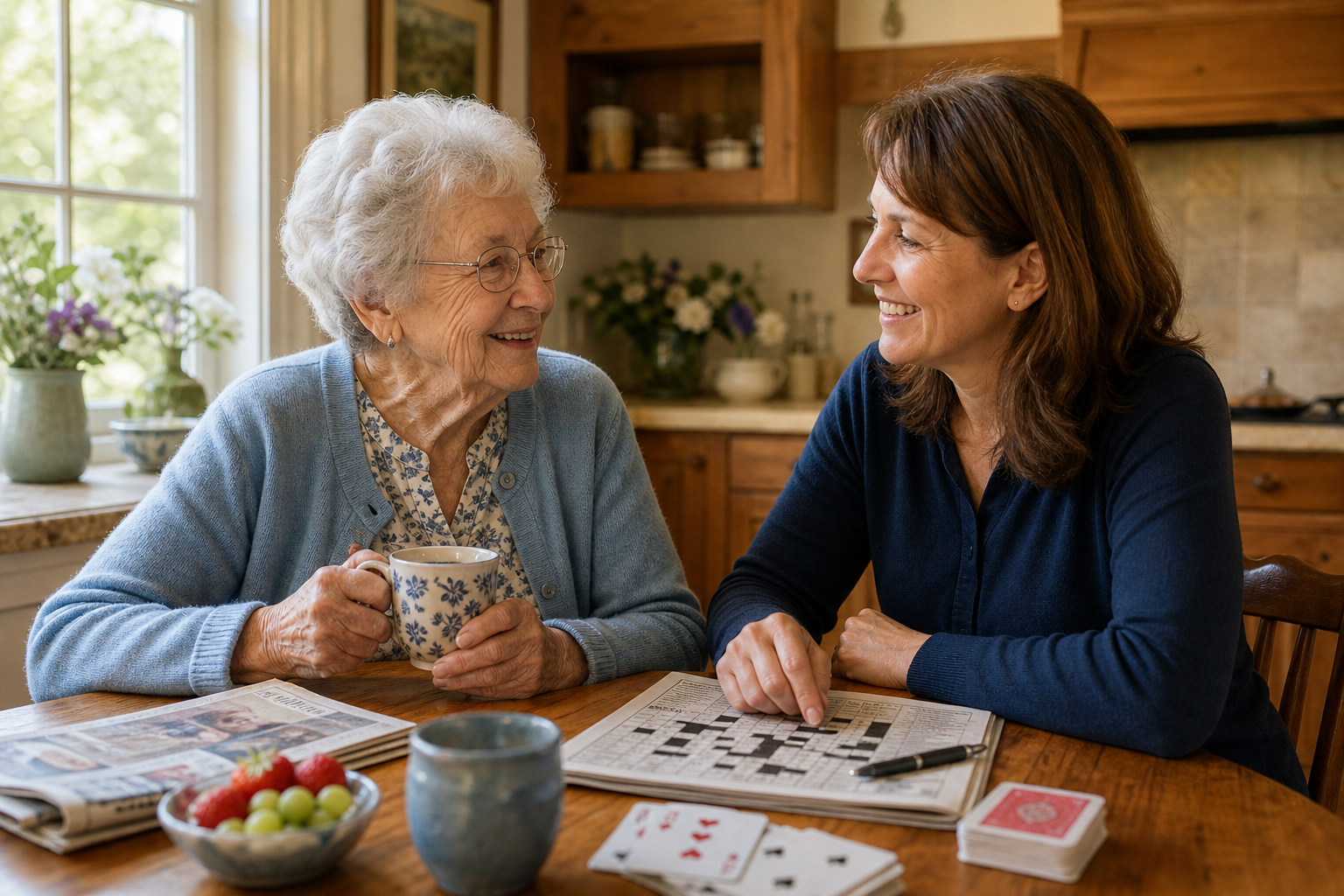
A senior sitter provides companionship and supervision in a home setting, addressing the human connection needs that often signal a deeper decline.
Introduction: The Difficulty of Knowing When It’s Time
You notice things. Your mother’s refrigerator has the same carton of milk from three weeks ago. Your father, who used to call every Sunday, now lets the phone ring to voicemail. The laundry basket in the corner of the living room has become a permanent fixture. None of these moments, on their own, is a crisis. But together, they form a pattern — a slow, quiet decline that is easy to rationalize away until the day something breaks.
The decision to hire a senior sitter is rarely triggered by a single dramatic event. It is a response to a pattern of decline across observable domains of daily life. This guide is built around six such domains — social engagement, home maintenance, nutrition, personal hygiene, caregiver wellbeing, and physical safety. Each section describes concrete, observable warning signs, explains why they matter, and shows how a sitter’s non-medical support can address the root cause.
If you are reading this because you are worried, you are already past the point of wondering. The question is not whether something is wrong. The question is whether a sitter is the right response to what you are seeing.
Sign #1: Social Withdrawal and Loneliness
Social withdrawal is often the first sign that a family member notices, but it is also the easiest to dismiss. Your parent may have stopped attending the weekly bridge game, declined invitations from neighbors, or let memberships at the senior center lapse. The phone calls you used to receive have become shorter and less frequent. When you visit, they seem content to sit in silence rather than engage.
This is not simply a personality shift. According to AARP’s 2025 survey, 41% of Americans aged 60 and older report feeling lonely. The consequences extend far beyond emotional discomfort. The New York Office for the Aging (2026) links chronic loneliness to elevated risks of dementia, heart disease, and stroke — conditions that compound the physical vulnerabilities of aging.
A senior sitter addresses this domain directly. The U.S. Department of Labor defines companionship services as primarily involving fellowship and protection — friendly conversation, games, crafts, short walks, and shared activities. A sitter does not replace a social network, but they provide a consistent, structured point of human contact that breaks the cycle of isolation. For an older adult who has stopped initiating social contact, the sitter’s regular presence creates a rhythm of interaction that can improve mood, cognitive engagement, and overall wellbeing.
Sign #2: Decline in Home Cleanliness and Maintenance
The state of a person’s home is one of the most objective windows into their functional status. When an older adult who once kept a tidy house begins to let things slide, it is rarely because they no longer care. It is because the physical or cognitive effort required to maintain the home has exceeded their capacity.
Look for these specific, observable signs:
Piled-up dishes in the sink and on countertops, sometimes with visible mold or food residue
Unwashed laundry accumulating in baskets or on furniture, or the same clothes being worn repeatedly
Expired food in the refrigerator or pantry, or a refrigerator that is nearly empty despite the person living there full-time
Clutter on floors — newspapers, mail, boxes, loose items — creating trip hazards that increase fall risk
Loose rugs, unsecured cords, or furniture blocking pathways that the person no longer has the energy to rearrange
A sitter’s light housekeeping duties — sweeping, washing dishes, doing laundry, tidying up — directly address these issues. Under DOL regulations, these tasks are classified as incidental to the primary companionship role, provided they do not exceed 20% of the sitter’s total weekly hours. For a family caregiver, this means the sitter can keep the home environment safe and sanitary without requiring a separate housekeeping service. The reduction in clutter and trip hazards alone can meaningfully lower the risk of a fall.
Sign #3: Poor Nutrition and Unexplained Weight Changes
Nutrition is one of the most underappreciated markers of an older adult’s ability to live independently. Cooking a balanced meal requires planning, shopping, standing at the stove, lifting pots, and cleaning up afterward — a sequence of tasks that can become overwhelming for someone with declining strength, stamina, or cognitive function.
The data is stark: more than 1 in 4 older adults in the United States is malnourished or at risk of malnutrition, according to the National Institute on Aging (NIA), as cited by SeniorLiving.org. This is not a problem limited to low-income households or people with diagnosed eating disorders. It affects older adults across the socioeconomic spectrum, often because the social and physical infrastructure of meal preparation has broken down.
Warning signs include: an empty or nearly empty refrigerator, a pantry stocked only with processed snacks and canned goods, reliance on frozen dinners or takeout, visible weight loss (clothes that no longer fit), or comments about food tasting bland or unappealing. Some older adults simply lose interest in eating alone — the social isolation described in Sign #1 directly suppresses appetite.
A sitter can assist with meal planning, grocery shopping, and preparing nutritious meals. Perhaps more importantly, sharing a meal with someone — sitting down at the table together — can improve appetite and make eating a social event rather than a chore. This is one of the most tangible ways a sitter’s companionship role translates into a health benefit.
Sign #4: Declining Personal Hygiene
Personal hygiene is a deeply sensitive topic for families. Noticing that your parent is wearing the same clothes for days, has body odor, or has stopped bathing regularly can feel both alarming and intrusive. It is also one of the clearest signals that the person is struggling with the basic routines of daily life.
The reasons for hygiene decline are varied. Physical limitations — arthritis, reduced mobility, chronic pain — can make bathing, dressing, and grooming physically difficult. Cognitive decline can cause a person to forget when they last bathed or to lose the ability to sequence the steps involved. Depression, which is common among isolated older adults, can drain the motivation for self-care entirely.
Observable signs include: unwashed or disheveled hair, body odor, stained or wrinkled clothing worn repeatedly, an unmade bed that has not been changed in weeks, and a neglected bathroom (mold, grime, empty soap dispensers).
It is important to understand the boundary of what a sitter can do in this domain. Sitters provide companionship and supervision — they can offer gentle reminders about hygiene routines, encourage the person to bathe or change clothes, and assist with tasks like laundry. However, sitters do not provide hands-on personal care such as bathing, dressing, toileting, or incontinence care. Those tasks require a home care aide (personal care worker) who is trained and licensed to provide hands-on assistance with activities of daily living (ADLs). If your parent has reached the point where they need physical help with bathing or dressing, a sitter alone is not sufficient — you will need to explore home care services.
Sign #5: Caregiver Burnout (Your Own Wellbeing)
This sign is different from the others. It is not about your parent. It is about you.
Family caregiving is demanding in ways that are easy to underestimate until you are in the middle of it. The constant worry, the phone calls, the trips across town, the financial pressure, the emotional weight of watching a parent decline — these accumulate. According to the Family Caregiver Alliance, as cited by the National Council on Aging (NCOA), roughly 20% of family caregivers suffer from depression. That is one in five caregivers experiencing clinical depression, not just stress or fatigue.
Hiring a sitter is not a sign of failure. It is a legitimate form of respite care — a structured break that allows you to maintain your own health, work, and relationships. The NCOA frames respite care as a tool to prevent caregiver burnout, not a luxury for those who can afford it. When you are exhausted, your ability to provide good care diminishes. A sitter can take over for a few hours a day or a few days a week, giving you the space to recharge.
Sign #6: Safety Concerns — Falls, Wandering, and Medication Mix-Ups
Safety concerns are the most urgent of the six signs. They are also the ones that most often trigger a crisis — a fall that results in a broken hip, a stove left on overnight, a missed dose of a critical medication that leads to hospitalization.
Specific red flags to watch for:
Recent falls or near-falls, even if no injury occurred — a single fall doubles the risk of falling again
Confusion about medications — taking doses at the wrong time, skipping doses, or double-dosing
Burned pots or pans on the stove, or the stove being left on after cooking
Wandering or getting lost in familiar places, especially at night
Difficulty managing the door locks or answering the door safely
Unexplained bruises or injuries that the person cannot explain or does not remember
A sitter provides a watchful presence that can prevent many of these incidents. They can offer medication reminders (though not administer medications), ensure the stove is turned off, accompany the person on walks to prevent falls, and provide supervision that reduces the risk of wandering. For families who have already experienced a fall, our guide on What to Do in the First 24 Hours After Your Elderly Parent Falls provides immediate crisis-response steps.
The table below maps each of the six warning signs to the specific service a sitter provides. This is not an exhaustive list of what a sitter can do, but it shows how the same person — a companion who is present for a few hours a day — can address multiple domains simultaneously.
How a senior sitter’s services map to each warning sign, with key limitations noted.
Warning Sign
What a Sitter Provides
Key Limitation
Social withdrawal and loneliness
Friendly conversation, games, crafts, shared activities, short walks
Does not replace a clinical mental health intervention for severe depression
Cannot provide hands-on bathing, dressing, or incontinence care
Caregiver burnout
Respite coverage for family caregivers, typically 4–8 hours per shift
Does not replace professional mental health treatment for clinical depression
Safety concerns (falls, wandering, medication)
Supervision, medication reminders, stove checks, fall prevention presence
Cannot administer medications or provide medical care
Typical hourly rates for senior sitters range from $20 to $35 per hour, depending on location, agency vs. independent hiring, and the specific duties required. Genworth’s 2025 Cost of Care Survey reports a national median of $33.99 per hour for homemaker services (which include companion-level tasks). Most families pay out-of-pocket, though some state Medicaid waivers and long-term care insurance policies may provide partial coverage. For a detailed breakdown of costs and payment options, see our Senior Home Services Decision Framework.
Next Steps: An Assessment Checklist and Conversation Starter
Use the following checklist to assess your parent’s situation across the six domains. For each item, note whether you have observed the behavior in the past month. If you check three or more items, the pattern of decline is significant enough to warrant a conversation about hiring a sitter.
Has stopped attending regular social activities (senior center, religious services, clubs)
Expresses loneliness or says they feel forgotten
Home has visible clutter, dirty dishes, or unwashed laundry
Refrigerator contains expired food or is nearly empty
Has lost or gained weight without explanation
Wears the same clothes repeatedly or has noticeable body odor
Has fallen or had a near-fall in the past six months
Is confused about medications or has missed doses
Has left the stove on or had other kitchen safety incidents
You feel exhausted, anxious, or overwhelmed by caregiving responsibilities
Once you have completed the assessment, the next step is the conversation. This is often the hardest part. Here is a simple script you can adapt:
If the conversation goes well, your next step is to create a plan. Our First Steps Playbook for New Caregivers walks you through exactly what to do after you have decided to seek help — from assessing needs to finding a provider to setting up the first visit. For a broader view of all home-based care options, the Senior Home Services Decision Framework can help you compare sitting services with home care, home health, and other options.
You do not need to have all the answers today. The first step is simply recognizing that the pattern you are seeing is real — and that there is a practical, affordable way to respond.


Comments
Join the discussion with an anonymous comment.