
Caregiver decision guide
Cyclospora Recovery in Older Adults: A Week-by-Week Caregiver Guide
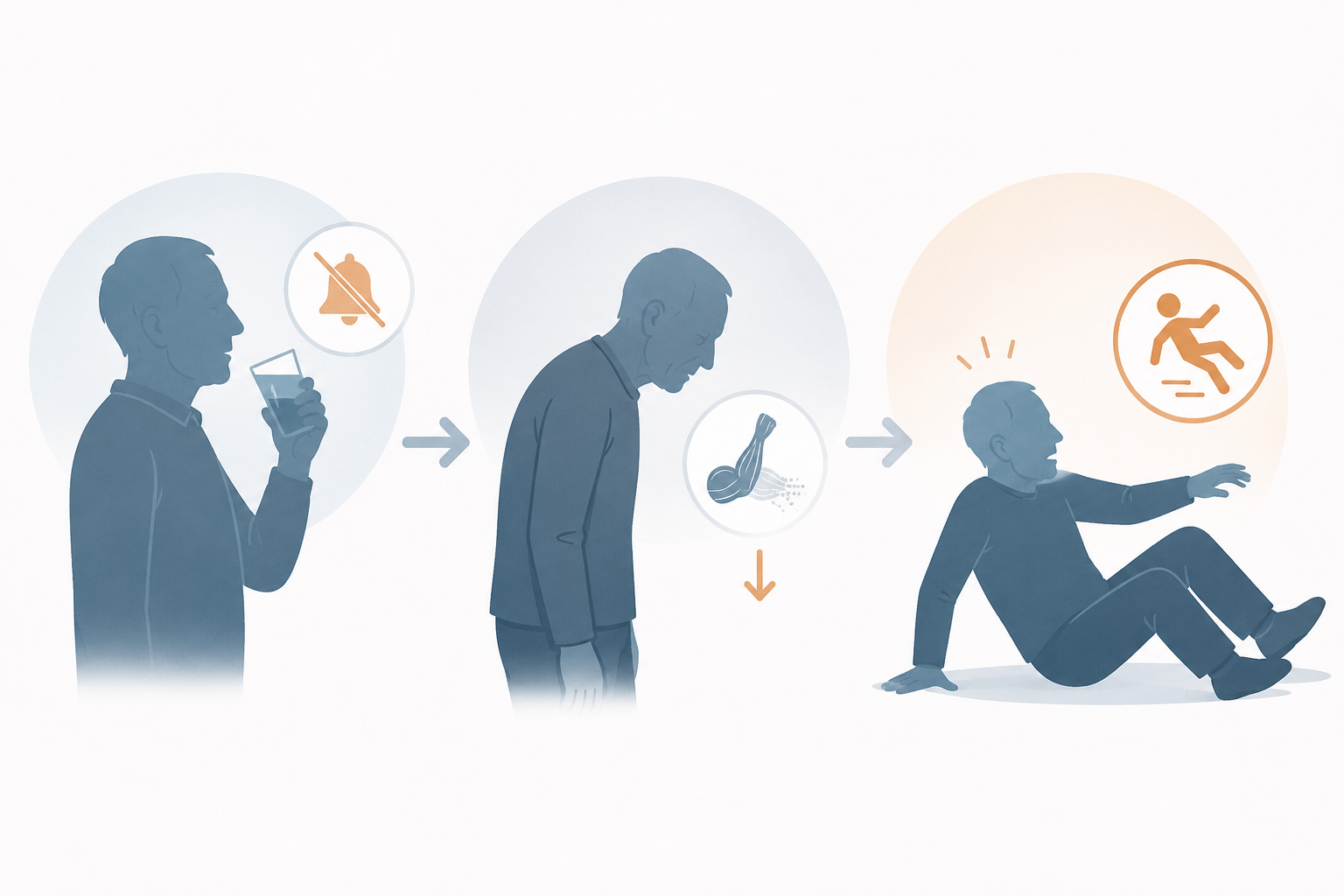
This guide provides a week-by-week recovery timeline for older adults with cyclosporiasis during the 2026 outbreak, with elderly-specific care tips woven into each phase. Caregivers learn what to expect, when to escalate care, and how to monitor for the dehydration-weakness-fall cascade that poses the greatest danger to seniors.
Last reviewed: July 20, 2026. The 2026 cyclospora outbreak is still being tracked, so case counts and source details may change.
If your older parent has cyclosporiasis, the recovery timeline is useful, but not because it gives you a clean countdown. It helps you decide what to watch tonight, what can wait until morning, and what should trigger a call before weakness turns into a fall.
Cyclospora often behaves in a way that is especially hard on family caregivers: symptoms can improve, then come back. Diarrhea may ease for a day and return. Appetite may briefly improve while strength is still poor. That waxing-and-waning pattern is recognized as characteristic of cyclosporiasis, and it is the reason a “better today” report from an older parent should still be followed by hydration, bathroom-safety, and medication checks tomorrow.[1]

The Week-by-Week Recovery Arc
For many adults, symptoms begin about one week after exposure, though the reported range is from 2 days to more than 2 weeks.[1] That gap matters. A parent may be sick now from food eaten long enough ago that nobody in the family connects the two.
| Phase | What may happen | Caregiver focus |
|---|---|---|
| Exposure to symptom onset | Symptoms often begin around 1 week after exposure, with a range of 2 days to more than 2 weeks. | Do not rule out cyclospora only because the suspected meal was not yesterday. |
| Week 1 of illness | Watery diarrhea, cramping, nausea, appetite loss, fatigue, and weight loss can begin; symptoms may already fluctuate. | Track stool frequency, fluids, urination, dizziness, confusion, and bathroom safety. |
| Weeks 2-4 and beyond | Untreated illness can last for weeks, and symptoms may seem to stop and return. | Keep monitoring even after a “good day,” especially if weakness or low intake continues. |
| First 2-3 days after TMP-SMX starts | Symptoms often begin improving within 2-3 days when treatment is appropriate. | Improvement is not the same as full recovery; review medications and fall risk closely. |
| Recovery after diarrhea improves | Energy and stamina may lag for several weeks, particularly in an older adult who ate and drank poorly. | Watch walking, toileting, cognition, hydration, and whether the home setup still matches current strength. |
As of CDC surveillance data posted July 15, 2026, 1,645 confirmed cyclosporiasis cases had been reported in 2026, with patients ranging in age from 2 to 95 years and a median age of 44; 141 people, or 9%, had been hospitalized, and no deaths had been reported.[2] CDC’s July 14 Health Alert Network advisory also highlighted the increase in cases and hospitalizations.[3] Those numbers do not tell us exactly how an 82-year-old will recover, and there are no published recovery-timeline studies cited here that isolate older adults from younger adults. Still, hospitalization is the part family caregivers should respect: diarrhea that is inconvenient in a younger adult can become dehydration, weakness, confusion, and a fall in an older one.
Before Symptoms: The Exposure Window Can Be Longer Than Families Expect
Cyclospora is a parasite that causes cyclosporiasis, a diarrheal illness most often linked to contaminated food or water. For a caregiver, the practical point is timing. If your parent ate a suspected food and felt fine for several days, that does not clear the exposure. The average incubation period is about 1 week, but symptoms can begin as soon as 2 days or more than 2 weeks later.[1]
During this waiting period, there is usually no special home treatment to begin unless a clinician has instructed otherwise. What helps is preparation: make sure your parent has fluids they will actually drink, a working thermometer, easy bathroom access, and an updated medication list. If you live far away, this is the point to confirm who can lay eyes on them if symptoms start after dinner. A written plan such as The Long-Distance Caregiver's First-Hour Emergency Response Plan can keep the first call from turning into a scramble.
Week 1 of Illness: Diarrhea Is the Obvious Symptom, but Hydration Is the Safety Issue
The first week is when families tend to focus on the bathroom count, and they should. Cyclospora commonly causes watery diarrhea, and symptoms can also include stomach cramps, bloating, nausea, appetite loss, fatigue, and weight loss.[1] But in an older adult, the stool count is only one part of the risk picture. The larger question is whether fluid loss is starting to show up as weakness, dizziness, lower urine output, or a change in thinking.
Older adults may not feel or report thirst reliably. A parent who says “I’m not thirsty” may still be falling behind. That is why the monitoring needs to be external and boring: how many times they had diarrhea, how much they drank, when they last urinated, whether they stood up steadily, whether they seemed more sleepy or confused, and whether they can get to the toilet without rushing.
Dr. Luis Marcos’ escalation criteria are the clearest caregiver numbers in the available material: call a doctor if diarrhea lasts more than 2 to 3 days without improvement, if there are more than 6 to 8 episodes per day, or if dizziness, confusion, decreased urination, or rapid heartbeat appears even after just 1 to 2 days of symptoms.[1]
- Put a light on the route to the bathroom before bedtime, not after the first near-fall.
- Move rugs, cords, laundry baskets, and pet bowls out of the walking path.
- Ask whether they feel dizzy when standing, not only whether they feel “okay.”
- Check whether they are urinating at usual intervals; “I went this morning” is not enough information at 9 p.m.
- If they use a cane, walker, bedside commode, or grab bar, make sure it is actually within reach overnight.
This is also the week to stop relying on memory. Write down diarrhea episodes, fluids, temperature if taken, urine output clues, and any confusion or dizziness. That record helps the clinician judge urgency, and it helps the caregiver see a worsening pattern that a tired parent may minimize.
Testing: Ask for Cyclospora by Name
If a clinician suspects cyclosporiasis, testing may require a specific request. Routine stool cultures do not detect cyclospora, and specialized testing is needed.[4] Johns Hopkins experts have also noted that multiple stool samples may be needed because shedding can be intermittent.[5]
This is one of those details that can save a family days of confusion. A negative routine stool culture does not necessarily answer the cyclospora question. If the symptoms and exposure history fit, ask the clinician whether cyclospora testing was ordered specifically and whether another stool sample is needed.
Weeks 2 to 4: The False-Recovery Problem
Cyclospora can make a caregiver lower their guard too early. Symptoms may appear to resolve and then return, a relapsing-remitting pattern described by CDC-aligned and clinical sources.[1][5] That does not mean every return of diarrhea is harmless. It means the pattern is familiar enough that caregivers should expect it and keep measuring what matters.

A parent may have a better morning, eat half a sandwich, and then have diarrhea again that evening. The care response is not panic, and it is not dismissal. Go back to the same checks: stool frequency, fluid intake, urination, dizziness, rapid heartbeat, confusion, and walking safety. If the episode count is high, symptoms are not improving after 2 to 3 days, or any dehydration warning signs appear, call the doctor rather than waiting for the next “good day.”[1]
This middle stretch is also when home fatigue shows up. The bathroom needs cleaning again. The parent is tired of being watched. The caregiver starts wondering whether everyone is overreacting. That is exactly when falls happen: on the quick trip to the toilet, after a nap, in socks, while trying not to “bother” anyone.
If your parent already takes medicines that can contribute to dizziness, low blood pressure, sedation, or balance trouble, keep the fall-risk lens open. A broader medication review resource such as A Caregiver's Guide to Medications That Increase Fall Risk in Older Adults can help you prepare better questions for the clinician or pharmacist, especially if new treatment is being considered.
Treatment Response: Better in 2 to 3 Days Does Not Mean Back to Baseline
The CDC lists trimethoprim-sulfamethoxazole, often shortened to TMP-SMX, as the treatment of choice for cyclosporiasis. The adult dosing information given by CDC is one double-strength tablet, 160 mg trimethoprim and 800 mg sulfamethoxazole, twice daily for 7 to 10 days.[6] That dosing detail is context, not a self-prescribing instruction. The parent’s clinician decides whether it is appropriate, especially when kidney function, allergies, and the medication list are part of the picture.
When TMP-SMX is appropriate, symptoms typically begin improving within 2 to 3 days.[6] That is encouraging, and families deserve some encouraging news. But the first improvement is usually a treatment-response marker, not proof that the parent is steady enough to resume normal routines. A person who had several days of diarrhea may still be volume-depleted, weak, and a little unsteady even after the stool pattern starts to calm.
Before or at the time treatment starts, get the full medication list in front of the prescribing clinician or pharmacist. AARP’s outbreak guidance highlights several TMP-SMX interaction concerns that matter in older adults: warfarin, with a reported 2- to 4-fold over-anticoagulation risk; thiazide diuretics, with thrombocytopenia risk in elderly patients noted from FDA-label information; diabetes medications; ACE inhibitors or ARBs; and drugs that affect potassium.[1]
- Do not report only prescription drugs; include over-the-counter medicines, supplements, and “as needed” pills.
- Ask whether diarrhea plus current diuretics or blood pressure medicines changes hydration or dizziness risk.
- If the parent takes warfarin, ask what monitoring or dose adjustments the clinician wants.
- If the parent has diabetes, ask how poor intake and diarrhea should affect glucose monitoring and medication timing.
- If potassium-related medicines are on the list, ask whether lab monitoring is needed.
The practical point is not that TMP-SMX is unusually frightening. It is that an older parent with cyclosporiasis is rarely just “an adult with diarrhea.” They may also be an adult on a blood thinner, a diuretic, diabetes medicine, blood pressure medicine, and a potassium-affecting drug, while eating poorly and walking to the bathroom at night.
After Diarrhea Improves: Watch Strength, Not Just Stools
Once diarrhea improves, families naturally want the illness to be over. For an older adult, the safer question is whether hydration, strength, thinking, and walking have returned close to baseline. Full energy recovery may take several weeks after the acute illness, especially if appetite and fluid intake were poor.
This is the period when a parent may stop accepting help because the worst bathroom days are behind them. Try to shift help from “sick care” to “rebuilding routine.” Keep fluids visible. Offer smaller meals if appetite is still off. Keep the bathroom path clear. Encourage sitting at the edge of the bed before standing. If they shower, consider whether someone should be nearby or whether a shower chair is safer until stamina returns.
If you cannot be present and your parent is still weak, consider whether short-term support at home is safer than asking them to push through alone. Elderly Home Care Options: A Complete Guide to At-Home Services for Seniors can help families compare what kind of help is realistic during a temporary recovery window.
When to Call, and When Waiting Becomes the Risk
Call the doctor if diarrhea lasts more than 2 to 3 days without improvement, if your parent has more than 6 to 8 diarrhea episodes in a day, or if dizziness, confusion, decreased urination, or rapid heartbeat appears even after 1 to 2 days of symptoms.[1] If symptoms seem severe, your parent cannot keep fluids down, appears acutely confused, is too weak to walk safely, has fainted, or you are worried about an immediate fall or medical emergency, seek urgent or emergency care.
For caregivers who are not in the same home, do not try to manage warning signs by phone alone. Ask a neighbor, relative, home aide, or local emergency service to check directly. Confusion and weakness are hard to judge through a cheerful “I’m fine,” especially from a parent who does not want to be a burden.
Hygiene and Outbreak Context at Home
Cyclospora outbreak details are still evolving. One reported Taco Bell-related outbreak subset involved 1,644 linked cases and 94 hospitalizations and was linked to Taylor Farms de Mexico, according to CIDRAP reporting.[7] That subset should not be treated as identical to the broader CDC surveillance count of 1,645 confirmed 2026 cases reported as of July 15.[2] For caregivers, the distinction matters because outbreak tracing can change while the home-care priorities stay the same: fluids, stool pattern, urination, cognition, medication safety, and falls.
For prevention around the household, use soap and water. Alcohol-based hand sanitizers do not kill cyclospora, according to AP reporting citing Dr. Erika Noel and CDC guidance.[8] Wash hands after bathroom care, before food preparation, and after cleaning contaminated surfaces. If a food recall or outbreak notice affects your household, How to Keep Your Aging Parent Safe From Food Recalls can help organize the practical next steps.
After a week like this, many families also discover that emergency information is scattered across phones, drawers, and portals. Building or updating an emergency contact binder for your aging parents is not busywork if it puts medication lists, clinician numbers, pharmacy details, allergies, and insurance information in one place before the next urgent call.
You can worry less when several things are stable at the same time: diarrhea is clearly improving, fluids are staying down, urination is near usual, thinking is normal for your parent, dizziness is absent, medications have been reviewed, and walking to the bathroom is safe. A paused stool pattern by itself is not the finish line.
References
- What Older Adults Should Know About Cyclospora — AARP
- CDC Surveillance (July 15, 2026) — CDC, July 15, 2026
- CDC HAN Advisory (July 14, 2026) — CDC, July 14, 2026
- What to know about cyclosporiasis — NPR / Johns Hopkins
- Johns Hopkins Medicine Q&A (Dr. Sears) — Johns Hopkins Medicine
- Clinical Care of Cyclosporiasis — CDC
- What we truly know about the huge US Cyclospora outbreak — and what we don’t — CIDRAP
- How to stay safe and still enjoy produce — AP News
Questions to bring to a clinician or OT
This is not medical, legal, or a family's final decision — only a framework. Bring these questions to a clinician, occupational therapist, or your local Area Agency on Aging.
Find Local HelpRelated reading
Noticed something outdated or inaccurate on this page? Flag a correction. We review every report against CDC, NIA, and AARP HomeFit guidance before updating a page.