Sundowning Behavior Response Card for Dementia Caregivers
For: family caregiver📄 PrintableReviewed: 2026-07-05
Sundowning Behavior Response Card for Dementia Caregivers
This printable quick-reference card helps family caregivers recognize common sundowning behaviors and follow a five-step response protocol, designed to be kept on hand for in-the-moment use during late-afternoon episodes of agitation or confusion.
By Editorial Team
new caregiver
experienced caregiver
long-distance caregiving
spousal caregiver
working caregiver
daily routines
medication management
personal hygiene
care coordination
first steps
ADLs
IADLs
📄
A printable version of this guide is available. Use your browser's print function (Ctrl+P / ⌘P) to save or print.
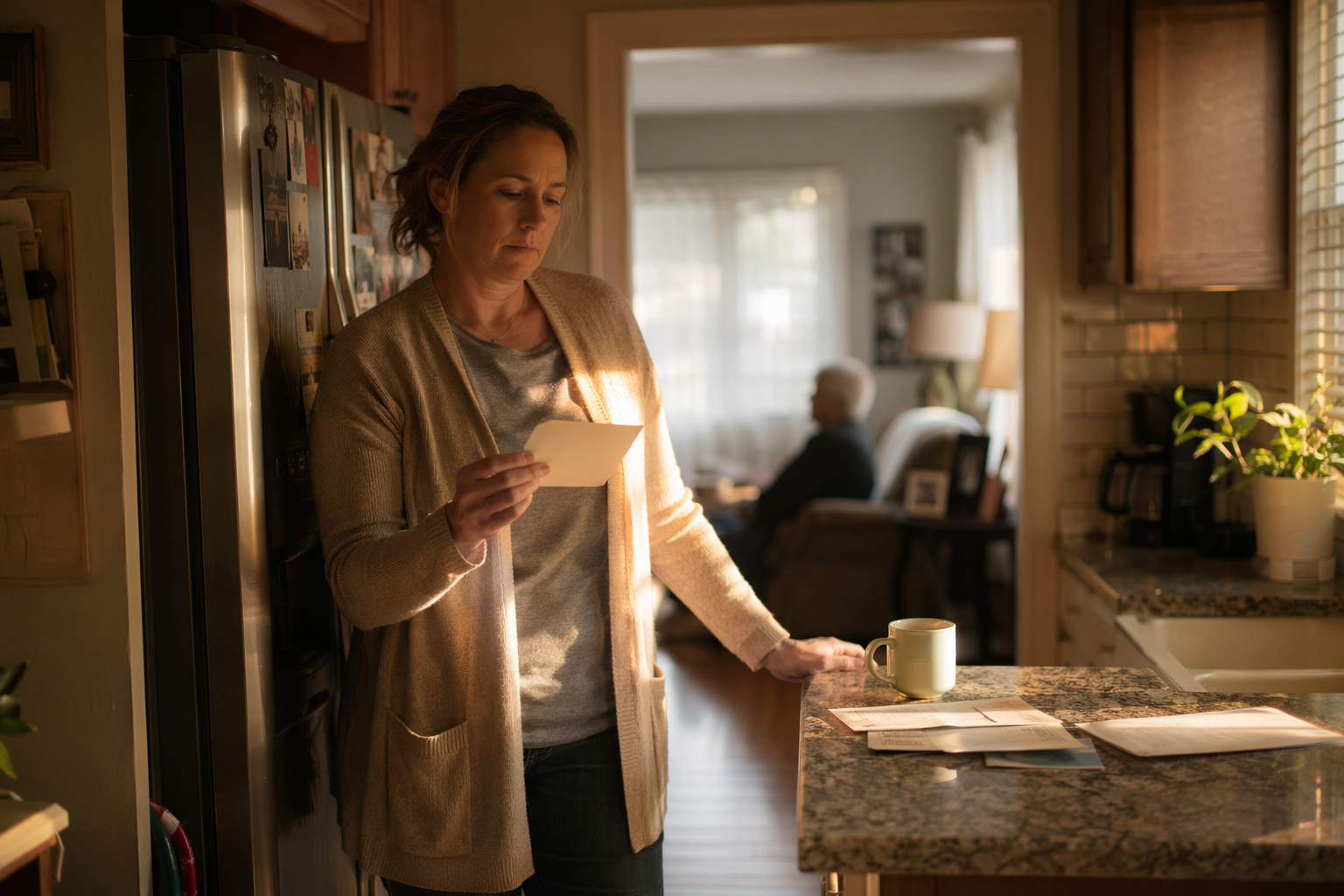
A useful dementia sundowning behavior response card is not the one you read carefully at 10 a.m. It is the one you can glance at when the kitchen is noisy, dinner is half-started, and someone you love is pacing toward the door saying they need to go home.
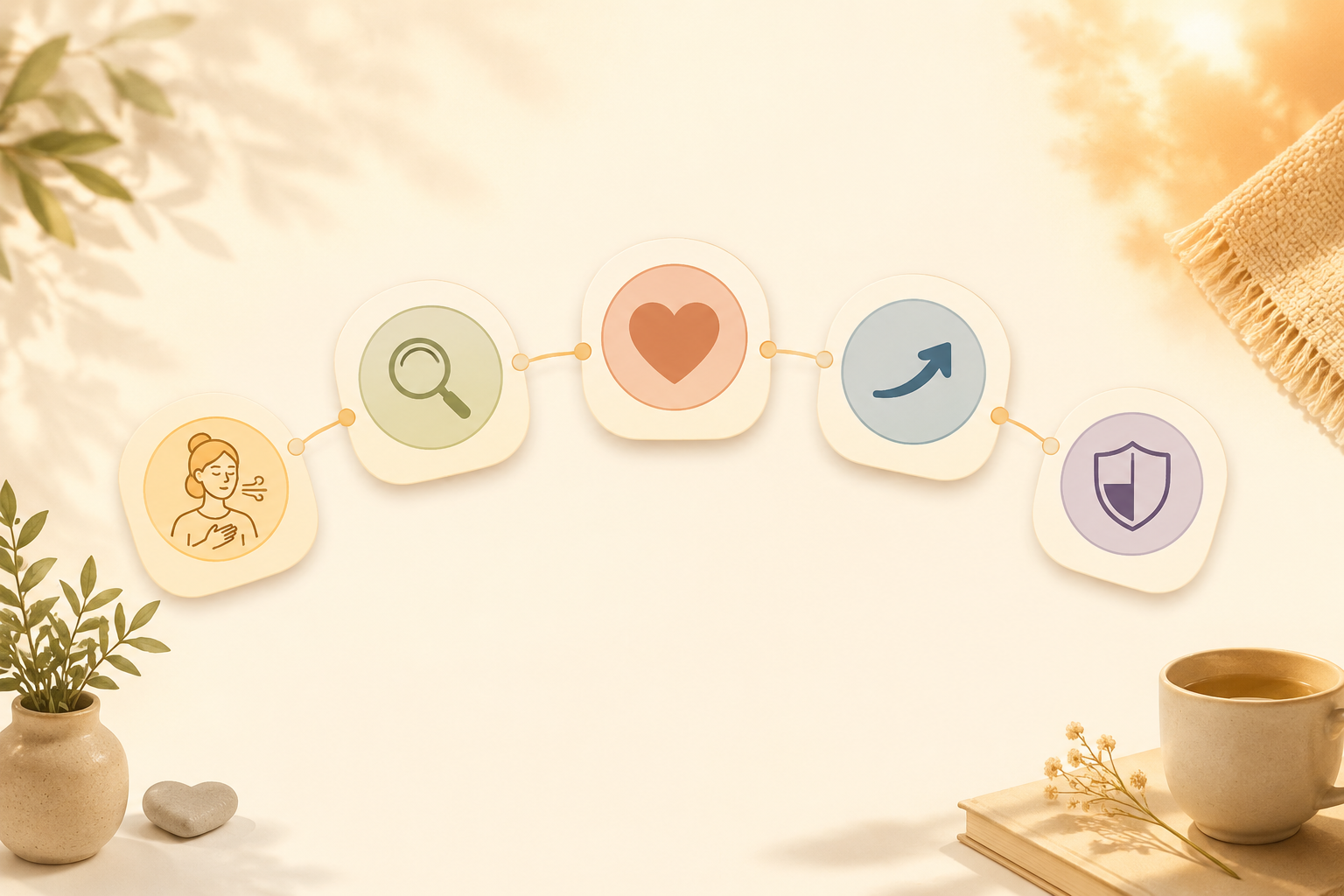
A printable card should do two jobs quickly. One side helps you recognize the late-day pattern: agitation, pacing, shadowing, confusion, yelling, suspiciousness, resisting care, or repeated “I want to go home” language. The other side gives you a short response sequence: steady yourself, look for the likely trigger, validate the feeling, redirect gently, and reassure safety.
The five-step response below is adapted from Baycrest’s CARER framework, which was designed as a general quick-response caregiver tool for dementia-related behavior challenges: Calm down, Attend, Assess triggers, Reflect, and Respond. This is an adaptation for sundowning, not a Baycrest-endorsed sundowning protocol.[1]
Card side
What it helps you do
What to keep visible
Side 1: Recognize
Name what is happening without arguing with it
Common behaviors and quick trigger checks
Side 2: Respond
Move through the next 30–90 seconds calmly
Five steps with short phrases to say out loud
Keep the card where the episode usually starts: on the refrigerator, beside the favorite chair, inside a medication binder, or laminated near the hallway. If the hard part is the first minute, the card has to live in that minute.
Side 1: Recognize Sundowning Without Turning It Into a Fight
Sundowning is commonly used to describe a late-day pattern of increased confusion, agitation, restlessness, or distress in people living with dementia. The National Institute on Aging, Alzheimer’s Association, and Mayo Clinic all describe evening or late-afternoon changes that may include agitation, pacing, confusion, anxiety, aggression, or sleep-related disruption.[2][3][4]
For a caregiver in the middle of it, the first win is not a perfect label. The first win is recognizing, “This may be the late-day pattern,” before the conversation turns into correction, pleading, or a door-blocking standoff.
What you may see
What it may sound like
What to remind yourself
Agitation or restlessness
“I can’t sit here.” “Something is wrong.”
Lower the stimulation before explaining anything.
Pacing
Repeated walking, checking doors, moving room to room
Movement may be distress, unmet need, or searching.
Shadowing
Following you closely, asking where you are going
Your presence may feel like the only safe anchor.
Yelling or verbal outbursts
Raised voice, repeated demands, angry phrases
Respond to fear first, not the volume.
Confusion about time or place
“I have to get to work.” “Where are we?”
Correcting the facts may increase distress.
“I want to go home”
Said even when already home
“Home” may mean safety, routine, parents, childhood, or relief.
Suspiciousness
“You took my keys.” “People are watching.”
Arguing evidence rarely helps in the moment.
Resistance to care
Refusing bathing, changing clothes, medication, or dinner
Back up and reduce the demand if safety allows.
Those behaviors are not rare caregiver failures. Dementia UK describes sundowning as affecting around 20% of people with dementia living at home, while Cleveland Clinic notes that it may affect up to 80% of people with dementia in residential care settings.[5][6] Those patient-facing figures are useful for reassurance, but they should not be treated as a universal rate for every home or care setting; reported ranges vary across the broader literature.
The trigger check belongs on the recognition side, too
A trigger list on the card is not there to make you diagnose the whole evening. It is there to stop the reflexive argument and give your hands something useful to do.
Fatigue: Is this happening near the end of a long day?
Hunger or thirst: Has dinner been delayed, or has fluid intake been low?
Pain or discomfort: Could there be a headache, constipation, joint pain, dental pain, tight clothing, or a bathroom need?
Lighting and shadows: Has the room become dim, shadowy, or visually confusing?
Noise and overstimulation: Is the TV on, are dishes clattering, or are multiple people talking?
Medication timing: Could a dose be wearing off, missed, newly changed, or causing side effects?
Disrupted rhythm: Was the day unusually inactive, chaotic, overstimulating, or nap-heavy?
Caregiver stress: Is your own urgency, fear, or frustration raising the temperature in the room?
These trigger categories appear across caregiver-facing guidance from the Alzheimer’s Association, Mayo Clinic, NIA, and BrightFocus Foundation, especially around fatigue, lighting, sleep-wake disruption, overstimulation, pain or illness, and changes in routine.[2][3][4][7]
For a deeper look at patterns, home routines, and environmental prevention, use the fuller guide to managing sundowning in dementia at home. The card is for the moment when you cannot read the fuller guide.
Side 2: The Five-Step Response You Can Read in Ten Seconds
The response side should be short enough to use while standing up. The point is not to win the conversation. The point is to lower fear, reduce stimulation, and move one step away from escalation.
Step
Action
Say something like
1. Calm yourself first
Lower your voice, slow your body, unclench your face and hands.
“I’m here. We’re going to take this slowly.”
2. Identify the likely trigger
Scan for fatigue, hunger, pain, bathroom need, shadows, noise, or medication timing.
“Let me check what might be bothering you.”
3. Validate the feeling
Name the emotion instead of correcting the facts.
“You seem worried about getting home. Tell me about home.”
4. Redirect gently
Offer one simple next action: snack, drink, walk, music, folding towels, photo album, or a quieter room.
“Come with me. Let’s have some tea while we talk about it.”
5. Reassure safety
Stay close, repeat a short safety phrase, and avoid sudden demands.
“You’re safe. I’m here with you. We don’t have to rush.”
1. Calm yourself first
This step can feel unfair because you may already be exhausted. Still, the room usually changes when your voice drops and your movements slow. NIA advises caregivers not to argue, to stay calm, and to reassure the person when agitation or sundowning occurs.[2]
Put the instruction on the card in body language terms, not just emotional terms: soften your voice, turn down the TV, stand at an angle rather than face-to-face, and leave space near the exit if it is safe. “Calm down” is not a moral command. It is the first safety tool you still control.
2. Identify the likely trigger
Do not turn this into a full investigation while the person is distressed. Use a fast scan: body, room, routine, medication, your own stress level. If you can fix one obvious thing in under a minute, fix that first.
Body: bathroom, hunger, thirst, pain, too hot, too cold, tired
Room: dim light, shadows, TV noise, clutter, too many people
Routine: missed nap, delayed meal, unusual visitors, change in schedule
Medication: missed dose, new dose, wearing off, possible side effect
If shadows and visual confusion are a recurring trigger, the card can sit beside a more permanent home plan. Practical lighting, contrast, and wayfinding changes fit better in a dementia-friendly home modification plan than on the response card itself.
3. Validate the feeling
Validation is not pretending every statement is factually true. It is answering the feeling that is driving the statement. AARP and Family Caregiver Alliance both emphasize calm reassurance, avoiding confrontation, and using supportive language when dementia-related distress escalates.[8][9]
If they say
Avoid
Try
“I want to go home.”
“You are home. We’ve lived here for years.”
“You’re missing home. Tell me what you want to do when you get there.”
“You stole my keys.”
“No I didn’t. You always do this.”
“You’re worried about your keys. Let’s look together.”
“I have to leave for work.”
“You retired 15 years ago.”
“You’ve always been responsible. Let’s get ready after we sit for a minute.”
“Something is wrong.”
“Nothing is wrong.”
“You feel uneasy. I’m going to stay right here with you.”
The card should use phrases the caregiver can actually say. If a line sounds fake in your mouth, rewrite it. “You’re safe. I’m here.” may work better than a polished sentence when both people are tired.
4. Redirect gently
Redirection works best when it offers a next step rather than a debate. NIA, the Alzheimer’s Association, and Mayo Clinic all favor calm approaches, reducing triggers, and shifting attention instead of arguing during late-day agitation or confusion.[2][3][4]
Offer a drink or snack if hunger or thirst may be involved.
Move to a quieter, brighter room if shadows or noise are increasing distress.
Walk together if pacing is safe and the person needs movement.
Use a familiar object: blanket, photo album, folded towels, rosary, newspaper, or favorite sweater.
Play familiar music if it usually calms rather than stimulates.
Delay non-urgent care tasks if the demand itself is escalating the episode.
A good redirect is small. “Let’s fold this towel” is easier to enter than “Let’s calm down and have a better evening.” The first gives the body something to do.
5. Reassure safety
Reassurance often has to be repeated. That does not mean it failed. Memory, time sense, and threat perception may not reset just because you said the right thing once.
Use one or two phrases and keep them steady: “You’re safe.” “I’m here.” “We don’t have to go anywhere right now.” “Let’s sit together.” The more words you add, the more the person may have to process.
What Makes This Different From the Usual Dementia Handout
Most caregiver education is written for reading, not for being used with one hand while someone is following you from room to room. Broad sundowning guides matter; they explain sleep, routine, lighting, medical review, and prevention. But the response card has a narrower job: it helps you get through the next few minutes without making fear worse.
Existing public-facing tools also tend to solve adjacent problems. Alzheimer’s Association companion cards are helpful for explaining dementia-related behavior to strangers in public. Dementia Training Australia’s Changed Behaviour cards are more staff-oriented. Baycrest’s CARER tool gives a strong general behavior-response structure. The family-facing gap is the sundowning-specific synthesis: “Here are the late-day behaviors you may see, and here is what to say next.”
That is why the card should not try to include every prevention tip. If daytime structure is part of the pattern, a guide to adult day care for dementia may be more useful. If the episodes are spilling into nighttime wandering or supervision needs, compare options for overnight care or a 24-hour care decision. Those are planning questions. The card is for the episode already underway.
How to Use the Card Safely
Print it in large type. Keep the wording plain. If more than one person provides care, use the same phrases so the person with dementia hears a familiar rhythm. Do not bury the card in a folder marked “resources.” Put it where the episode actually happens.
Use it early, when pacing, shadowing, or repeated questions first begin.
Use it to lower stimulation before trying to reason or explain.
Use it to keep caregivers consistent across shifts, spouses, siblings, aides, or visiting relatives.
Use it after the episode to note patterns, but do not analyze loudly in front of the distressed person.
A response card should never train a caregiver to control a person with dementia. It should train the caregiver to reduce fear, notice unmet needs, protect dignity, and avoid preventable escalation.
When the Card Is Not Enough
A dementia sundowning behavior response card is not a cure, a diagnostic tool, or a substitute for medical advice. It is a seconds-access aid for a recurring late-afternoon pattern.
Call a clinician when the change is sudden, severe, or new; when aggression appears for the first time; when there are signs of pain, fever, dehydration, constipation, urinary symptoms, or other illness; when delirium or a urinary tract infection is possible; or when a medication change may be involved. NIA, Cleveland Clinic, and Family Caregiver Alliance all point caregivers toward medical review when behavior changes may reflect illness, pain, delirium, or medication effects.[2][6][9]
If sundowning is becoming dangerous, repeated, or impossible to manage at home, the next question is no longer what to print. It is whether the current support plan is still enough. That may mean reviewing supervision, respite, overnight help, monitoring, or whether it is time to consider a higher level of memory care.

Comments
Join the discussion with an anonymous comment.