When to Stop Cancer Screenings After 75: A Frailty-Based Guide for Caregivers
Most cancer screening guidelines stop at age 74, leaving families uncertain about what to do next. This guide helps adult children and spousal caregivers understand how frailty, life expectancy, and personal values should drive decisions about continuing or stopping preventive screenings for an older adult.
By Editorial Team
new caregiver
care coordination
first steps
ADLs
IADLs
📄
A printable version of this guide is available. Use your browser's print function (Ctrl+P / ⌘P) to save or print.
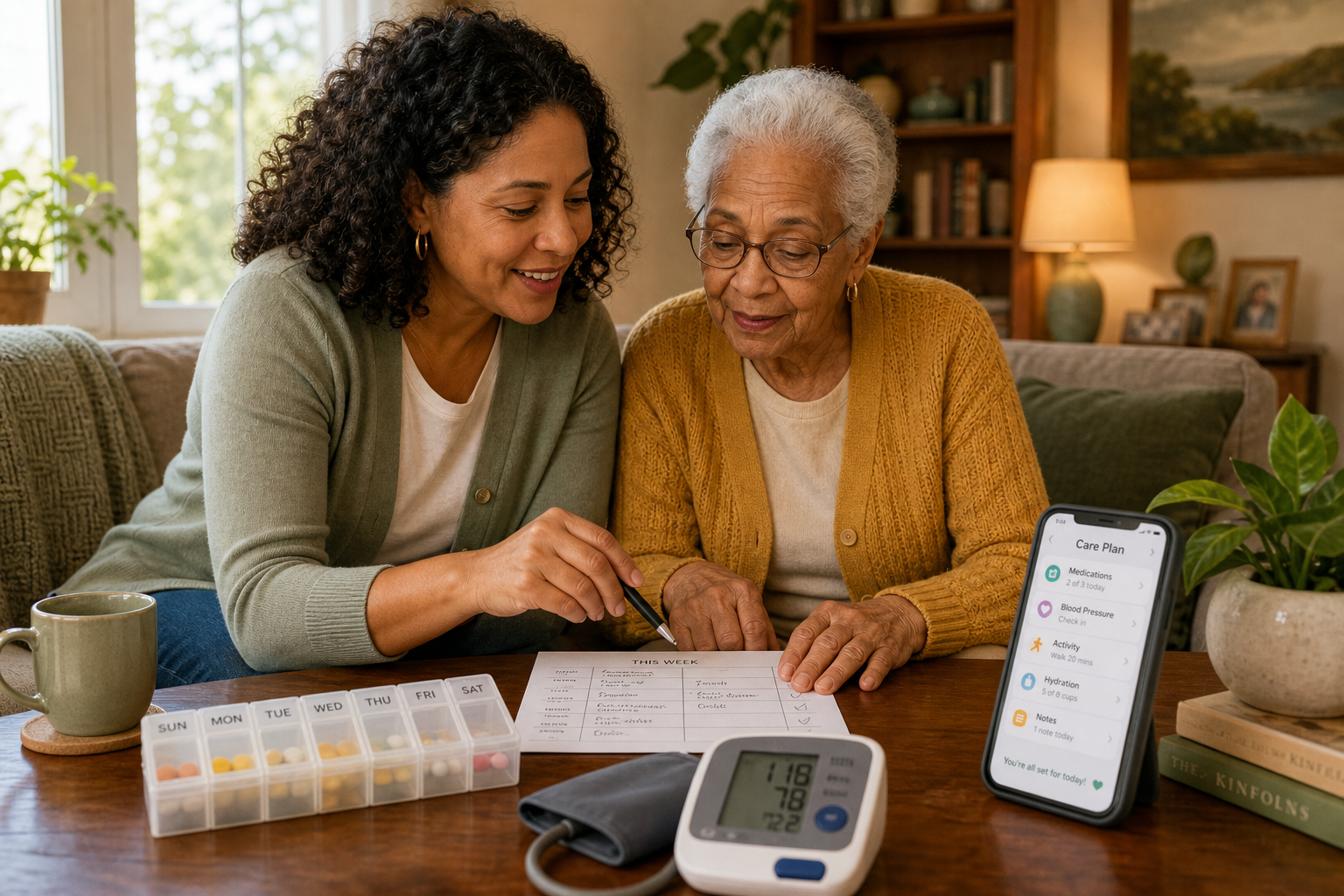
Collaborative health decision-making between an adult child and their parent.
Why Screening Guidelines Stop at 74 — and What That Means for Your Family
If you have been helping a parent manage their health for a few years, you are probably familiar with the annual rhythm: mammogram, colonoscopy, blood work, flu shot. But somewhere around age 74 or 75, that rhythm often breaks. The U.S. Preventive Services Task Force (USPSTF) and most major cancer organizations simply do not issue screening recommendations for adults beyond 74 or 75. The clinical trials that set the guidelines largely excluded people in this age group, especially those with chronic conditions.
This creates a confusing situation for families. The default assumption is often "more screening is better," but the evidence does not support that for everyone over 75. In fact, adults 65 and older have a 16-fold greater risk of dying from cancer than younger people, according to SEER/NCI data cited in a 2016 review in Canadian Family Physician, yet the same review notes that screening can cause harm — overdiagnosis, unnecessary procedures, and anxiety — when a person's remaining life expectancy is shorter than the time it would take for a screen-detected cancer to become symptomatic.
The goal of this article is not to tell you whether your parent should stop a specific screening. It is to give you a structured way to think about the question — using frailty, life expectancy, and your parent's values — so you can walk into the next medical appointment with informed, specific questions.
The Clinical Frailty Scale: A Framework for Understanding Your Parent's Health
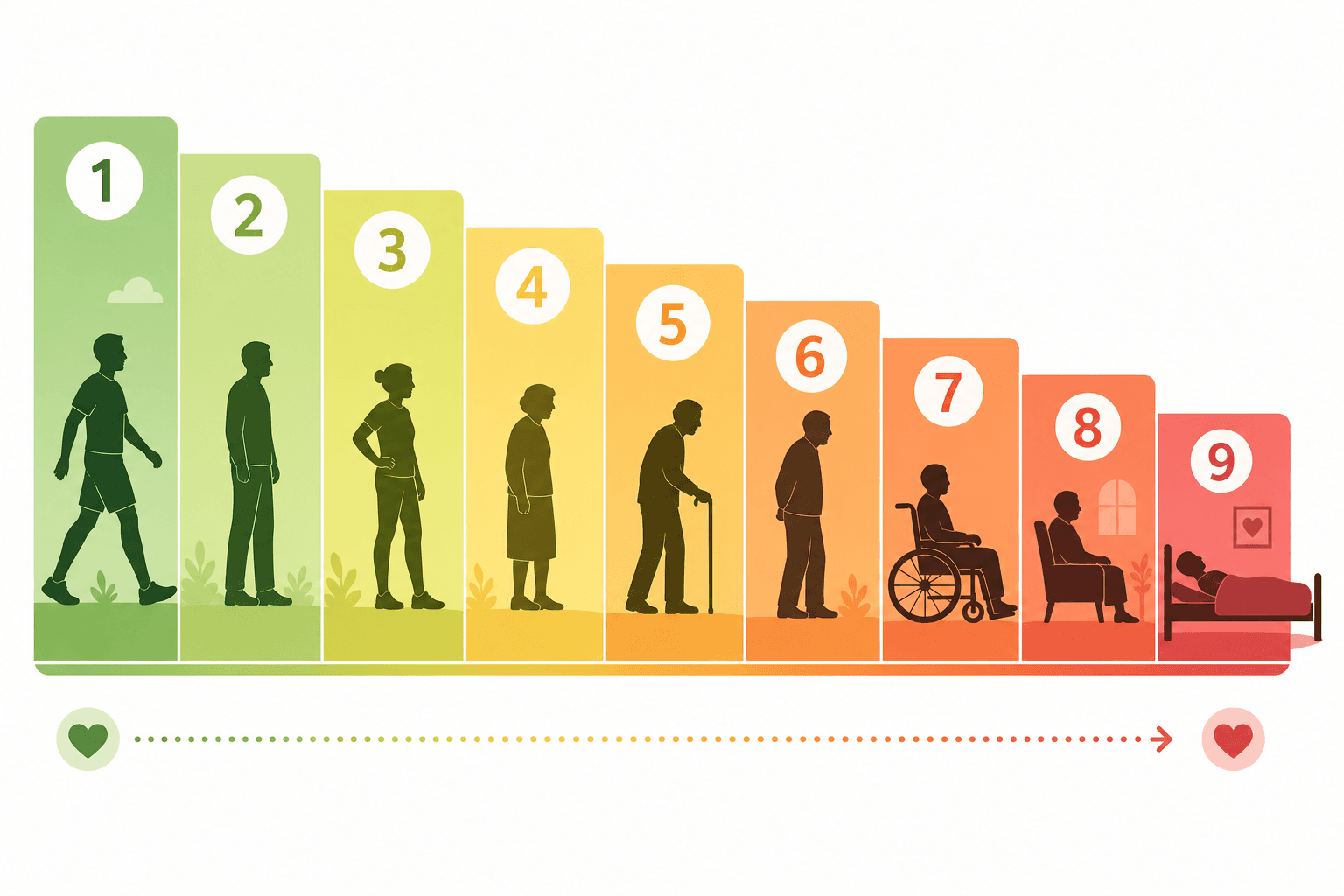
Chronological age tells you how old someone is. Frailty tells you how well their body is aging. The Clinical Frailty Scale, developed from the Canadian Study of Health and Aging and published by Rockwood et al. in the Canadian Medical Association Journal, is a 9-level tool that clinicians use to assess overall health status. You do not need a doctor to use it — the descriptions are straightforward enough for a family caregiver to make a reasonable initial assessment.
The Clinical Frailty Scale provides a visual framework for assessing overall health status.
The key threshold for screening decisions is Level 3, described as "Managing Well." People at this level have no symptoms of frailty but may have chronic conditions that are well-controlled. According to the Rockwood data, a person at Level 3 has approximately an 80% probability of surviving 5 years. That is important because most cancer screening benefits take 5 to 10 years to materialize.
Clinical Frailty Scale levels and their relationship to 5-year survival probability (Rockwood et al., CMAJ).
Frailty Level
Description
Approximate 5-Year Survival Probability
Screening Relevance
1–2 (Very Fit to Well)
Active, energetic, exercise regularly
>90%
Standard screening likely appropriate
3 (Managing Well)
Well-controlled chronic conditions, no frailty symptoms
~80%
Screening may still offer benefit; consider life expectancy
4–5 (Vulnerable to Mildly Frail)
Slowed, needs help with high-level tasks (shopping, finances)
50–70%
Screening benefit diminishes; individualize
6–7 (Moderately to Severely Frail)
Needs help with ADLs (bathing, dressing); may be homebound
<50%
Screening unlikely to provide benefit
8–9 (Very Severely Frail to Terminally Ill)
Completely dependent; end of life
<20%
Screening not recommended
To locate your parent on the scale, ask yourself: Can they walk a block without stopping? Do they manage their own medications and finances? Do they need help with bathing or dressing? A person who is independent but has well-controlled high blood pressure and arthritis is probably a Level 3. A person who has slowed down noticeably, needs help with shopping, and has had a recent hospitalization is probably a Level 4 or 5. A person who needs help with bathing and dressing is at least a Level 6.
Once you have a sense of where your parent falls on this scale, you can begin to match screening decisions to their actual health status rather than their age alone. This is the foundation of the individualized approach that the guidelines leave room for.
How Remaining Life Expectancy Changes the Benefit of Cancer Screenings
Cancer screening works by finding disease before it causes symptoms. But not all screen-detected cancers would ever cause symptoms in a person's remaining lifetime. This is the concept of "overdiagnosis" — finding a cancer that would have remained silent. For a person with a life expectancy of less than 5 years, the chance that a screening test will extend their life is very small, while the chance of harm from follow-up procedures (biopsies, surgeries, treatment side effects) is real and immediate.
Research by Schonberg et al., cited in the Tazkarji review, found that screening mammography is unlikely to benefit women with a life expectancy of less than 5 years. The USPSTF recommends against colonoscopy screening beyond age 85, and many guidelines suggest stopping earlier for people with significant chronic illness. The logic is straightforward: if a cancer takes 7 to 10 years to become clinically significant, screening a person with a 4-year life expectancy exposes them to the risks of the screening and follow-up without a realistic chance of benefit.
The benefit of cancer screening depends on remaining life expectancy, not age alone.
Common cancer screening thresholds for older adults.
Screening Test
Age/Health Threshold for Stopping
Key Source
Mammography
Life expectancy <5 years (Schonberg et al.)
Tazkarji et al. review
Colonoscopy
USPSTF recommends against after age 85
USPSTF
Pap test
Generally not needed after 65 with adequate prior screening
USPSTF
PSA (prostate)
No clear upper age; individualize based on life expectancy >10 years
USPSTF
Cancer Screening Decisions After 75: Mammography, Colonoscopy, and Pap Tests
When a guideline says "recommends against" or "unlikely to benefit," it does not mean the test is dangerous. It means the balance of benefits and harms shifts as a person ages and becomes frailer. Here is how that plays out for the three most common cancer screenings.
Mammography
For women over 75, the decision to continue mammography depends almost entirely on health status. A woman who is at Clinical Frailty Scale Level 3 (Managing Well) with a life expectancy of 10 or more years may still benefit from screening. A woman at Level 5 or higher, or one with significant comorbidities, is unlikely to benefit. The Schonberg study found that women with a life expectancy of less than 5 years did not experience a mortality benefit from screening mammography, but they did experience the anxiety, cost, and potential complications of follow-up testing.
Colonoscopy
The USPSTF explicitly recommends against colorectal cancer screening in adults over 85. For adults aged 76 to 85, the recommendation is selective — it should only be considered for those who have never been screened and are healthy enough to tolerate treatment. The reason is that colonoscopy carries risks of perforation, bleeding, and complications from sedation, and the benefit takes years to accrue. If your parent had a normal colonoscopy at age 70, they almost certainly do not need another one at 80.
Pap Tests
Cervical cancer screening is generally not recommended after age 65 for women who have had adequate prior screening (three consecutive negative Pap tests or two consecutive negative HPV tests within the previous 10 years). For women over 75 who have never been screened or have a history of abnormal results, the decision should be individualized. But for the vast majority of older women, Pap tests can stop.
Managing Chronic Conditions: Blood Pressure, Blood Sugar, and Statins
The same frailty-based logic applies to managing chronic conditions. Aggressive treatment targets that make sense for a 60-year-old may cause harm in a frail 80-year-old — falls from low blood pressure, dangerous hypoglycemia from tight blood sugar control, and medication burden without clear benefit.
Blood Sugar (HbA1c) Targets
Choosing Wisely Canada, an initiative that promotes evidence-based medical decision-making, recommends different HbA1c targets based on health status. For a healthy older adult with a life expectancy of more than 10 years, a target below 7.5% is reasonable. For a person with a life expectancy of less than 5 years — someone who is frail, has multiple chronic conditions, or is in a nursing home — a target below 8.5% is appropriate. The reason is that tight glucose control increases the risk of hypoglycemia, which can cause falls, confusion, and hospitalization, without providing meaningful long-term benefit for someone with limited life expectancy.
Blood Pressure Targets
The HYVET trial, a landmark study published in the New England Journal of Medicine, demonstrated that treating hypertension to a target of 150/80 mmHg in patients aged 80 and older reduced total mortality and cardiovascular events. This is important because hypertension occurs in more than two-thirds of adults over 65, according to Framingham Heart Study data cited in the Tazkarji review. However, the trial excluded frail and institutionalized patients. For a frail older adult, aggressive blood pressure lowering can cause orthostatic hypotension (a sudden drop in blood pressure when standing), which increases fall risk. The goal should be to treat to a level that reduces cardiovascular risk without causing dizziness or falls.
Statin Use
For primary prevention — that is, preventing a first heart attack or stroke in someone who has not had one — the Tazkarji review states there is no convincing evidence to recommend routine statin screening for people over 80. The clinical trials that established the benefit of statins largely excluded this age group. For secondary prevention (preventing a second event in someone who has already had a heart attack or stroke), the evidence is stronger, and continuing a statin may be appropriate. But for a frail 85-year-old who has never had cardiovascular disease, starting a statin is unlikely to provide meaningful benefit and adds another medication to an already complex regimen.
Chronic condition management targets by health status.
Condition
Target for Healthy Older Adult
Target for Frail Older Adult (<5-year life expectancy)
Key Source
HbA1c (diabetes)
<7.5%
<8.5%
Choosing Wisely Canada
Blood pressure
Treat to 150/80 mmHg
Individualize; avoid orthostatic hypotension
HYVET trial
Statin (primary prevention)
No convincing evidence >80
Not recommended
Tazkarji et al. review
Falls, Osteoporosis, and Immunizations: Preventive Care That Still Matters
Stopping cancer screenings and relaxing chronic disease targets does not mean stopping all preventive care. The CCFP framework includes a fourth category — Preventive Immunizations — and the Falls/Osteoporosis component is arguably more important for a frail older adult than any cancer screening.
Falls are the leading cause of injury-related death and hospitalization among older adults. A single fall can end independent living. The Tazkarji review emphasizes that all older adults should be asked about falls at least annually, and those who have fallen should receive a multifactorial assessment. This is where the site's fall prevention content becomes directly relevant — room-by-room checklists, balance exercises, and home modification guidance are practical tools that can prevent a life-altering injury.
Immunizations also remain critical. The review notes that annual influenza vaccination reduces flu-related hospital admissions by 42% in older adults. Older adults also have twice the incidence of tetanus infections and higher fatality rates, making tetanus vaccination important. Pneumococcal and shingles vaccines are recommended for all adults over 65. These interventions have a short time-to-benefit — they work within weeks or months — which makes them valuable even for frail older adults with limited life expectancy.
Annual flu vaccine: reduces flu-related hospital admissions by 42%
Tetanus vaccine: older adults have twice the incidence and higher fatality rates
Pneumococcal vaccine: recommended for all adults 65+
Shingles vaccine: recommended for immunocompetent adults 50+
Fall risk assessment: ask about falls at every annual visit
Bone density screening: for women 65+ and men 70+ with risk factors
Putting It All Together: Questions to Ask Your Parent's Doctor
The most important outcome of this article is not a decision — it is a better conversation. Here is a set of questions you can bring to your parent's next medical appointment. They are designed to be collaborative, not confrontational. You are asking the doctor to share their clinical reasoning so you can make an informed decision together.
"Based on my parent's overall health and frailty level, what is their estimated life expectancy?"
"Would a mammogram change their treatment plan if we found something? Or would we be monitoring a cancer that would never cause problems?"
"Is a less aggressive HbA1c target appropriate given their health status?"
"Are their blood pressure medications increasing their risk of falls? Could we adjust the dose or timing?"
"Does my parent still need their statin, given their age and the fact that they have never had a heart attack?"
"Are they up to date on their flu, pneumonia, shingles, and tetanus vaccines?"
"Have they had a fall in the past year that they did not tell me about? Can we do a fall risk assessment?"
"If we stop some of these screenings, what should we focus on instead to maintain their quality of life?"
If the doctor recommends stopping a screening or relaxing a treatment target, ask what the alternative monitoring plan is. Stopping a mammogram does not mean ignoring breast health — it means paying attention to symptoms and doing clinical breast exams. Stopping a colonoscopy does not mean ignoring bowel changes — it means being alert to blood in the stool or changes in bowel habits. The goal is to shift from population-based screening to symptom-based vigilance.
Respecting Your Parent's Values in Shared Decision-Making
The clinical framework — frailty, life expectancy, evidence-based thresholds — is only half of the equation. The other half is what your parent actually wants. A 78-year-old woman who is otherwise healthy and values doing everything possible to prevent cancer may reasonably choose to continue mammography even if her statistical chance of benefit is small. A 76-year-old man who is tired of medical appointments and wants to focus on gardening and time with grandchildren may reasonably choose to stop all screenings. Both decisions are valid.
The challenge for caregivers is that these conversations can feel like you are giving up on your parent's health. That is not what is happening. You are shifting the focus from disease detection to quality of life. You are aligning medical care with what actually matters to the person receiving it.
If your parent is cognitively intact, include them directly in the conversation with the doctor. If they have cognitive impairment, you may need to make a substituted judgment based on what you know about their values. Ask yourself: If my parent could understand the trade-offs, what would they choose? Would they want to spend their remaining years going to screening appointments and worrying about results, or would they rather focus on comfort, independence, and time with family?
The bottom line is this: continuing all preventive screenings indefinitely is not necessarily better care. For many older adults, the kindest, most evidence-based approach is to stop some screenings, relax some treatment targets, and invest that time and energy in fall prevention, immunizations, and the things that make life worth living. The CCFP framework gives you a structured way to have that conversation with your parent's doctor — and with your parent.


Comments
Join the discussion with an anonymous comment.