
Clinical term
Palliative Care for Seniors with Chronic Conditions: When to Start and How It Differs from Hospice
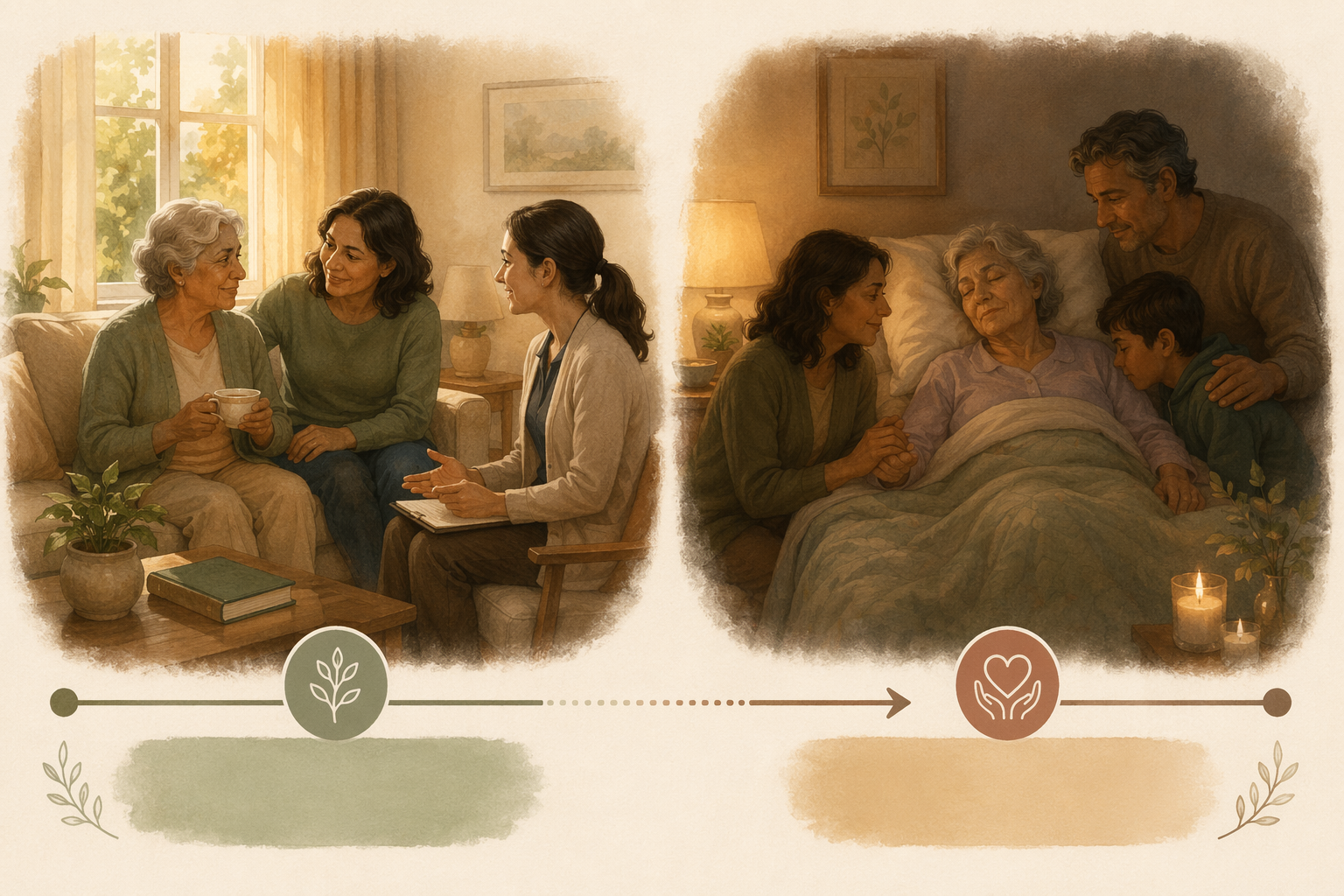
Why Chronic Disease Caregivers Need Palliative Care Earlier Than They Think
If your parent has heart failure, COPD, dementia, or Parkinson's disease, you have probably heard the term "palliative care" only in the context of end-of-life decisions. That assumption is costing families years of better symptom management and quality of life. The reality is that palliative care is appropriate from the moment of diagnosis — and for non-cancer conditions, it is dramatically underused.
Research consistently shows that patients with chronic lung disease, heart failure, and other non-cancer diagnoses are referred to palliative care at far lower rates than cancer patients. One commonly cited comparison places COPD referral rates around 20%, while cancer patients are referred at rates closer to 60% — despite experiencing comparable symptom burdens in breathlessness, pain, fatigue, and depression. The gap is not explained by a lack of need. It reflects a widespread misunderstanding that palliative care belongs only at the end of a disease trajectory.
The consequences of late referral are measurable. Seniors with heart failure or COPD who receive palliative care earlier experience fewer hospital readmissions, better control of distressing symptoms like shortness of breath and anxiety, and higher overall quality of life. For dementia caregivers, early palliative involvement provides something equally valuable: a structured framework for advance care planning and behavioral symptom support before a crisis forces the conversation.
The core message for adult children managing a parent's chronic illness is this: palliative care is not a surrender. It is an active layer of support that works alongside your parent's cardiologist, pulmonologist, or neurologist. The earlier you ask about it, the more you get from it.
How Palliative Care Differs from Hospice for Chronic Conditions
The single most important distinction for families to understand is the timeline. Palliative care can begin at any stage of a serious illness, including the day of diagnosis, and it runs alongside curative or disease-modifying treatments. Hospice care, by contrast, is a specific type of palliative care reserved for people who are expected to live six months or less and who have chosen to stop treatments aimed at curing their illness.
For a senior with heart failure, this difference can mean years of active symptom management while continuing to see their cardiologist and take prescribed medications. For a person with early-stage dementia, it means having a palliative care team in place to manage behavioral symptoms and coordinate advance care planning long before the disease reaches its advanced stages.
| Dimension | Palliative Care | Hospice Care |
|---|---|---|
| When it starts | At any stage of illness, including at diagnosis | When a doctor certifies a prognosis of 6 months or less |
| Can it run alongside curative treatment? | Yes — works with chemotherapy, dialysis, surgery, and disease-modifying medications | No — the patient must accept comfort care instead of care to cure the terminal illness |
| Duration | As long as needed — months or years | Two 90-day benefit periods, then unlimited 60-day periods; requires recertification |
| Care setting | Home, hospital, clinic, or nursing facility | Wherever the patient calls home (over 90% of hospice care is delivered at home or in a residential setting) |
| Primary goal | Symptom management, quality of life, and caregiver support alongside disease treatment | Comfort and dignity when cure is no longer possible |
For a more detailed comparison of the two approaches, including Medicare coverage specifics and a decision-making framework, see our related guide: Hospice vs. Palliative Care: A Family Caregiver's Decision Framework.
Condition-Specific Palliative Care Applications
Palliative care is not a one-size-fits-all service. The team tailors its approach to the specific symptoms, trajectory, and treatment context of each chronic condition. Understanding how palliative care applies to your parent's diagnosis can help you make a more informed case when requesting a consultation.
Heart Failure
Heart failure is characterized by unpredictable exacerbations — periods of stability interrupted by sudden worsening that often leads to emergency room visits and hospital admissions. Palliative care teams help manage the symptoms that drive these crises: fluid retention, shortness of breath, fatigue, and pain. They also work with the cardiologist to ensure that the treatment plan aligns with the patient's goals, which may change as the disease progresses.
Studies have shown that early palliative care for heart failure patients reduces hospital readmissions and lowers healthcare costs by decreasing the use of high-intensity interventions that do not align with the patient's preferences. The palliative team also addresses the anxiety and depression that frequently accompany a heart failure diagnosis — conditions that, if untreated, can worsen physical outcomes.
COPD
Chronic obstructive pulmonary disease carries a symptom burden that rivals advanced lung cancer: progressive breathlessness, chronic cough, fatigue, and frequent exacerbations that erode independence and quality of life. Despite this, COPD patients are referred to palliative care at roughly one-third the rate of cancer patients.
A palliative care team can provide specialized breathlessness management techniques, medication optimization to reduce symptom flare-ups, and emotional support for the anxiety that breathlessness triggers. They also help families plan for the predictable pattern of COPD — gradual decline punctuated by acute episodes — so that decisions about hospitalization, non-invasive ventilation, and end-of-life care are made proactively rather than in the middle of a crisis.
Dementia
Dementia presents a unique challenge because the patient's ability to communicate symptoms and participate in care decisions declines over time. Palliative care teams bring expertise in managing behavioral and psychological symptoms of dementia (BPSD) — agitation, wandering, sleep disturbances, and refusal of care — using non-pharmacological approaches before turning to medications.
Elizabeth Edgerly, senior director of community programs and services for the Alzheimer's Association, puts it plainly: it is never too early to ask for a palliative care consultation, even if a person with dementia is not currently experiencing discomfort. Early involvement allows the team to establish a relationship, document advance care preferences while the patient can still express them, and provide caregivers with behavioral management strategies before a crisis develops.
For practical daily care strategies during early-stage Alzheimer's, see our Early-Stage Alzheimer's Care Priorities and Daily Routine Guide.
Parkinson's Disease
Parkinson's disease affects motor function, but its non-motor symptoms — pain, fatigue, depression, constipation, and sleep disorders — often cause more distress than the tremors and rigidity. A palliative care team coordinates with the neurologist to manage both domains, ensuring that medication schedules (which can be complex for Parkinson's) are optimized and that the patient's evolving goals are reflected in the care plan.
As the disease progresses, palliative care addresses common challenges such as swallowing difficulties, fall risk, and the emotional toll on the caregiver. The team also facilitates conversations about advanced therapies (deep brain stimulation, pump-based medications) and helps families weigh the benefits against the burdens.
Common Myths About Palliative Care for Chronic Conditions
- "Palliative care means giving up treatment." False. Palliative care runs alongside curative and disease-modifying treatments. A patient can receive palliative care while continuing chemotherapy, dialysis, or heart failure medications.
- "Palliative care is only for cancer patients." False. Palliative care benefits people with heart failure, COPD, dementia, Parkinson's, kidney disease, liver disease, multiple sclerosis, and many other serious illnesses.
- "Palliative care hastens death." False. Studies consistently show that people who receive early palliative care often live longer than those with the same advanced illness who do not receive it. Palliative care does not accelerate dying — it improves the quality of the time a person has.
- "You need a referral from a specialist." False. Any physician — primary care doctor, cardiologist, pulmonologist, or neurologist — can order a palliative care consultation. You can also request one directly.
The Interdisciplinary Team for Chronic Disease Management

One of the defining features of palliative care is that it is delivered by an interdisciplinary team, not a single doctor. The composition of the team varies by program, but it typically includes the following roles, each addressing a different dimension of the patient's and family's needs.
- Palliative medicine physician: Oversees the medical plan, manages complex symptoms, and coordinates with the patient's existing specialists (cardiologist, pulmonologist, neurologist).
- Palliative nurse: Provides day-to-day symptom monitoring, medication management, and patient and family education about what to expect as the condition progresses.
- Social worker: Addresses practical concerns — insurance coverage, transportation to appointments, financial stress, and advance care planning documentation (living will, health care proxy).
- Chaplain or spiritual counselor: Provides emotional and spiritual support for both the patient and family, regardless of religious affiliation. This role is particularly valuable when families are struggling with the existential weight of a progressive diagnosis.
- Pharmacist: Reviews the patient's full medication list to identify drugs that may be causing side effects, interactions, or unnecessary burden — a common issue for seniors seeing multiple specialists.
- Dietitian: Addresses nutrition challenges — loss of appetite, difficulty swallowing, unintended weight loss — that are common in advanced chronic illness.
For caregivers, the team's most valuable function may be the support it provides directly to you. Palliative care social workers can coordinate respite care so you get a break. The nurse can teach you how to recognize early signs of a COPD exacerbation or heart failure decompensation before it requires an ER visit. The chaplain can sit with you when the weight of caregiving feels overwhelming. If you are a spousal caregiver, our Spousal Caregiver Burnout Prevention Guide offers additional strategies for sustaining your own health while caring for a partner.
When and How to Transition to Hospice as the Condition Progresses
For many chronic conditions, the transition from palliative care to hospice is not a sharp line but a gradual shift. The palliative care team that has been managing symptoms for years is often the same team that facilitates the transition when the time comes. Understanding the criteria and process in advance can reduce the anxiety of making this decision during a crisis.
Medicare Hospice Eligibility Requirements
To qualify for the Medicare hospice benefit, a patient must meet the following conditions, as defined by the Centers for Medicare & Medicaid Services.
- Be enrolled in Medicare Part A.
- Have a hospice doctor and the regular doctor certify that the patient is terminally ill with a life expectancy of six months or less if the illness runs its normal course.
- Accept comfort care (palliative treatment) instead of care aimed at curing the terminal illness.
- Sign a statement choosing hospice care instead of other Medicare-covered benefits for the terminal illness.
Once enrolled, hospice coverage includes two 90-day benefit periods followed by an unlimited number of 60-day benefit periods. At the start of each period, the hospice doctor must recertify that the patient remains eligible. If the patient's condition improves or they wish to resume curative treatment, they can revoke hospice at any time and return to standard Medicare coverage.
Signs That It May Be Time to Discuss Hospice
The decision to transition to hospice is deeply personal, but certain clinical patterns often signal that the timing is right.
- The patient has had two or more hospitalizations or emergency room visits in the past six months related to their chronic condition.
- Disease-modifying treatments are no longer effective or the patient has chosen to stop them.
- Functional decline is accelerating — the patient is spending more time in bed, eating less, and losing weight unintentionally.
- Symptoms (pain, breathlessness, agitation) are becoming harder to control despite optimized palliative management.
- The patient or family expresses that the burden of treatment outweighs the benefits.
The palliative care team can help facilitate this conversation. Because they already have a relationship with the family and understand the patient's disease trajectory, they are often the best people to raise the topic of hospice before the patient or family feels ready to ask about it.
What Studies Show About Early Palliative Care in Non-Cancer Conditions
The evidence base for early palliative care in non-cancer conditions has grown substantially over the past decade. While much of the early research focused on cancer, a growing body of studies now demonstrates that the benefits extend across chronic illnesses.
- Reduced hospital readmissions: For heart failure and COPD patients, palliative care involvement is associated with fewer hospitalizations and shorter lengths of stay when admissions do occur. This is driven by better symptom management at home and clearer advance care planning that reduces the use of unwanted aggressive interventions.
- Improved quality of life: Multiple studies show that patients receiving early palliative care report better control of pain, breathlessness, fatigue, and depression compared to those receiving standard care alone. The effect is measurable across physical, emotional, and social domains.
- Lower healthcare costs: By reducing emergency department visits, hospital admissions, and intensive care unit stays, early palliative care lowers overall healthcare spending. This is not a secondary benefit — it is a direct consequence of aligning medical treatment with the patient's goals.
- Longer survival: Contrary to the misconception that palliative care hastens death, studies show that people who receive early palliative care often live longer than those with the same advanced illness who do not. The mechanism is not fully understood, but better symptom management, fewer hospital-acquired complications, and improved mood likely contribute.
The Alzheimer's Association explicitly recommends early palliative care consultations for people with dementia, noting that the approach improves quality of life for both the patient and the caregiver. This recommendation is based on evidence that palliative care teams reduce the behavioral and psychological symptoms that are the primary drivers of caregiver stress and nursing home placement.
Practical Next Steps: Questions to Ask the Doctor and How to Request a Consult
Knowing that palliative care exists and understanding why it matters are two different things. The third step — actually getting a consultation — requires knowing what to ask and whom to ask. Here is a practical framework for starting the conversation.
Questions to Ask Your Parent's Primary Care Doctor or Specialist
- "Is there a palliative care program affiliated with this hospital or health system?" Many major medical centers have palliative care departments, but smaller hospitals and community practices may not. If they do not, ask for a referral to one that does.
- "Would a palliative care consultation be appropriate for my parent's condition at this stage?" Frame it as a question about timing, not about whether palliative care is needed. The doctor may not raise it on their own, but many will support the request once a family member asks.
- "How would palliative care work alongside my parent's current treatment plan?" This question clarifies that you are not asking to stop treatment — you are asking to add a layer of support. The answer should reassure you that the cardiologist or pulmonologist remains the primary doctor.
- "What symptoms or situations would trigger a referral to palliative care?" If the doctor is unsure, ask what criteria they use. This can help you identify the right moment to revisit the conversation.
- "Can you write the referral today, or do you need to discuss it with the palliative care team first?" A direct ask often works. Many doctors will write the referral if a family member specifically requests it.
What to Expect During the First Palliative Care Visit
The first visit typically lasts 60 to 90 minutes and includes the patient, family members, and at least two members of the palliative care team (often a physician or nurse practitioner and a social worker). The team will ask about:
- Current symptoms and how well they are controlled
- The patient's understanding of their illness and prognosis
- Goals and priorities — what matters most to the patient right now
- Advance care planning — whether there is a living will, health care proxy, or advance directive in place
- Caregiver wellbeing — how the family is coping and what support they need
The team will then develop a care plan that addresses the identified needs and coordinates with the patient's existing specialists. Follow-up visits are scheduled based on the patient's condition, typically every one to four weeks.
For quick reference on the key terms used in this article — including advance directive, health care proxy, living will, and the difference between palliative and hospice care — see our Hospice and Palliative Care Glossary.
Browse more in the Glossary.