
The Fall Prevention Gap: Why 90% of Homes Aren't Ready for Aging in Place (and What to Do About It)
93% of older adults want to age in place, yet 90% of homes lack basic safety features. This article bridges the gap between desire and action with a week-by-week prioritization framework for fall-proofing a home.
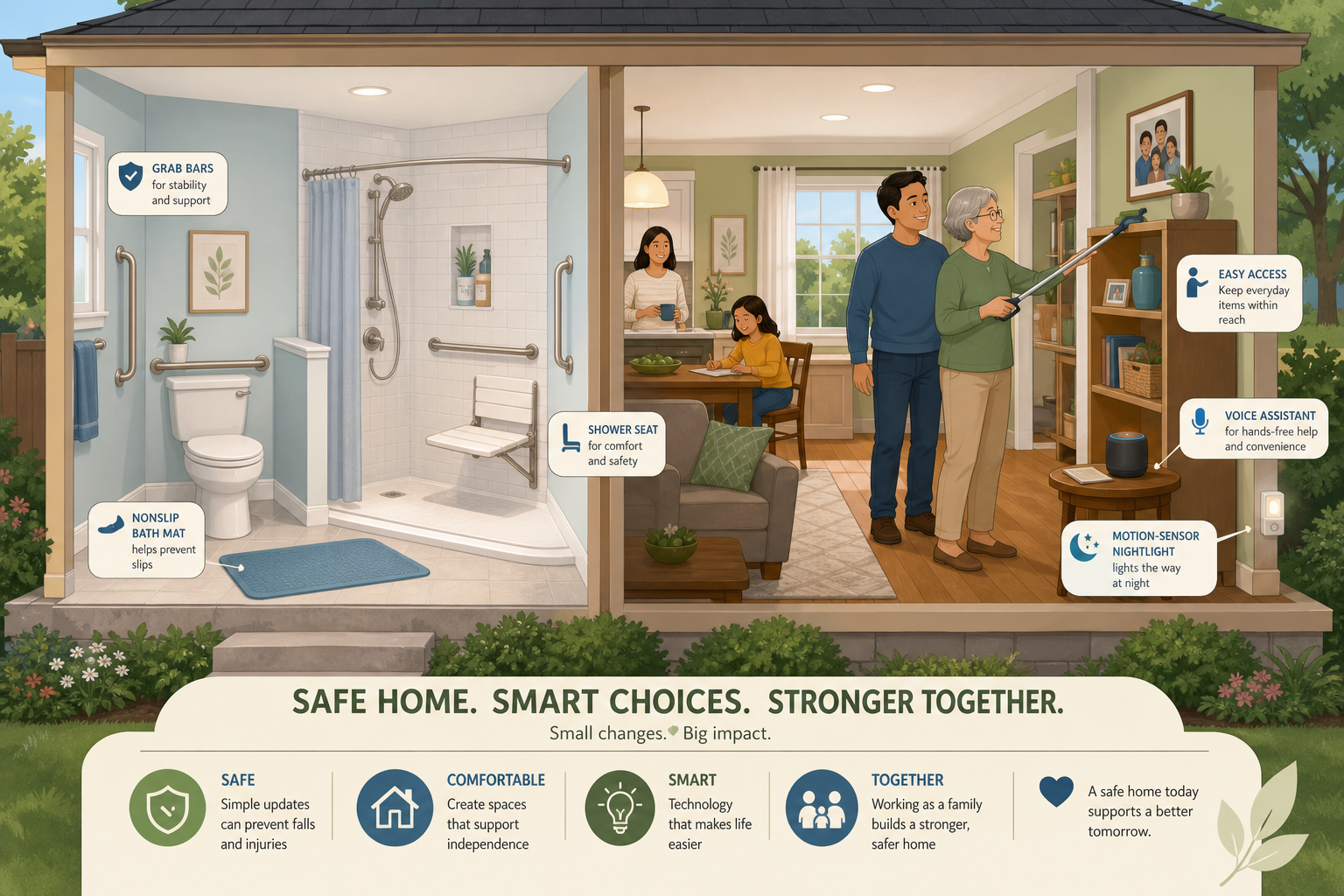
The 90% Gap: Why We Know the Stats but Don’t Act
Here is a number that should stop every adult child of an aging parent cold: 93% of adults 65 and older live in their own home or apartment, and 60% of those who live independently say they would want to stay in that home with care support if they could no longer manage alone. The desire to age in place is not a fringe preference — it is the overwhelming majority position.
Now here is the number that should keep you up at night: only 10% of U.S. homes are equipped for safe aging in place. That means 90% of homes lack the basic accessibility features — grab bars, step-free entries, adequate lighting, safe bathrooms — that make independent living possible as mobility and balance change. And despite widespread awareness of these risks, only 18% of adults 50 and older have actually made any home modifications.
The Pew Research Center survey that produced the 93% figure also found something troubling: only 34% of older adults who want to age in place think it is extremely or very likely to happen. And only 21% have long-term care insurance to help cover the cost of ongoing assistance. The gap between desire and confidence is enormous, and it is not because families are in denial. It is because they do not have a roadmap.
This article provides that roadmap. It is organized not by room, but by priority tier — what you can do this week, what you should plan for this quarter, and what belongs on this year’s horizon. The goal is not to renovate your parent’s entire home overnight. The goal is to take one action today that makes tomorrow safer.
Why Falls Are the Primary Threat to Aging in Place
Before we talk about grab bars and stair lifts, we need to be clear about what we are trying to prevent. Falls are the leading cause of injury death for adults 65 and older. The CDC reports that one in four older adults falls each year, and over half of all falls take place at home.
A single fall can end a senior’s ability to live independently. Hip fractures, head injuries, and the loss of confidence that follows a fall often trigger a cascade: hospitalization, rehabilitation, reduced mobility, and eventually a move to assisted living or a nursing home. The annual cost of assisted living is approximately $64,200 per year, and the emotional cost to both the older adult and the family is incalculable.
Home modification is the single most impactful action a family can take to support aging in place. Unlike medication changes or exercise programs, which require ongoing adherence, a grab bar installed correctly works every time, without fail, for years. The evidence supports this: a well-executed home modification plan can reduce falls by 39% and reduce the need for paid care hours by 42%.
The Five Quickest DIY Fixes You Can Do This Week
The most common reason families do nothing is that they think home modification means a $50,000 renovation. It does not. The NCOA has identified five modifications that cost very little, require no contractor, and can be completed in a single weekend. These are your starting point.
- Secure a shower seat, grab bar, and adjustable-height handheld showerhead in the bathroom. This single change eliminates the most dangerous activity for older adults: standing on a wet, slippery surface. The grab bar must be professionally anchored into wall studs — a suction-cup bar is not sufficient for weight-bearing.
- Replace every burnt-out bulb with bright, non-glare LED bulbs. Dim lighting is a primary contributor to falls, especially on stairs and in hallways. Use the highest wattage your fixtures allow, and choose warm-toned bulbs to reduce glare.
- Place a sturdy, arm-supported chair in the bedroom for sitting while dressing. Dressing while standing on one leg is a high-risk activity. A simple chair eliminates that risk entirely.
- Clear all clutter and throw rugs from stairs and high-traffic pathways. Throw rugs are one of the most common trip hazards in the home. If a rug does not have a non-slip backing and is not taped down, remove it.
- Move frequently used kitchen items to shelves between waist and shoulder height. Reaching above the shoulders or bending to low cabinets requires balance and coordination that may be compromised. A reach stick can help with items that are slightly out of range.
These five fixes cost between $25 and $500 total, depending on whether you install the grab bar yourself or hire a professional. They address the most common fall hazards identified by the NCOA and the National Institute on Aging. Completing them this week will immediately reduce your parent’s fall risk and, just as importantly, build momentum for the larger projects that follow.
Room-by-Room Hazard Guide with Cost Ranges
Once the five quick fixes are done, it is time to assess the entire home systematically. The table below summarizes the most common fall hazards in each room, the recommended fix, and the typical cost range. Use this as a scannable reference to identify what your parent’s home needs.
| Room | Common Hazard | Recommended Fix | Cost Range |
|---|---|---|---|
| Bathroom | Slippery surfaces, no support near toilet or shower | Grab bars (professionally installed), shower seat, handheld showerhead, nonslip mat | Low: $25–$500 |
| Stairs | Poor lighting, missing or weak handrails, no edge contrast | Handrails on both sides, bright LED lighting at top and bottom, contrasting color tape on step edges | Low: $50–$300 |
| Bedroom | Dark path to bathroom, no support when standing from bed | Night lights, clear pathway, bed rail or bedside commode if needed | Low: $25–$200 |
| Kitchen | Items stored too high or too low, step stools used for access | Reorganize shelves to waist height, use reach stick, replace step stool with stable step ladder with handrail | Low: $25–$150 |
| Entryways | Uneven steps, poor outdoor lighting, no handrail at door | Motion-sensor lights, grab bar at door, repair uneven surfaces, add ramp if threshold is high | Low to Mid: $100–$2,000 |
| Bathroom (Mid) | Bathtub is a fall hazard, toilet is too low | Walk-in shower ($6,000–$12,000), comfort-height toilet ($200–$500), stair lift ($2,500–$8,000) | Mid: $1,000–$10,000 |
| Whole Home (High) | Doorways too narrow, no first-floor bedroom or bathroom, steps at all entrances | Widen doorways, add first-floor bedroom/bathroom, install ramp or elevator | High: $10,000–$50,000+ |
Notice that most of the high-impact hazards fall into the “low cost” category. You do not need a $50,000 renovation to make a home significantly safer. You need to address the specific hazards that are most likely to cause a fall, and those are often the cheapest to fix.
When to Call an Occupational Therapist or CAPS Professional
The five DIY fixes and the room-by-room guide above are designed for families who are ready to take action on their own. But some situations require professional assessment. Here is how to know when to call in an expert.
Occupational Therapist (OT)
An occupational therapist can conduct a comprehensive home safety evaluation that identifies hazards you might miss and recommends specific modifications tailored to your parent’s mobility, strength, and cognitive function. Many insurance plans, including Medicare Part B, cover OT evaluations when ordered by a physician. This is often the best first step before spending any money on modifications, because the OT’s recommendations will prevent you from buying the wrong equipment or installing something in the wrong location.
Certified Aging-in-Place Specialist (CAPS)
A CAPS-certified contractor is trained specifically in home modifications for older adults. They understand clear floor space requirements for wheelchairs and walkers, proper grab bar placement and anchoring, and how to design a bathroom or kitchen that is both functional and safe. For structural modifications — widening doorways, installing a walk-in shower, adding a ramp — a CAPS professional is the right choice.
General Contractor
For major structural changes like adding a first-floor bedroom or bathroom, a general contractor with experience in accessible design may be sufficient. However, not all general contractors understand the specific needs of aging-in-place modifications. If you hire a general contractor, ask about their experience with ADA guidelines and universal design principles.
For a deeper comparison of these roles and guidance on which professional to hire for each type of project, see our guide on CAPS vs. General Contractor vs. OT and our explainer on how an aging-in-place specialist prevents falls.
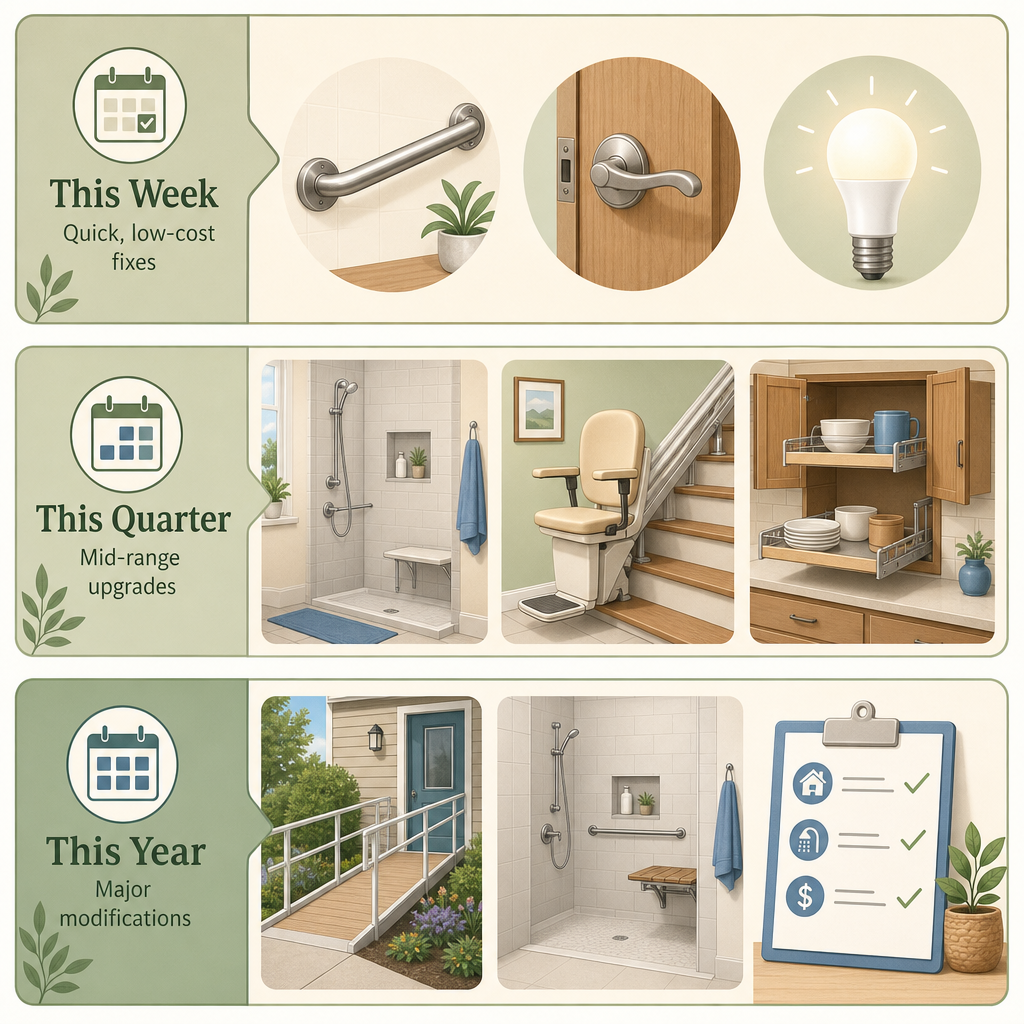
Your Week-by-Week Prioritization Framework
The single biggest reason families do not modify their parent’s home is that they do not know where to start. The problem feels overwhelming. This framework breaks it into three clear tiers, ordered by urgency, cost, and complexity.
This Week: The Five DIY Fixes ($25–$500)
Complete the five NCOA-recommended fixes listed above. Order a grab bar and schedule professional installation if needed. Replace all burnt-out bulbs. Clear clutter and throw rugs. Move frequently used items to waist height. These actions address the most common fall hazards and can be completed in a single weekend.
This Quarter: Mid-Range Projects ($1,000–$10,000)
Once the immediate hazards are addressed, move to the projects that require planning and a budget. These include:
- Installing a walk-in shower ($6,000–$12,000) to replace a bathtub that requires stepping over a high wall
- Adding a stair lift ($2,500–$8,000) if the bedroom and bathroom are on different floors
- Improving lighting throughout the home with LED fixtures and motion sensors
- Installing lever-style door handles ($20–$50 each) to replace round knobs that are difficult to grip
- Adding a modular ramp ($1,000–$3,000) if there are steps at the main entrance
These projects typically require a contractor and may take several weeks to complete. Start planning them now, even if you cannot afford them immediately. Knowing what needs to be done and getting quotes will help you budget and prioritize.
This Year: High-Cost Structural Changes ($10,000–$50,000+)
The most expensive modifications are also the most transformative. These include:
- Widening doorways to 32–36 inches to accommodate a walker or wheelchair
- Adding a first-floor bedroom and bathroom so the senior does not need to use stairs
- Installing a residential elevator ($20,000–$50,000) for multi-story homes
- Full bathroom remodel with roll-in shower, grab bars, and accessible sink
These projects are expensive, but they are also one-time investments. Compare the cost of a $15,000 bathroom remodel to the $64,200 annual cost of assisted living. In most cases, the modification pays for itself within the first year if it allows the senior to remain at home.
Funding Sources: How to Pay for Modifications
Cost is the most common barrier to home modification, but many families are unaware of the financial assistance available. Here are the most common funding sources:
- Medicaid waiver programs: Many states offer Home and Community-Based Services (HCBS) waivers that cover home modifications for eligible low-income seniors. The specific services and eligibility criteria vary by state.
- VA Aid and Attendance grants: Veterans and surviving spouses who need assistance with daily activities may qualify for a grant that can be used for home modifications. The VA also offers the Specially Adapted Housing (SAH) grant for service-connected disabilities.
- USDA Rural Development grants: Homeowners in rural areas may qualify for grants and loans to make accessibility improvements through the USDA’s Single Family Housing Repair program.
- Tax deductions: The IRS allows medical expense deductions for home modifications that are medically necessary, including ramps, grab bars, and widening doorways. The expense must exceed 7.5% of adjusted gross income.
- Nonprofit programs: Organizations like Habitat for Humanity and Rebuilding Together offer home modification services for low-income seniors in some communities.
For a comprehensive breakdown of each funding source, including eligibility requirements and application steps, see our complete guide on how to pay for aging-in-place home modifications.
From Awareness to Action: Your First Step Today
The gap between wanting to age in place and actually doing it is bridged by small, consistent actions, not by a single massive renovation. The 93% of older adults who want to stay home, and the 90% of homes that are not ready for them, represent a problem that is entirely solvable — but only if families start.
Your first step today is simple: pick one of the five DIY fixes and complete it this week. Not next month. Not when you have time. This week. Order a grab bar. Replace a light bulb. Clear a cluttered stairway. The specific action matters less than the act of starting.
The evidence is clear: a few hundred dollars and a weekend of work can dramatically reduce the risk of a fall that could end your parent’s ability to live independently. The only thing standing between your family and a safer home is the decision to start.
Related reading
Noticed something outdated or inaccurate on this page? Flag a correction. We review every report against CDC, NIA, and AARP HomeFit guidance before updating a page.
Part of the Fall Prevention section.