
STEADI: Intervene
Room-by-Room Earthquake Safety Checklist for Elderly Parents
Walk a parent's home room by room to spot the unsecured furniture, loose rugs, and clutter that are both everyday fall hazards and earthquake topple-and-projectile risks. This checklist shows what to anchor, move, or clear so fall prevention and earthquake preparedness get done in one pass.
Start at the front door with your keys still in your hand and your phone camera open. Before anyone buys an emergency radio or argues about where to store bottled water, look at the house the way shaking would find it: the rug lip by the entry, the bookcase beside the recliner, the glass cabinet that has always been “just fine,” the hallway narrowed by a walker basket, a side table, and yesterday’s mail.
An earthquake safety checklist for elderly parents should begin with the things they touch and walk past every day. CDC fall-prevention material names home hazards such as throw rugs, clutter, and uneven steps as modifiable fall risk factors; CDC earthquake guidance also warns that many earthquake deaths and injuries come from falling objects such as bookcases, cabinets, and heating units.[1][2] Those are not two separate household projects. In a parent’s home, the same object can be a trip hazard on Tuesday and a topple hazard during shaking.
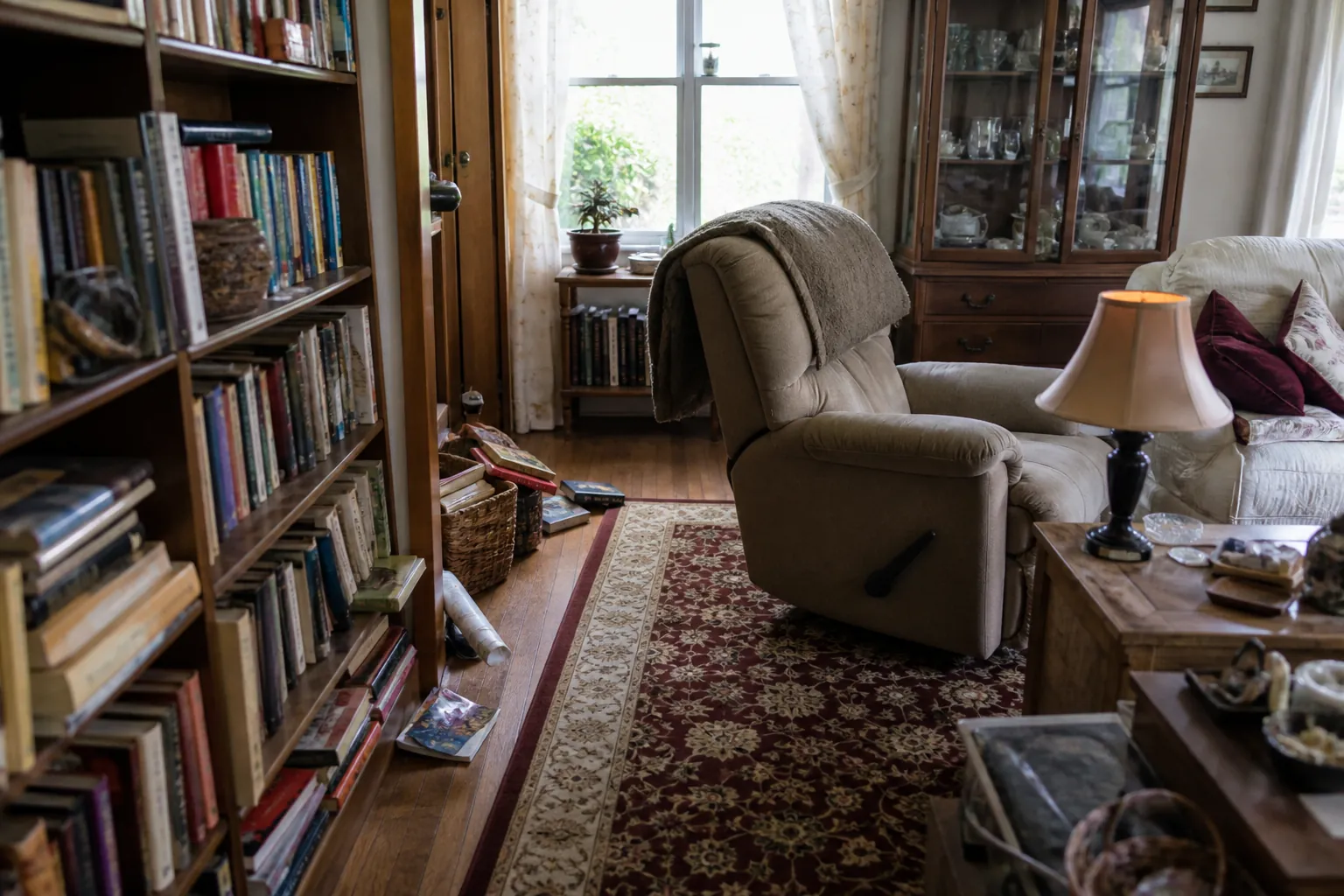
This walkthrough uses the hazard-hunt idea from Earthquake Country Alliance’s Seven Steps: identify and secure the objects that could move, fall, shatter, or block a way out before the earthquake happens.[3] For an older adult, that matters even more because Illinois emergency guidance for seniors notes that older people may not be agile enough to get under furniture quickly, and it specifically calls out falling objects, bookcases, china cabinets, medical equipment, heavy objects on high shelves, and clear doorways, halls, and exits.[4]
Walk the home with six verbs in mind
A useful safety walkthrough does not need to turn your parent’s home into a clinic. It needs a simple way to decide what happens to each hazard you notice. Take photos, put a small removable note on the item if your parent agrees, and sort each problem into one of these actions.
| Action | Use it when you see | Examples |
|---|---|---|
| Anchor | Tall, heavy, or important items that could tip | Bookcases, china cabinets, medical equipment, large shelving units |
| Move | Something dangerous over a bed, chair, doorway, or walking path | Heavy frames, mirrors, lamps, breakables, tall furniture beside the bed |
| Latch | Cabinet doors or drawers that could fly open | Kitchen cabinets, china cabinet doors, storage cupboards |
| Lower | Heavy items stored above shoulder height | Cast-iron pans, mixers, bulk supplies, large dishes, tools |
| Clear | Anything that narrows a path or catches a foot | Throw rugs, cords, clutter, small tables, boxes, plant stands |
| Call a professional | Work involving gas, water heaters, appliances, structure, or uncertain anchoring | Water-heater bracing, flexible gas connections, seismic retrofit questions |
CDC earthquake guidance names practical securing methods such as L-brackets, corner brackets, aluminum molding, eyebolts, cabinet latches, and flexible cable or metal strapping for appliances and water heaters.[2] The point is not to buy every piece of hardware in one afternoon. The point is to stop pretending that a tall cabinet full of glass is “decor” when it is also a predictable hazard.
Entryways, halls, and the routes out
Stand at the main entrance and look down first. Entry rugs are often chosen because they look warm and familiar, not because they lie flat. A curled corner, thick edge, or sliding mat can catch a toe, cane tip, or walker wheel. If the rug cannot be secured so it stays flat, it belongs somewhere else.
- Clear shoes, umbrellas, delivery boxes, pet bowls, and plant stands from the door swing and the first few steps inside.
- Check whether a walker, rollator, or wheelchair can pass without turning sideways or clipping furniture.
- Move loose cords away from the path, especially phone chargers and lamp cords stretched across a baseboard gap.
- Look for framed pictures, shelves, clocks, or decorative plates that could fall into the hallway.
- Open every door used as an exit and make sure it is not blocked by furniture, storage bins, or a rug that jams underneath.
The Red Cross advises planning two ways out of each room if possible.[5] In an older adult’s house, that should be read very literally: can the door open all the way, can the person reach it with their usual mobility device, and would a fallen bookcase or cabinet block the path?
Do not save hallways for last because they seem empty. A narrow hall is where small compromises collect: a laundry basket waiting to go back, a stack of newspapers, a decorative table, a walker parked “just for now.” Clear routes are both fall prevention and evacuation preparation.
Living areas: the room that usually needs the longest look
Living rooms are where dignity and risk get tangled. The recliner is in the right spot for the television. The china cabinet belonged to someone. The shelf over the couch has family photos. None of that makes the hazards imaginary.
Start with the parent’s most-used chair. Sit in it if they will let you. From that position, look at what could fall toward them, what they might grab while standing, and what narrows their first three steps.
- Anchor tall furniture, including bookcases, display cabinets, entertainment units, and freestanding shelves. Cal OES specifically advises bolting bookshelves to wall studs.[6]
- Move heavy or sharp decor away from the wall above couches, chairs, and favorite sitting places. Cal OES advises not hanging heavy items above couches, chairs, or beds.[6]
- Lower heavy books, pottery, photo albums, speakers, and keepsake boxes to lower shelves.
- Latch glass-front or storage cabinet doors if they hold dishes, figurines, framed photos, or other items that could spill out.
- Remove or secure throw rugs, especially between the chair and the bathroom, kitchen, bedroom, or front door.
- Relocate floor lamps and small tables if they force a curved or narrow walking route.
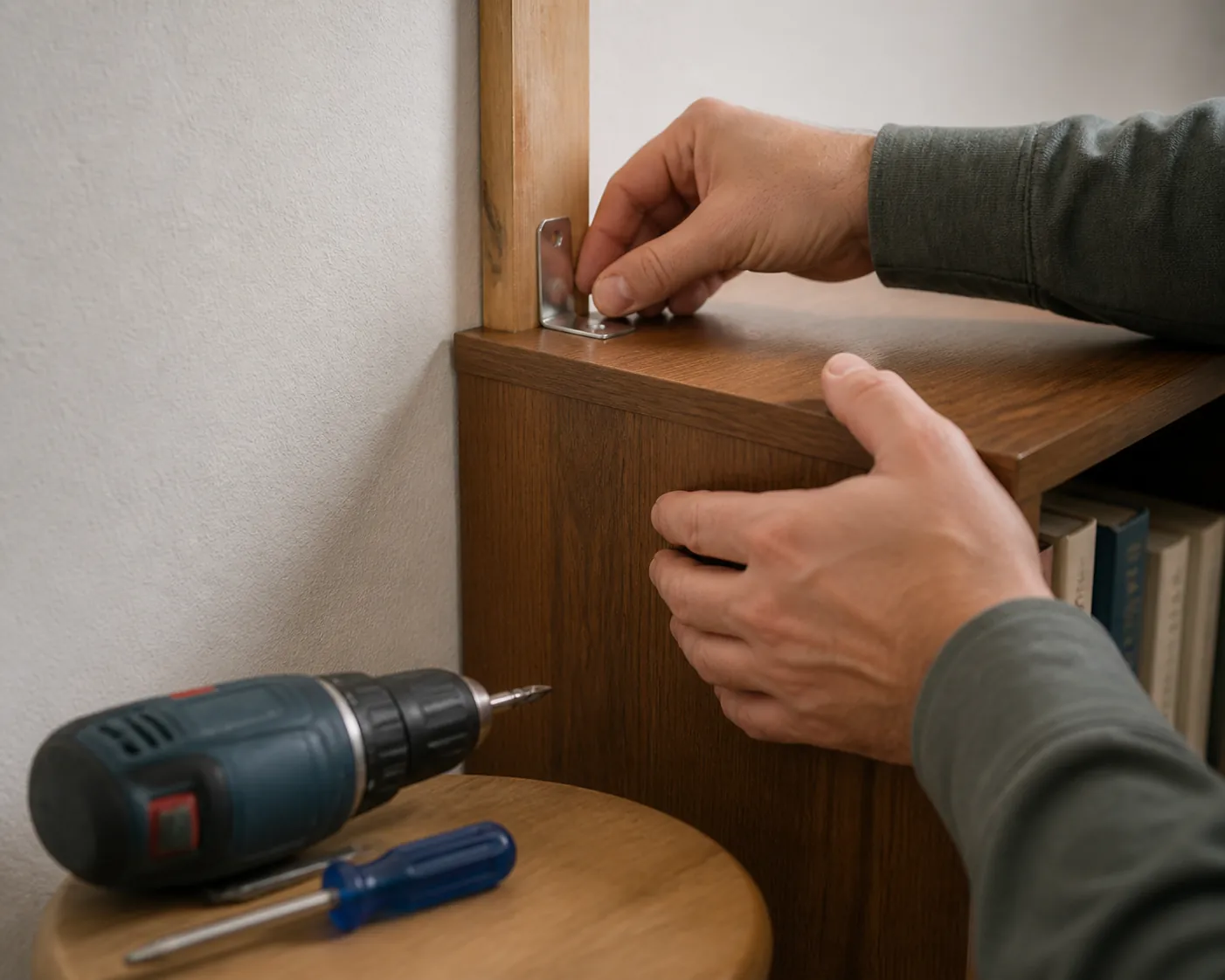
A good compromise is often to keep the familiar item but change its behavior. The bookcase can stay if it is properly anchored. The display cabinet can remain if it is secured and latched. The framed picture can move to a wall where it would not land on someone resting or sleeping. The throw rug, however, may not deserve a negotiation if it curls, slides, or hides an uneven threshold.
Pay attention to glass. A glass-front cabinet near a narrow walking path is not only a shaking hazard; it can become broken glass in the exact place your parent needs to step after an event. If the cabinet is important, anchor it, latch it, and consider whether the heaviest and most breakable contents can be moved lower or elsewhere.
Bedroom: protect the place where reaction time is slowest
A bedroom walkthrough deserves a little less politeness than the room usually receives. At night, an older adult may be groggy, without glasses, separated from a cane, or trying to reach the bathroom quickly. During shaking, they may not have time to choose the safest part of the room.

- Move the bed away from windows if the room allows it. Cal OES includes moving beds away from windows in its earthquake safety tips.[6]
- Remove heavy frames, mirrors, shelves, plants, or decorative objects above the headboard.
- Anchor tall dressers, bookcases, wardrobes, and shelving units, especially anything beside the bed.
- Lower heavy storage items from closet shelves so your parent is not reaching overhead during ordinary weeks and those items are less likely to fall during shaking.
- Clear the bed-to-bathroom path of shoes, laundry, baskets, scales, cords, and loose rugs.
- Place the cane, walker, glasses, phone, and flashlight where they can be reached without stepping around furniture.
Dressers are easy to underestimate because they are low compared with bookcases. But a dresser with open drawers can change the walking path, and a tall dresser can tip if pulled or shaken. If a parent uses a drawer pull for balance, that is a separate warning sign: the furniture is doing a job it was not built to do.
If your parent sleeps with a mobility device nearby, make sure the device itself will not be trapped by a falling lamp, shelf, or stack of books. The goal is not a bare bedroom. It is a room where the first move after waking is not a step into clutter or glass.
Kitchen: lower the heavy things and latch what can swing open
Kitchens create the most satisfying fixes because many of them help immediately. Moving the heavy Dutch oven from a high shelf to a waist-level cabinet reduces overhead reaching today and keeps a dense object from becoming a falling hazard later. The same is true for mixers, bulk cans, glass serving bowls, stacks of plates, and small appliances.
- Install latches on cabinets that hold glassware, dishes, cleaning products, or heavy cookware.
- Move heavy items to low shelves or drawers, ideally between knee and shoulder height for routine use.
- Keep the floor clear of step stools, pet bowls, recycling bags, and small rugs near the sink or stove.
- Secure or relocate countertop appliances that sit near an edge.
- Check whether cabinet doors, refrigerator doors, or pantry doors would block a walker route if they swung open.
- Do not rely on a parent climbing a stool to reach emergency food, medication, or cookware after a quake.
CDC’s earthquake guidance includes cabinet latches among the methods used to secure household contents.[2] In a parent’s kitchen, latches are not about making the room look childproofed. They are about keeping dishes, jars, and cleaning products inside the cabinet instead of across the floor.
If your parent is attached to a familiar kitchen arrangement, start with the items that are both heavy and rarely used. Holiday platters, roasting pans, big serving bowls, and extra appliances are often stored high because they are not part of daily cooking. They are also exactly the objects no one should be reaching for from a step stool.
Bathroom: keep the exit path boring
Bathrooms are fall-prevention territory first, but they still belong in an earthquake walkthrough. The room is small, surfaces are hard, and items stored above the toilet or sink can fall into the few places a person has to stand.
- Remove loose bath mats that slide, bunch, or catch a cane tip; use only mats that stay flat and are appropriate for the surface.
- Clear the path from toilet to sink to door, including scales, trash cans, laundry baskets, and storage bins.
- Move heavy bottles, ceramic containers, and appliances from high shelves or narrow ledges.
- Secure or relocate wall cabinets and over-toilet shelving if they are loose, top-heavy, or crowded with breakables.
- Check that the door can open fully and will not be blocked by a fallen hamper, cabinet, or shelving unit.
If you are already reviewing the bathroom for grab bars, lighting, or non-slip surfaces, include the earthquake questions in the same visit. What could fall? What could shatter? What could block the door? What would your parent step on barefoot?
Utility rooms, garage, and equipment areas
The utility area is where a caregiver should be quicker to call help. Water heaters, gas connections, appliances, garage shelving, and medical equipment can be heavy, technical, or both. Cal OES advises bracing water heaters to studs and using flexible gas connections; CDC also names flexible cable or metal strapping as securing methods for appliances and water heaters.[6][2]
- Check whether the water heater is properly braced; if you are unsure, call a qualified professional rather than guessing.
- Anchor garage or utility shelving, especially shelves holding paint cans, tools, bottled supplies, or medical equipment.
- Move heavy tools, bulk supplies, and bins from high shelves to lower storage.
- Keep the path to electrical panels, shutoff areas, exits, and stored mobility equipment clear.
- Secure oxygen equipment, backup power devices, or other medical equipment according to manufacturer and professional guidance.
- Do not stack storage where it could fall against a door into the house or garage.
Illinois guidance for seniors specifically includes anchoring medical equipment, bookcases, and china cabinets, and storing heavy objects on low shelves.[4] That matters in garages and spare rooms because families often move “extra” items there and stop thinking about them. A shelf full of tools over a narrow walkway is not safer because it is out of sight.
If your parent uses a cane, walker, or wheelchair
This checklist is about preparing the room before shaking. The during-shaking plan is related, but it is a separate conversation. A person who uses a cane, walker, or wheelchair may need adapted actions rather than a standard “drop, cover, and hold on” response; use this site’s guide to protecting elderly people during earthquakes when they can’t drop for that part of the plan.
For the room-by-room walkthrough, mobility equipment changes the size of the path you need to protect. A hallway that works for a steady adult may not work for a rollator. A rug that looks harmless may stop a walker wheel. A cabinet door that swings open after shaking may block a wheelchair turn. Measure the safety of the room by the way your parent actually moves through it, not by how it looks when no one is walking.
What to fix first if time, money, or patience is limited
The best first fixes are the ones that reduce daily fall risk and earthquake injury risk at the same time. If you only have one visit, do not spend it making a perfect inventory spreadsheet while the hallway rug still curls up. Mark the hazards, then complete the easiest clear-and-move tasks before you leave.
- Clear walking paths from bed to bathroom, chair to kitchen, chair to exit, and entry to main living space.
- Remove or secure loose rugs, especially in hallways, bedrooms, bathrooms, and near the kitchen sink.
- Move heavy objects off high shelves and away from beds, couches, recliners, and doorways.
- Anchor tall furniture in the living room, bedroom, garage, and any room where your parent spends time.
- Latch cabinets that hold glass, dishes, heavy cookware, chemicals, or breakables.
- Schedule professional help for water-heater bracing, gas connections, appliance securing, and structural concerns.
Local earthquake urgency is not the same everywhere. A parent in a high-seismic area may need faster action on anchoring and water-heater bracing than a parent in a lower-risk area. But the fall-prevention half of this walkthrough is useful in any home, and it gives you a sensible order of work even while you check local emergency-management guidance.
If your parent resists changes, avoid presenting the whole house as a failure. Choose one visible improvement that protects their independence: a clear nighttime path to the bathroom, a secured bookcase beside the favorite chair, a heavy mirror moved away from the bed. Familiar rooms can stay familiar without leaving every hazard in its old place.
When the checklist should turn into a phone call
Some work is reasonable for a handy family member. Some is not. Call qualified help when the job involves gas, plumbing, electrical systems, heavy appliances, uncertain wall construction, masonry, ceiling-mounted items, or anything that could injure your parent if it fails.
For broader home-modification questions, especially if earthquake safety is being combined with aging-in-place changes, a certified aging-in-place specialist can help sort practical safety work from cosmetic disruption. This guide to finding and vetting a CAPS contractor is a useful next step if the home is older, the parent has mobility changes, or the walkthrough turns up more than simple furniture anchoring.
Older homes, possible seismic retrofit needs, water-heater work, and appliance strapping are not good places for guesswork. It is better to pay for one correct installation than to reassure yourself with a bracket that is not attached to anything solid.
A clean stopping point for the first walkthrough
By the end of the first pass, you should have three things: photos of hazards, a short list of fixes completed immediately, and a scheduled list for anchoring, latching, lowering, or professional work. If you also want room-by-room help for other disaster-related fall hazards, the guides to after-storm home safety for seniors and power-outage fall-proofing follow the same practical idea: protect the path before the emergency makes the path harder to use.
Do the easy clears before you go home. Move the heavy serving bowl down. Take the sliding rug out of the hallway. Shift the lamp that crowds the walker route. Then schedule the anchoring, latches, and professional work, and use the during-shaking guide for your parent’s personal response plan.
References
- Facts About Falls — CDC
- Preparing for Earthquakes — CDC
- Seven Steps to Earthquake Safety — Earthquake Country Alliance
- Planning Guide for Seniors — Illinois Emergency Management Agency and Office of Homeland Security
- Earthquake Safety — American Red Cross
- Essential Earthquake Safety Tips — Cal OES
Related reading
Noticed something outdated or inaccurate on this page? Flag a correction. We review every report against CDC, NIA, and AARP HomeFit guidance before updating a page.
Part of the Fall Prevention section.