
STEADI: intervene
Protecting Elderly During Earthquakes When They Can't Drop
Standard earthquake instructions assume you can get on the floor—many seniors cannot. This guide provides device-specific protocols (wheelchair, walker, cane) endorsed by the Red Cross and Earthquake Country Alliance, so you can protect yourself even when you can't drop.
“Drop, Cover, and Hold On” is good earthquake advice until the person hearing it knows they cannot safely drop. For many older adults who use a wheelchair, walker, or cane, getting to the floor during shaking can create the very injury the instruction is meant to prevent. Protecting elderly during an earthquake emergency starts by changing the action to fit the body and the mobility device.
That change is not guesswork. Earthquake Country Alliance, the American Red Cross, and Aging & Disability Services for Seattle & King County describe modified earthquake actions for people with mobility limitations, including wheelchair, walker, and cane users.[1][2][3] These actions are best understood as comparable risk-reduction strategies, not identical copies of getting under a table on hands and knees. The point is practical protection: stay as stable as possible, protect the head and neck, and avoid being separated from the device needed when the shaking stops.
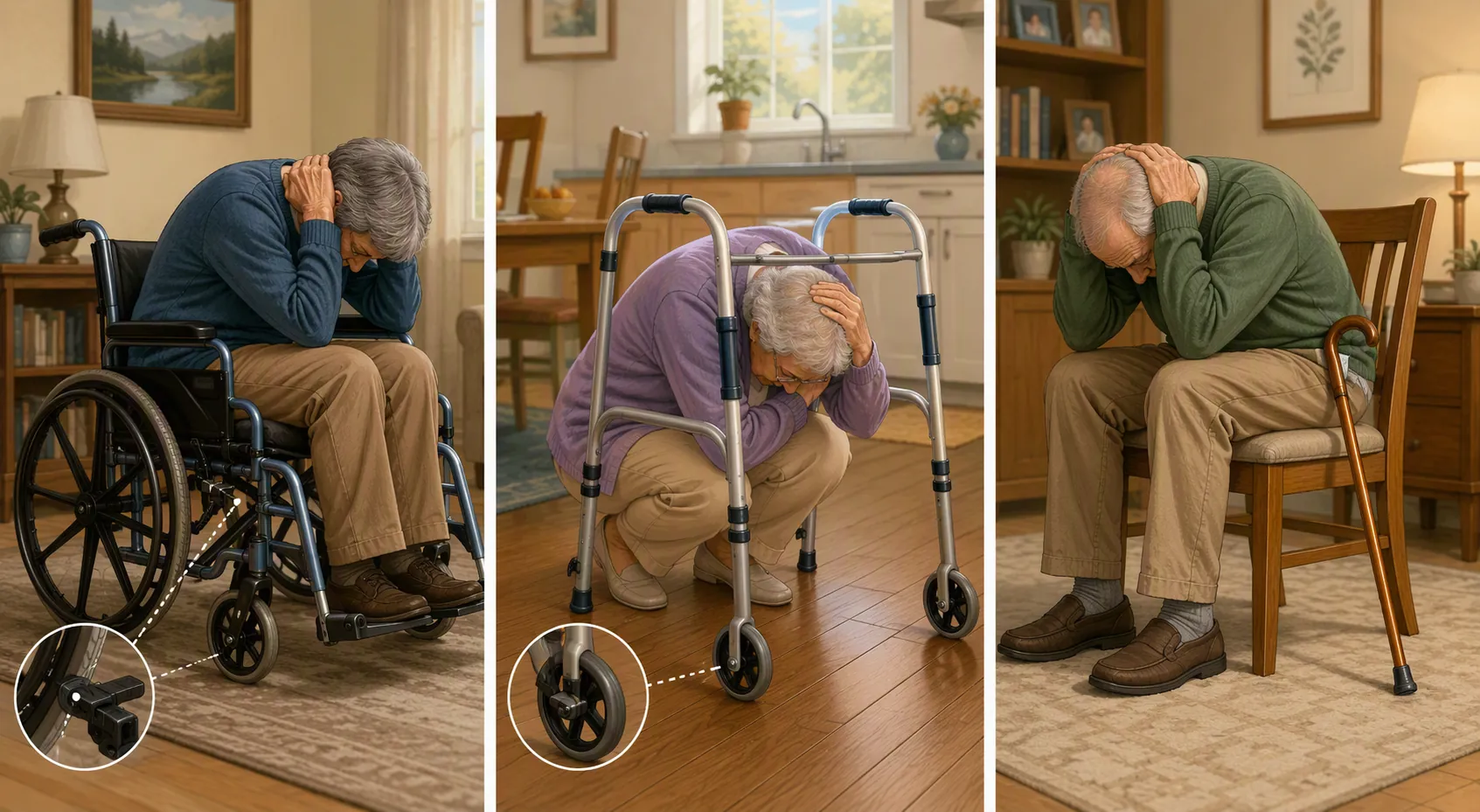
The Modified Actions, by Mobility Device
If there is only one thing to decide before an earthquake, decide what the older adult should do from the position they are most likely to be in. A wheelchair user needs a different first move than a cane user standing in the kitchen. A walker user with hand brakes has a different problem than someone sitting in a recliner with the walker parked across the room.
| Mobility situation | During shaking | Main safety goal |
|---|---|---|
| Wheelchair user | LOCK the wheels, cover the head and neck, and hold on until shaking stops. | Prevent rolling, reduce head and neck injury risk, and keep the chair usable afterward. |
| Walker user | Lock walker wheels if present, get as low as safely possible, and cover the head and neck. | Avoid a fall while lowering the body and keep the walker close. |
| Cane user | Sit on a sturdy chair or stable surface if nearby, cover the head and neck with both hands, and keep the cane within reach. | Avoid an unsafe drop to the floor and preserve safe mobility after shaking. |
Wheelchair Users: LOCK, Cover, and Hold On
For a wheelchair user, the first word matters: LOCK. Set the brakes or lock the wheels as soon as shaking begins, if it can be done without reaching into danger. Then bend forward as much as safely possible, cover the head and neck with arms, a pillow, a book, or another available object, and hold on until the shaking stops.[1][2]
The brake step is not a minor detail. A rolling chair can turn a survivable shaking episode into a collision with furniture, a wall, a doorway, or glass. Locking the wheels also helps keep the chair exactly where the person needs it after the shaking ends. For someone who cannot transfer without help, being tipped, rolled away from reach, or separated from the chair can become the next emergency.
Covering the head and neck should be treated as the active protection step, not an afterthought. If the person can lean forward without losing position, they should make the upper body smaller and shield the back of the head and neck. If leaning forward is unsafe because of balance, trunk control, pain, oxygen tubing, or another medical condition, the safer version may be staying upright, locking the chair, and using both arms or a nearby cushion to protect the head.
Caregivers should not try to pull a wheelchair user out of the chair during shaking. That move asks two people to balance while the floor is moving. It can also remove the older adult from the one device that makes evacuation, repositioning, and basic movement possible after the shaking stops.
Walker Users: Lock, Lower, Protect
For someone using a walker, the safe action begins with the device. If the walker has wheels or brakes, lock them. Then get as low as safely possible and cover the head and neck.[1] “As low as safely possible” is doing real work here. It does not mean forcing a person with weak legs, fragile balance, or joint pain into a floor position they cannot control.
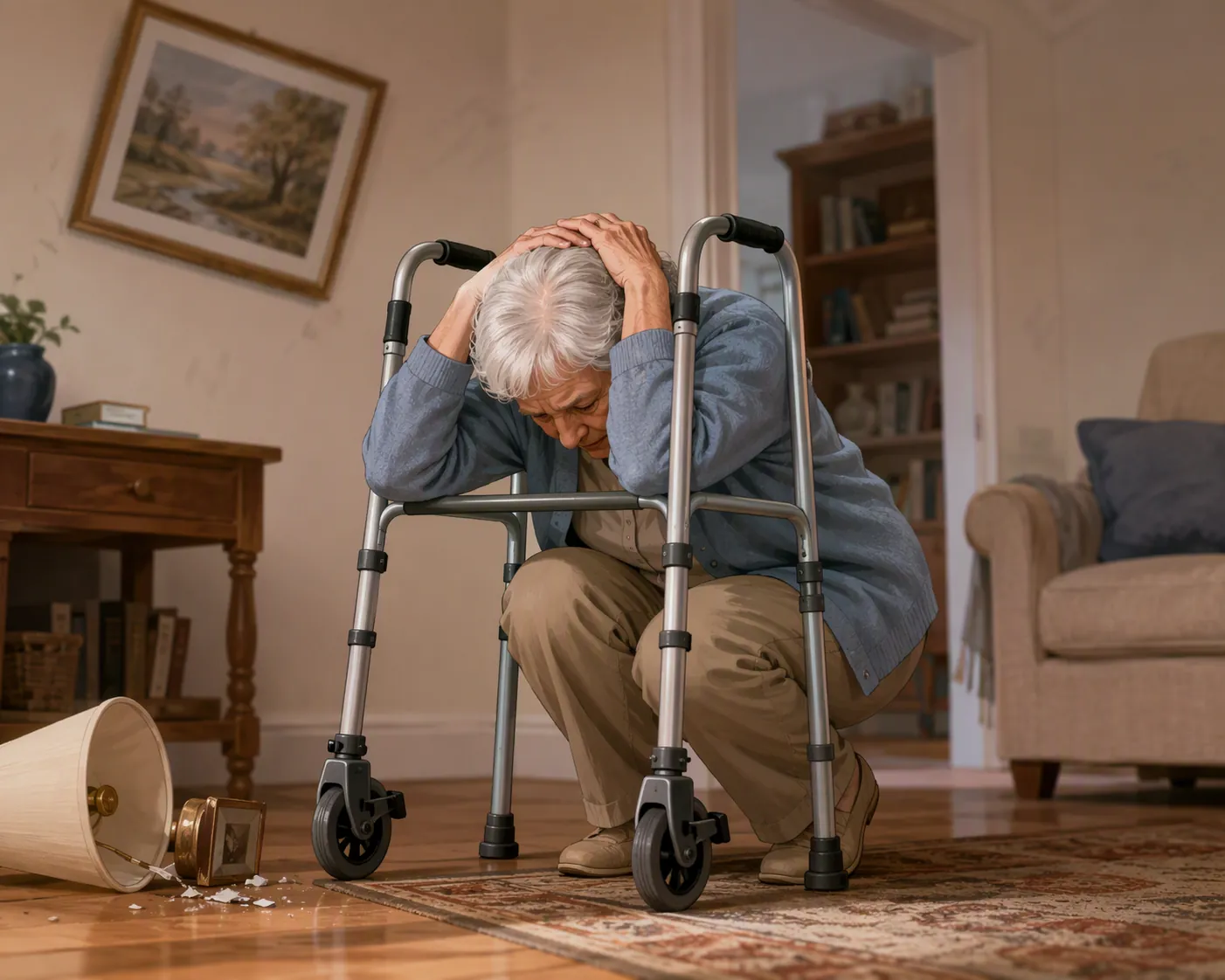
A walker user may be able to bend the knees slightly, widen the stance, brace against the locked walker, and bring the head lower than standing height. Another person may only be able to stop, hold the walker, and cover the head with one arm while keeping one hand on the device. The better choice is the one that prevents a fall during the shaking.
Do not move the walker away to “make room” unless it is creating an immediate hazard. The walker is not clutter in this moment. It is the person’s route back to safe movement. If it stays in front of them, locked and reachable, they have a better chance of staying stable during shaking and moving carefully afterward.
Cane Users: Sit Before Trying to Drop
A cane user who is standing when shaking starts should not automatically try to get to the floor. If a sturdy chair, bench, bed edge, or stable surface is within immediate reach, sitting may be safer. Once seated, cover the head and neck with both hands if possible and keep the cane close enough to reach after the shaking stops.[1]
The cane itself is easy to lose during a startled movement. If it falls under a table, slides across a hard floor, or ends up behind a chair, the person may be stranded in a room with debris, broken glass, or shifted furniture. During practice, choose a simple cane habit: when sitting for earthquake protection, place the cane against the chair leg, between the knees, or along the side where the dominant hand can find it.
If no seat is within immediate reach, the person should stay where they are, get as low as they safely can, and protect the head and neck. A controlled partial lowering is better than an ambitious drop that ends in a hip, wrist, or head injury.
Do Not Travel Across the Room for a “Better” Spot
One caregiver instinct is to move the older adult toward a doorway, bedroom, hallway, or favorite “safe place.” During shaking, that instinct can be dangerous. Earthquake Country Alliance says the greatest danger during an earthquake is from falling and flying objects, and moving more than 5 to 7 feet to reach a different place increases the chance of injury.[2]
That distance guidance changes the plan. If a sturdy table is right beside the wheelchair, walker, or chair, it may make sense to use it for cover. If it is across the room, the older adult should not be urged to cross open floor while lamps, frames, books, dishes, or furniture may be moving. The safer action is usually to protect in place.
Doorways deserve special caution. Older advice often treated doorways as safe earthquake locations. Modern guidance emphasizes Drop, Cover, and Hold On or modified versions of it, because most doorways in modern homes are not meaningfully stronger than the rest of the structure and do not protect well from falling or flying objects.[2] For an older adult with a mobility aid, getting to the doorway may be more dangerous than staying near the device and covering the head.
Caregivers can help most before the shaking, not during it, by arranging rooms so protection is already close. A stable chair near the kitchen counter, a clear space beside the bed, a walker kept within arm’s reach, and a wheelchair brake habit practiced daily are more useful than a heroic dash once the floor starts moving.
What “Cover” Should Mean in a Real Home
Cover is not limited to getting under a table. For an older adult who cannot drop, cover may mean using forearms over the head and neck, turning away from windows, lowering the face toward the lap, or pulling a cushion, folded jacket, book, lap blanket, or firm pillow over the head. The goal is to reduce injury from things falling or flying into the head, neck, face, and upper body.
This is where room setup matters. Heavy objects should not sit on high shelves above a favorite chair. Framed items over beds, unsecured lamps near recliners, and glass objects beside mobility paths can all turn a short earthquake into a head-injury risk. A broader discussion of home earthquake risk and fall prevention belongs in Why Earthquake Preparedness for Elderly in Japan Is Fall Prevention, but the during-shaking rule is simple: protect the head and neck without creating a fall.
For wheelchair users, foundational chair setup also matters outside earthquake moments: working brakes, good positioning, safe transfers, and clear indoor routes make the modified action easier to perform. Readers who need that broader home setup can continue with the wheelchair safety at home guide.
Practice the First Ten Seconds
A plan that depends on remembering six instructions during shaking is not much of a plan. Practice should focus on the first few seconds: stop, lock or stabilize the device, lower only as safely as possible, cover the head and neck, and hold position until shaking stops.
- Wheelchair user: roll to a stop, lock the wheels, bend forward if safe, cover the head and neck, and hold on.
- Walker user: stop moving, lock the walker if it has brakes, lower the body only as far as controlled, and shield the head.
- Cane user: sit on the nearest sturdy surface if it is immediately available, keep the cane reachable, and cover the head and neck.
- Caregiver: do not drag, lift, or rush the person across the room during shaking; protect yourself nearby and give short verbal cues if helpful.
The Great ShakeOut can be useful because it gives households, senior communities, and caregivers a recurring reason to rehearse. Aging & Disability Services for Seattle & King County describes the Great ShakeOut as involving more than 12.4 million participants annually and taking place every third Thursday in October.[1] The number is less important than the appointment it creates: a day to test whether the older adult can actually lock the brakes, reach a cushion, sit safely, or keep the cane from sliding away.
A rehearsal should be gentle and realistic. No one needs to be startled, timed aggressively, or asked to perform a movement that causes pain. The better test is quieter: from the normal chair, bed, dining table, or bathroom doorway, can the person name and perform the safest modified action without crossing the room?
Set Up the Room Around the Action
The modified action works best when the home does not fight it. A wheelchair brake that sticks, a walker parked out of reach, a cane leaning loosely against a round table, or a favorite chair placed under a heavy shelf all make the emergency instruction harder to carry out.
- Check whether wheelchair brakes can be reached and locked quickly from the normal seated position.
- Keep walkers and canes on the side where the older adult usually reaches, not across the room.
- Choose sturdy chairs in common rooms where a cane user can sit fast without needing to turn sharply.
- Place a cushion, small pillow, or folded blanket near favorite seating areas for head and neck cover.
- Clear the immediate floor area around beds, recliners, and mobility-device parking spots.
These setup steps are not a full disaster plan. Older adults may also need communication plans, medication access, backup power arrangements, transportation support, and help building a personal support network; Ready.gov and the Red Cross both emphasize planning around individual needs for older adults.[3][4] But during shaking, the most urgent question is narrower: can the person protect in place without losing balance or losing the device they need?
For other emergencies, evacuation planning becomes the main issue rather than staying in place. The same household may need a wildfire evacuation plan for seniors with limited mobility or a room-by-room fire evacuation plan. Earthquake shaking is different: before evacuation comes the immediate job of not falling, not being struck in the head, and not being separated from the mobility aid.
Caregiver Cues That Help During Shaking
During an earthquake, long explanations do not help. A caregiver nearby can use short cues matched to the person’s device: “Lock your brakes.” “Cover your head.” “Stay there.” “Hold the walker.” “Keep your cane.” Those cues are useful only if both people have already agreed on the action.
The caregiver should also protect themselves. If they fall while trying to move someone else, both people may be injured and neither may be able to help when the shaking stops. Staying close, giving simple verbal direction, and avoiding sudden transfers is usually safer than attempting to reposition the older adult in the middle of shaking.
After the shaking stops, the mobility aid still matters. A wheelchair should be checked before moving. A walker should be upright and reachable. A cane should be found before the person stands. Post-earthquake recovery and fear of moving after a disaster are separate challenges; readers dealing with that later stage can continue with helping elderly earthquake survivors with disabilities regain mobility.
Seniors who cannot drop still have authoritative earthquake actions they can rehearse. The safest version is chosen before the emergency: LOCK, Cover, and Hold On for wheelchair users; lock, lower, and protect for walker users; sit, cover, and keep the cane close for cane users. The instruction becomes usable when it fits the person who has to perform it.
References
- How to Drop, Cover, and Hold—Even When You Can’t. Aging & Disability Services for Seattle & King County. October 14, 2020.
- Step 5: Drop, Cover, and Hold On. Earthquake Country Alliance.
- Earthquake Safety. American Red Cross.
- Older Adults. Ready.gov.
Related reading
Noticed something outdated or inaccurate on this page? Flag a correction. We review every report against CDC, NIA, and AARP HomeFit guidance before updating a page.
Part of the Fall Prevention section.