
Clinical term
Which GLP-1 Side Effects Raise Fall Risk in Seniors
Last verified 2026-08-04
The GLP-1 weight loss drug side effects for seniors that deserve the most attention are the ones that can turn into a fall: dehydration, dizziness, blood-pressure drops, low blood sugar, and loss of strength during rapid weight loss. Nausea or a smaller appetite may sound manageable at the pharmacy counter. At home, the risk becomes more practical: your parent stands up, feels faint, skips lunch, drinks less, gets confused, or no longer has the leg strength to recover from a stumble.
This article is educational, not medical advice. If an older adult has been prescribed a GLP-1 or related incretin drug such as Ozempic, Wegovy, Mounjaro, or Zepbound, do not stop it, change the dose, or adjust diabetes or blood-pressure medication on your own. Call the prescriber when new dizziness, fainting, falls, near-falls, confusion, vomiting, diarrhea, poor intake, or unusual weakness appears—especially after a dose increase or a medication change.
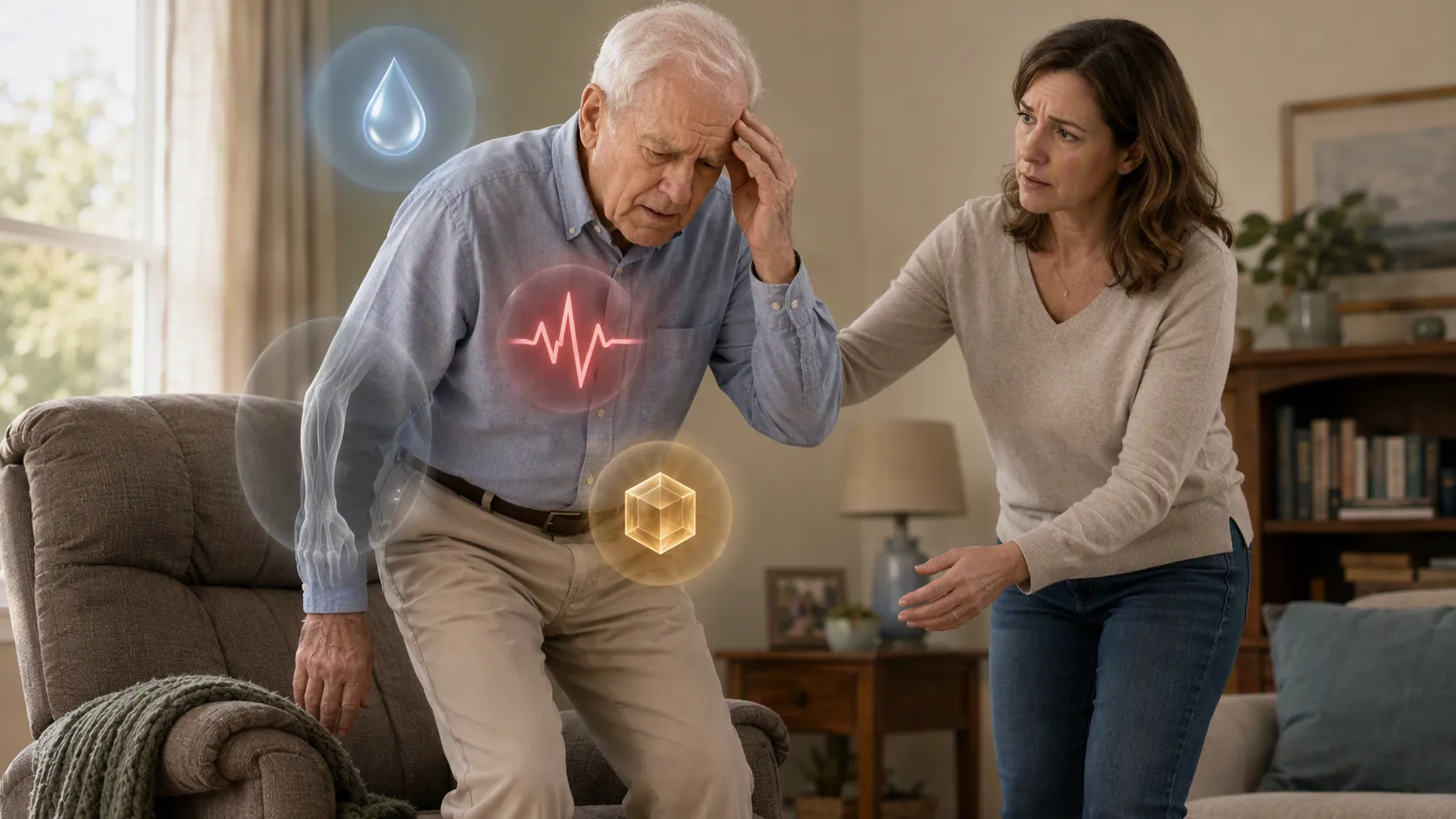
Not every senior on a GLP-1 will fall. Many older adults use these medications for legitimate diabetes or weight-related health reasons and may benefit from them. The safer question is narrower: which side effects change the body systems that keep a person upright?
A June 2026 Northwestern Medicine analysis is useful because it did not stop at vague complaints of “dizziness.” It looked at more than 42,000 adults who were already taking two or more blood-pressure medications. Within six months of starting a GLP-1, hypotensive events—including dizziness, fainting, falls, and low blood pressure—rose from 8.7% to 10.2%. Adults 65 and older were 37% of the cohort but accounted for 53% of those events.[1]
The four side-effect pathways that matter most for falls
| Pathway | What changes | What a caregiver may notice |
|---|---|---|
| Dehydration and dizziness | Less thirst, less intake, vomiting, diarrhea, or constipation-related poor eating | Dry mouth, dark urine, weakness, lightheadedness, confusion, faintness when standing |
| Blood-pressure drops | GLP-1 effects layered onto existing blood-pressure medication burden | New dizziness, near-falls, fainting, “wobbly” bathroom trips, low home blood-pressure readings if monitored |
| Hypoglycemia | Low blood sugar risk, especially with insulin or sulfonylureas | Shakiness, sweating, confusion, unusual sleepiness, poor coordination, falls |
| Muscle loss during rapid weight loss | Loss of lean mass along with fat, especially without enough protein or resistance activity | Trouble rising from a chair, slower walking, more use of furniture for support, worse balance |
When less thirst and stomach upset become a fall pathway
GLP-1 drugs can reduce appetite, but older adults and caregivers should also watch thirst. AARP’s July 2026 review notes that these drugs may blunt thirst as well as hunger, and dehydration can cause dizziness, weakness, and confusion—exactly the kind of symptoms that make a hallway, bathroom, or kitchen trip less safe.[2]
Severe nausea, vomiting, diarrhea, or constipation can push the same chain forward. Yale geriatric experts John Batsis, MD, and Alissa Chen, MD, have flagged dehydration and gastrointestinal side effects as concerns for older adults using GLP-1s, particularly because fluid loss and poor intake can lead to dizziness, fainting, and falls.[3]
The household version is often quiet. A parent says breakfast “doesn’t sound good.” The water glass stays full. They nap through lunch. By evening, they are lightheaded getting up from the recliner. That is not a moral failure or proof the medication is wrong; it is a reason to document what changed and call the prescriber if symptoms are new, persistent, or worsening.
For hydration routines, the same fall-prevention logic used during heat and diarrheal illness applies here: make fluids visible, pair drinking with existing habits, and watch standing dizziness. Caregivers who want a practical hydration frame can use the site’s heatwave fall-prevention guide or the dehydration-to-fall explanations in cyclospora symptoms and fall risk. The illness is different; the home safety problem—fluid loss plus unsteady standing—is similar.
Blood-pressure medication stacking is the pathway to take seriously
The Northwestern Medicine finding matters because many seniors do not start a GLP-1 on an empty medication list. They may already take a diuretic, beta blocker, ACE inhibitor, ARB, calcium-channel blocker, nitrate, or other medication that affects blood pressure. Add appetite loss, lower fluid intake, weight loss, and possible GI symptoms, and a previously stable blood-pressure plan may no longer feel stable in the body that has to stand up at 2 a.m.
In the Northwestern analysis, the group was already taking two or more blood-pressure medications before the GLP-1 start. Hypotensive events rose over the next six months, and older adults made up a disproportionate share of those events.[1] That does not prove that every dizzy spell after starting a GLP-1 is caused by the drug. It does make a strong case for treating new dizziness or faintness as a medication-review issue, not as something to brush off as “just getting older.”
At home, blood-pressure-related fall risk often shows up during transitions:
- standing from a recliner, bed, toilet, or dining chair;
- walking to the bathroom after a long nap;
- showering or getting dressed, especially in a warm bathroom;
- getting up after a small meal or after skipping a meal;
- moving around after vomiting, diarrhea, or several days of poor fluid intake.
The caregiver’s job is not to decide which blood-pressure medicine to reduce. The job is to notice the pattern clearly enough that the prescriber can act: “Since the dose increase, she has had three near-falls when standing after dinner,” or “His morning blood pressure has been lower and he is dizzy walking to the bathroom.” That is much more useful than a vague report that the medication “doesn’t agree with him.”
What to bring to the prescriber
- A current medication list, including prescription drugs, over-the-counter medicines, supplements, and recent dose changes.
- The GLP-1 name, dose, start date, and most recent dose increase date.
- A short log of dizziness, faintness, falls, near-falls, confusion, vomiting, diarrhea, skipped meals, and fluid intake.
- Home blood-pressure readings if the older adult already monitors blood pressure, especially readings taken around symptoms.
Low blood sugar is mainly a combination risk
For seniors with diabetes, hypoglycemia deserves special attention when a GLP-1 is combined with insulin or sulfonylureas. A 2026 meta-analysis of GLP-1 receptor agonist use in elderly people with obesity reported hypoglycemia as more common in older adults, and expert guidance for older adults also highlights the combination with insulin or sulfonylureas as a higher-risk situation.[4][5]
The fall connection is straightforward: low blood sugar can look like shakiness, sweating, confusion, weakness, sleepiness, poor coordination, or a sudden need to sit down. In an older adult, confusion may be the only clue a caregiver sees before a fall.
This is where skipped meals matter. If a GLP-1 makes food unappealing and the older adult still takes medications that lower blood sugar, the prescriber may need to know quickly. For meal-pattern support—not as a substitute for diabetes medication guidance—the site’s meal order guide for seniors and blood sugar can help caregivers think about steadier eating.
Muscle loss: the numbers vary, but the home signs are visible
Weight loss is not only fat loss. That is not a reason to panic, but it is a reason to watch strength in older adults. Healthline’s July 2026 expert discussion estimated that 25% to 40% of weight lost with GLP-1 medications may come from lean mass.[5] Endocrine News, discussing concerns raised in an Annals of Internal Medicine editorial, reported estimates of 30% to 35% of lost weight as fat-free mass, and also cited a 2024 Diabetes, Obesity & Metabolism review that put the lean-mass share across studies at 15% to 60%.[6]
Those ranges should not be mashed into one scary average. They come from different sources and study contexts. The practical point is simpler: if an older adult loses weight quickly while eating less protein and moving less, they may also lose some of the strength that protects them during a stumble.
Caregivers can see this before it becomes a fracture. Watch whether your parent needs both arms to rise from a chair, avoids stairs they used to manage, walks more slowly, leans on counters, stops carrying groceries, or says their legs feel “hollow” or “tired.” Those observations belong in the same call as the weight-loss update.
If the prescriber approves activity, strength and balance work can help protect function while weight changes. Start with safe, appropriate routines such as posture exercises for senior balance or senior workout videos for strength and balance, with medical clearance when frailty, heart disease, neuropathy, recent falls, or severe joint pain is part of the picture.
The evidence in adults over 75 is thinner than families need
Older-adult trial data help, but they do not fully answer the kitchen-table question for frail parents in their late 70s, 80s, or 90s. A 2025 pooled semaglutide safety analysis of PIONEER, SUSTAIN, and STEP trials included adults 65 and older, but noted that few participants were over 75. In those pooled trial data, nausea in older adults was roughly 16% to 39%, and older adults discontinued because of side effects at higher rates than the overall trial populations: 9.3% to 12.4% versus 5.7% to 8.7%. The analysis was funded by Novo Nordisk.[7]
That sponsor funding does not make the data useless, and the limited over-75 representation does not make the medications automatically unsafe. It does mean families should not rely on younger-adult reassurance alone. A robust 58-year-old in a trial and an 82-year-old taking multiple medications at home are not the same fall-risk situation.
A two-week home log that catches the right problems
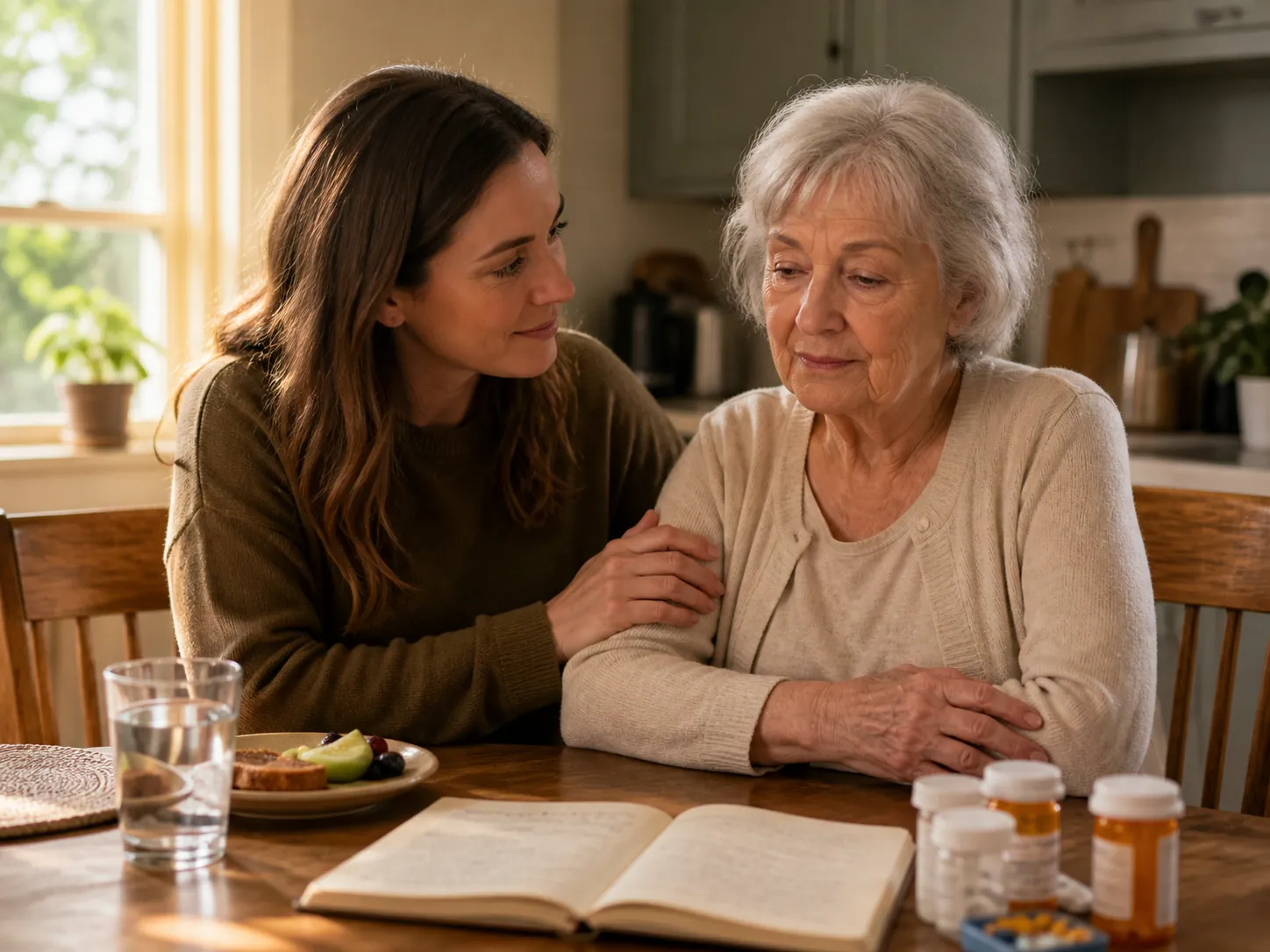
A caregiver does not need a medical chart to be useful. A two-week symptom log can show whether the problem started after the first dose, after a dose increase, after a skipped-meal pattern, or after another medication changed. It also keeps the phone call calm: fewer guesses, more observations.
| Track this | What to write down |
|---|---|
| GLP-1 schedule | Medication name, dose, injection or pill day, start date, and dose increase dates |
| Fluids | Approximate cups or bottles per day, whether urine looks darker than usual, and whether the water glass is being ignored |
| GI symptoms | Nausea, vomiting, diarrhea, constipation, abdominal pain, and whether symptoms prevent eating or drinking |
| Standing symptoms | Dizziness, faintness, wobbliness, needing to sit back down, or symptoms after standing from bed, toilet, recliner, or dining chair |
| Meals | Skipped meals, half meals, very small meals, protein intake concerns, and days when food “doesn’t sound good” |
| Blood sugar concerns | Low readings if monitored, shakiness, sweating, confusion, unusual sleepiness, or symptoms after missed meals—especially if insulin or sulfonylureas are used |
| Blood pressure concerns | Home readings if already measured, plus the time of dizziness, fainting, near-falls, or confusion |
| Weight-loss pace | Weekly weight if the prescriber wants it tracked, and whether weight is dropping faster than expected |
| Strength and balance | Trouble rising from a chair, slower walking, new furniture-walking, avoiding stairs, or new fear of falling |
| Falls and near-falls | Date, time, location, what happened just before, whether there was dizziness, and whether there was injury |
Harvard Health’s overview of GLP-1 side effects emphasizes that common digestive symptoms can usually be managed but that severe or persistent symptoms need medical attention.[8] For seniors, the threshold for calling should be lower when symptoms interfere with drinking, eating, standing, walking, or clear thinking.
Warning signs that should prompt a call
- New dizziness, faintness, or weakness after starting the GLP-1 or after a dose increase.
- A fall, near-fall, fainting episode, or “almost passed out” feeling.
- Confusion, unusual sleepiness, poor coordination, or behavior that seems suddenly off.
- Vomiting, diarrhea, constipation, or nausea that prevents normal eating or drinking.
- Skipped meals in a person who also uses insulin, sulfonylureas, or other glucose-lowering medication.
- Repeated low blood sugar readings, if the older adult monitors glucose.
- Very low or unusually low blood-pressure readings, if the older adult already checks blood pressure.
- Rapid weight loss paired with new weakness, slower walking, trouble rising from a chair, or new balance problems.
- Any new symptom that appears after another medication was added, stopped, or changed.
If the broader question is whether a GLP-1 is a reasonable medication for a specific older adult, use this article alongside the site’s general GLP-1 safety FAQ for seniors. This piece is narrower: it focuses on the side effects that change fall risk once the medication is already being considered or used.
The practical bottom line
GLP-1s are not automatically unsafe for seniors. The safety work at home is to watch the systems that keep an older adult steady: fluids, blood pressure, blood sugar, food intake, and muscle strength. When those change, the next step is not self-adjusting the medication. It is a clear call to the prescriber with the medication list and the two-week log in hand.
Last verified: August 4, 2026.
References
- GLP-1 drugs tied to elevated risk of low blood pressure episodes. Northwestern Now. June 13, 2026.
- GLP-1 Risks Older Adults Should Consider. AARP. July 30, 2026.
- What Is the Impact of GLP-1s in Older Adults with Obesity?. Yale School of Medicine.
- Safety and Efficacy of Glucagon-Like Peptide-1 Receptor Agonists Use in Elderly People With Obesity — A Meta-Analysis. Obesity. 2026.
- Expert Answers About GLP-1 Medications for Older Adults. Healthline. July 10, 2026.
- GLP-1 Agonists and Muscle Loss: A Hidden Risk for Older Adults. Endocrine News.
- Safety considerations of semaglutide in adults aged ≥ 65 years. Alzheimer’s & Dementia. 2025.
- GLP-1 diabetes and weight-loss drug side effects: Ozempic face and more. Harvard Health.
Browse more in the Glossary.