
STEADI: intervene
How to Build a Lightning Safety Checklist for Seniors
A phase-by-phase lightning safety checklist for a senior's home — alerts that work with hearing loss, a pre-chosen safe room, backup power for medical devices, and post-storm fall-risk steps. It is built so nothing has to be decided in the moment thunder arrives.
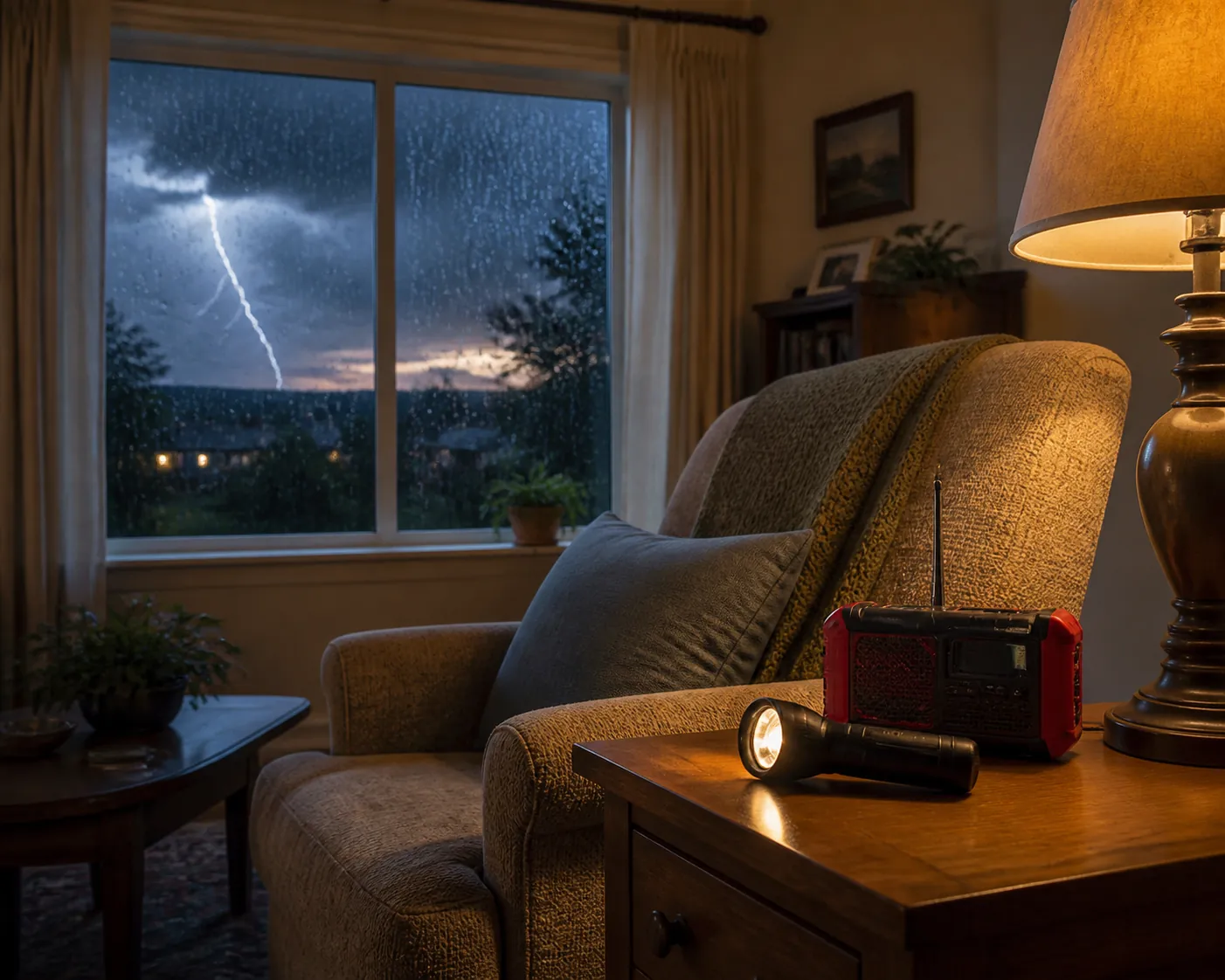
A useful lightning safety checklist for seniors is decided before thunder arrives: choose an alert the older adult can notice, select the safest reachable room, plan for electrically powered medical equipment, and establish a routine for returning safely to normal afterward. The goal is to remove decisions from the moment an alert sounds or the lights go out.
The basic rule is simple: when thunder roars, go indoors. NOAA identifies a substantial building or an enclosed metal-topped vehicle with the windows closed as safe shelter, and advises staying inside for at least 30 minutes after the last sound of thunder. [1] For an older adult, however, getting indoors is only the beginning. Hearing loss, limited mobility, memory problems, and dependence on powered equipment can turn an ordinary instruction into a series of decisions under pressure.
The Checklist at a Glance
- Before the storm: test the alert, choose and equip the safe room, charge essential devices, protect medical equipment, and place supplies within reach.
- During the storm: move indoors promptly, stay away from water, outlets, corded phones, windows, doors, porches, and concrete, and remain sheltered for 30 minutes after the last thunder.
- After the storm: restore lighting before anyone walks through the home, avoid downed lines, check power and medication questions through the appropriate professionals, and use the household's fall-response plan if someone is injured.
Before the Storm: Configure the Home
Preparation deserves the most attention because it is when the household can still test equipment, move furniture, charge batteries, and ask for help. Walk through the plan with the older adult during daylight. A checklist that cannot be followed from the bedroom, bathroom, or usual chair is not finished.
1. Set Up an Alert the Senior Can Notice
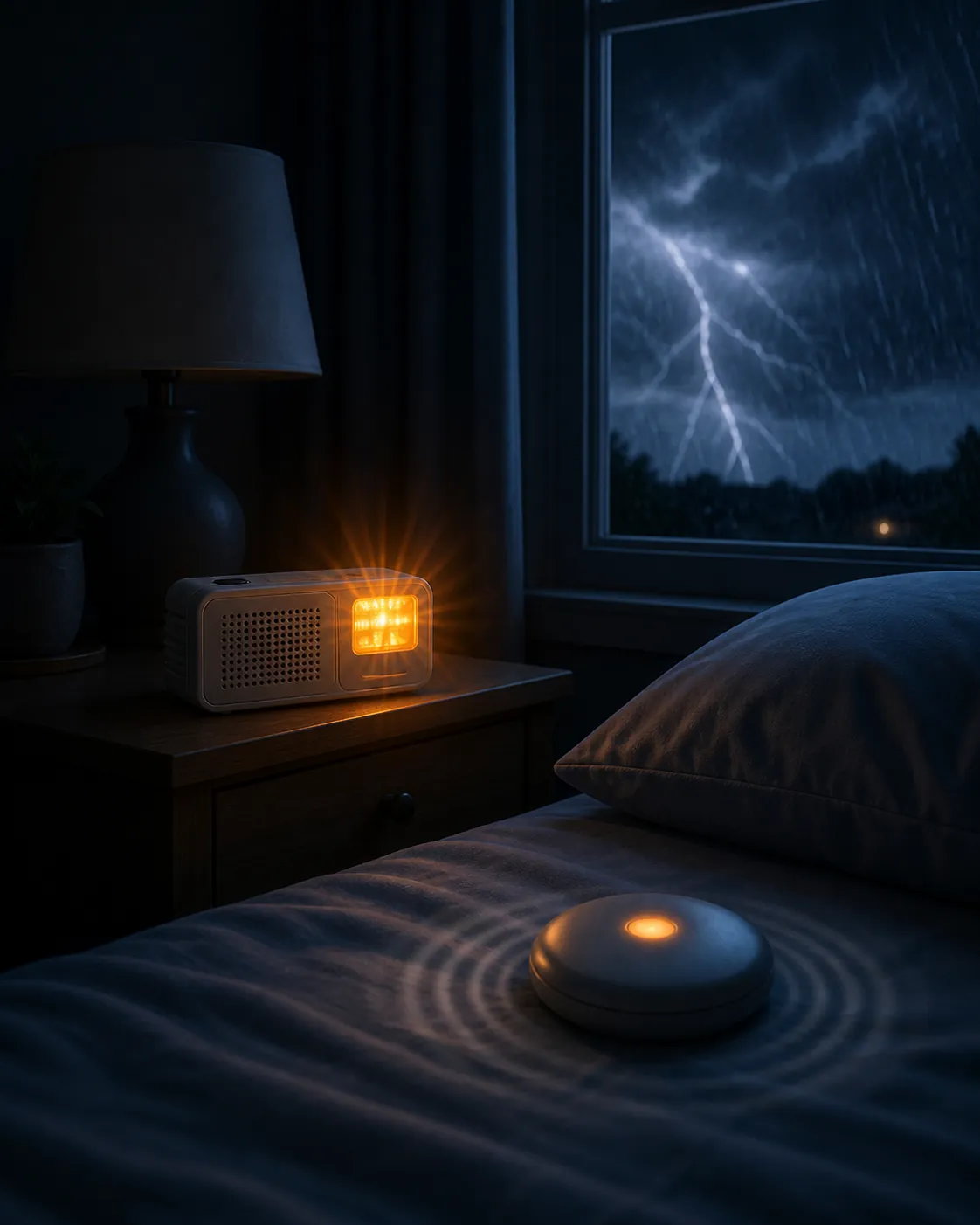
Do not assume that a siren, phone notification, or thunderclap will wake or alert the person. Test the actual path from the alert to the person who needs to respond. The alert may need to be audible, bright enough to see, connected to a bed-shaker or other vibrating device, or repeated across more than one room.
The National Weather Service notes that NOAA All-Hazards Radio models are available with visual and vibrating alarms, three-level warning lights, and text readouts for people who cannot hear thunder. Its guidance also uses the phrase “See a Flash, Dash Inside” for people with hearing loss. [4] A phone or smartwatch can be part of the alert pathway, but it should be tested with the senior in the place where they sleep and spend time. See also the guidance on fall-detection alert pathways if a wearable is already part of the household's safety plan.
- Place the alert where it can be heard, seen, or felt from the bedroom and the main living area.
- Confirm that the alert still works during a power outage, or identify its battery and charging plan.
- Make sure the senior knows what the signal means and what action follows it.
- Check the volume, light, vibration, text display, and battery on a regular schedule.
2. Choose a Safe Room That Is Safe to Reach
Select the room before the storm and practice reaching it. The best location is usually a basement or a small interior room without windows on the lowest level of a sturdy building. The American Red Cross recommends this type of shelter and advises people in mobile or manufactured homes and RVs to identify a sturdy building nearby in advance. [3]

For a senior, the theoretically strongest room may be the wrong room if it requires stairs, a narrow passage, or a dark hallway. Choose the safest location the person can reach without rushing. Keep the route clear of loose rugs, baskets, cords, and furniture. If the safe room has a door that is difficult to open, fix that problem before storm season.
- Place a flashlight or lantern where it can be reached from the bed or chair and another at the safe room.
- Keep a sturdy chair available if standing for long periods is difficult.
- Post the room name and the route in the household checklist.
- Arrange a plan for a caregiver, neighbor, or family member to check in if the senior cannot move independently.
3. Plan Power Before an Outage
Write down every device that must remain available, including oxygen concentrators, CPAP equipment, mobility-device chargers, and communication equipment. Identify how each device is powered, how long its backup lasts, and who should be contacted if power is interrupted. The senior storm guidance from Elder Love USA recommends notifying the utility about electrically powered medical equipment, keeping backup power for oxygen concentrators and CPAP machines, and storing medications in waterproof containers. [5]
Use surge protection and follow the device manufacturer's instructions for charging and backup power. A surge protector does not replace a battery backup, generator plan, or clinical advice. Generator placement, oxygen safety, and the required operating time for medical equipment need professional guidance; record the responsible utility, equipment provider, clinician, or emergency contact in the checklist.
4. Assemble Reachable Supplies
Build the storm supplies around the person who will use them, not around a generic container stored in a garage. Include water, medications, hearing-aid batteries or charging equipment, glasses, mobility aids, copies of key contacts, phone power, and flashlights. Keep the most important items on the same level as the safe room and at a height the senior can reach without bending or climbing.
For a broader three-day supply list covering medications, assistive devices, sensory backups, waterproof documents, and review timing, use the senior emergency-kit checklist.
An older adult does not need to be the typical lightning victim for these preparations to matter. CDC data records 517 lightning deaths in the United States from 2006 through 2025 and gives the average victim age as 37; the same context reports that about 90% of victims survive. [6] Those figures support a calm priority: get indoors, stay sheltered, and make the home usable during the interruption. The senior-specific work is making sure hearing, movement, cognition, and medical equipment do not undermine that priority.
During the Storm: Follow the Room Rules
When the alert sounds, flashes, vibrates, or displays, move to the selected shelter. NOAA's current guidance does not require counting the seconds between a flash and thunder; the action is to go indoors when thunder is heard and remain there for at least 30 minutes after the last thunder. [1]
- Stay away from showers, baths, sinks, dishwashing, and other contact with water.
- Avoid appliances and anything connected to an outlet, and stay off corded phones.
- Move away from windows, doors, porches, and concrete floors or walls.
- Keep the senior seated or comfortably positioned if walking is unnecessary.
- Do not leave the shelter simply because the rain has weakened; wait 30 minutes after the last thunder.
These indoor precautions come from CDC lightning safety guidance. [2] Put them on the posted checklist in language the senior will recognize, especially if a caregiver may need to act quickly.
After the Storm: Make the First Walk Safe
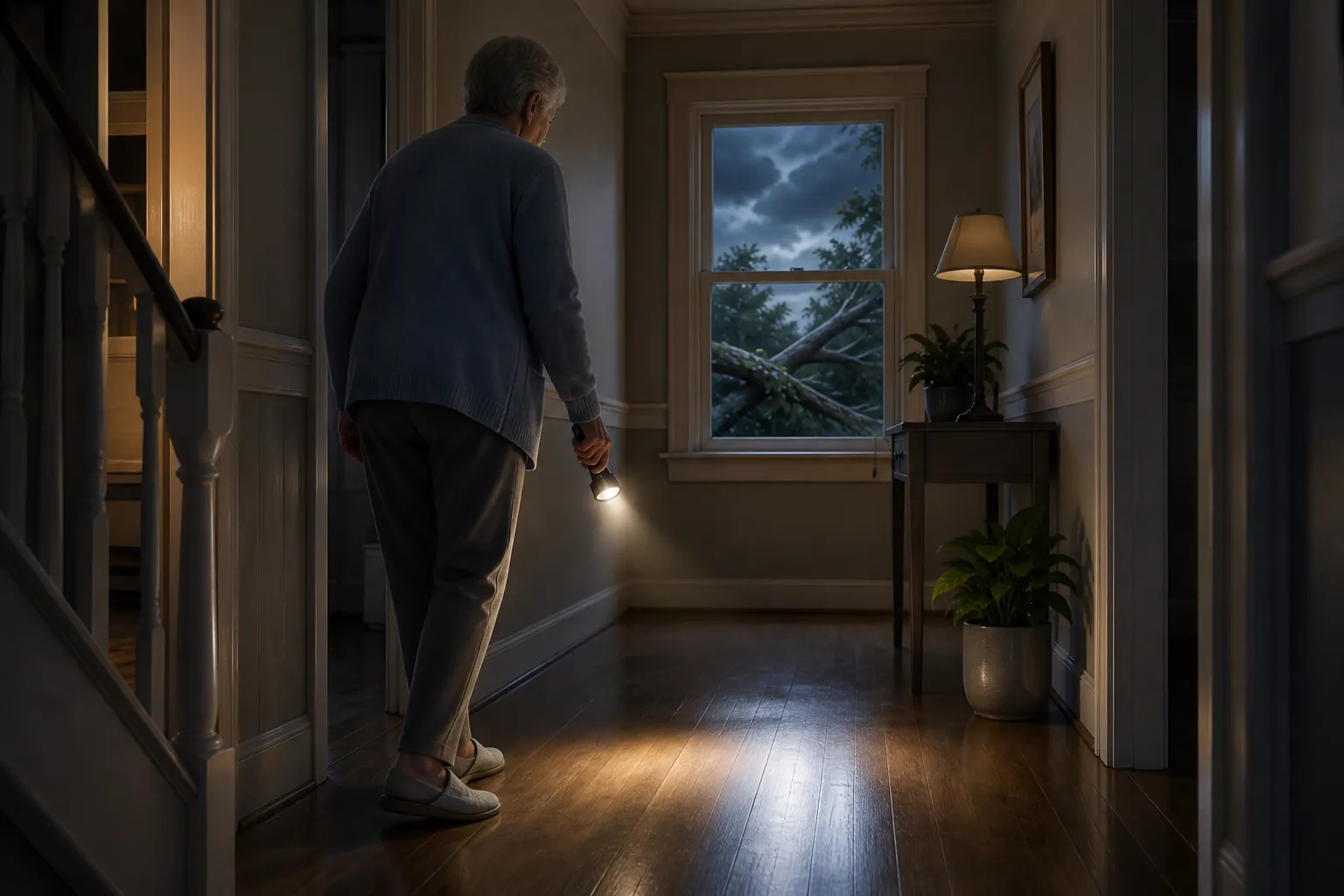
The first trip out of the safe room is often where a preparation plan proves its value. Do not send someone into a dark hallway to find a flashlight. Keep lighting within reach, turn on fixed lights only after confirming the electrical situation is safe, and use a mobility aid or ask for assistance when the route has changed.
- Use a flashlight before stepping over thresholds, around furniture, or onto wet flooring.
- Stay well away from fallen wires and anything they may have energized. Report hazards to the utility or emergency services as appropriate.
- Do not improvise instructions about refrigerated medications, oxygen equipment, or other clinical devices. Contact the pharmacist, clinician, equipment provider, utility, or emergency service that handles that question.
- If someone falls, follow the household's post-fall response plan rather than immediately pulling the person up. Continue with the relevant post-fall guidance.
Recheck the route after each significant storm. A branch, wet mat, displaced chair, or failed light can turn a familiar hallway into a different walking environment. The plan is complete when the senior and caregiver can point to the alert, the safe room, the lighting, the power instructions, and the person to call without having to work it out during the next storm.
This article provides general planning information, not medical advice. Decisions about oxygen, CPAP, refrigerated medications, generators, and other medical equipment should be confirmed with the relevant clinician, pharmacist, equipment provider, utility, or emergency service.
References
- Lightning Safety — NOAA
- Lightning Safety — CDC
- Thunderstorm Safety — American Red Cross
- NOAA Weather Radio Safety for People Who Are Deaf or Hard of Hearing — National Weather Service
- Senior Storm Safety Guide — Elder Love USA
- Lightning Data and Research and About Lightning — CDC
Related reading
Noticed something outdated or inaccurate on this page? Flag a correction. We review every report against CDC, NIA, and AARP HomeFit guidance before updating a page.
Part of the Fall Prevention section.