
STEADI: Intervene
Why Rural Poverty Raises Fall Risk — and Where Help Exists
For rural seniors in poverty, financial strain is a home-safety problem: deferred repairs, missing grab bars and lighting, and long distances to care all raise fall risk. The concrete help that exists — USDA Section 504, LIHEAP, SNAP, and Medicaid — plus low-cost hazard fixes gives families a realistic path to safer homes.
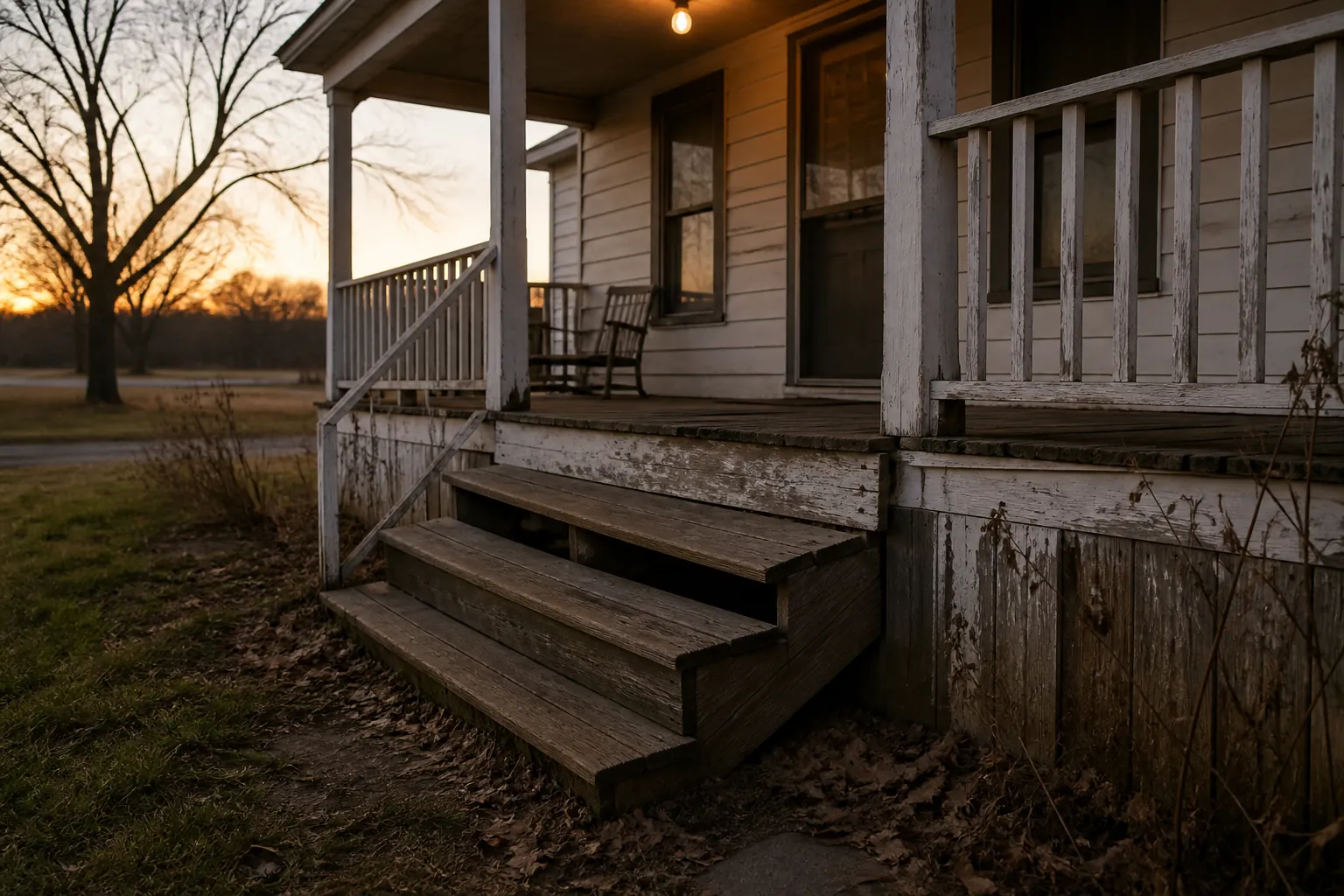
A loose porch board is not a “lifestyle risk factor.” Neither is a hallway bulb that stays burned out because the next check has to cover propane, groceries, and a prescription refill first. In many rural homes, fall risk starts this way: one repair delayed, then another, until the path from bed to bathroom or kitchen to back step has become harder to cross safely.
That is why any practical discussion of elderly poverty in rural areas — its causes and its solutions — has to get down to the floor level. Poverty raises fall risk when it leaves an older adult with weak lighting, no grab bar, unstable steps, unrepaired flooring, no easy ride to care, and too few nearby workers who can assess or fix the problem early.
Rural fall risk is not just anecdotal
The home details matter because the larger pattern is real. A review of aging in rural communities found that rural older adults have higher fall incidence and higher fall-related mortality than urban older adults.[1] Rural communities also tend to have fewer geriatricians and direct-care workers per capita, and hospital closures can push care farther from home.[2]
The poverty numbers need careful labeling. In the 2019 American Community Survey official poverty measure, poverty among people 65 and older was 10.3% in nonmetro areas and 9.3% in metro areas.[3] That is not the same measure as the Supplemental Poverty Measure, which counted older-adult poverty nationally at 14.2% in 2022 and 15% in 2024.[4][5] Those figures should not be blended into one headline number, but together they point to the same practical problem: a substantial share of older adults are making safety decisions under tight financial pressure.
Health and poverty also loop into each other. KFF found that older adults in fair or poor health had roughly double the poverty rate of those in excellent or very good health.[4] That matters for fall prevention because the person least able to afford a repair may also be the person least able to recover from a fall, drive to follow-up care, or wait months for a safer bathroom.
How poverty turns into a fall hazard at home
The money-to-safety chain is usually not dramatic. It is ordinary household triage. A family postpones the stair repair because the fuel tank is low. A bathroom stays without a grab bar because nobody nearby installs them cheaply. A rug remains curled at the edge because replacing flooring would cost far more than the family has. None of these choices means the older adult is careless. It means the house is asking for money the household does not have.
Deferred repairs create unstable walking surfaces
Older rural homes can carry years of small failures: a lifted threshold, a soft porch step, uneven outdoor concrete, torn linoleum, loose railing, or a basement stair with poor tread. Any one hazard might be manageable on a good day. Add rain, a weak hip, bifocals, a cane, or an urgent trip to the bathroom at night, and the margin disappears.
The unfair part is that the cheapest advice often assumes the biggest barrier has already been solved. “Install better lighting” sounds simple until the fixture is old, the wiring is questionable, the breaker box needs work, and the closest electrician charges for travel time. “Fix the steps” sounds obvious until lumber, labor, and transport turn a small hazard into a bill the household cannot absorb.
Missing handholds make bathrooms and entries harder
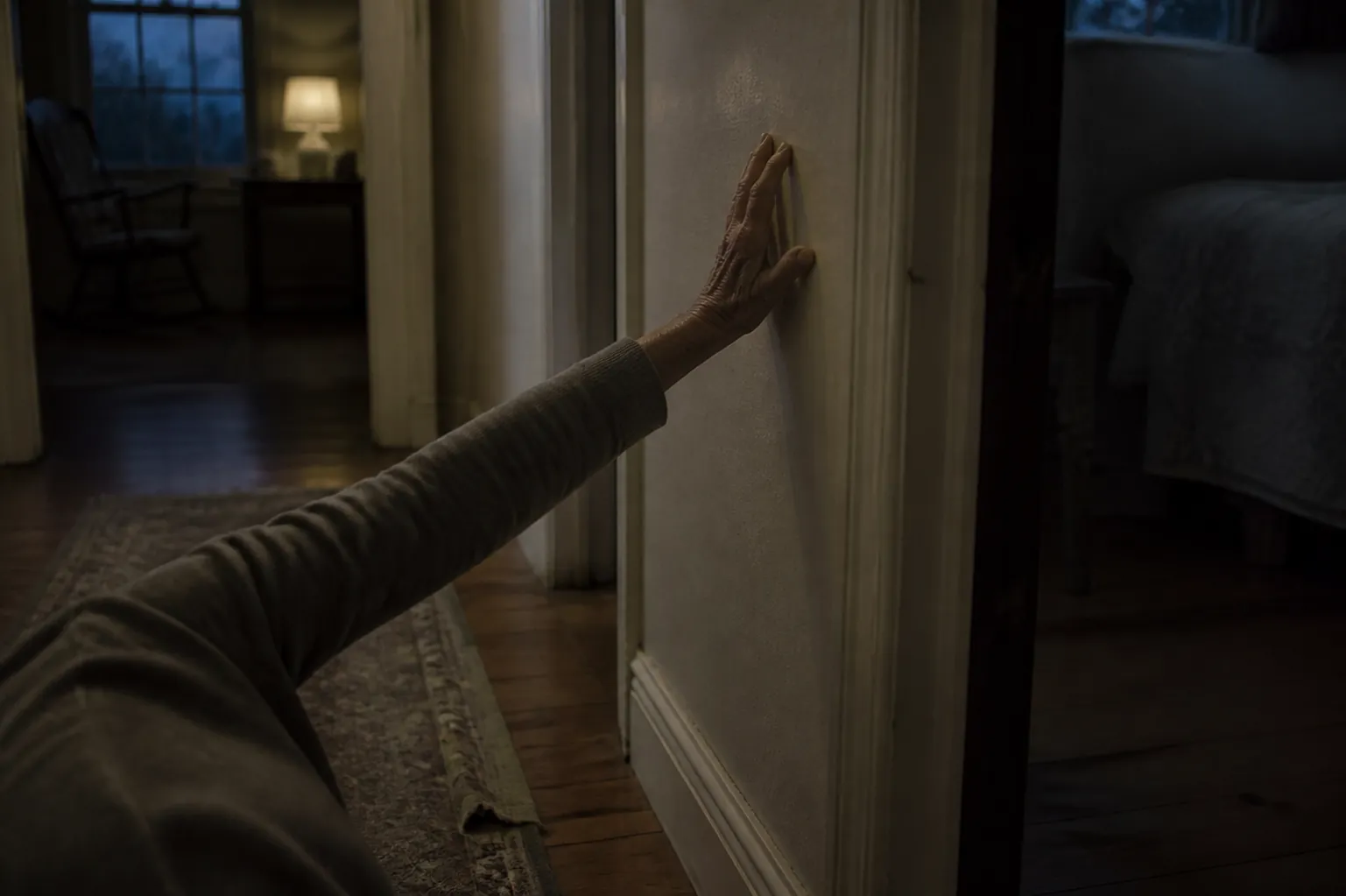
Bathrooms are unforgiving. A towel bar is not a grab bar. A shower wall without backing may not hold weight. A tub edge that was easy at age 60 can become the hardest step in the house at 82. Entryways are similar: a person may be safe indoors but at risk at the exact place where mail, groceries, mud, snow, pets, and packages meet.
Low income changes the timing. Families often wait until after a fall to pay for handrails, grab bars, better lighting, or a ramp. By then the older adult may be weaker, more afraid, and more dependent. Prevention is cheaper than injury, but prevention still costs money, tools, transportation, and someone capable of doing the work correctly.
Heat, food, and utility pressure crowd out safety spending
A fall-prevention budget does not live in a separate envelope from heat and food. If the winter utility bill rises, the grab bar waits. If the car needs tires for medical trips, the brighter hallway fixture waits. If food costs run ahead of the benefit check, the worn shoes or bath mat stay in use.
Food insecurity is part of the safety picture, not a separate moral issue. FRAC reported that rural households had 15.4% food insecurity in 2023 compared with 12.2% nationally, and that 1 in 7 rural households relies on SNAP.[6] Poor nutrition, skipped meals, and financial stress do not automatically cause a fall in a straight line, but they can leave less money and less physical reserve for keeping a home safe.
Living alone turns a small hazard into a bigger safety condition
Isolation matters because it changes who notices the hazard and who responds after trouble. The U.S. Census Bureau reported that 63% of older adults in poverty in 2021 lived alone.[7] In a rural setting, living alone can mean no one sees the dark stairwell, no one replaces the porch bulb, no one notices a new limp, and no one is present when a fall turns into hours on the floor.
For families already worried about isolation, the same logic behind loneliness and fall risk applies outside the holidays too: fewer visits can mean fewer chances to catch hazards before they become injuries.
Distance makes assessment and repair harder
In many rural places, “ask the doctor,” “get physical therapy,” or “have someone assess the home” starts with a ride. RHIhub notes that more than 90% of rural trips are by car and that rural non-drivers have few alternatives.[2] If an older adult no longer drives, or should not be driving after dark, then a fall-risk assessment becomes a transportation problem before it becomes a medical one.
The provider shortage compounds this. Fewer nearby geriatricians and direct-care workers means fewer people to spot medication side effects, strength decline, vision changes, unsafe transfers, or home hazards early.[2] A caregiver may be willing to help and still be stuck: the appointment is 65 miles away, the repair person is booked out, the county program has a waitlist, and the older adult is still walking to the bathroom tonight.
Where help may exist, and what it can realistically do
Benefits guidance in this section is informational, not legal, financial, or eligibility advice. Program rules, funding, local processing times, and state Medicaid details can change. Last verified for article purposes: August 25, 2026. A family should confirm details with the local agency before making plans around a benefit.
Still, these programs are worth naming because they connect money to safety. The point is not that every rural older adult will qualify or receive help quickly. The point is that “we cannot afford the repair” may have a next step besides waiting for an injury.
USDA Section 504: the most direct home-repair lead
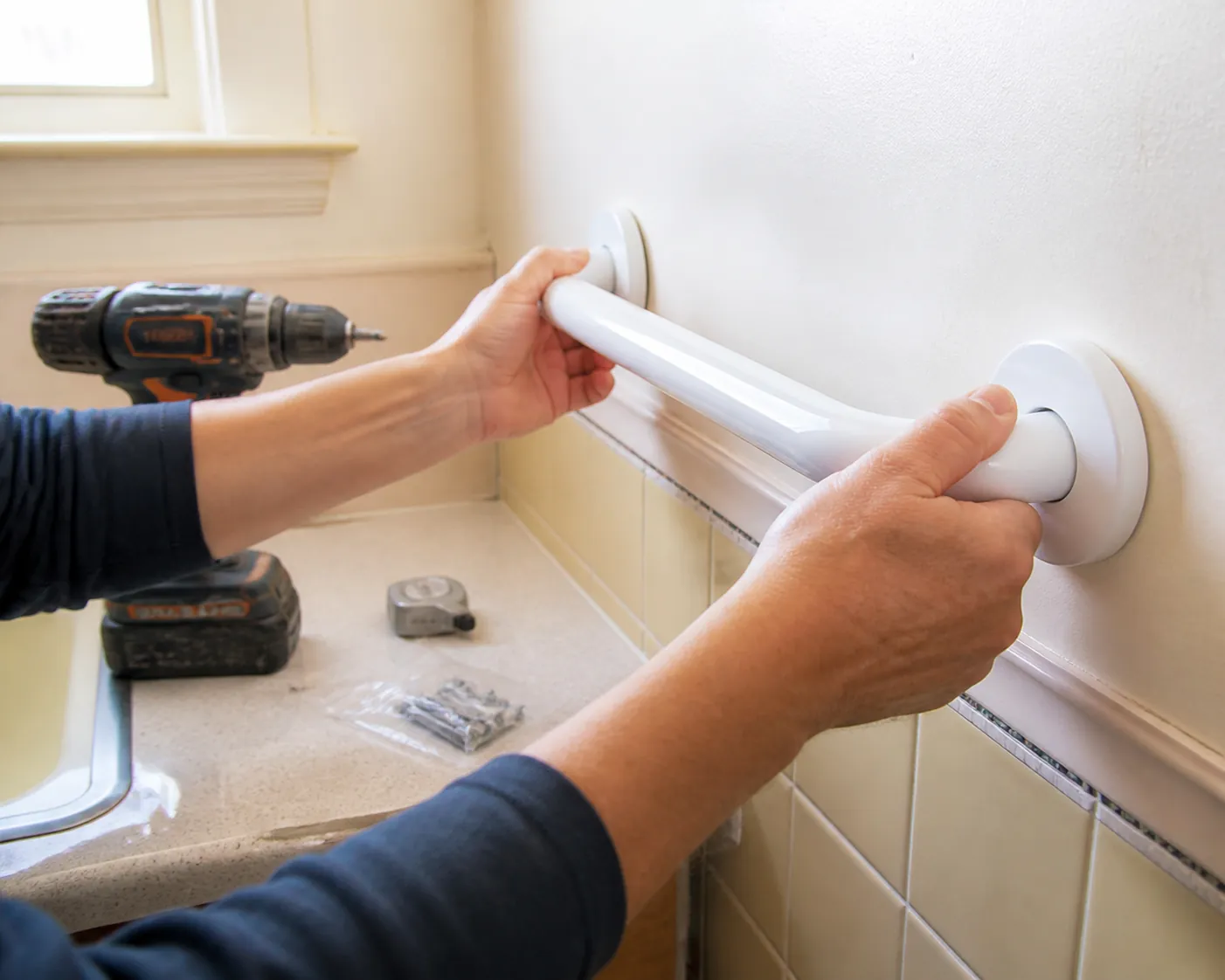
USDA Rural Development’s Section 504 Single Family Housing Repair Loans & Grants program is the clearest federal repair path to check first for many rural homeowners. The program lists grants of up to $10,000 for homeowners age 62 and older who are very low income, with the grant purpose limited to removing health and safety hazards. It also lists 1% loans of up to $40,000 over 20 years, with loans and grants combinable up to $50,000.[8]
Those numbers are helpful, but they are not a promise. The applicant must be a homeowner, the home must fit program requirements, income must qualify, the work must fit the purpose, and local funding and processing capacity matter.[8] A family looking at a failing step, unsafe bathroom, or missing handrail should still ask, because this is one of the few programs that directly speaks the language of home hazards.
SNAP, LIHEAP, and Medicaid can affect fall risk indirectly
SNAP does not install a handrail. LIHEAP does not level a porch. Medicaid does not automatically make a rural home safe. But each can change the household math that decides whether safety gets delayed again.
| Program to ask about | How it may connect to fall prevention | Practical caution |
|---|---|---|
| USDA Section 504 | May help eligible rural homeowners repair, improve, modernize, or remove health and safety hazards in the home. | Strict income, age, homeowner, purpose, funding, and local processing limits apply.[8] |
| SNAP | Can help stabilize the food budget, leaving less pressure to trade meals against home-safety purchases. | Eligibility and participation vary; older adults often face paperwork and access barriers. |
| LIHEAP | Can help with heating or cooling costs, which may free limited cash for lighting, rails, repairs, or safer footwear. | Seasonal funding, local rules, and application windows vary. |
| Medicaid | Depending on state rules and eligibility, may connect an older adult to health or long-term-services supports relevant to staying safely at home. | Coverage and home-based services differ by state; ask the local Medicaid office or Area Agency on Aging. |
| Medicare Savings Programs | May reduce certain Medicare cost burdens for eligible people, freeing money for food, heat, transportation, or safety fixes. | Many eligible older adults are not enrolled; application help may be needed. |
Participation gaps show why families should not read nonuse of benefits as stubbornness. NCOA reported that only about 38% of eligible older adults receive SNAP and that roughly 70% of eligible older Americans are not enrolled in Medicare Savings Programs; it also notes that NCOA runs about 90 Benefits Enrollment Centers across 40 states.[9] Paperwork, digital access, transportation, stigma, and confusing rules are real barriers, especially when a caregiver is trying to manage applications after work.
SNAP also has a rural-community role beyond one household. FRAC reported that every $1 of SNAP generates up to $1.80 in local economic activity.[6] For fall prevention, the household-level effect is the more immediate one: food support can keep a low-income older adult from having to choose between groceries and the small purchases that reduce daily risk.
What to do first when cash and help are limited
When a family cannot fix everything, the first task is not to make a perfect aging-in-place plan. It is to find the hazards most likely to hurt someone this week. Start where the older adult walks every day: bed to bathroom, chair to kitchen, door to mailbox or vehicle, and the steps used for laundry, wood, pets, trash, or groceries.
- Restore lighting first. Replace burned-out bulbs, add plug-in night-lights, use motion lights where outlets allow, and make sure the route to the bathroom is visible at night.
- Clear the walking path. Remove loose cords, boxes, shoes, pet bowls, stacked newspapers, and furniture that forces side-stepping.
- Deal with rugs and edges. Remove small loose rugs if possible. If a rug must stay, secure the edges and check whether a cane, walker, or slipper catches on it.
- Add stable handholds where the body already reaches for support. The bathroom, entry steps, and favorite chair area usually matter more than a rarely used room.
- Check the entry. Look for loose boards, uneven steps, missing railings, mud, ice, poor lighting, and places where groceries or mail make balance harder.
- Plan the ride before the appointment. If a fall-risk check, medication review, vision visit, or physical therapy referral is needed, identify who drives, which day is possible, and what happens if weather cancels the trip.
- Start the benefit inquiry while making the cheapest fixes. A USDA Section 504 application, SNAP screening, LIHEAP inquiry, or Medicaid question may take time; the hallway bulb cannot wait for the mail.
For a fuller room-by-room walk-through, use the rainy-day home safety checklist. Rain is a useful test because it exposes the same hazards rural caregivers often miss on a dry afternoon: slick entries, dim corners, wet footwear, cluttered paths, and weak handholds.
Weather deserves its own check in rural homes. Ice, heavy rain, power outages, smoke, heat, and long ambulance distances can turn an ordinary fall hazard into an emergency. The severe weather preparedness checklist for older adults can help families think beyond the hallway and include backup lighting, medication access, phone charging, safe heat, and evacuation planning.
A simple way to rank the fixes
If there are ten hazards and money for two, rank them by frequency and consequence. A cracked floor in a guest room matters less than the rug edge on the nightly bathroom route. A missing handrail on the front steps matters more if those steps are the only path to the car. A dark bedroom corner matters more if the older adult wakes often at night.
| Question | Why it helps prioritize |
|---|---|
| Does the older adult cross this spot every day? | Daily exposure makes even a small hazard more important. |
| Is the hazard on the bathroom, kitchen, bedroom, or entry route? | These routes are used when people are tired, rushed, carrying items, or moving in low light. |
| Would a fall here mean hard flooring, stairs, weather exposure, or a long time without help? | The likely consequence is worse. |
| Can the family reduce the risk today for little or no money? | Lighting, clutter, cords, and loose rugs are often the fastest first wins. |
| Does the repair require a qualified installer or structural work? | That is when Section 504, local aging services, church volunteers, civic groups, or county resources may need to be explored. |
There will still be gaps. Some homes need repairs larger than a family can handle. Some counties have too few contractors. Some benefits are underfunded, slow, or unavailable to renters. Some older adults will not qualify for the program that seems most relevant. Those limits are not proof that the family failed. They are part of the rural fall-risk problem itself.
The safest practical sequence is this: remove the cheapest immediate hazards, check the highest-risk rooms and entryways, ask about named assistance instead of trying to decode everything alone, and keep transportation and isolation in the safety plan. A rural older adult should not have to fall before the house finally gets treated as part of the care problem.
References
- Aging in Rural Communities — Current Epidemiology Reports.
- Rural Healthy Aging Toolkit — Rural Health Information Hub.
- Rural Poverty & Well-Being — USDA Economic Research Service.
- How Many Older Adults Live in Poverty? — KFF.
- Poverty Among Older Adults Keeps Growing — National Council on Aging.
- SNAP’s Critical Role in Rural Communities and the Consequences of Cuts — Food Research & Action Center.
- Most Older Adults Who Lived in Poverty Were Alone — U.S. Census Bureau, June 2024.
- Single Family Housing Repair Loans & Grants — USDA Rural Development.
- Lifting Barriers to SNAP: Real Stories from Older Adults — National Council on Aging.
Related reading
Noticed something outdated or inaccurate on this page? Flag a correction. We review every report against CDC, NIA, and AARP HomeFit guidance before updating a page.
Part of the Fall Prevention section.