
STEADI: intervene
How to Prepare for a Storm Power Outage Without Falling
During a power outage, the loss of light compounds age-related vision decline and turns everyday home hazards into invisible obstacles. This article explains why the first trip to the bathroom in the dark is especially dangerous and provides a 30-minute pre-storm plan to cut fall risk.
The house does not have to be messy to become dangerous when the power fails. A bedroom that was easy to cross at 8 p.m. can feel like a different room at 2 a.m., especially when the first job is ordinary and urgent: get out of bed, find slippers, reach for a cane or walker, and make it to the bathroom without turning an ankle on something that was harmless in daylight.
That is the part many storm lists do not dwell on long enough. Bottled water matters. Charged phones matter. So do medications, food safety, and backup power. But for an older adult at home during a storm outage, the first injury risk may be much closer to the bed: a curled rug edge, a cord, a doorway threshold, a pet toy, or the few seconds of reaching for a light that is not where the hand expects it to be.
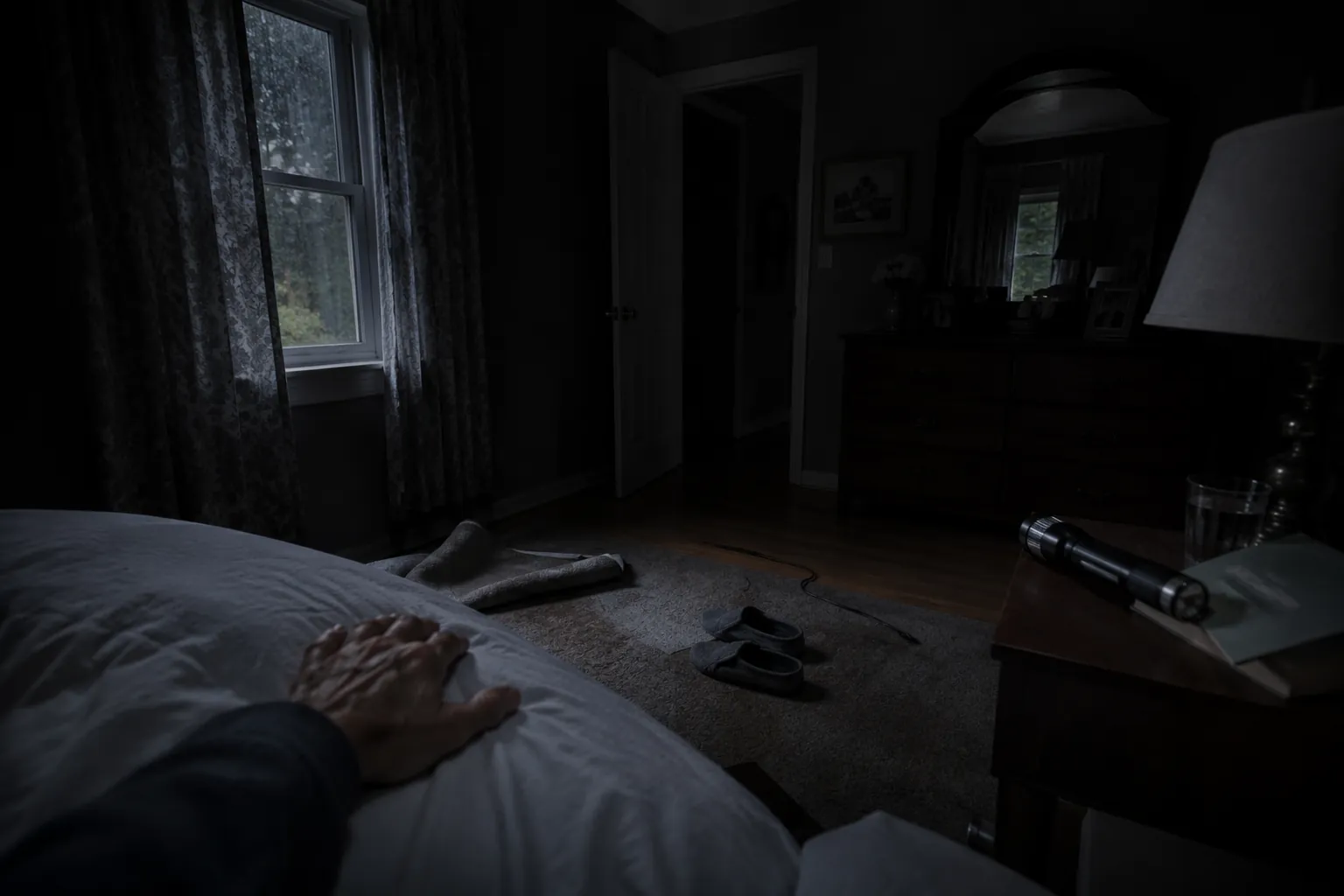
The numbers give this scene its weight. The CDC reports that about one in four older adults falls each year, and falls remain a major source of injury for adults 65 and older.[1] The CDC also notes that vision impairment doubles fall risk, and that severe vision loss combined with home hazards is associated with a three to four times higher risk of falling.[2] A power outage does not give every older adult the same medical diagnosis, but it can temporarily remove the light that makes depth, contrast, and familiar spatial cues usable.
That is why the most useful answer to how seniors can prepare for power outages during storms starts with movement, not supplies. Before the lights go out, the house has to be prepared for the body that will be moving through it in the dark.
Why darkness changes the body, not just the room
Older eyes often need more light to do the same work younger eyes do almost automatically. In a dark hallway, the edge of a rug may stop looking like an edge. A white bathroom threshold against a pale floor may flatten out. A black cane leaning against a dark dresser may disappear. The problem is not only that hazards are hidden; the body has less reliable information for judging where the floor is, how far away the doorway is, and whether the next step is clear.
Depth perception, contrast sensitivity, and orientation all get worse when the light drops. A person may still know the house perfectly and still misjudge the last step into the bathroom. Familiarity helps, but it does not make a cord visible. It does not make a glossy tile floor easier to read. It does not keep a robe belt from sliding underfoot.
The danger is sharper because storm outages often happen when people are tired. After bedtime, balance is already less forgiving. Glasses may be on the nightstand. Hearing aids may be out. The cane may be where it usually is, but the hand has to find it before the feet start moving. A few seconds of guessing can be enough.
This is not a reason to treat an older adult as helpless. It is a reason to respect the actual route they will take when nobody is standing there with a flashlight. Good storm preparation preserves independence by making that route easier before anyone has to use it under pressure.
What ordinary outage advice covers, and what it often leaves too late
General power-outage guidance from organizations such as the American Red Cross and Ready.gov properly covers food, water, flashlights, phones, medications, generators, and staying informed.[3][4] Those are not small matters. A person using powered medical equipment, refrigerated medication, or an electric lift chair needs a broader plan than a clear hallway.
Still, many outage checklists treat falls as a side issue, when falls are often the way an outage first injures an older adult. A flashlight in a kitchen drawer is useful only if the person can reach the kitchen safely. A lantern in the garage is useful only if someone can get to the garage without crossing a dark step, rug, or cluttered laundry area.
For a deeper room-by-room sweep, use A Room-by-Room Guide to Power Outage Safety for Seniors. For this article, stay with the highest-risk chain: bed, feet on floor, hand finds light, body stands, person walks to the bathroom, enters, turns, and returns.
The 30-minute pre-storm fall-prevention check
This check is meant for the window before bad weather arrives, when there is still light, patience, and enough calm to move things properly. It can be done by an older adult living alone, an adult child during a short visit, or a neighbor helping with storm checks.
| Time | Action | Why it matters in an outage |
|---|---|---|
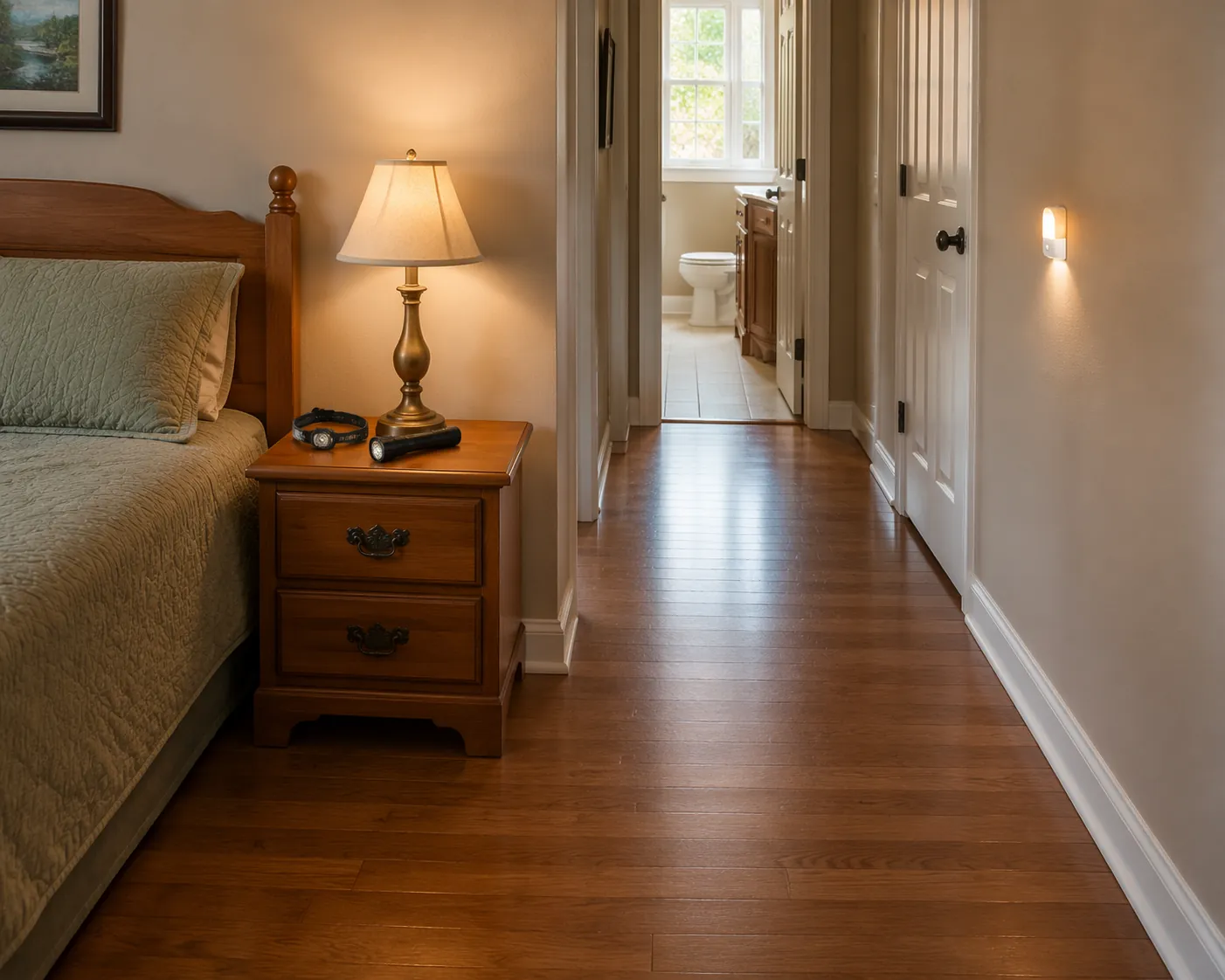
| 0-5 minutes | Place a headlamp and flashlight at the bedside | The first light must be reachable before standing |
| 5-10 minutes | Clear the bed-to-bathroom route | The most likely first trip should not depend on memory |
| 10-15 minutes | Secure or remove rugs, cords, slippers, and small objects | Low-contrast hazards become invisible when the lights fail |
| 15-20 minutes | Set battery motion lights in the hallway, bathroom, and stair landing if used | Light should turn on where the body is already moving |
| 20-25 minutes | Put flashlights in fixed, touch-friendly places | No one should have to search drawers in the dark |
| 25-30 minutes | Check hearing aid batteries, phone charge, medication needs, and utility contacts | Communication and medical routines should not unravel during the same outage |
Put the first light where the hand lands
A headlamp on the nightstand is not fancy. That is its virtue. It leaves both hands free for a cane, walker, wall rail, door frame, or sink edge. It also keeps light pointed where the person looks instead of making them carry a flashlight in one hand while trying to balance with the other.
The headlamp should be placed before the storm, not tossed into an emergency bin. Put it in the same place every time: beside the glasses, beside the phone, or in a shallow dish on the nightstand. If the person uses a cane or walker at night, the light belongs on the side they reach from bed. If batteries are separate, they are not ready. Install them now, then test the switch.
A flashlight can sit next to it, but the flashlight is the backup. The headlamp is for the first stand-up. In a storm check, this one detail deserves more attention than another case of water in the pantry, because the water can wait until morning. The bathroom trip usually cannot.
Walk the bed-to-bathroom route while the lights are still on
Start at the bed, not at the front door. Sit on the edge of the mattress and look down. Are slippers in the path or under the bed where a foot has to hunt for them? Is a charging cord crossing the floor? Does the rug edge curl where the first step lands? Is the cane leaning so it can slide away when touched?
Then walk the exact route to the bathroom. Do not inspect it like a visitor; move through it the way it will be used at night. Turn at the same corner. Reach for the same wall. Open the same bathroom door. If the door sticks, fix it or leave it partly open before the storm. A door that needs a shoulder push in daylight is worse in darkness when balance is already occupied.
Clear the path wide enough for the actual mobility aid. A walker needs more room than a person’s shoulders. A cane needs a clean place to land. Laundry baskets, footstools, plant stands, magazines, shoes, and pet dishes should be moved out of this path before the outage, not nudged aside with a toe later.
Treat rugs and cords as storm hazards
A rug that has behaved for years can still become the thing that catches a foot when contrast disappears. If a rug edge curls, remove the rug for the storm window or secure it properly. If a bathmat slides, move it until the bathroom is being used, or replace it with one that stays flat and has a non-slip backing. Do not leave a loose mat waiting in the dark because it looks tidy in daylight.
Cords deserve the same treatment. Phone chargers, oxygen tubing, extension cords, lamp cords, and fan cords should not cross the route from bed to bathroom. If a cord must stay plugged in, run it along the wall and keep it out of the walking line. Tape can help for a short-term storm setup, but it should not create a raised edge that becomes its own trip point.
Let motion lights do the quiet work
Battery-operated motion lights are worth using because they do not ask a sleepy person to remember a switch location. Put them where movement starts and turns: beside the bed if needed, in the hallway, near the bathroom doorway, inside the bathroom, and at any stair landing that might be used. Test them from the height and angle of actual walking, not by waving a hand in front of them while standing in full daylight.
The bathroom light matters as much as the hallway light. A toilet base, tub edge, scale, trash can, or bathmat can blend into the floor. Place light so it reaches the floor, not only the mirror. If the motion light is too bright and startling, move it lower or angle it away from the face while keeping the walking surface visible.
For stairs, do not rely on memory. If there is any chance the person will need to use steps during an outage, put light at the top and bottom. If steps can be avoided until daylight or until help arrives, make that the plan and say it plainly before the storm.
Give every flashlight a home
A flashlight system should be boring. One at the bedside. One in the bathroom or just outside it. One in the kitchen. One near the main exit. Each should be in an open, fixed place that can be found by touch: a tray, a hook, a basket, or the same corner of a counter. A flashlight buried in a junk drawer is not a first-use tool.
Do not assume everyone in the house knows the system. Say it out loud: “If the power goes out tonight, your headlamp is here, the hall light should come on by itself, and the bathroom flashlight is on this shelf.” That short sentence can prevent searching, rushing, and unnecessary pride battles later.
The small checks that keep a fall problem from becoming a bigger emergency
After the walking route is safer, widen the check just enough. Hearing aid batteries belong with storm safety supplies, not as an afterthought in a bedroom drawer. PowerOutage.us cites NIH/NIDCD figures that disabling hearing loss affects 22% of adults ages 65 to 74 and 55% of adults 75 and older.[5] If hearing aids stop working during a storm, a person may miss weather alerts, a phone call, a caregiver at the door, or instructions from emergency responders.
Charge the phone before the storm, but also decide where it will sit overnight. A fully charged phone across a dark room may still invite a fall. Keep it reachable from bed, with the charging cord out of the walking path. If the older adult uses a medical alert device, check its charge and whether its base station depends on household power or internet service.
Medication planning should stay calm and specific. For insulin users, the FDA says insulin products may generally be kept at room temperature between 59°F and 86°F for up to 28 days, and that insulin exposed to temperatures above 86°F should be discarded.[6] That does not replace a clinician’s instructions for a particular product, but it can reduce the panic that starts the minute a refrigerator shuts off.
Temperature deserves attention too, especially for people who are frail, live alone, or have trouble sensing heat or cold. If the home is becoming unsafe, the plan should shift from “ride it out” to calling a caregiver, local emergency management, or a designated shelter contact. For a broader look at darkness, temperature, medical devices, and communication during an outage, see What to Do During a Power Outage for an Elderly Person.
When the utility or evacuation plan matters
If someone depends on powered medical equipment, refrigerated medication, an elevator, or an electric bed or lift chair, contact the utility before storm season and ask about medical baseline, medical needs, or outage notification programs. Availability, eligibility, and any restoration priority vary by utility and location, so the safe assumption is not “they will restore us first.” The safe assumption is “we need to know the rule before the storm.”
For areas with planned shutoffs or utility-specific outage programs, a local checklist helps. Readers in PG&E territory can use Prevent Falls During a PG&E Power Shutoff for that setting. If the storm brings evacuation risk, the fall-prevention plan has to include shoes, lighting, mobility aids, medications, and the route out of the house, not just the route to the bathroom. The same principle applies: the path that will be used under stress should be cleared before stress arrives.
A quiet standard for being ready
A packed emergency kit can sit untouched in a closet while the real danger waits between the bed and the bathroom. The better storm check is more ordinary. Can the person reach light before standing? Is the cane or walker where the hand expects it? Is the floor clear where the feet will land? Will the hallway and bathroom light up without searching? Are hearing aid batteries, phone, and essential medications handled without a last-minute scramble?
Storm preparation for seniors is not complete when the supplies are packed. It is complete when the first dark walk through the house has been made safer before anyone has to take it.
References
- Facts About Falls — CDC
- About Vision Impairment and Falls Among Older Adults — CDC
- Power Outage Safety — American Red Cross
- Power Outages — Ready.gov
- Power Outage Preparedness for Seniors & Elderly — PowerOutage.us
- Information Regarding Insulin Storage and Switching Between Products in Emergency — FDA
Related reading
Noticed something outdated or inaccurate on this page? Flag a correction. We review every report against CDC, NIA, and AARP HomeFit guidance before updating a page.
Part of the Fall Prevention section.