
STEADI: intervene
Best Thermostat Temperature for Seniors by Season
Older adults need a narrower indoor temperature band than general energy guidance allows: never below 68°F in winter and at or below about 78–79°F in summer. This season-by-season reference gives caregivers and seniors exact day/night and room-by-room targets, red-flag thresholds, and a printable quick-reference card.
For most older adults, the best thermostat temperature is not one magic number. It is a narrow safe band: keep the home at or above 68°F in winter and at or below about 78–79°F in summer. If the house is drifting below 65°F or above 80°F, stop treating it like a comfort preference and start treating it like a caregiver check.
That band is tighter than the usual energy-saving advice, and it should be. Older adults may not sense temperature changes as quickly, may have medical conditions or medications that change how they respond to cold or heat, and may sit still for long stretches in one room while the thermostat is measuring another.
| Season | Best thermostat target for seniors | Do not let the home drift past | What to do |
|---|---|---|---|
| Winter | 68–70°F for occupied living space; never set heat below 68°F for an older adult’s home. | Below 65°F is a red flag. NIA warns that homes at 60–65°F can lead to hypothermia in older adults.[1] | Raise the heat, check the actual room temperature where the person sits or sleeps, add safe layers, and check for symptoms. |
| Spring / fall shoulder seasons | Use the same safety band, not the calendar: heat if occupied rooms fall below 68°F; cool or ventilate if rooms rise toward 78–79°F. | Below 65°F or above 80°F, especially overnight or in a closed room. | Use a room thermometer. Thermostat displays can miss cold bedrooms, overheated upstairs rooms, sunrooms, and shut-off rooms. |
| Summer | Keep indoor temperature at or below about 78–79°F when possible. Health Canada’s older-adult guidance sets 26°C, about 79°F, as an upper indoor temperature limit.[2] | Above 80°F is a caregiver check. Sustained heat near or above 79°F, especially overnight, deserves attention; impacts escalate above 31°C, about 88°F, in Health Canada guidance.[2] | Turn on AC, cool the hottest room, increase fluids if medically appropriate, relocate to a cooler place if the home cannot be cooled, and watch for heat illness signs. |
| Extreme heat / no AC / outage | Use the coolest safe room available; do not rely on a fan as the main plan once indoor heat is dangerous. | CDC says fans may help below 90°F, but above 90°F they will not prevent heat-related illness and may increase body temperature.[3] | Use AC, a cooling center, a neighbor or family home, or emergency services if symptoms appear or the home cannot be made safe. |
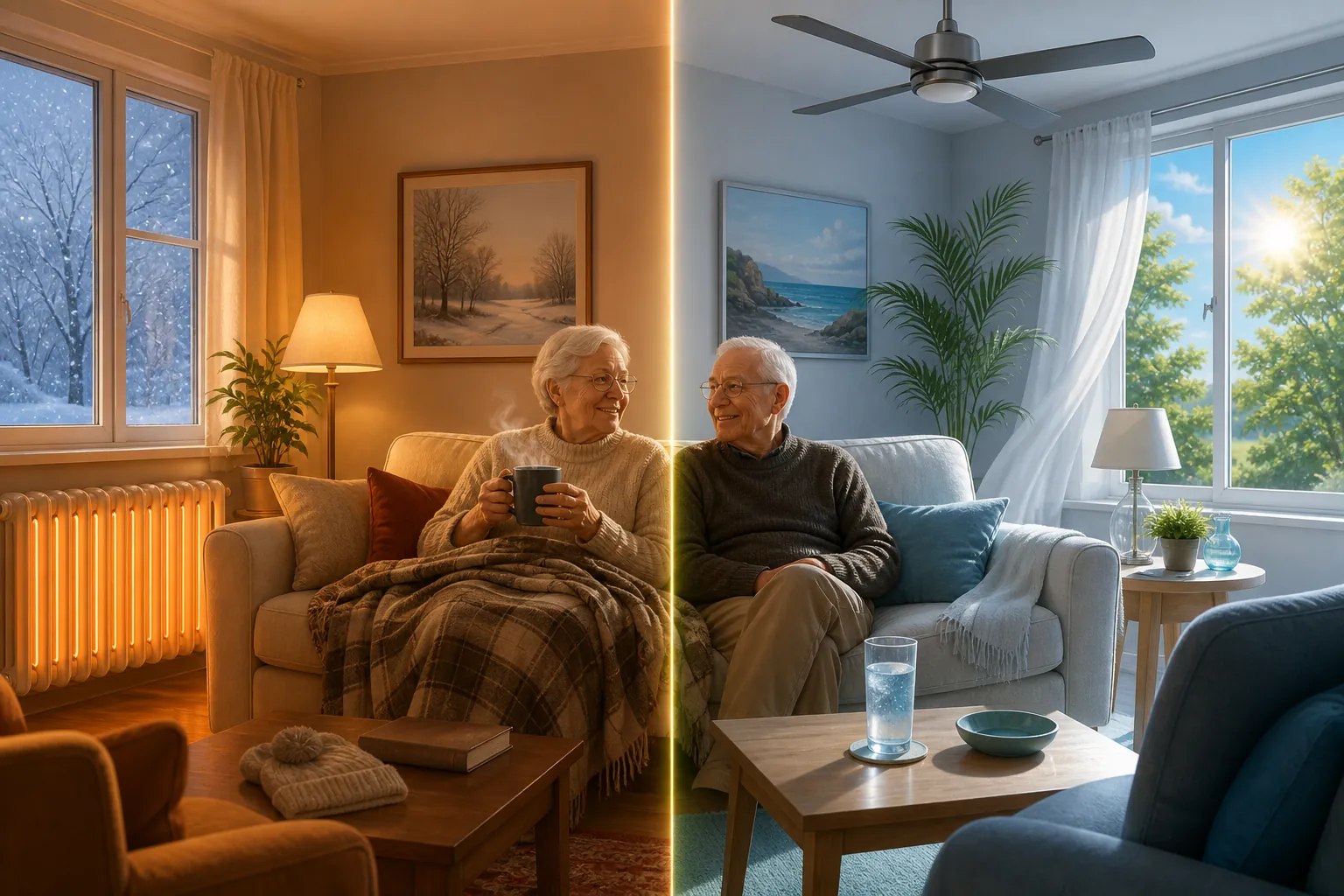
Why the safe range is narrower for older adults
The winter floor is the clearest number: 68°F. The National Institute on Aging tells older adults to set heat to at least 68°F and warns that a home kept between 60°F and 65°F can lead to hypothermia.[1] That is the number I would put on the refrigerator, not the number hidden three menus deep in a programmable thermostat.
Illinois Department of Public Health gives the same practical warning: extended exposure to indoor temperatures of 60–65°F can trigger hypothermia, and a body temperature below 95°F is a medical emergency.[4] AARP’s winter safety guidance, citing geriatrician Liron Sinvani of Northwell Health, also recommends keeping indoor temperature around 68°F or higher for older adults.[5]
The summer ceiling is less familiar in the United States because there is no single U.S. federal indoor temperature limit for older adults. The best health-specific upper limit in these materials comes from Health Canada, which advises keeping indoor temperatures no higher than 26°C, about 79°F, to protect older adults.[2] Label that correctly: it is Canadian public health guidance, not a U.S. federal rule. It is still useful because it is specific to older adults, indoor heat, and health risk.
If you have heard “68 in winter, 78 in summer,” you are not imagining it. Those numbers have circulated for years in energy-saving advice. The problem is that utility-bill guidance is not the same thing as senior safety guidance. For an older person living alone, sitting for hours, taking blood pressure medicine, recovering from illness, or sleeping in a room that runs hotter or colder than the hall thermostat, the health number gets priority.
The national data is grim enough to justify being bossy about this. CDC analyses found that about 39% of U.S. heat-related deaths during 2004–2018 were among people age 65 and older, and that 49% of hypothermia deaths during 1979–1998 were among people age 65 and older.[6][7] Those figures do not tell you what to set your parent’s thermostat to tonight. They do explain why “they said they feel fine” is not a temperature plan.
Day, night, and room-by-room thermostat settings
Start with the thermostat, then verify the rooms. A hallway thermostat can say 70°F while the bedroom is 64°F, the bathroom tile feels like an ice pack, or the upstairs sitting room is baking in afternoon sun. Put a simple room thermometer where the older adult actually spends time: favorite chair, bedside table, bathroom counter, and any room that always seems “a little off.”
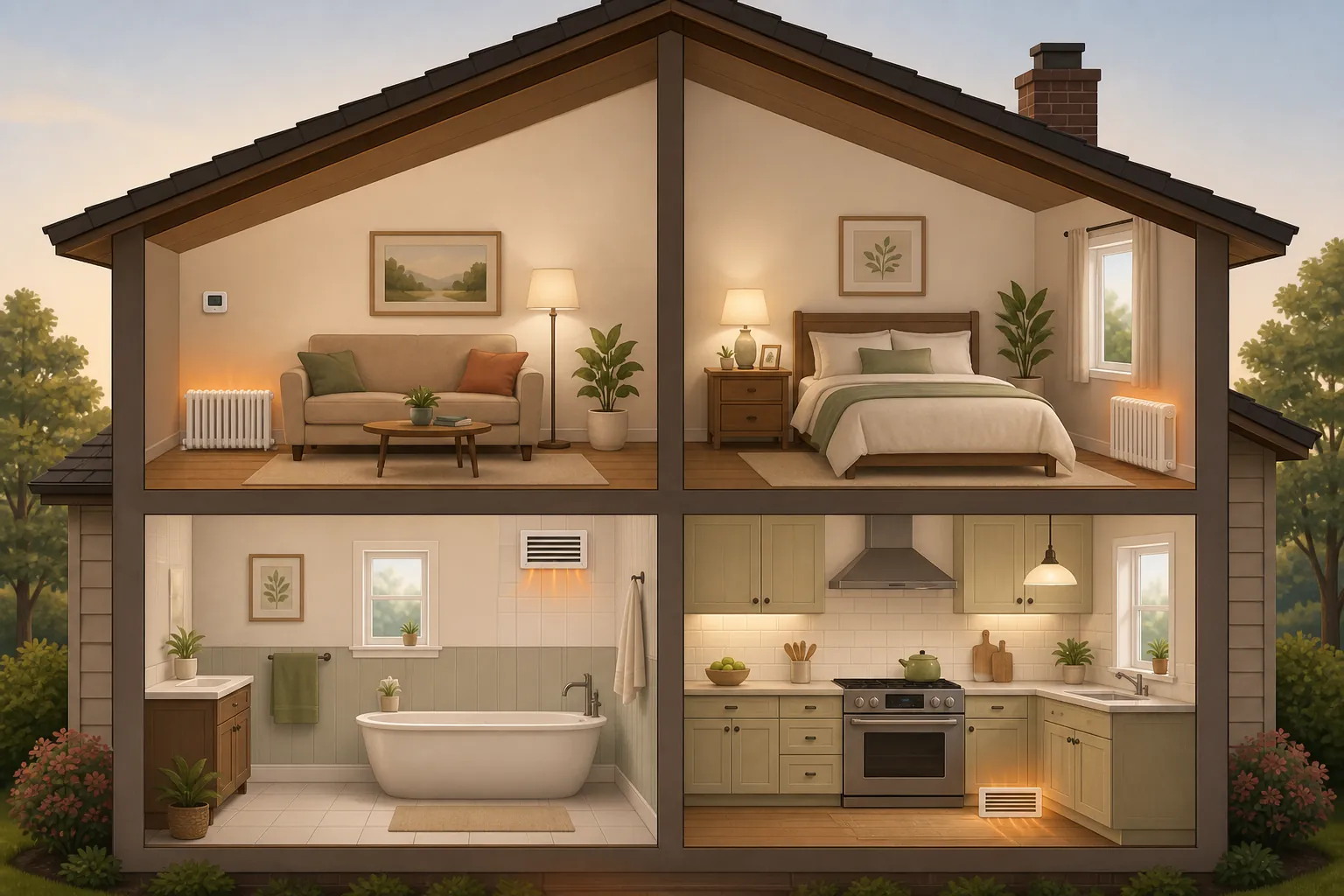
| Place or time | Winter target | Summer target | Caregiver notes |
|---|---|---|---|
| Main living area | 68–70°F while occupied; higher if the person is chilled, inactive, frail, or medically vulnerable. | At or below about 78–79°F when possible. | This is the room to measure first if the person spends most of the day in a recliner, wheelchair, or reading chair. |
| Bedroom overnight | Do not let the bedroom fall below 68°F for an older adult unless their clinician has given different instructions. | Aim to keep the bedroom within the safe summer band. A Hebrew SeniorLife/Harvard study found older adults’ sleep efficiency was best between 68°F and 77°F, with a 5–10% drop as temperatures rose from 77°F to 86°F.[8] | Use this sleep-specific range for the bedroom at night, not as a whole-house daytime rule. |
| Bathroom | Warm before bathing; avoid a cold bathroom below the household winter floor. | Keep ventilated and not steamy-hot after bathing. | Bathing combines wet skin, standing, transfers, and temperature shock. Warm the room first, then keep the path dry. |
| Kitchen | Keep within the winter safe band, but watch for cold floors and drafts. | Cooking can push the room above the rest of the house; check it during stove or oven use. | If the kitchen runs hot, shorten cooking sessions during heat waves and move meal prep earlier in the day. |
| Rooms that run cold | Measure directly. If the room is below 68°F while occupied, the thermostat setting is not doing its job. | Usually less of a summer concern unless the room is closed off from AC airflow. | Common culprits: closed vents, poor insulation, windows, exterior walls, basements, and rooms over garages. |
| Rooms that run hot | May still need winter checks if doors are closed and airflow is poor. | Treat 80°F and rising as a check-in threshold; do not wait for the central thermostat to catch up. | Common culprits: upstairs bedrooms, west-facing rooms, sunrooms, closed curtains, old windows, and poor AC distribution. |
For the bedroom row above, the detailed night-air-conditioning discussion belongs in what temperature seniors should use for AC at night. The short version here is enough: do not borrow a sleep-study number and turn it into permission to keep the whole house warmer all day.
Season changes: when to switch the thermostat plan
Spring and fall are where families get sloppy because the weather looks harmless. The thermostat may be off, windows may be cracked, and nobody wants to “turn the heat back on” for one cold night. For an older adult’s home, the rule is not emotional. If occupied rooms fall below 68°F, use heat. If occupied rooms rise toward 78–79°F and stay there, use cooling, ventilation, shades, or a cooler location.
- Use winter rules whenever the room where the older adult sits or sleeps is below 68°F, even if the daytime high looks mild.
- Use summer rules whenever the room is approaching 78–79°F and the person cannot cool it down reliably.
- Check actual room temperature after sunset, before bed, and in the hottest part of the afternoon.
- Do not trust one hallway thermostat in a home with closed doors, upstairs bedrooms, old windows, sun exposure, or uneven HVAC.
If the house needs broader cold-weather preparation—walkways, lighting, footwear, backup heat, and fall hazards—use the winter safety checklist for seniors at home. If summer heat is the problem room by room, the more detailed fixes belong in the extreme heat safety guide for seniors.
Red flags: when temperature stops being a household argument
A cold or hot house is not automatically an emergency. Symptoms plus unsafe indoor temperature are different. If the person seems confused, unusually sleepy, weak, dizzy, clumsy, nauseated, or not like themselves, take the temperature problem seriously and get medical advice promptly.
| Situation | Red-flag threshold | Action |
|---|---|---|
| Cold indoor temperature | Room below 65°F, especially if exposure has lasted hours or overnight. | Raise heat, move the person to a warmer room, add dry layers and blankets, offer warm drinks if safe, and call for medical advice if symptoms appear. |
| Possible hypothermia | Body temperature below 95°F is an emergency.[4] | Call emergency services. Do not wait for the person to “warm up a little” first. |
| Hot indoor temperature | Room above 80°F, especially if humidity is high, the person is alone, AC is out, or the room will stay hot overnight. | Cool the room, move the person to air conditioning, encourage fluids if medically appropriate, and check again soon. |
| Fan-only cooling | Fan use becomes unsafe as the main strategy once indoor heat is very high. CDC warns fans do not prevent heat illness above 90°F and may raise body temperature.[3] | Use AC, a cooling center, a cooler family home, or emergency help if symptoms are present. |
| Possible heat stroke | Body temperature of 104°F is a medical emergency threshold for heat stroke in CDC heat guidance.[3] | Call emergency services and begin cooling while help is on the way. |
| Power outage during cold or heat | Any outage that makes the home drift below the winter floor or above the summer ceiling. | Use the backup plan immediately, not after the house has already become unsafe. |
Power outages deserve their own plan because the safe band can disappear fast. If the older adult depends on electric heat, central AC, oxygen equipment, refrigerated medication, stair lifts, or powered medical devices, read why power outages are dangerous for older adults before the next storm warning. For people living alone, pair the thermostat card below with a broader severe-weather checklist for seniors living alone.
Printable one-page thermostat card for a senior’s home
Print this, write the caregiver phone numbers on it, and put it near the thermostat or refrigerator. If a number lives in a home, it should tell someone what to do.
| Thermostat safety card | Number to remember | Action |
|---|---|---|
| Winter minimum | Never below 68°F | Turn heat on or up. Check the actual room where the older adult sits and sleeps. |
| Winter usual target | 68–70°F | Use the higher end if the person is frail, chilled, inactive, sick, or sitting still for long periods. |
| Winter red flag | Below 65°F | Do a caregiver check. Warm the room and watch for confusion, sleepiness, shivering, clumsiness, or unusual behavior. |
| Hypothermia emergency | Body temperature below 95°F | Call emergency services. |
| Summer target | At or below about 78–79°F | Use AC, shades, airflow, cooler rooms, or relocation if the home cannot stay in range. |
| Summer red flag | Above 80°F | Check the person, the room thermometer, hydration, medications, AC function, and whether the room will cool overnight. |
| Fan warning | Do not rely on fans above 90°F | Use air conditioning or move to a cooler place. |
| Heat stroke emergency | Body temperature of 104°F or heat-stroke symptoms | Call emergency services. |
| Shoulder seasons | Below 68°F: heat rules. Near 78–79°F: cooling rules. | Do not wait for the calendar to declare winter or summer. |
| Caregiver check times | Morning, late afternoon, bedtime, and during outages | Check the room thermometer, not only the thermostat display. |
A few adjustments that are worth the utility cost
Yes, heating and cooling cost money. Poor insulation, old windows, fixed incomes, and inefficient equipment are real problems. But the safe-temperature decision comes first; the cost-control work comes after. Seal drafts, use curtains and shades, service HVAC equipment, close off unsafe hot spots or cold spots only if doing so does not make another occupied room worse, and ask local aging or utility assistance programs about help when bills make safe temperatures hard to maintain.
The goal is not to win an argument with the thermostat. It is to keep an older adult inside a narrow indoor band that the body can tolerate: at least 68°F in winter, about 78–79°F or cooler in summer, and immediate help when symptoms, unsafe temperatures, outages, or emergency body-temperature thresholds appear.
Home-safety education note: This article provides general home-safety information, not personalized medical advice. Older adults with heart disease, lung disease, diabetes, dementia, mobility limitations, dehydration risk, medication changes, or recent illness may need individualized guidance from their clinician.
References
- Cold Weather Safety for Older Adults, National Institute on Aging, https://www.nia.nih.gov/health/safety/cold-weather-safety-older-adults
- Guidance on upper indoor temperature limits to protect older adults, Health Canada, https://www.canada.ca/en/health-canada/services/publications/healthy-living/guidance-upper-indoor-temperature-limits-protecting-older-adults.html
- About Heat and Your Health, CDC, https://www.cdc.gov/heat-health/about/index.html
- Cold Weather Health and Safety, Illinois Department of Public Health, https://dph.illinois.gov/topics-services/prevention-wellness/cold-weather-health-and-safety.html
- The Dangers of Extreme Cold Weather, AARP, https://www.aarp.org/health/conditions-treatments/extreme-cold-weather-dangers/
- Heat-Related Deaths — United States, 2004–2018, CDC MMWR, https://www.cdc.gov/mmwr/volumes/69/wr/mm6924a1.htm
- Hypothermia-Related Deaths — United States, 1979–1998, CDC MMWR, https://www.cdc.gov/mmwr/preview/mmwrhtml/mm5004a1.htm
- Optimal Sleep Temperature for Seniors is Between 68–77 Degrees Fahrenheit, Study Reveals, Hebrew SeniorLife, https://www.hebrewseniorlife.org/news/optimal-sleep-temperature-seniors-between-68-77-degrees-fahrenheit-study-reveals
Related reading
Noticed something outdated or inaccurate on this page? Flag a correction. We review every report against CDC, NIA, and AARP HomeFit guidance before updating a page.
Part of the Fall Prevention section.