
STEADI: intervene
Why Power Outages Are Dangerous for Older Adults
A power outage is a multi-pathway health event for older adults, not an inconvenience — national data link outages to measurable increases in hospitalizations. This guide breaks down the six danger pathways and the evidence-based preparation steps that reduce each risk.
Medically reviewed by a geriatric RN/OT/CAPS reviewer. This article is for general information, not medical advice.
For adults 65 and older, a blackout is a health event. In McBrien et al.'s 2026 analysis of Medicare beneficiaries, outages lasting eight hours or more were associated with about 2.0% higher cardiovascular hospitalization rates the next day and about 2.5% higher respiratory hospitalization rates the same day; larger outages were associated with still higher rates, and the authors estimated 4,246 excess hospitalizations in 2018 among Medicare Fee-For-Service beneficiaries if the observed associations are causal. [1]
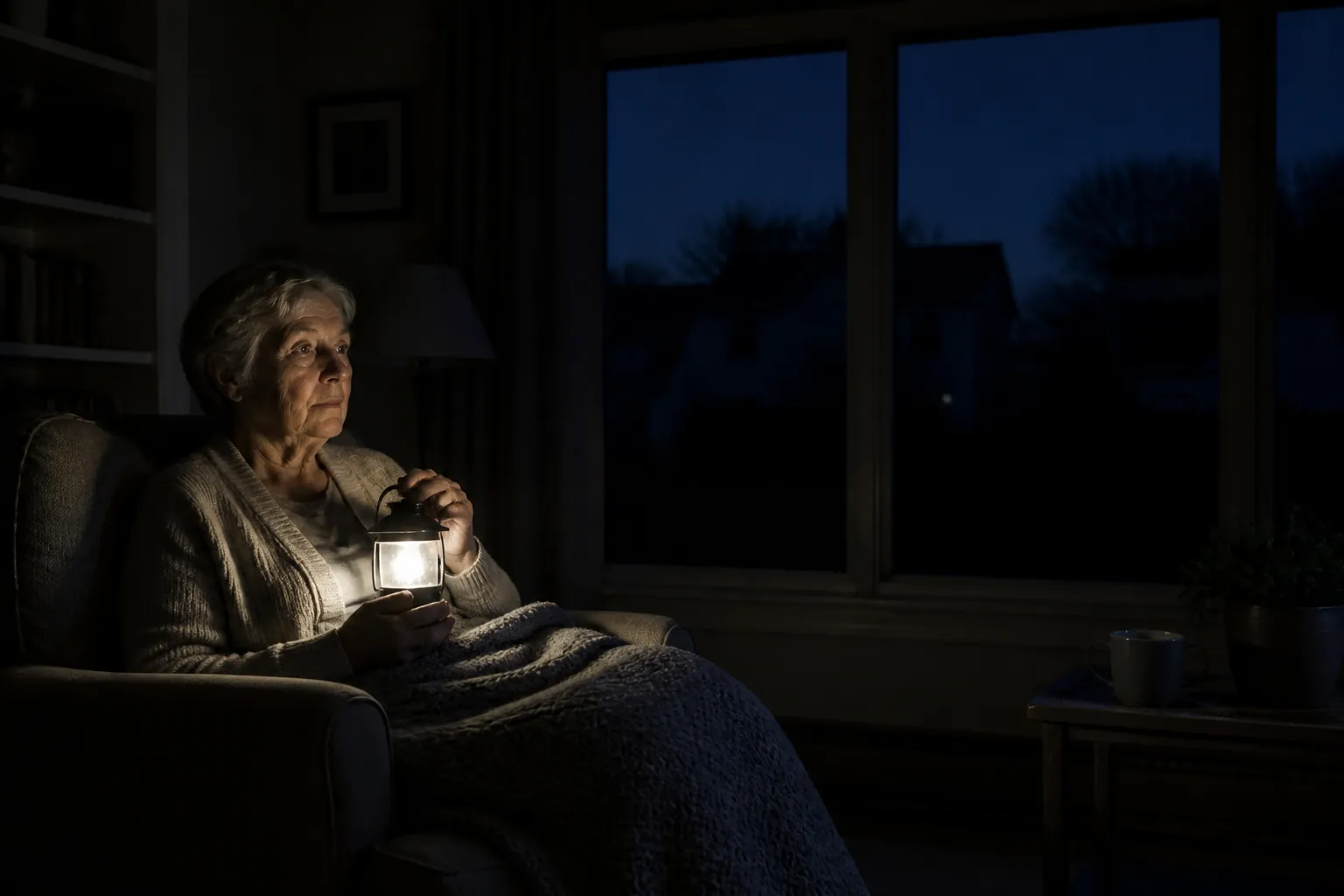
That fits the larger pattern. A 2020 review summarized earlier studies showing a tenfold increase in major U.S. outages from 1984 to 2012, a 122% rise in accidental deaths after the 2003 New York City blackout, about 23% of COPD hospitalizations on New York City outage days attributed to the outage, and a 114% increase in Beth Israel emergency-department use among patients 80+ after Hurricane Sandy versus an 11% decline among ages 18–64. [2]
The six pathways that make outages dangerous
The harm reaches older adults through six pathways. The first two are usually the most immediate in the home: temperature control and electricity-dependent care.
Temperature extremes
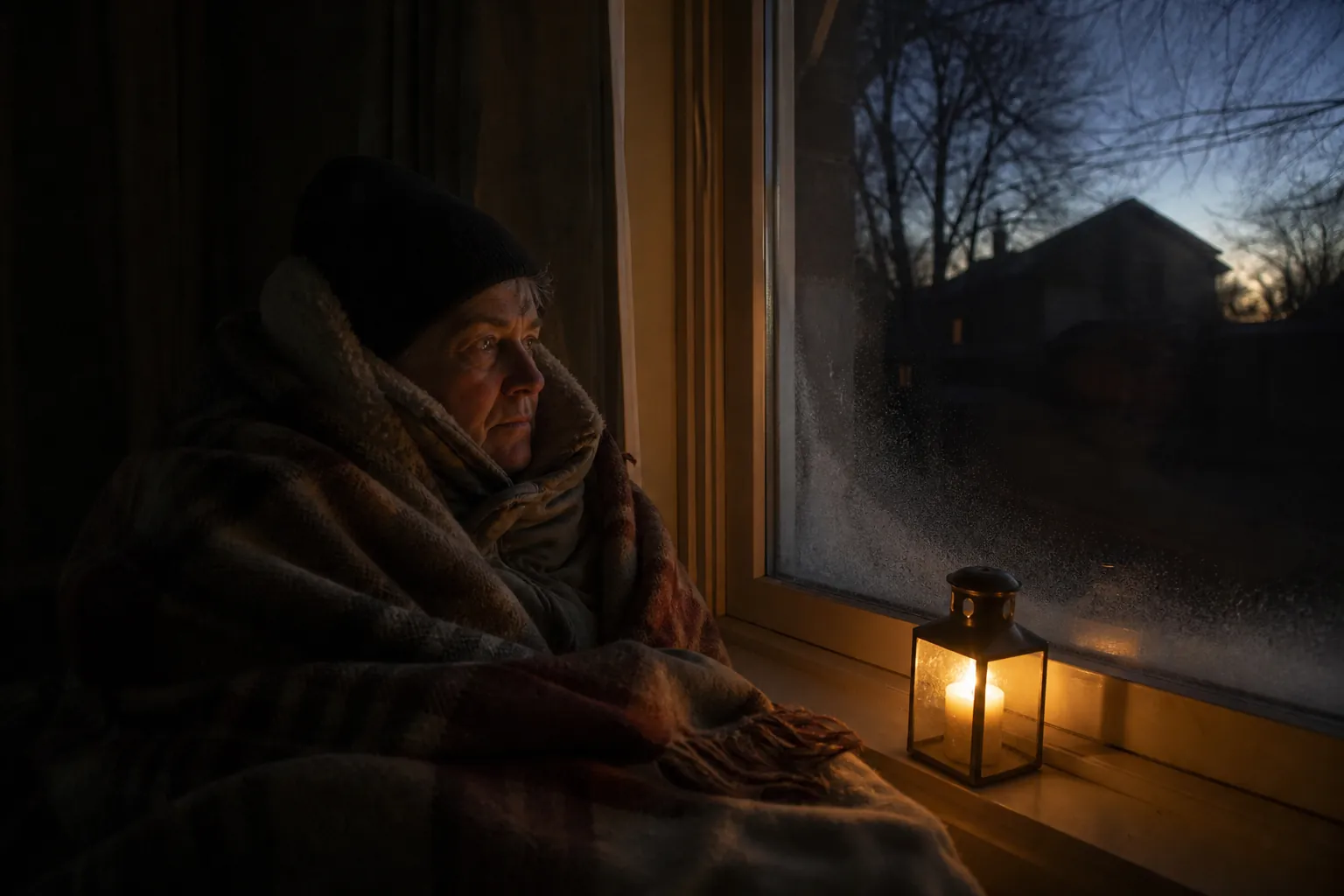
Older bodies lose heat and shed heat less efficiently. NIA notes that older adults are at higher risk in both cold and hot weather, and UCLA Health points to the same basic mechanisms: thinner insulation, circulation changes, and medications such as beta blockers can make hypothermia more likely. Indoor temperatures in the 60–65°F range can become unsafe during cold weather, and prolonged heat without air conditioning can turn an ordinary house into a heat-stress environment fast. [3][4][5]
Electricity-dependent medical equipment
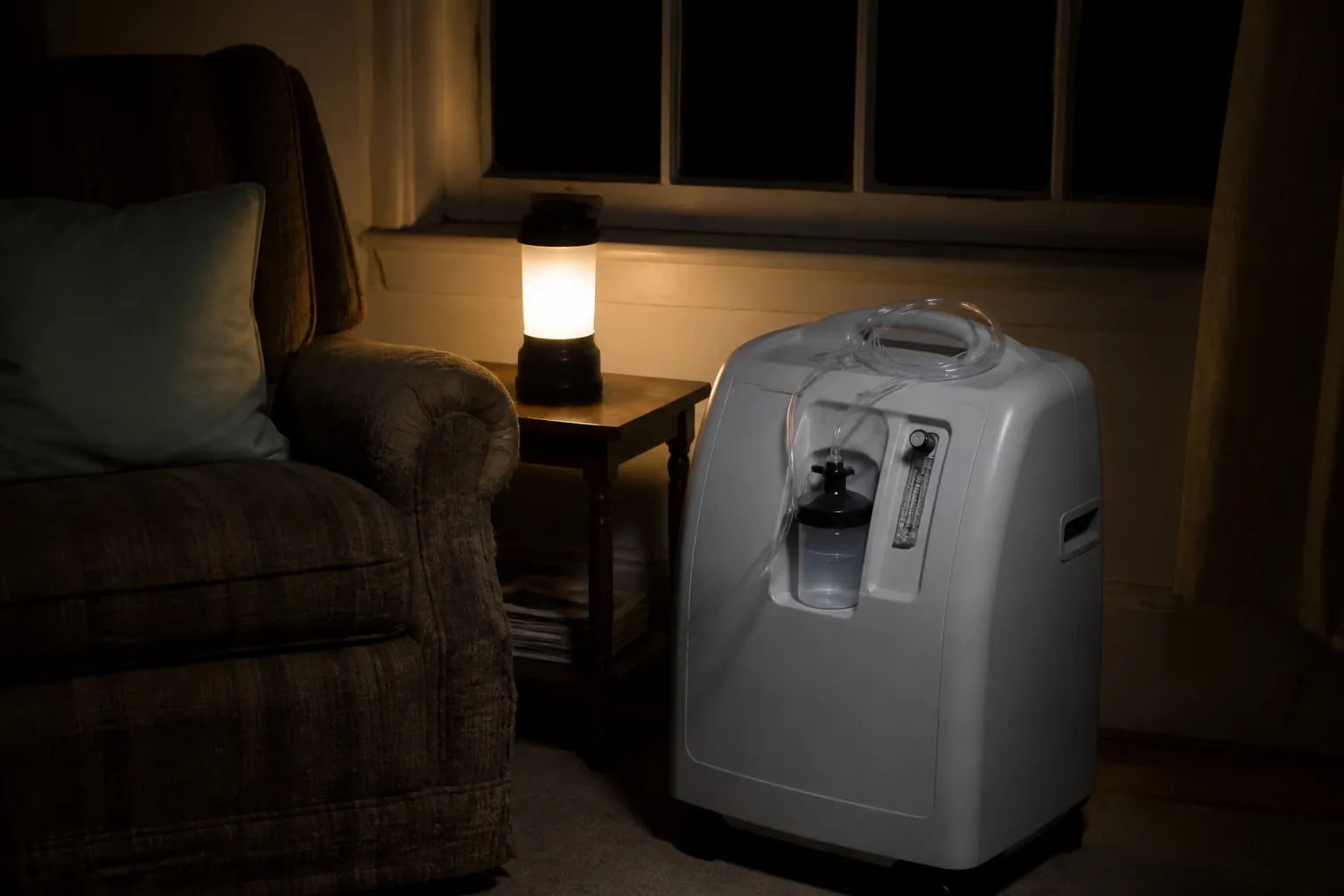
The second pathway is more direct: some homes depend on electricity to keep someone alive or stable. HHS emPOWER tracks older adults and others who rely on durable medical equipment, including oxygen concentrators and ventilators; more than 3% of older adults use this kind of equipment at home. For someone with heart or lung disease, the outage is not just a comfort problem; it can stop the device, drain the backup, or force a scramble for an alternate power source. [6][7]
Falls in sudden darkness
Darkness changes the floor plan. CDC says more than 1 in 4 adults 65 and older falls each year, and falls are the leading cause of injury death in this age group. Poor lighting is a modifiable risk factor, which is why an outage is so dangerous in hallways, bathrooms, and stairs where people already move more carefully. [8]
Medication and food spoilage
Outages also break the storage system. Refrigerated drugs, including insulin, can be ruined when the fridge stays warm too long, and spoiled food becomes a second problem once the house warms up. Ready.gov advises discarding refrigerated food at 40°F or warmer after 2 hours, so the clock starts faster than many people expect. [9]
Carbon monoxide from improvised heating
When the power goes out in winter, the improvised fix is often the hazard. Indoor generators and charcoal are the main sources of carbon monoxide after outages, and the danger rises when people move heating equipment closer to the house or use it in a garage, porch, or entryway. Ready.gov and the Red Cross both warn against running generators indoors or near openings. [9][10]
Isolation and delayed care
The last pathway is the most invisible. Power loss interrupts refills, phones, chargers, internet, medical portals, and the small bits of coordination that keep a chronic condition on schedule. When communication fails, help-seeking fails too, and a manageable outage can turn into a delayed emergency. Red Cross guidance for older adults and Ready.gov both emphasize having a communication plan and a way to stay reachable during long outages. [9][10]
How to stay safe before the lights go out
The prevention side works best when it matches the hazard. A person who depends on oxygen needs different planning than a person worried about ice, and a household that faces hurricane outages does not need the same checklist as one that mainly loses power in winter storms.
- For a general outage kit, use the senior emergency kit checklist for the items that matter when water, lights, and chargers fail.
- For cold weather, generator distance, and carbon monoxide detector placement, use the winter safety checklist for seniors at home.
- If an outage may force a move, use the emergency evacuation plan checklist.
- For hurricane season, use the hurricane stay-or-go decision framework and the hurricane safety checklist for seniors.
- If medical equipment needs backup power during storms or lightning-related outages, use the lightning safety checklist for seniors.
- To reduce smoke and carbon monoxide risk, use the fire emergency checklist for seniors.
- After a fall, or if ice is part of the outage problem, read warning signs after a fall and prevent falls on ice for elderly.
For adults 65 and older, especially those with mobility limits, chronic heart or lung disease, insulin use, or home medical equipment, a blackout is a health event that should be planned for before the lights go out.
References
- Cardiovascular and respiratory hospitalization after power outages among Medicare beneficiaries in the United States — PLOS Medicine, March 2026
- The health impacts of power outages on older adults: a narrative review — Current Environmental Health Reports, 2020
- Cold Weather Safety for Older Adults — National Institute on Aging
- Hot Weather Safety for Older Adults — National Institute on Aging
- Older Adults Are More Susceptible to Hypothermia — UCLA Health
- About emPOWER Map — HHS emPOWER Program
- Power Outage Preparation — American Lung Association
- Fall Facts and Statistics — CDC
- Power Outages — Ready.gov
- Older Adults — American Red Cross
Related reading
Noticed something outdated or inaccurate on this page? Flag a correction. We review every report against CDC, NIA, and AARP HomeFit guidance before updating a page.
Part of the Fall Prevention section.