
Room checklist
Paying for Elderly Home Care in 2026: A Financial Roadmap for Families After a Hospital Discharge
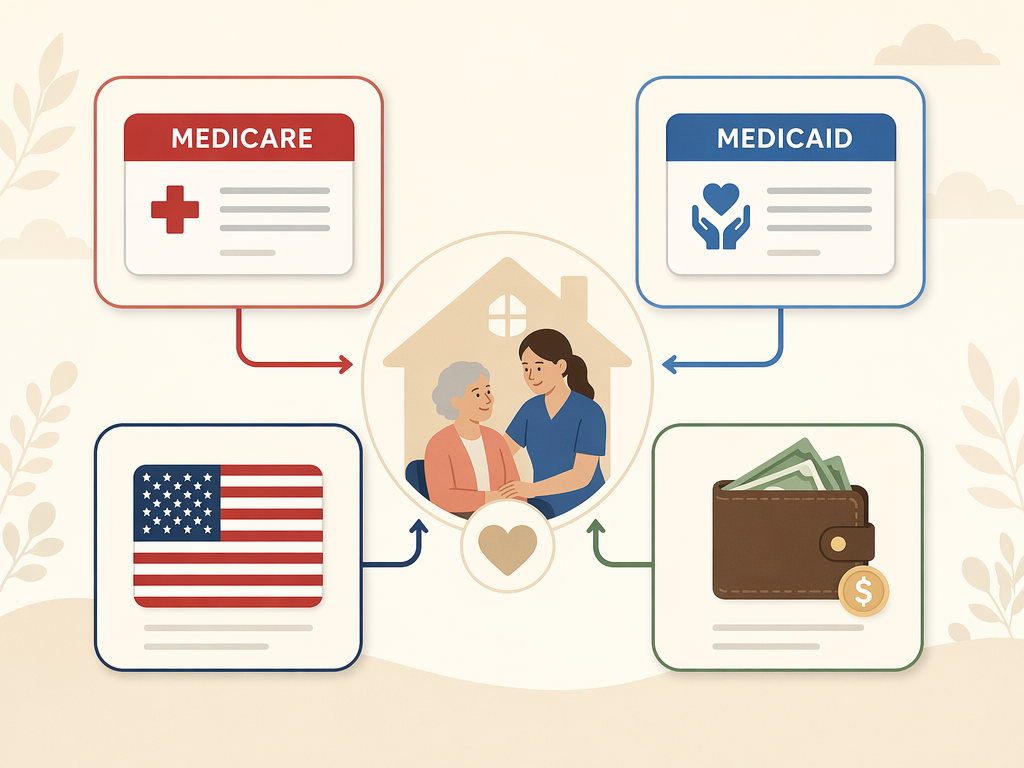
This guide provides a comprehensive, 2026-specific financial roadmap for family caregivers confronting home care costs for the first time after a hospital discharge. It covers Medicare, Medicaid, VA benefits, long-term care insurance, and community programs in a decision-flowchart format.

The Cost Reality of Home Care in 2026
The moment a hospital discharge planner hands you a list of home care agencies, the financial question hits immediately: how are we going to pay for this? The numbers for 2026 are sobering. According to A Place for Mom's 2026 Costs of Long-Term Care and Senior Living Report, the national median cost for a home health aide is approximately $34 per hour. For a family needing 44 hours of care per week — a common part-time schedule — that translates to roughly $6,478 per month.
To put that figure in context, consider the alternatives. A semi-private room in a nursing home costs a median of $9,581 per month in 2026, according to the same report. While home care is generally less expensive than a nursing home when fewer than 40 to 50 hours of weekly care are required, the monthly outlay still represents a significant financial commitment for most families.
| Care Type | 2026 National Median Cost | Typical Weekly Hours |
|---|---|---|
| Home Health Aide (non-medical) | $34/hour — $6,478/month | 44 hours |
| Nursing Home (semi-private room) | $9,581/month | 24/7 |
| Assisted Living | Varies widely by state | 24/7 |
Understanding these baseline costs is essential because most families will need to combine multiple payment sources to cover them. No single program — Medicare, Medicaid, or VA benefits — pays for everything. The key is knowing what each source covers, what its limitations are, and how to layer them effectively.
What Medicare Actually Pays For (and Doesn't) After a Hospital Discharge
This is the most common point of confusion for families. Original Medicare (Part A and Part B) does cover home health services, but the coverage is tightly restricted. As the National Institute on Aging explains, Medicare has limited coverage of home health service costs, and the services must be short-term and provided by agencies certified by Medicare.
Specifically, Medicare covers 100% of the cost of covered home health services — including skilled nursing care, physical therapy, occupational therapy, and speech-language pathology services — with no copay. However, to qualify, all of the following conditions must be met:
- The care must be medically necessary and ordered by a doctor.
- The patient must be homebound, meaning leaving home requires considerable effort and is typically not recommended.
- The care must be part-time or intermittent — generally fewer than 28 hours per week. Medicare does not cover 24/7 care.
- The services must be provided by a Medicare-certified home health agency.
What Medicare does NOT cover is equally important to understand. It will not pay for:
- 24/7 or full-time home care
- Personal care (bathing, dressing, toileting) when that is the only care needed
- Meal delivery services
- Companion care or homemaker services
- Long-term custodial care
The 2026 CMS Payment Reduction and What It Means for Families
There is a critical 2026 update that families need to know about. The Centers for Medicare & Medicaid Services (CMS) finalized the Calendar Year 2026 Home Health Prospective Payment System rule in November 2025. According to the CMS fact sheet, aggregate Medicare payments to home health agencies (HHAs) will decrease by an estimated 1.3%, or $220 million, compared to 2025.
This reduction is the net result of a 2.4% payment increase ($405 million) offset by a 0.9% permanent adjustment decrease ($150 million), a 2.7% temporary adjustment decrease ($460 million), and a 0.1% decrease for the fixed-dollar loss ratio for outlier payments ($15 million). While the percentage seems small, the practical effect may be that some home health agencies become more selective about which patients they accept or reduce the number of visits they offer. Families should be prepared for the possibility that finding a Medicare-certified agency willing to provide the full scope of needed services may be more challenging in 2026.
On a positive note, the 2026 rule also aligns the face-to-face encounter policy with the CARES Act, allowing nurse practitioners, clinical nurse specialists, and physician assistants to order and certify patients for the Medicare home health benefit. This change may streamline access for some families.
Medicare Advantage: Supplemental Benefits for Home Care in 2026
Medicare Advantage (Part C) plans operate differently from Original Medicare. Since a 2019 CMS rule change, these plans have been permitted to offer supplemental benefits that go beyond what Original Medicare covers, including some home care and home modification benefits. In 2026, some Medicare Advantage plans may offer coverage for services like:
- In-home support services (personal care, bathing, dressing)
- Home safety modifications (grab bars, ramps, bathroom modifications)
- Meal delivery after a hospital stay
- Transportation to medical appointments
If your parent is enrolled in a Medicare Advantage plan, the first step is to check whether their specific plan includes any home care or home modification supplemental benefits. Open enrollment periods (January 1 to March 31 each year) provide an opportunity to switch plans if better coverage is available.
Medicaid HCBS Waivers: A State-by-State Path to In-Home Care
For families with limited income and assets, Medicaid's Home and Community-Based Services (HCBS) waivers can be a lifeline. These waivers allow states to provide home care services — including personal care, homemaker services, and even some home modifications — to eligible individuals who would otherwise require nursing home care.
As the National Institute on Aging notes, Medicaid provides coverage for home health service costs, but these benefits vary by state. The Family Caregiver Alliance similarly confirms that Medicaid pays for limited home health care with certain restrictions. The key word here is "vary" — and it cannot be overstated.
To explore Medicaid HCBS waivers, families should:
- Contact their state's Medicaid office or visit the state's Department of Health and Human Services website.
- Ask specifically about HCBS waivers for home care and home modifications.
- Inquire about income and asset limits, which vary by state and waiver type.
- Ask about waitlist times — some popular waivers have years-long waiting lists.
- Consider consulting with a Medicaid planning professional or elder law attorney, especially if asset transfers or spend-down strategies may be needed.
It is also worth noting that personal care aides (PCAs) provided under a state's Medicaid waiver program must come from a Medicaid-certified agency or meet state requirements, as outlined by CaringInfo. This means families cannot simply hire a neighbor or family friend and expect Medicaid to pay.
VA Benefits: The Strongest Funding Pathway for Qualifying Veterans
For veterans and surviving spouses, the Department of Veterans Affairs (VA) offers some of the most generous funding available for home care and home modifications. If your parent served in the military, this is the first funding source you should investigate after Medicare.
The VA provides several grant programs specifically designed to help veterans with service-connected disabilities modify their homes to live more independently. These grants can be used for a wide range of modifications, including ramps, grab bars, widened doorways, roll-in showers, and stair lifts.
| VA Grant Program | Maximum Award (2026) | Best For |
|---|---|---|
| Specially Adapted Housing (SAH) Grant | $109,986 | Veterans with severe service-connected disabilities needing major structural modifications |
| Special Housing Adaptation (SHA) Grant | $22,000 | Veterans with specific service-connected disabilities needing less extensive adaptations |
| Home Improvements and Structural Alterations (HISA) Grant | $6,800 (service-connected) / $2,000 (non-service-connected) | Veterans needing medically necessary home modifications |
In addition to these home modification grants, the VA also offers the Aid and Attendance benefit, which provides monthly payments to qualifying veterans and surviving spouses who need assistance with activities of daily living. This benefit can be used to pay for home care services, including home health aides and personal care attendants.
To apply for VA benefits, families should:
- Gather the veteran's DD-214 discharge papers and medical records documenting service-connected disabilities.
- Contact the local VA regional office or visit va.gov to begin the application process.
- Consider working with a VA-accredited claims agent or veterans service organization (VSO) like the American Legion or VFW for assistance with the application.
- Be prepared for a potentially lengthy application process — some benefits can take several months to be approved.
Long-Term Care Insurance and Community Programs
If your parent has a long-term care insurance policy, now is the time to review it carefully. These policies vary widely in what they cover, but many will pay for home care services, including home health aides, personal care, and even some home modifications. Key things to look for in a policy include:
- The daily or monthly benefit amount for home care
- The elimination period (waiting period) before benefits begin
- Whether the policy covers home modifications or only personal care services
- Whether the policy requires prior hospitalization or a specific level of care need
- Whether the policy has inflation protection
Beyond insurance, community-based programs can provide significant support. The Family Caregiver Alliance offers a comprehensive guide to community resources, including:
- Area Agencies on Aging (AAA) — These local offices provide information, referrals, and sometimes direct services for older adults. They can help families navigate local resources and may offer case management.
- Meals on Wheels — Delivers nutritious meals to homebound seniors. Medicare does not generally cover meal delivery, but many local programs operate on a sliding fee scale or at no cost.
- Adult day care centers — Provide supervised care during the day, giving family caregivers a break. Medicare does not pay for adult day care, but some Medicaid programs and local grants may cover costs.
- Friendly visitor and senior companion programs — Often volunteer-based and available at no cost. These programs provide social interaction and companionship.
- Transportation services — Under the Americans with Disabilities Act, many communities offer paratransit services for medical appointments. Medicaid also provides transportation for emergency and doctor's appointments.
- Geriatric care managers — These professionals (charging $75 to $150 per hour, according to the NIA and Family Caregiver Alliance) can assess needs, coordinate services, and help families navigate the complex care system. Medicare and Medicaid do not pay for their services.
For more detailed guidance on finding financial assistance, see our article: The Hidden $7,200 Gap: A Practical Guide to Finding Financial Help When Caring for Aging Parents.
Decision Flowchart: Which Payment Path Fits Your Situation?
The following decision framework synthesizes all the information above into a single, actionable path. Use it to identify the most relevant payment sources for your specific situation.
| Your Situation | First Funding Source to Explore | Second Funding Source | Third Funding Source |
|---|---|---|---|
| Parent just discharged from hospital, needs short-term skilled care (nursing, PT, OT) | Original Medicare (Part A/B) — covers 100% for up to 28 hours/week if homebound | Medicare Advantage plan (if enrolled) — may offer supplemental home care benefits | Private pay for any additional hours needed |
| Parent needs long-term personal care (bathing, dressing, toileting) but not skilled nursing | Medicaid HCBS waiver (if income/asset eligible) — check state program | VA Aid and Attendance benefit (if veteran or surviving spouse) | Long-term care insurance (if policy exists) or private pay |
| Parent is a veteran with a service-connected disability needing home modifications | VA SAH grant (up to $109,986) or SHA grant (up to $22,000) | VA HISA grant (up to $6,800 service-connected) | Medicaid HCBS waiver (if eligible) for additional modifications |
| Parent has limited income and assets, needs ongoing home care | Medicaid HCBS waiver — apply immediately (waitlists may be long) | Community programs (AAA, Meals on Wheels, adult day care) | Private pay for uncovered services |
| Parent has a long-term care insurance policy | File a claim with the insurance company — review benefit details carefully | Medicare for any skilled care needs | Private pay for any gaps in coverage |
| Parent needs only occasional companionship or light help | Community programs (friendly visitor, senior companion — often free) | Private pay for a few hours per week | Area Agency on Aging for local resources |
Next Steps: From Hospital Discharge to a Sustainable Care Plan
The period immediately following a hospital discharge is overwhelming, but taking structured action now can save your family tens of thousands of dollars over the coming year. Here is your action plan:
- Start with a needs assessment. Before you can determine what to pay for, you need to know what care is actually needed. Work with the hospital discharge planner, your parent's primary care physician, and an occupational therapist to create a detailed list of required services — skilled nursing, personal care, therapy, home modifications, and any other needs.
- Contact your state Medicaid office. Even if you think your parent may not qualify, it is worth a call. Many states have Medicaid waiver programs with income limits that are higher than standard Medicaid, and some states offer spend-down options that allow families to qualify by spending down excess assets on medical care.
- Explore VA benefits if applicable. If your parent is a veteran or a surviving spouse of a veteran, contact the VA immediately. The Aid and Attendance benefit and home modification grants can provide substantial financial support. Do not delay — the application process can take months.
- Review your parent's insurance documents. Check their Medicare Advantage plan (if applicable) for supplemental home care benefits. Review any long-term care insurance policy for home care coverage. Gather all policy numbers and contact information.
- Contact your local Area Agency on Aging. These offices are an underutilized resource. They can provide information on local programs, help with Medicaid applications, and connect you with community services like Meals on Wheels and adult day care.
- Create a budget. Based on the care needs assessment and the funding sources you have identified, create a monthly budget. Include all costs: home care hours, home modifications, medical equipment, transportation, and any uncovered services. Be realistic about what you can afford and where you may need to make adjustments.
- Revisit the plan regularly. Care needs change over time, and funding sources may become available or expire. Set a reminder to review the care plan and funding strategy every three to six months.
For a broader comparison of costs across all care types — home care, assisted living, and nursing homes — see our guide: The True Cost of Assisted Care: A Financial Roadmap for Families Comparing Home Care, Assisted Living, and Nursing Homes in 2026. And for a comprehensive overview of all payment sources, including those not covered in this guide, visit our broader resource: How to Pay for Senior Care in 2026: A Guide to Medicare, Medicaid, and Other Funding Sources.
Related reading
Need a professional assessment?
Find a CAPS-credentialed professional or local aging services through our outbound resource list — we never name or rank individual contractors.
Find Local HelpNoticed something outdated or inaccurate on this page? Flag a correction. We review every report against CDC, NIA, and AARP HomeFit guidance before updating a page.