
Dementia-Capable vs. Dementia-Tolerant Adult Day Care: How to Evaluate Programs for Your Loved One
This guide helps families distinguish truly specialized dementia adult day centers from programs that merely accept people with memory loss. It covers what makes a program dementia-capable, key evaluation questions, research evidence, red flags, and when to transition out.
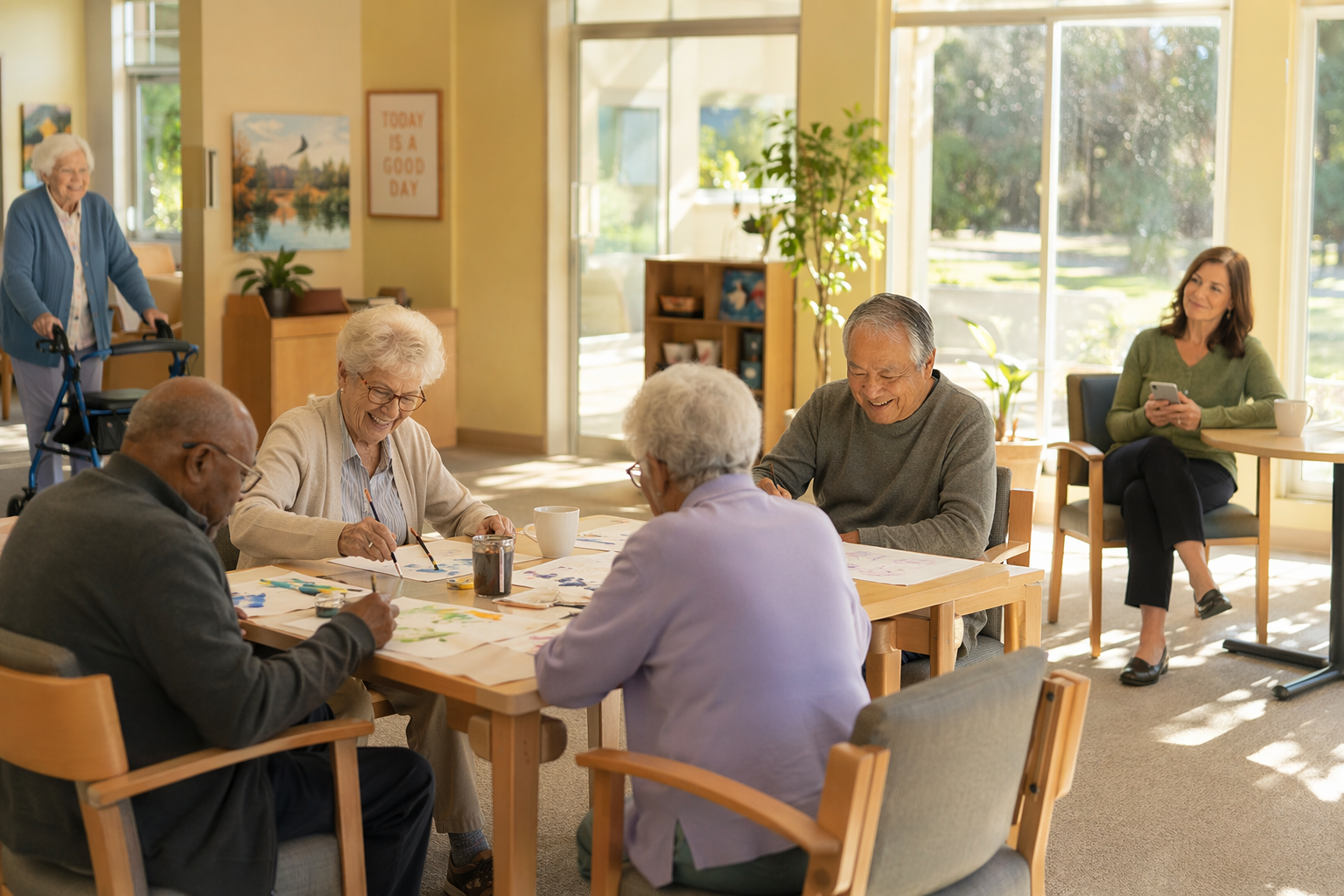
Why Most Adult Day Centers Aren't Built for Dementia
The numbers paint a clear picture: more than half of all older adults attending adult day care facilities have some form of cognitive impairment, according to the National Adult Day Services Association (NADSA). Yet the programs themselves are not all designed to meet the complex needs that come with a dementia diagnosis. A center that works well for a socially isolated older adult with mild physical limitations may be completely inadequate — or even unsafe — for someone who wanders, experiences sundowning, or becomes agitated in unfamiliar environments.
This gap between who shows up and what centers are prepared for is the central problem families face. The term "adult day care" covers a wide spectrum, from purely social programs offering lunch and recreation to medical-model adult day health centers with skilled nursing on staff. Within that spectrum, a smaller subset of programs are truly dementia-capable — meaning their staff, environment, activities, and safety protocols are specifically designed for people with Alzheimer's disease and related dementias. The rest are what we might call dementia-tolerant: they accept participants with memory loss but lack the specialized training, secured spaces, and behavior management protocols that make attendance safe and beneficial.
If you are just beginning to explore whether adult day care might help your situation, we recommend starting with our companion overview, Adult Day Care for Dementia: How Day Programs Benefit Both Your Loved One and You, which covers the general benefits and evidence base. This guide goes a step further: it gives you a framework for distinguishing genuinely dementia-ready programs from those that simply accept anyone who walks through the door.
What Makes a Program Dementia-Capable?
A dementia-capable program is not simply a general adult day center that happens to accept people with memory loss. It is a program whose entire operating model — staffing, environment, activities, safety protocols, and care planning — is built around the cognitive, behavioral, and emotional realities of dementia. The Alzheimer's Association provides specific guidance on what to look for, and the differences are substantial.
Core Differentiators
| Feature | Dementia-Capable Program | Dementia-Tolerant Program |
|---|---|---|
| Staff training | All staff receive specialized training in dementia behavior management, communication techniques, and de-escalation. Training is ongoing, not a one-time workshop. | Staff may have general caregiving experience but lack specific training in dementia behaviors. Behavior issues are handled reactively rather than proactively. |
| Behavior management protocols | Written protocols exist for wandering, sundowning, agitation, repetitive questioning, and eating refusal. Staff can describe these protocols without hesitation. | Behavior issues are managed on an ad-hoc basis. Staff may call the family to pick up the participant if behaviors become challenging. |
| Environment and safety | Secured outdoor access (enclosed garden or courtyard). Wandering paths. Visual cues for wayfinding. Calm, low-stimulation spaces available. Doors have alarms or coded egress. | Standard locked doors. No dedicated secured outdoor space. Environment may be overstimulating (loud, bright, crowded). No quiet retreat area. |
| Activity programming | Activities are individualized based on cognitive level and personal history. Includes music therapy, reminiscence groups, sensory stimulation, and adapted exercise. Group sizes are small. | One-size-fits-all activities (bingo, movies, general crafts). No adaptation for cognitive level. Participants with dementia may be included in large groups without modification. |
| Participant grouping | Dementia participants are either separated from the general population or placed in a dedicated wing with appropriate staffing ratios and environmental modifications. | All participants are mixed together regardless of cognitive status. No separation or accommodation for dementia-specific needs. |
| Care planning | Individualized care plans address cognitive status, behavioral triggers, communication preferences, and personal history. Plans are reviewed and updated regularly with family input. | Standard care plan covers basic medical and personal care needs. No dementia-specific goals or behavior management strategies. |
The Alzheimer's Association recommends asking specific questions during your tour: Are people with dementia separated from other participants or included in general activities? Is staff trained specifically in dementia issues? What types of health care professionals are on staff? How is safety ensured, particularly for someone who may try to leave? A program that cannot give clear, confident answers to these questions is not truly dementia-capable.
The Research: How Specialized Programs Help Both of You
The evidence for dementia-specific adult day services goes beyond anecdote. While research on adult day care outcomes is still growing, several well-regarded studies point to meaningful benefits for both the person with dementia and the family caregiver.
Caregiver Stress Reduction
The Adult Day Services Health and Stress Study (DaSH), led by Zarit and colleagues and published in The Gerontologist, found that adult day services reduced caregivers' exposure to daily stressors and improved their overall well-being. On days when the person with dementia attended the center, caregivers reported lower stress levels and better emotional states. This effect was not trivial — it represented a measurable improvement in the daily lived experience of caregiving.
Improved Sleep for Both
A 2021 study published in Aging & Mental Health found that both dementia patients and their caregivers slept better on nights before the patient attended adult day care. This is a particularly important finding because sleep disruption is one of the most common and distressing challenges in dementia caregiving. Better sleep for the caregiver means better emotional regulation, better health, and greater capacity to provide care. For the person with dementia, better sleep is associated with reduced agitation and better daytime function.
Delayed Institutionalization and Cost Savings
Perhaps the most striking evidence comes from a case study documented in the PMC journal: an 84-year-old woman with dementia named Edna attended adult day care for 14 years before eventually transitioning to a nursing home. The cost of her day care was $70.20 per day, compared to $139 per day for a semi-private nursing home room. Over 14 years, this saved Missouri taxpayers an estimated $500,000. While this is a single case, it illustrates the potential for high-quality adult day services to delay — sometimes for years — the need for more expensive institutional care.
A 2017 review in The Gerontologist also confirmed that adult day centers provide health-related, social, psychological, and behavioral benefits for participants with dementia. These benefits are most pronounced when programs are specifically designed for the dementia population — which brings us back to the central question of how to identify those programs.
Your Evaluation Checklist: Questions to Ask Every Center
When you tour a potential adult day center, you are not just a visitor — you are an evaluator. The following checklist, adapted from the Alzheimer's Association, U.S. News readiness indicators, and AgingCare.com, covers the essential domains you need to assess. Take notes. Ask to speak with direct care staff, not just the director. Observe how staff interact with participants during activities, not just during the tour.
| Domain | Questions to Ask | What to Look For |
|---|---|---|
| Staff training | What specific dementia training does your staff receive? How often is it updated? Can you describe your approach to managing agitation or wandering? | Staff should be able to describe specific techniques (redirection, validation therapy, environmental modification). Look for ongoing training, not a single workshop. |
| Behavior management | What happens if my loved one becomes agitated, tries to leave, or refuses to participate? Do you have written protocols for wandering, sundowning, and aggression? | Clear, calm answers. Protocols should be documented and known to all staff. The answer should not be "we call the family to pick them up." |
| Safety and environment | Is the outdoor area secured? How do you prevent wandering? Are there quiet spaces for participants who become overstimulated? | Secured garden or courtyard. Alarmed or coded doors. Visual cues for wayfinding. A quiet room or corner available. No obvious hazards. |
| Participant grouping | Are participants with dementia separated from those without? If so, how are groups determined? What is the staff-to-participant ratio in the dementia group? | Ideally, a dedicated dementia wing or separate programming. If integrated, there should be clear accommodations. Lower staff-to-participant ratios for dementia groups (e.g., 1:4 or better). |
| Activities | How are activities tailored to different cognitive levels? Can you give me an example of an activity designed for someone with moderate dementia? | Activities should be adapted: shorter sessions, simpler instructions, sensory elements, music, reminiscence. Look for small group sizes and individual engagement. |
| Medication management | Who administers medications? What training do they have? How are medication changes communicated to families? | Licensed nurse (RN or LPN) on staff or regularly available. Clear communication protocols for medication changes. |
| Emergency procedures | What is your protocol for a medical emergency? For a behavioral emergency? How are families notified? | Written emergency plans. Staff can describe them. Families should receive a written copy. Ask about hospital transfer arrangements. |
| Licensing and complaints | Are you licensed by the state? Have you had any complaints or violations in the past two years? Can I see your most recent inspection report? | Valid state license. No unresolved serious complaints. Willingness to share inspection reports is a good sign. |
Red Flags That Signal a Program Isn't Truly Dementia-Ready
Not every program that claims to serve people with dementia is actually equipped to do so safely and effectively. The following red flags should give you serious pause — and in many cases, prompt you to look elsewhere.
- High staff turnover. U.S. News reports that staff tenure at many centers is often less than six months. High turnover means your loved one cannot form stable relationships with caregivers, and it signals underlying organizational problems. Ask about average staff tenure and turnover rates.
- No secured outdoor access. For a person with dementia who may wander, access to a secured outdoor area is not a luxury — it is a safety necessity. A center without one is not dementia-capable.
- One-size-fits-all activities. If the activity calendar looks the same for everyone — bingo, movies, general crafts — with no adaptation for cognitive level, the program is not designed for dementia. Effective dementia programming requires individualized or small-group activities matched to cognitive ability and personal history.
- Staff cannot describe behavior management approaches. When you ask "What do you do when a participant becomes agitated?" the staff should have a clear, specific answer. Vague responses or "we call the family" indicate the program is not prepared for dementia behaviors.
- Dementia participants mixed with general population without accommodation. Integration is possible, but only if the program provides appropriate accommodations: smaller group sizes, lower staff ratios, modified activities, and a quiet space to retreat. If dementia participants are simply placed in the same large group as everyone else, the program is not dementia-ready.
- No individualized care plans. Every participant with dementia should have a care plan that addresses their cognitive status, behavioral triggers, communication preferences, and personal history. If the center uses a generic plan for everyone, they are not providing individualized dementia care.
- Unwillingness to share inspection reports or licensing information. Transparency is a baseline requirement. A center that hesitates or refuses to share this information is hiding something.
The Gradual Transition Approach That Works
Even the best dementia-capable center can be overwhelming for someone with memory loss on the first day. The Alzheimer's Association recommends a gradual transition strategy that respects the person's need for familiarity and routine.
- Start with a short visit. Bring your loved one for just one meal or one activity — no more than an hour or two. Stay nearby or in the building if needed. The goal is a positive first impression, not a full day.
- Build to half-days. After a few short visits, try a half-day that includes lunch and one or two activities. Gradually increase the duration as your loved one becomes more comfortable.
- Commit to two days per week for a month. The Alzheimer's Association specifically recommends using the center at least twice a week for a full month before making a final decision. This gives the person with dementia time to adjust to the new routine and form relationships with staff and other participants.
- Manage separation anxiety. It is common for a person with dementia to resist being left at a new place. Staff at a dementia-capable center should have strategies for this: redirecting the person to an activity, using a favorite object or photo as a comfort item, or having the family member leave quickly after a brief, cheerful goodbye.
- Prepare your loved one for the new routine. Talk about the center in positive, concrete terms: "Tomorrow we're going to the place with the garden where you can paint." Use a visual calendar or social story if that helps. Consistency in drop-off and pick-up times also supports adjustment.
If after a month of consistent attendance your loved one remains distressed, agitated, or refuses to go, it may be a sign that this particular center — or adult day care in general — is not the right fit. Some people with dementia, particularly those with advanced disease or severe anxiety, may not tolerate group settings. In those cases, in-home care or a smaller, more personalized program may be more appropriate.
Cost and Funding for Dementia-Specific Programs
The cost of adult day care varies significantly by location, program type, and level of specialization. Dementia-specific programs may command a premium over general adult day care because of the lower staff-to-participant ratios, specialized training, and enhanced safety features required.
| Source | National Median Cost | Year of Data |
|---|---|---|
| Genworth Cost of Care Survey | $1,690/month ($78/day) | 2021 |
| CareScout (via U.S. News) | $2,058/month ($95/day) | 2025–2026 |
| Genworth (via SeniorLiving.org) | $2,123/month (~$100/day) | 2024 |
Despite the costs, several funding sources can help make dementia-specific adult day care affordable:
- Medicaid HCBS Waivers. All 50 states and the District of Columbia offer adult day care assistance through Medicaid Home and Community-Based Services (HCBS) waivers, according to PayingForSeniorCare. These waivers typically require the participant to meet nursing home level of care criteria. Income and asset limits apply (2024 income limit approximately $2,829/month, assets around $2,000 excluding the home). Waiver structures, reimbursement rates, and enrollment caps vary significantly by state.
- VA Adult Day Health Care. The Department of Veterans Affairs offers Adult Day Health Care to all enrolled veterans who meet clinical criteria. Services include social activities, peer support, recreation, and health services from nurses, therapists, and social workers. A copay may apply based on service-connected disability status and income. Transportation assistance may also be available.
- Long-term care insurance. Many long-term care insurance policies cover adult day care services, including dementia-specific programs. Check your policy's benefit details and any requirements for prior authorization or physician certification.
- Sliding scale fees. The Alzheimer's Association notes that many centers offer sliding scale fees based on income. Ask about this during your tour, especially if you are paying out of pocket.
- Tax deductions and credits. Adult day care costs may be tax-deductible as a medical expense or qualify for the dependent care credit (up to $3,000 for one person, $6,000 for two or more, per SeniorLiving.org). Consult a tax professional for your specific situation.
When Dementia Progression Means It's Time to Transition Out
Adult day care is not a permanent solution for every stage of dementia. As the disease progresses, there will likely come a point when the center can no longer safely or effectively meet your loved one's needs. Recognizing this transition point early — and planning for it — can prevent a crisis.
- Advanced mobility decline. When the person can no longer walk or transfer safely with minimal assistance, the center's staff may not have the capacity to provide the level of physical support needed. If the person requires a Hoyer lift or two-person transfer, a group setting is unlikely to be appropriate.
- Increased aggression or agitation. If the person becomes physically aggressive toward staff or other participants, or if agitation escalates to the point where the center cannot manage it safely, it is time to consider other options. This is not a failure of the program or of you — it is a natural progression of the disease.
- Frequent incontinence. While many dementia-capable centers are equipped to handle incontinence, frequent or unpredictable episodes may exceed what the staff can manage in a group setting, particularly if the person requires one-on-one assistance for toileting.
- Need for one-on-one supervision. When the person requires constant individual attention — due to safety risks, severe confusion, or medical instability — a group program with a 1:4 or 1:6 staff ratio cannot provide adequate supervision. This is the clearest signal that it is time to transition to in-home care or a higher level of residential care.
- Staff recommendation. The Alzheimer's Association notes that staff at a good adult day center will be honest with you when they can no longer meet your loved one's needs. They may help you evaluate future care options and recommend next steps. Listen to their assessment — they have experience with many families in similar situations.
When the time comes to transition out, you have several options to consider. For many families, the next step is full-time in-home care. Our guide, Live-In Caregiver for a Parent with Dementia: A Complete Guide to Hiring, Training, and Safety at Every Stage, covers how to find, hire, and work with a live-in caregiver. For overnight challenges like sundowning and wandering, see Overnight Care for Elderly Parents with Dementia: Managing Sundowning, Wandering, and Caregiver Sleep Deprivation. And for monitoring technology that can support safety during evenings and weekends, our guide on Dementia Monitoring Systems: What Works for Wandering, Nighttime Agitation, and Daily Routine Changes provides a product-neutral overview of available options.
Transitioning out of adult day care can feel like a loss — both for you and for your loved one. The center may have become a source of routine, social connection, and respite. Allow yourself to acknowledge that loss even as you plan for the next stage. You made the best decision you could with the information you had at each step, and that is enough.
Related reading
Noticed something outdated or inaccurate on this page? Flag a correction. We review every report against CDC, NIA, and AARP HomeFit guidance before updating a page.
Part of the Fall Prevention section.