
Sundowning and Overnight Dementia Care: A Guide for Family Caregivers
This guide helps adult children and spousal caregivers understand sundowning as an environmental and pattern-driven phenomenon, not a disease. It provides actionable strategies for environmental design, routine consistency, and trained caregiver responses to reduce nighttime agitation, and offers a framework for choosing the right overnight care model based on dementia stage.
What Is Sundowning and Why Does It Happen?
Sundowning is not a disease. It is a predictable pattern of increased confusion, agitation, and restlessness that occurs in many people living with Alzheimer's disease and other dementias, typically beginning in the late afternoon and continuing through the night. The Alzheimer's Association describes symptoms that may include difficulty sleeping, anxiety, agitation, hallucinations, pacing, and disorientation. These behaviors emerge from a combination of factors: mental and physical exhaustion accumulated during the day, a disrupted internal body clock, low evening lighting that creates confusing shadows, and the person's ability to sense stress in those around them.
The core mechanism is circadian rhythm disruption. Dementia damages the part of the brain that regulates the sleep-wake cycle, making it difficult for the person to distinguish between night and day. This biological shift, combined with environmental triggers, creates the conditions for sundowning. Understanding this distinction — that sundowning is driven by environmental and pattern-based factors, not by the disease itself progressing in a new way — is the first step toward managing it effectively.
How Common Is Sundowning and Its Impact on Caregivers?
Sundowning is not a rare or unusual phenomenon. The Alzheimer's Association notes that it affects a majority of people living with Alzheimer's disease. The prevalence is high enough that sundowning is consistently cited as one of the most common reasons family caregivers decide to place a loved one in a residential facility.
The toll on caregivers is equally significant. Data compiled by the Family Caregiver Alliance from multiple studies shows that approximately 70% of caregivers for people with dementia report sleep problems, and 60% report sleeping fewer than seven hours per night. In data from the California Caregiver Resource Centers, 41% of caregivers said they are awakened during the night by the person they care for. Between 10% and 20% of caregivers report using alcohol or sleep medication to cope.
These numbers matter because they point to a structural problem: when a family caregiver cannot get consistent sleep, their ability to provide safe, patient, and effective care erodes. The Family Caregiver Alliance advises that a good night's sleep every third night is necessary to prevent burnout. Professional overnight care is one of the few interventions that can reliably provide that recovery window.
Environmental Interventions: Designing the Evening for Calm
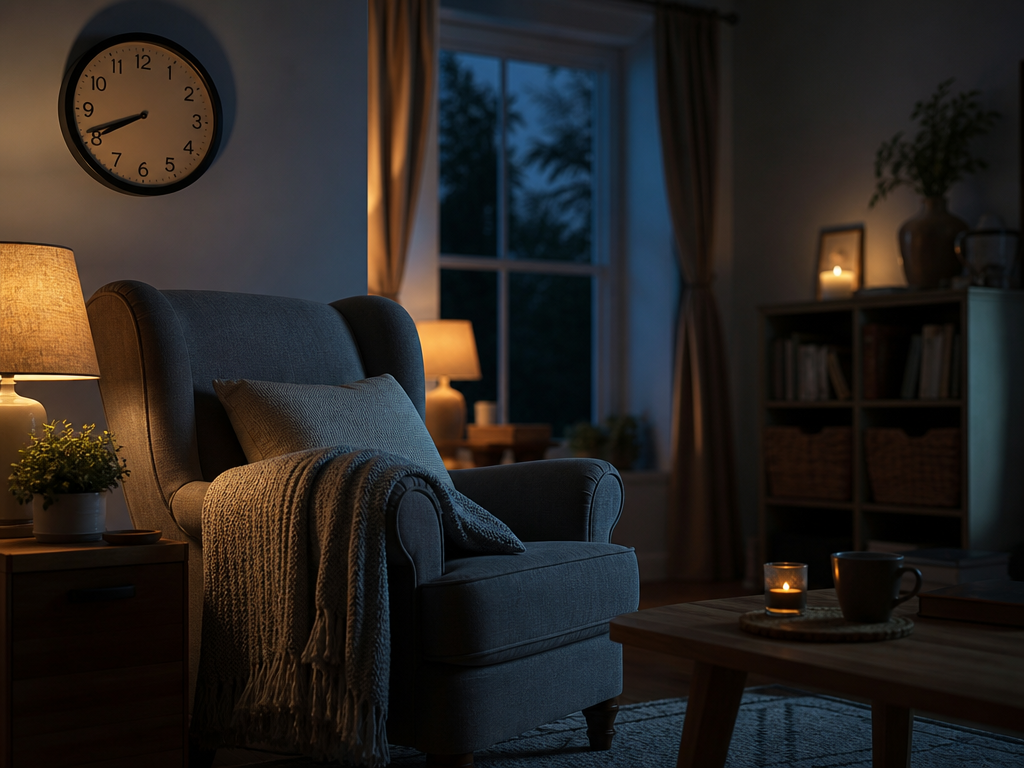
Because sundowning is driven by environmental and circadian factors, modifying the physical environment is the most effective first-line intervention. The National Council of Certified Dementia Practitioners (NCCDP) emphasizes that non-pharmaceutical approaches are especially beneficial because they avoid the side effects of sleep-inducing medications, which can be particularly dangerous for older adults.
Lighting Strategy
Light is the most powerful regulator of the circadian clock. The NCCDP recommends ensuring exposure to natural sunlight during the morning and early afternoon. As evening approaches, the strategy shifts: dim the lights gradually, use warm-toned lamps rather than overhead fluorescents, and place nightlights in hallways and the bathroom to reduce disorientation when the person gets up during the night. The Alzheimer's Association specifically notes that low lighting can increase shadows, which may trigger confusion or fear.
Noise and Stimulation Reduction
The evening hours should be a period of decreasing stimulation. This means turning off the television at least an hour before bedtime, avoiding loud conversations, and minimizing unexpected visitors or phone calls. The NCCDP suggests replacing stimulating activities with calming ones such as gentle stretching, soft music, or reading aloud in a quiet voice.
Bedtime Routine and Comfort
- Establish a consistent, predictable sequence of events each evening — the same order, at the same time, every night.
- Use nightlights to create a clear, shadow-free path from the bed to the bathroom.
- Consider a weighted blanket, which the NCCDP notes can reduce anxiety and improve sleep quality for some individuals with dementia.
- Ensure the bedroom is cool, dark, and quiet. Keep a flashlight and a phone with emergency numbers in large print near the bed, as recommended by the National Institute on Aging.
- Limit daytime naps to 30 minutes or less, and avoid caffeine and alcohol in the afternoon and evening.
Why Overnight Care Is Different for Dementia: The Caregiver Skills That Matter
Overnight care for a person with dementia is fundamentally different from overnight care for an older adult who is cognitively intact. The difference is not about medical tasks — it is about the specific communication and response techniques that a caregiver must use when a person is confused, frightened, or agitated in the middle of the night.
Visiting Angels describes the core approach: for dementia-related sundowning, overnight caregivers use validation rather than confrontation, gently redirect when agitation arises, and maintain a soothing environment. These are not intuitive skills — they require training and practice.
Key Skills for Dementia Overnight Caregivers
- Validation over correction: When a person with dementia says something that is not factually true — for example, insisting they need to go home when they are already home — the caregiver validates the feeling rather than arguing. A response like "You feel like you need to be somewhere safe, and I am here to make sure you are safe" is more effective than "You are home."
- Gentle redirection: If the person becomes agitated or tries to get up, the caregiver redirects their attention to a calming activity — offering a warm drink, suggesting a walk to the bathroom, or simply sitting with them and speaking in a low, steady voice.
- Fall prevention in low light: The CDC reports that more than one out of four older adults falls each year, and the National Institute on Aging notes that nighttime bathroom trips are a high-risk fall context. A trained caregiver anticipates these risks by keeping pathways clear, using nightlights, and offering assistance with every bathroom visit.
- Monitoring for medical changes: The caregiver also watches for signs of acute medical issues — trouble breathing, chest pain, sudden confusion that is worse than the person's baseline, or symptoms of stroke — and knows when to call for emergency help.
Choosing the Right Overnight Care Model: Awake vs. Sleepover Care by Dementia Stage
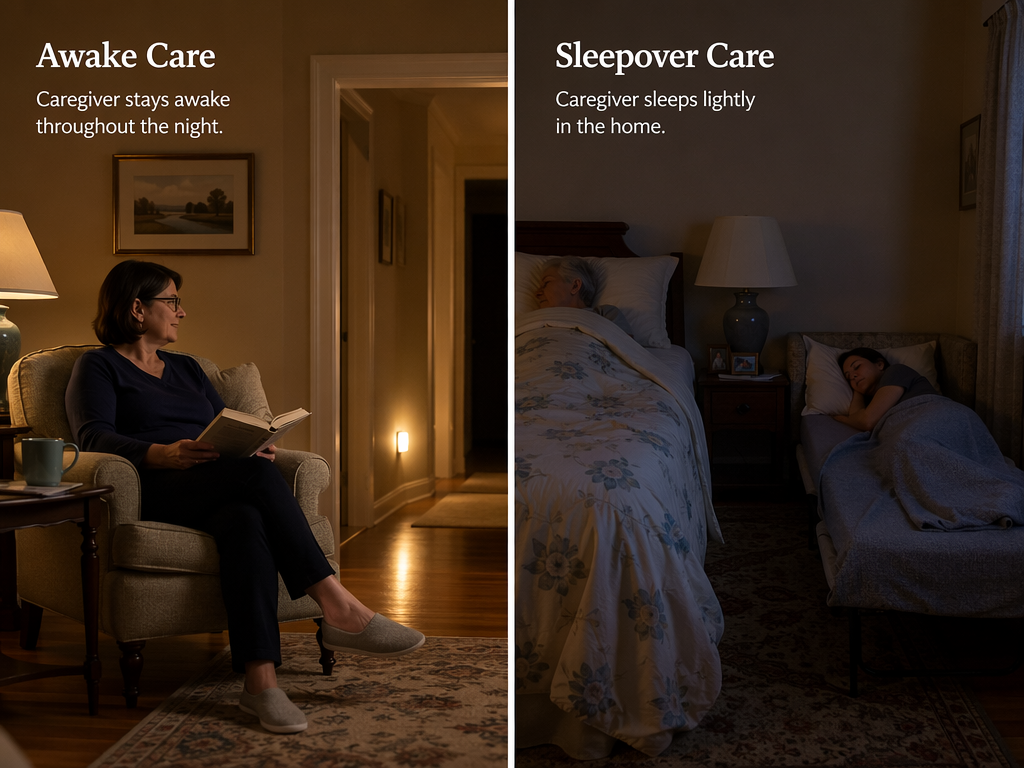
Not all overnight care is the same. The Geriatric Resource Centre distinguishes between two primary models: awake overnight care, where the caregiver remains alert for the entire shift, and sleepover care, where the caregiver sleeps nearby but can wake quickly if needed. The choice between them should be driven by the person's dementia stage and specific risk profile.
| Care Model | Best For | Typical Dementia Stage | Key Considerations |
|---|---|---|---|
| Awake Overnight Care | High fall risk, active wandering, severe sundowning agitation, recent hospital discharge | Middle to late stage | Caregiver stays alert all night; most expensive model due to full hourly pay; recommended for seniors who cannot be left unsupervised for any period |
| Sleepover Care | Moderate sundowning, low wandering risk, able to sleep for stretches with minimal disruption | Early to middle stage | Caregiver sleeps in the home and provides assistance when needed; under the Fair Labor Standards Act, a sleep-time deduction of up to 8 hours is allowed if the caregiver gets at least 5 hours of uninterrupted sleep and adequate accommodations are provided |
| Visiting Overnight Care | Low risk, needs only check-ins at specific times (e.g., 8 PM and 6 AM) | Early stage | Least expensive option; caregiver does not stay overnight; suitable only when the person can be safely left alone for hours at a time |
For families trying to determine whether their loved one's needs have progressed beyond overnight care to continuous 24-hour supervision, our guide At What Point Does a Person With Dementia Need 24-Hour Care? A Stage-Based Guide provides a detailed framework.
Medication Considerations: What to Know Before Turning to Sleep Aids
When sundowning disrupts sleep, the temptation to reach for a sleep aid is understandable. But the evidence consistently points in the other direction. The Alzheimer's Association recommends trying non-drug measures first, and the NCCDP emphasizes that non-pharmaceutical approaches are especially beneficial to avoid the side effects of sleep-inducing medications.
Several classes of medications pose particular risks for older adults with dementia:
- Anticholinergic medications, commonly found in over-the-counter sleep aids like diphenhydramine (Benadryl), can worsen confusion, increase fall risk, and are associated with long-term cognitive decline in older adults.
- Benzodiazepines (diazepam, lorazepam, alprazolam) carry risks of dependence, daytime sedation, and increased fall risk. The CDC identifies tranquilizers and antidepressants as medications that increase fall risk.
- Melatonin is sometimes used as a gentler option, but its effectiveness for dementia-related sleep disruption is not consistently supported by clinical evidence. Some individuals may benefit; others may not. A trial should only be done under a doctor's supervision.
For families seeking daytime structure that can help regulate the sleep-wake cycle and potentially reduce sundowning severity, our guide Dementia-Capable vs. Dementia-Tolerant Adult Day Care: How to Evaluate Programs for Your Loved One offers a framework for choosing a program that provides meaningful daytime engagement.
Financial Aid Pathways for Overnight Dementia Care
The cost of overnight care is a significant barrier for most families. The national median cost for nonmedical in-home care in 2026 is $34 per hour according to A Place for Mom, and $35 per hour according to SeniorLiving.org. At these rates, a single 12-hour overnight shift can cost $408 to $420 per night. However, several financial aid pathways can reduce the burden.
| Funding Source | What It Covers | Key Details |
|---|---|---|
| VA Aid & Attendance Pension | In-home care, including overnight care, for qualifying veterans and surviving spouses | Requires a medical need for assistance with activities of daily living; benefit amount varies based on income and assets; can be used to pay a family caregiver in some cases |
| Medicaid HCBS Waivers (Home and Community-Based Services) | In-home personal care services, including overnight support, for those who qualify financially and medically | Availability, eligibility, and waitlist length vary dramatically by state; some states have specific dementia waivers; not all states cover overnight care as a distinct service |
| Alzheimer's Association Community Resources | Respite care grants, support groups, and referrals to local financial assistance programs | The Alzheimer's Association maintains a 24/7 Helpline (800-272-3900) and can connect families to local chapters that may offer limited financial assistance for respite care |
| Student Caregiver Programs (Alternative Workforce) | Overnight care at reduced rates via pre-health students | Programs like CareYaya connect families to college students studying nursing or medicine for overnight care at $15–20 per hour or approximately $120 per night for an 8-hour session; availability is limited to areas near universities |
For a broader view of how overnight care fits into the full continuum of dementia care options — from in-home support to assisted living to memory care — see our Home Care vs. Assisted Living vs. Memory Care: A Continuum Decision Guide for Dementia Caregivers.
The Caregiver Health Connection: How Professional Overnight Care Prevents Burnout
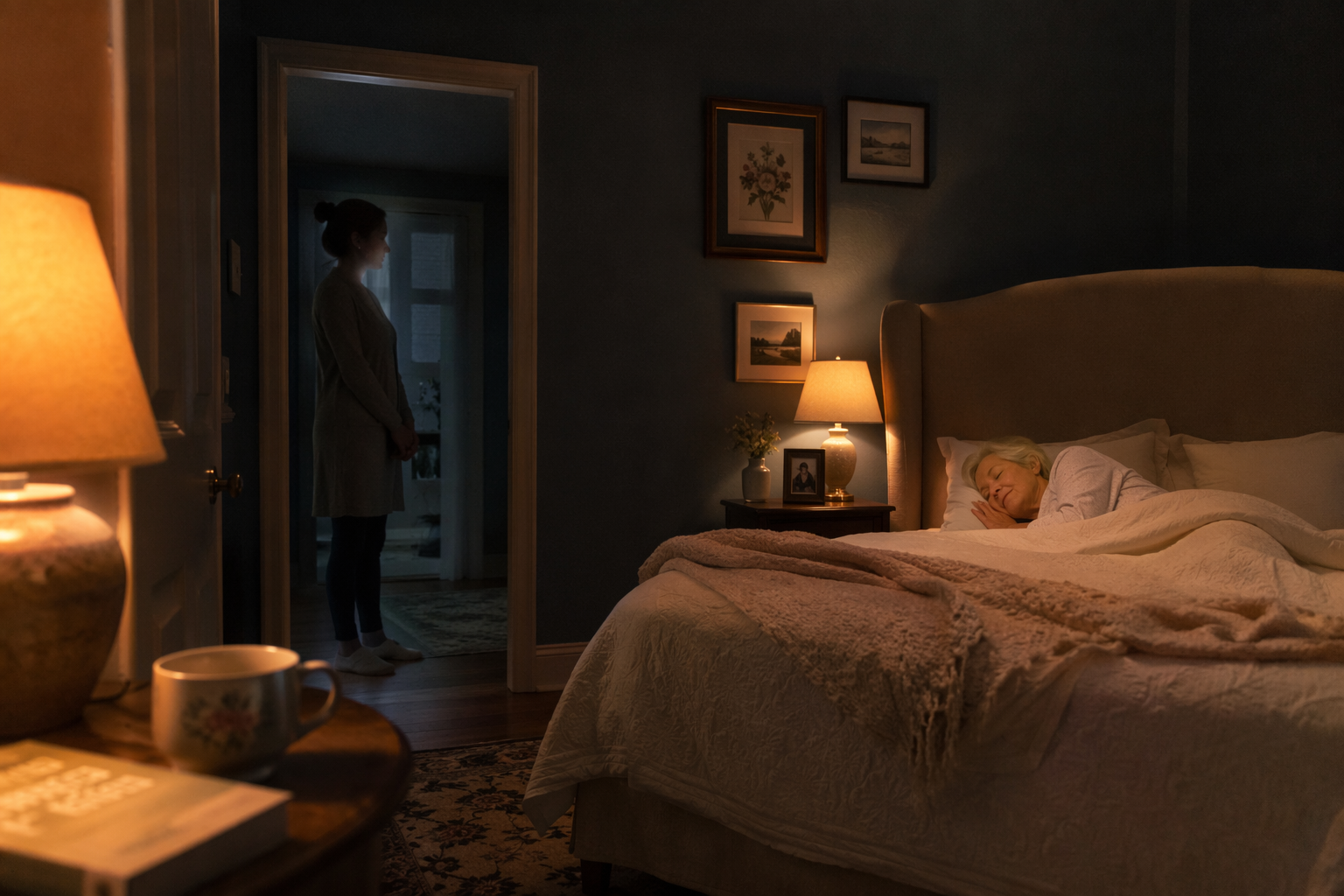
The connection between caregiver sleep deprivation and burnout is well established. The Family Caregiver Alliance reports that family caregivers lose an average of two hours of sleep every single night. When that deficit accumulates over weeks and months, the consequences extend beyond fatigue: impaired judgment, reduced patience, increased risk of depression, and a higher likelihood of making errors in medication management or safety supervision.
Professional overnight care breaks this cycle. By transferring nighttime supervision to a trained caregiver, the family caregiver gains a full night of uninterrupted sleep. The Family Caregiver Alliance advises that a good night's sleep every third night is necessary to prevent burnout — but with professional overnight care, that recovery can happen every night.
The benefits extend beyond the caregiver's health. When the family caregiver is well-rested, they are better able to provide patient, skilled care during the day. They are less likely to react with frustration to challenging behaviors. They are more capable of making thoughtful decisions about the person's care. And they are more likely to sustain the caregiving arrangement at home for longer, potentially delaying or avoiding the transition to a residential facility.
Sundowning is not a disease. It is a pattern — one that can be predicted, managed, and significantly reduced through environmental design, consistent routines, and the right overnight care model. The goal is not to eliminate every nighttime disruption. The goal is to build a system that keeps the person with dementia safe and calm while giving the family caregiver the rest they need to continue providing care over the long term.
Related reading
Noticed something outdated or inaccurate on this page? Flag a correction. We review every report against CDC, NIA, and AARP HomeFit guidance before updating a page.
Part of the Fall Prevention section.