
Equipment comparison
Should You Copy Arnold Schwarzenegger's Senior Workout?
Arnold Schwarzenegger still trains nearly every day at 78, but his routine now centers on machines, lighter loads, and daily low-impact cardio — a joint-protective plan shaped by multiple surgeries. This guide separates what he actually does from the hype and shows older adults which parts are realistic to adapt, using CDC physical-activity guidelines as the safety baseline.
| Equipment category | exercise-equipment |
|---|---|
| Comparison criteria | joint impact, balance support, cost, access, enjoyability, fit |
| Best fit for | older adults with balance concerns or joint limitations who need low-impact, seated strength options |
The most useful thing about the Arnold Schwarzenegger senior workout routine is not that Arnold still trains in his late 70s. Good for him, truly. The useful thing is that the routine now looks much less like a bodybuilding comeback and much more like a maintenance system built around cranky joints, repaired body parts, and the stubborn desire to keep moving tomorrow.
In the most current detailed reporting cited here, published in October 2025, Schwarzenegger was described at 78 as training nearly every day for about 90 minutes: roughly 25 sets on machines, followed by about 45 minutes of cycling.[1] That is still a big commitment. It is also a very different picture from the old free-weight mythology that tends to follow him around like a movie soundtrack.
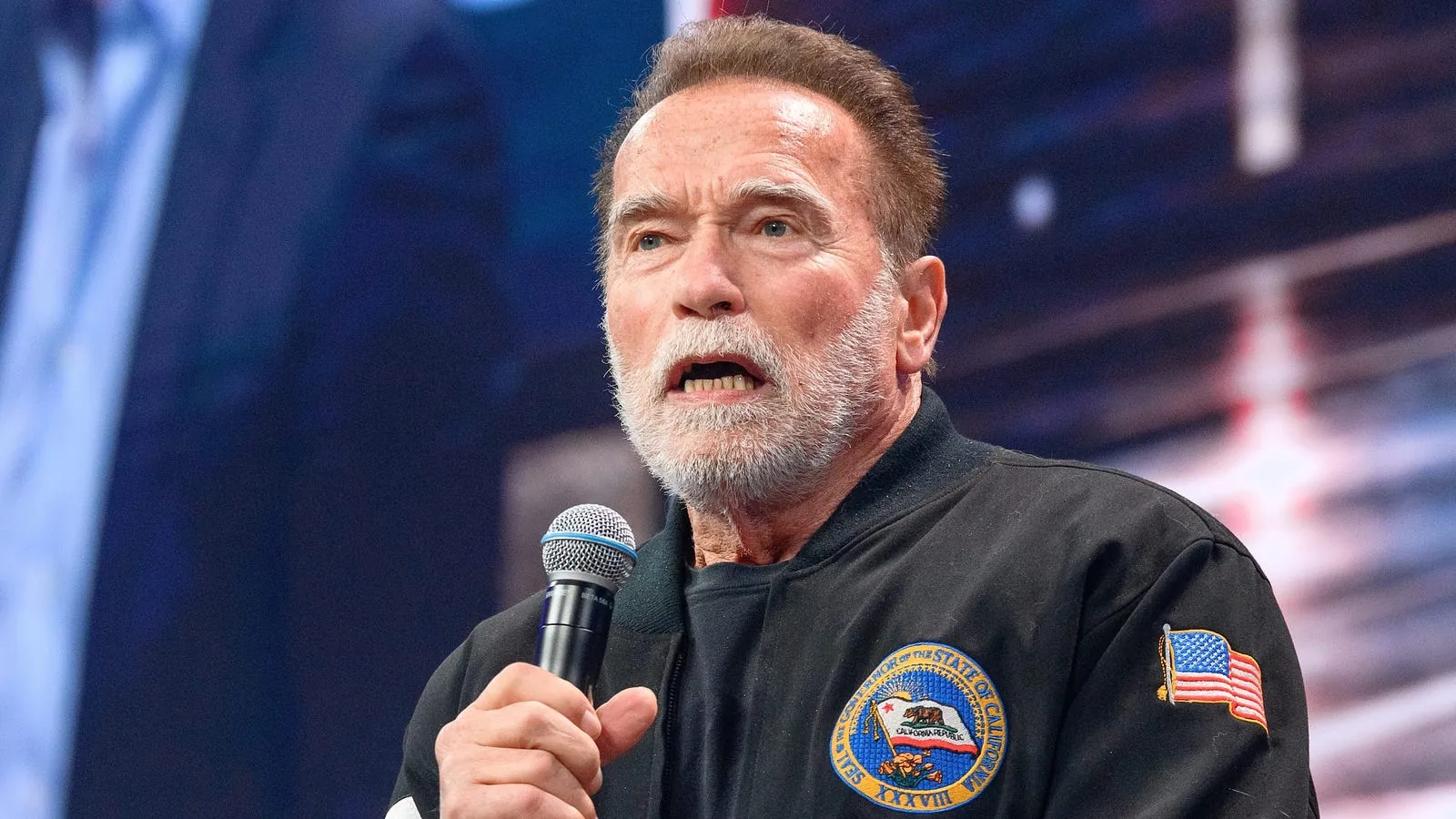
That distinction matters for ordinary older adults. A 72-year-old with sore knees does not need a celebrity template that quietly says, “Try harder.” She needs a way to protect those knees, strengthen the muscles around them, get her heart working safely, and finish the week feeling more confident rather than more fragile.
What Arnold reportedly does now
The late-70s version of Schwarzenegger’s routine, as reported by Business Insider, is built around regular morning movement, machine-based strength work, and low-impact cardio. The reported pattern is not one heroic weekly session; it is near-daily training, with a substantial block of machine lifting and a long cycling component.[1]
A 2023 Men’s Health feature, when he was 75, gave a more exercise-by-exercise look at the kind of machine routine he was using. It included machine preacher curls and machine dips, each performed as one set of 30 reps followed by four sets of 10 to 12 reps. The same feature described overhead press, lateral raise, and rear delt fly machines at five sets of 10 to 12 reps.[2]
| Reported Arnold element | What it suggests for an older exerciser | What it does not mean |
|---|---|---|
| Machine-based lifting | He is reducing the need to stabilize heavy free weights and controlling the movement path. | Machines are not automatically the best choice for every person or every joint. |
| Higher-rep sets | The emphasis appears to be maintenance, circulation, and repeatable effort rather than maximum-load lifting. | An older adult should not copy his volume without building up gradually. |
| Cycling after strength work | Low-impact cardio can support regular aerobic activity with less pounding than running. | A 45-minute ride is not the required starting point. |
| Nearly daily sessions | Consistency is the center of the routine. | Daily 60- to 90-minute workouts are not necessary for everyone. |
The exact sets and reps are interesting, and they satisfy the part of the brain that wants to peek at the workout card. But they are not the prescription. They are evidence of how much the plan has been altered: more guided equipment, more repeatable ranges of motion, and less of the old “let’s see how heavy this can go” business.
The real story is why he changed it
Schwarzenegger’s current routine is more meaningful when it is read through his medical and orthopedic history, not through his bodybuilding résumé. Men’s Health has reported that he shifted toward machines after heart and joint surgeries, including shoulder, knee, and hip procedures.[3] Business Insider also framed the late-70s routine around training despite accumulated physical limitations, including three open-heart surgeries.[1]
That is the part many older adults recognize. Not the fame, not the gym, not the biceps. The recognition comes from a sentence like the one he gave People, via Yahoo: “My knees are shot. I have to protect my knees because I want to go skiing.”[4]
There it is: the ordinary calculation. The knees hurt, but the person still wants a life. Maybe it is skiing. Maybe it is walking to the mailbox without holding the railing. Maybe it is getting up from a restaurant chair without making the whole table go quiet. The exercise plan has to serve that life, not punish the body for having a history.
This is also where the celebrity coverage needs a leash. Media reporting about Schwarzenegger’s routine is not medical evidence, and his exact choices may reflect his long training background, his doctors, his tolerance, his access to equipment, and a lifetime of knowing how exercise feels in his body. A person with a heart history, recent surgery, dizziness, chest symptoms, new shortness of breath, unexplained pain, a recent fall, or a major change in walking ability should not treat any famous person’s gym routine as clearance to begin.
What older adults can actually copy
The transferable lesson is not “do Arnold’s workout.” It is: keep a regular movement habit, choose joint-friendlier tools, use low-impact cardio, and adjust the plan when your body gives you new information.
For adults 65 and older, the safer baseline is the CDC physical activity framework: at least 150 minutes a week of moderate-intensity aerobic activity, muscle-strengthening activities at least two days a week, and balance activities as part of the weekly routine.[5] The CDC also describes a practical strength-training range for older adults: 8 to 12 repetitions per activity, 1 to 3 sets, on 2 or more days a week.[5]
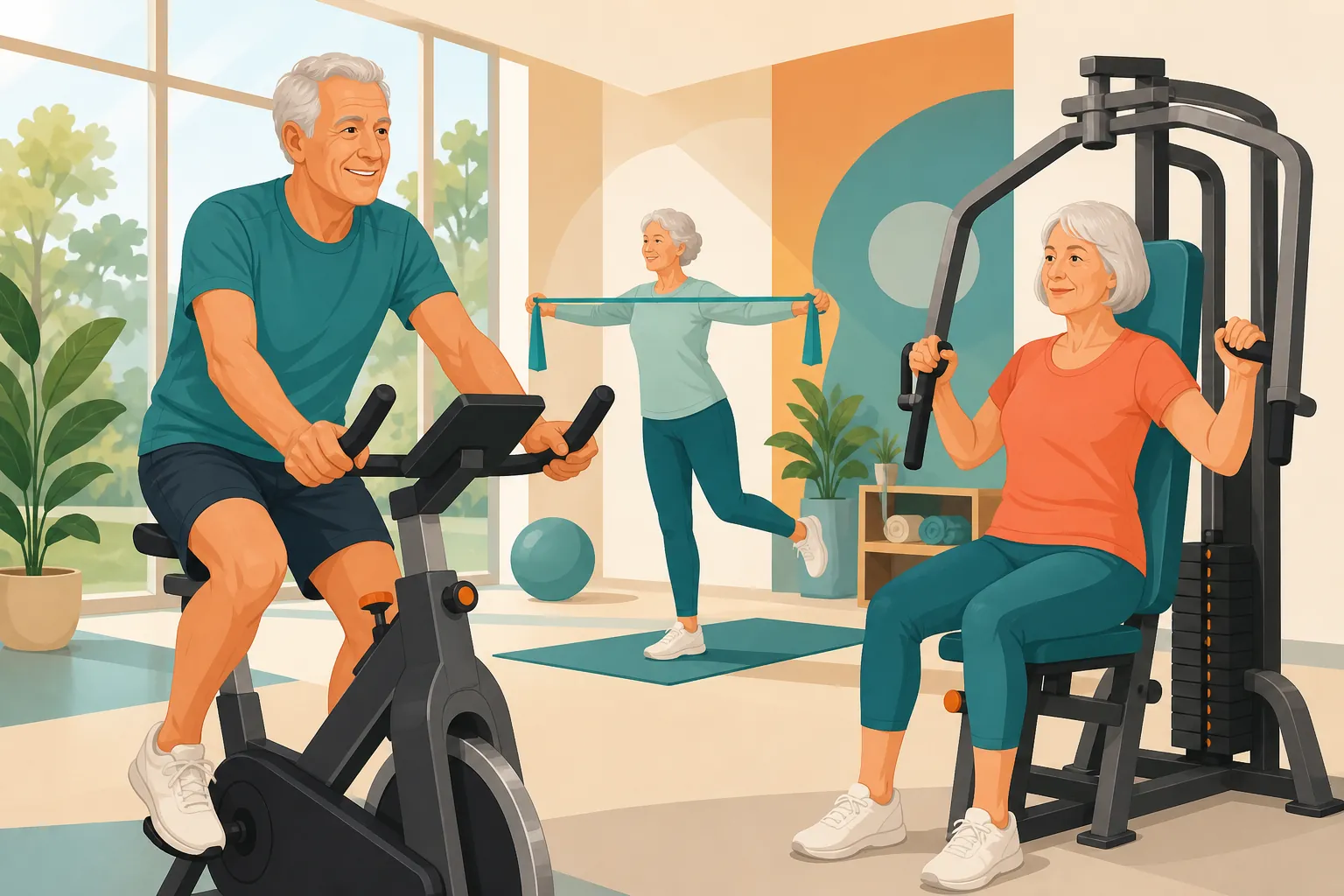
Put beside that standard, Arnold’s routine is not a minimum goal. It is far above what many older adults need in order to meet public-health guidance. The useful move is to scale the pattern down until it fits a real week.
A realistic weekly version
| Weekly goal | One practical way to do it | Arnold-inspired idea to borrow |
|---|---|---|
| 150 minutes of moderate aerobic activity | 30 minutes on 5 days, using walking, stationary cycling, water exercise, or another comfortable option. | Favor cardio you can repeat without stirring up the knees, hips, or back. |
| Strength training at least 2 days | Use machines, bands, bodyweight, or light weights for major muscle groups, with controlled repetitions. | Choose equipment that helps you work the muscle without wrestling the joint. |
| Balance activities | Add brief balance practice near a counter, rail, or stable chair, especially if falls are a concern. | Train for the daily moments that decide independence: turning, stepping, reaching, and recovering. |
| Recovery and symptom watching | Leave room between harder sessions and adjust if pain, swelling, dizziness, or unusual fatigue appears. | Adapt early instead of waiting until the body forces a long stop. |
Moderate intensity does not have to look dramatic. For many people, it is a brisk walk, an easy-to-moderate stationary bike ride, water walking, or a class where conversation is still possible but singing would be optimistic. If the knees complain on pavement, cycling or pool exercise may be the smarter choice. If the shoulder dislikes overhead work, a different pulling or pushing pattern may be better than forcing a machine that looks impressive.
The adult child trying to encourage a parent can help by changing the question from “Are you exercising enough?” to “What movement can you do again tomorrow?” That shift prevents a lot of unnecessary shame. It also pairs well with other independence habits, from brain-health routines such as word games and memory activities to practical fall-risk planning around sleep, lighting, and home safety.
Machines can help, but they are not magic
Schwarzenegger’s machine-heavy routine makes sense for him. Machines can reduce the balance demand, guide the movement, and make it easier to load a muscle without asking an irritated joint to do too many jobs at once. That is one reason they can be a good fit for older adults who feel uncertain with free weights.
The research picture is supportive, but not as simple as “machines win.” A 2025 network meta-analysis of 102 trials involving 4,754 community-dwelling older adults ages 63 to 87 found that all resistance-training modalities produced moderate-to-large strength gains. Machine training ranked first for strength gains, with a standardized mean difference of 1.34, but the authors cautioned that equipment choice “might depend on individual preference, enjoyability, and practicability.”[6]
That last sentence is not a footnote for academics; it is the practical heart of the matter. A machine you dislike, cannot adjust, cannot afford, or cannot get to twice a week is not superior to a resistance band you will actually use. A chair sit-to-stand done safely at home may beat a beautiful gym plan that requires driving in bad weather and then navigating a crowded weight room.
For someone with balance concerns, machines may allow strength work while seated. For someone who cannot comfortably grip handles, bands or cuffs may be easier. For someone who wants to practice getting up from a chair, bodyweight work may be more directly useful. The tool should match the limitation and the daily task.
Where heart history and fall risk change the plan
Schwarzenegger’s open-heart surgery history is exactly why his routine should be treated as an adaptation story, not a green light for everyone else. Older adults with heart disease, valve surgery, bypass surgery, stents, rhythm problems, fainting episodes, or unexplained chest pressure need individualized guidance before increasing exercise intensity. The same is true after joint replacement, new severe joint pain, or a fall that changes confidence.
A clinician does not have to approve every biceps curl. But a primary-care clinician, cardiologist, physical therapist, occupational therapist, or cardiac-rehab team can help set boundaries: how hard to work, what symptoms mean stop, which movements are off-limits for now, and whether balance training or assistive devices should come before heavier strengthening.
This is also where emergency planning belongs, especially for families. If a parent has had recent falls, dizziness, or hospital visits, exercise should sit inside a broader safety plan. A practical checklist such as a hospital emergency safety checklist for elderly patients is not glamorous, but neither is waiting in an ER while nobody can remember the medication list.
A safer way to adapt the Arnold idea
A reasonable Arnold-inspired plan for an ordinary older adult starts smaller than Arnold’s reported routine and earns its way upward. The first win is not 90 minutes. It is showing up repeatedly without making the knees, shoulders, hips, back, or heart symptoms worse.
- Copy the consistency: Pick regular days and a familiar time, because decision fatigue has ended many fine exercise intentions.
- Copy the joint-friendly substitutions: Use machines, bands, water exercise, cycling, or bodyweight movements when they make the work more controlled and less irritating.
- Copy the low-impact cardio habit: Walking, cycling, pool work, and similar options can help build the CDC’s weekly aerobic minutes without turning every session into a pounding contest.
- Do not copy the duration automatically: Near-daily 60- to 90-minute sessions are a large training load, especially for someone restarting after illness, surgery, or years of inactivity.
- Do not copy the exercise list blindly: A preacher curl machine may be fine for one person and irrelevant for another. A shoulder machine may be useful, painful, or unnecessary depending on the shoulder.
- Do not copy the intensity without clearance: Heart history, dizziness, recent falls, major pain, or new mobility changes should move the conversation to a clinician before the workout gets harder.
For a deconditioned beginner, the first version might be 10 to 15 minutes of comfortable walking or cycling on several days, plus two short strength sessions using a chair, wall, bands, or easy machines. For someone already active, the plan may look closer to a full gym routine, with more sets and longer cardio. Both versions can be legitimate if they build toward the CDC framework and leave the person able to function well the next day.
Balance deserves its own respect. Strength helps, but falls often happen in the messy in-between moments: turning too fast, stepping over a threshold, reaching for something just out of range, walking when sleep is poor, or moving through bad lighting. If that is a concern, pair exercise with fall-prevention habits such as reviewing home lighting, footwear, medications, and seasonal risks like the ones discussed in this guide to daylight saving time, senior sleep, and fall risk.
So, should you copy his routine?
Copy the spirit, not the spreadsheet.
The best reading of Arnold Schwarzenegger’s senior workout routine is that it is disciplined, adjusted, and protective. It accepts that knees, shoulders, hips, and heart history change the plan. It uses machines and low-impact cardio not as a secret longevity formula, but as tools that make regular training more repeatable.
For most older adults, the better target is a CDC-aligned week: enough moderate aerobic activity, at least two days of strengthening, balance work, and sensible medical guidance when symptoms or health history call for it. If Arnold’s example helps someone stop thinking of pain as the end of movement and start thinking in terms of adaptation, that is useful. If it makes someone feel behind because they are not doing 25 machine sets and 45 minutes on a bike, then the lesson has been badly translated.
This article is for general information only and is not a substitute for medical advice, diagnosis, rehabilitation, or an individualized exercise plan from a qualified health professional.
References
- At 78, Arnold Schwarzenegger still trains nearly every day — but his workouts look very different now, Business Insider, Oct. 2025
- Arnold Schwarzenegger Shares His Workout Routine at 75 Years Old, Men’s Health, 2023
- How Arnold Schwarzenegger, 74, Adapts His Workouts as He Ages, Men’s Health
- Arnold Schwarzenegger Had to Change Workouts, Yahoo Entertainment
- What Counts as Physical Activity for Older Adults, CDC
- Network meta-analysis of resistance training modalities in community-dwelling older adults, PubMed, 2025
Questions to ask your clinician or OT
This comparison doesn't decide final medical fit — bring it to a clinician or occupational therapist conversation, not a purchase decision.
Find Local HelpRelated reading
Noticed something outdated or inaccurate on this page? Flag a correction. We review every report against CDC, NIA, and AARP HomeFit guidance before updating a page.