
Caregiver decision guide
Best Self-Care Books for Caregivers, Matched to How You Feel
Depleted caregivers of aging parents don't have time to wade through another flat book list. This guide pairs a quick self-check — what state are you in right now: burnout, practical overwhelm, family conflict, dementia-related stress, or needing small moments of relief — with the self-care books that best match each situation, plus realistic ways to read when you have almost no time.
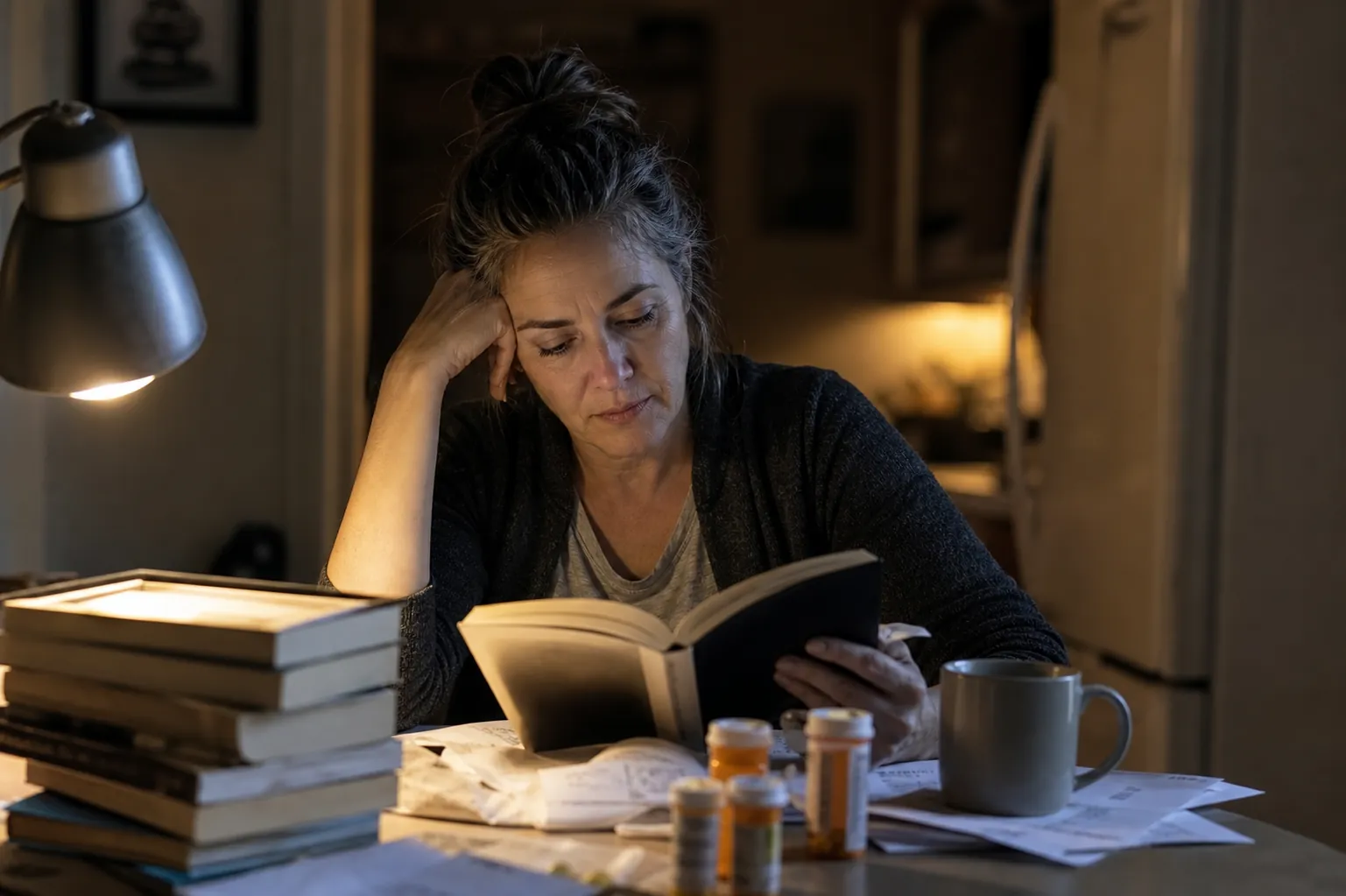
If you are searching for the best self-care books for caregivers of elderly parents, you probably do not need a longer list. You need a smaller decision.
Start here: which sentence sounds most like tonight?
- “I am burned out, resentful, guilty, and tired of being told to take a bath.”
- “I need instructions. There are forms, appointments, medications, bills, and nobody has explained the order.”
- “My family is fighting, or one difficult parent can still reduce me to twelve years old.”
- “Dementia has changed the person I love, and ordinary caregiving advice is not enough.”
- “I can only handle a few gentle pages. Anything heavier will break the thin thread I am hanging from.”
Choose from that state, not from a universal ranking. A caregiver who needs a checklist will be irritated by a beautiful memoir. A caregiver who needs language for grief may shut down in front of a planner. The right book is the one that asks less of you and gives back something usable: words, order, permission, boundaries, or a small pocket of calm.
This is educational reading support, not medical or mental-health advice. If you feel unsafe, unable to function, or at risk of harming yourself or someone else, books are not the next step; immediate professional or emergency help is.
First, match the book to the strain you are carrying
| If this is your current state | Start with | Why this fit works |
|---|---|---|
| Burnout and emotional validation | Already Toast; Passages in Caregiving; Can’t We Talk About Something More Pleasant?; Generation Care | These help name resentment, dread, grief, and the loneliness of being the default person. |
| Practical overwhelm | How to Care for Aging Parents; The Complete Eldercare Planner; The AARP Caregiver Answer Book | These are for sorting decisions, documents, care options, communication, and next steps. |
| Boundaries and family conflict | Boundaries; Coping with Your Difficult Older Parent; They’re Your Parents, Too! | These are better when the pain is relational: guilt, resistance, sibling imbalance, or old family roles. |
| Dementia-specific stress | The 36-Hour Day; Loving Someone Who Has Dementia; Creating Moments of Joy | These address dementia behavior, ambiguous loss, and daily moments differently than general caregiving books. |
| Tiny-moment comfort | Daily Comforts to Caregivers; Self-Care for Caregivers | These suit the caregiver who can read only a page or two and cannot absorb a heavy manual. |
The demand for this kind of triage is not imaginary. AARP reported in 2025 that 63 million Americans were family caregivers, a 45% increase since 2015.[1] In a separate AARP mental-health survey of 1,001 caregivers in May 2023, 50% said their emotional stress had increased and 39% said they rarely or never felt relaxed.[2] That does not mean every caregiver needs the same book. It means many caregivers arrive at a book list already carrying too much.

If you are burned out: choose a book that tells the truth before it gives advice
Burnout caregiving has a particular texture. You may still be competent. You may still be making the calls, refilling the pillbox, answering the same question, calming the crisis, and sounding pleasant to the scheduler. But underneath that competence is a private weather system: anger at siblings who “would help if asked,” dread before the phone rings, guilt when you want your own life back, and shame because none of those feelings match the soft-focus version of caregiving sold to the public.
For that state, start with books that validate the experience before trying to organize it. Already Toast by Kate Washington is useful when you need someone to say plainly that caregiving can consume an adult life. California Caregiver Resource Centers describes the book as drawing on more than 100 caregiver interviews, which matters because the book is not just one household’s private misery; it sits in a wider pattern of unsupported family care.[3]
That pattern has health consequences. Family Caregiver Alliance’s self-care page states that 46% to 59% of family caregivers are clinically depressed.[4] A separate FCA statistics page, using different sourcing, reports that 40% to 70% of family caregivers have clinically significant symptoms of depression; those ranges should not be blended into one cleaner statistic, but they point in the same direction: caregiver distress is not a character flaw.[5]
Gail Sheehy’s Passages in Caregiving belongs in the same bucket for a different reason. It gives a caregiver a sense of movement through a long ordeal. That is helpful when every week feels like a new emergency but also somehow exactly the same. It may be a better fit than a punchy self-help title if you want a map of the emotional journey rather than a set of rules.
Roz Chast’s Can’t We Talk About Something More Pleasant? is the one to pick when prose feels like too much. Its graphic-memoir form lets in absurdity, tenderness, exasperation, and dread without requiring you to sit still for a dense chapter. It can be especially relieving for adult children who love their parents and still find the end-of-life logistics humiliating, expensive, repetitive, and occasionally ridiculous.
For younger and midlife caregivers, Jennifer N. Levin’s Generation Care is worth noting as a current-shelf title. Its publisher positions it around millennial caregivers, which makes it a better fit for readers who are juggling parents’ decline alongside careers, young children, debt, fertility decisions, or the strange social isolation of caregiving before many friends understand what the word means.[6]
Do not choose this bucket first if tonight’s problem is concrete and urgent: Medicaid paperwork, a discharge plan, a medication schedule, whether Mom can still live alone, or who is paying for what. Burnout books can make you feel less alone, but they will not replace an eldercare manual when you need to know what to do before Friday.
If you are practically overwhelmed: choose the book that reduces decisions
Practical overwhelm is not the same as emotional burnout, though they often travel together. This is the state where you have seventeen browser tabs open and still do not know whether you are supposed to call the doctor, the insurance company, the Area Agency on Aging, the pharmacy, the bank, or your brother who has once again texted, “Just let me know how I can help.”
Start with Virginia Morris’s How to Care for Aging Parents if you want a broad, practical reference. This is the book for a caregiver who does not necessarily want to read in order. You look up the problem, take what you need, mark a page, and close it. That matters when the emotional labor of caregiving is being made worse by not knowing the vocabulary of care.
Use The Complete Eldercare Planner when the work has become less about understanding and more about tracking. A planner-style book earns its place when information is scattered across sticky notes, patient portals, paper statements, prescription bottles, and the one sibling’s memory of what Dad “said he wanted” years ago. Its value is not inspiration. Its value is containment.
The newer AARP Caregiver Answer Book by Barry J. Jacobs and Julia L. Mayer is especially well matched to the “please just answer the question” caregiver. Guilford Press lists it as a July 1, 2025 release in Q&A format and notes that it received an AJN Book of the Year First Place award in Consumer Health.[7] A Q&A structure is not a small detail; it is the difference between being expected to sit down like a student and being allowed to arrive like a person with a ringing phone.
This bucket is also where it helps to separate book reading from the rest of the practical work. If fear of falls is the issue keeping you awake, a book may steady your thinking, but a targeted checklist may be more useful than another chapter. For Parkinson’s-specific concerns, see Parkinson’s Fall Warning Signs and When to Act. If the daily medication routine is the part that keeps slipping, How to Keep Your Parent’s Parkinson’s Medication on Time belongs closer to your elbow than a memoir.
Housing-cost anxiety is another kind of practical overwhelm that can masquerade as general panic. If the question underneath your search is whether staying home is still financially possible, pair an eldercare reference with a decision guide such as Is Staying Home Cheaper Than Senior Housing in 2026? or How to Afford Senior Housing for Aging Parents. Books can help you think; numbers often need their own page.
Do not choose the practical-overwhelm bucket first if you are so emotionally raw that instructions feel like accusation. A checklist can be merciful. It can also become one more witness to everything you have not done. If you feel that tightening in your chest when you open a planner, begin with validation and return to the manual later.
If boundaries or family conflict are the wound: choose carefully
Some caregiving stress is not caused by the tasks themselves. It comes from the family system wrapped around the tasks: the sibling who critiques but does not visit, the parent who refuses help until the situation becomes dangerous, the adult child who still feels twelve years old in the kitchen, the spouse who insists everything is fine while you quietly absorb the consequences.
Cloud and Townsend’s Boundaries is the broadest title here. It is not eldercare-specific, so it may not answer what to do about a missed neurology appointment or an unsafe staircase. Its use is more basic: helping a caregiver notice the difference between love and total availability. That distinction can be hard to hold when a parent’s needs are real and still more than one person can safely carry.
Grace Lebow and Barbara Kane’s Coping with Your Difficult Older Parent is better when the difficulty is specific to the parent-child relationship. Caring Senior Service describes it as offering sample dialogues for resistance, which is the practical detail that makes it more than a sympathy title.[8] Sometimes a caregiver does not need a theory of boundaries; they need three sentences to say when Dad refuses the walker, rejects paid help, or turns every safety conversation into an insult.
Francine Russo’s They’re Your Parents, Too! is the sibling-conflict pick. It fits the caregiver who has become the default coordinator while the family story still insists that everyone is “helping.” It is especially relevant when old roles have hardened: the responsible daughter, the distant son, the charming sibling, the one who controls money, the one who provides labor, the one who disappears until decisions are made.
Family-conflict books are not the first choice if a parent’s immediate safety is at stake. If the worry is a wet walkway, a fall-prone entry, or a home that has not caught up with a diagnosis, turn conflict into one concrete inspection. For example, Rainy Day Fall Prevention Starts Outside can be an easier family conversation than “you never help.” If ALS is part of the picture, How to Make Your Parent’s Home ALS-Safe Before a Fall gives the argument a practical object.
If dementia is changing everything: choose dementia-specific help
Dementia caregiving has its own rules of exhaustion. The same conversation may happen five times before lunch. A parent may accuse, wander, refuse bathing, reverse day and night, or look physically present while becoming harder to reach. General caregiver books can still help, but they may not explain the particular grief of losing someone in uneven pieces.
Nancy L. Mace and Peter V. Rabins’s The 36-Hour Day is the workhorse dementia title. It is the one to reach for when you need explanations of dementia-related behavior and care problems rather than a general pep talk. Caring Senior Service includes it among caregiving books for dementia care, and it appears widely in caregiver recommendations for a reason: dementia changes the problem you are trying to solve.[8]
Pauline Boss’s Loving Someone Who Has Dementia belongs beside it, but not as the same kind of book. Boss is associated with the language of ambiguous loss, and that is the right frame when the hardest part is not a task but the strange ache of presence and absence at once. Pick this when you find yourself grieving and then scolding yourself because the person is still alive.
Jolene Brackey’s Creating Moments of Joy is gentler and more moment-based. It is a better fit when the household needs small interactions that do not depend on arguing reality into place. Choose it when you are past the point of winning the conversation and need help making the next ten minutes less punishing.
Do not start here if your parent does not have dementia and the main issue is legal planning, sibling conflict, or your own depletion. A dementia book can still teach compassion, but it may add a layer of fear you do not need tonight.
If you can only handle a few gentle pages
There are caregiving seasons when even a good book feels like homework. You may be sleeping badly, listening for a fall, recovering from a hospital discharge, or doing the kind of night math that starts with “if I wake up at 5:30, I can call before work.” In that state, short-form comfort is not lesser reading. It is the only reading with a chance of surviving contact with your life.
Books such as Daily Comforts to Caregivers and Susanne White’s Self-Care for Caregivers are best treated as bedside or car-seat books, not projects. Read one page while the kettle heats. Read one paragraph in the parking lot before going into the appointment. Reread the same marked line for a week if that is all your mind will accept.
Skip this bucket if what you actually need is a decision. Gentle pages can soothe the edges, but they cannot tell you how to compare home care with senior housing, prepare a medication list, or divide responsibilities among siblings. Let comfort be comfort. Do not ask it to do the work of a manual.
The self-care part is not decorative
Caregivers are often told to practice self-care in a tone that makes the phrase sound like one more chore assigned by someone who will not be there at 2 a.m. The stronger argument is plainer: a strained caregiver is part of the care system. When that person collapses, the whole arrangement changes.
FCA cites research finding that a strained caregiving spouse aged 66 to 96 had a 63% higher mortality risk than same-age non-caregivers.[5] That finding should not be used to frighten an already frightened spouse. It does, however, make the oxygen-mask point less sentimental. Rest, support, medical care, boundaries, and relief are not rewards for doing caregiving beautifully. They are part of keeping the caregiver alive inside the arrangement.
A book cannot provide respite care, diagnose depression, repair an unsafe bathroom, or make a sibling fair. What it can sometimes do is interrupt the isolation long enough for a caregiver to name what is happening and choose one next action with less shame.
When are you supposed to read?
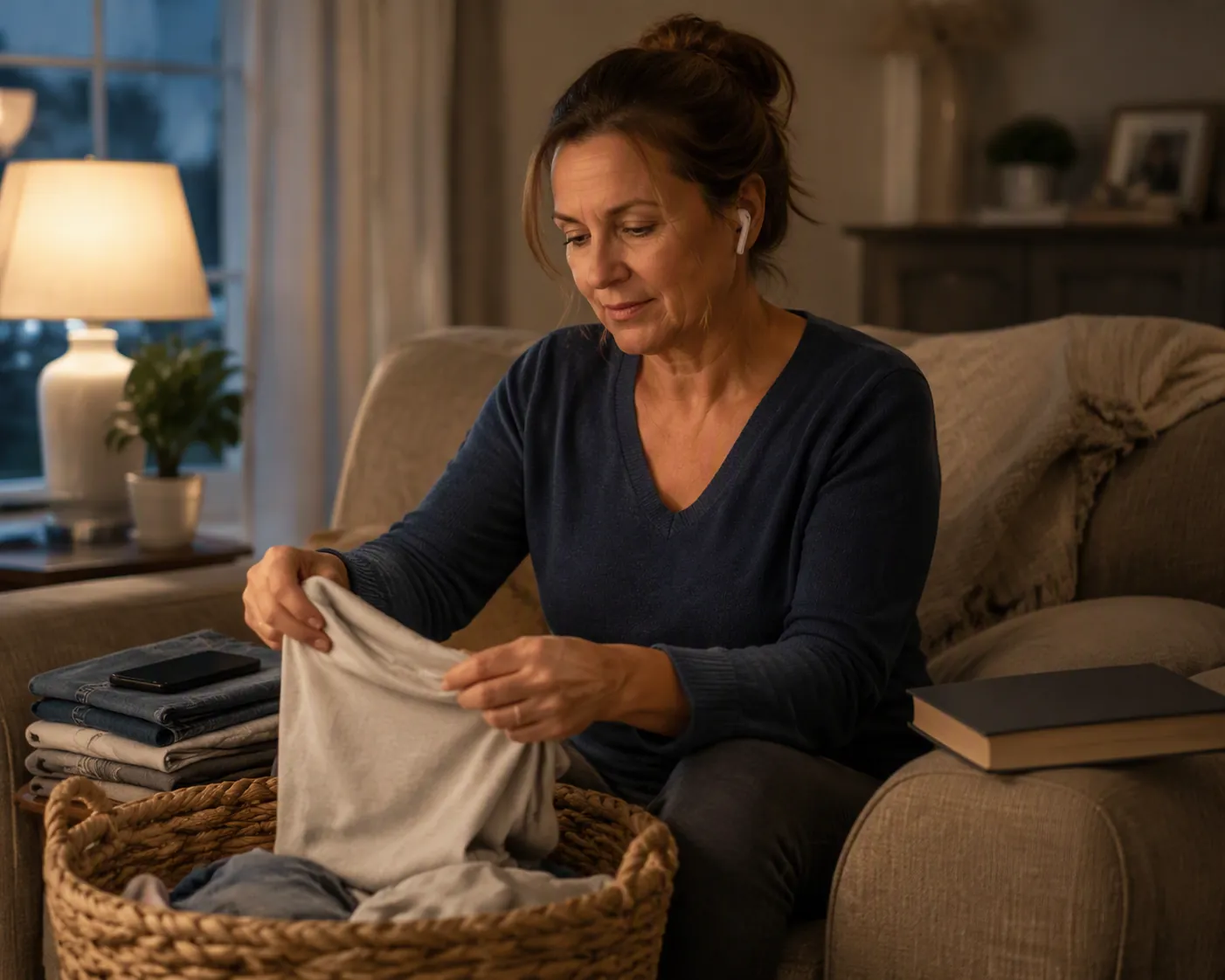
Do not wait for a quiet afternoon. That afternoon may not come, and if it does, you may spend it asleep.
Use the format that fits the chore. Audiobooks work while folding laundry, driving to the pharmacy, sitting in a school pickup line, or making the kind of dinner assembled from leftovers and apology. Library apps such as Libby can make this easier if buying another book feels irritating or impossible. A heavy manual may be better as a print or ebook reference; a memoir or gentle reflection may work better in audio, where someone else carries the sentences for a while.
There is one small reading finding worth treating as permission, not proof. Medical News Today summarized a 2009 University of Sussex/Mindlab study in which reading for as little as 6 minutes reduced stress by up to 68%, outperforming activities such as listening to music or walking in that lab context.[9] That does not mean six minutes with a book can cure caregiver burnout. It means a fragment may still count.
Make the fragment embarrassingly small:
- One answer from a Q&A book while the coffee brews.
- One page from a comfort book before opening the patient portal.
- One audiobook chapter during laundry, dishes, or a walk around the block.
- One marked paragraph reread before a hard family call.
- One practical section photographed and sent to a sibling with a specific request.
If your parent is still relatively independent and you are trying to keep things that way, reading may also mean choosing one preventive action instead of absorbing another general warning. For broader aging-in-place context, How to Stay Healthy and Independent After 70 can sit beside the books rather than compete with them.
The most useful caregiver book is not the one with the broadest reputation. It is the one that meets the state you are actually in and can be read in the life you actually have.
References
- New Report Reveals Crisis Point for America’s 63 Million Family Caregivers, AARP, July 24, 2025
- A Look at U.S. Caregivers’ Mental Health, AARP
- 11 Books for Caregivers: A Thoughtful Reading List for Family Caregivers, California Caregiver Resource Centers, November 14, 2022
- Taking Care of YOU: Self-Care for Family Caregivers, Family Caregiver Alliance
- Caregiver Statistics: Health, Technology, and Caregiving Resources, Family Caregiver Alliance
- Generation Care, Balance / Hachette, April 8, 2025
- The AARP Caregiver Answer Book, Guilford Press, July 1, 2025
- Best Books on Caregiving, Caring Senior Service
- Five ways reading can improve health and well-being, Medical News Today
Questions to bring to a clinician or OT
This is not medical, legal, or a family's final decision — only a framework. Bring these questions to a clinician, occupational therapist, or your local Area Agency on Aging.
Find Local HelpRelated reading
Noticed something outdated or inaccurate on this page? Flag a correction. We review every report against CDC, NIA, and AARP HomeFit guidance before updating a page.