
STEADI: Intervene
How to Stay Healthy and Independent After 70
Most older adults living independently would choose to stay at home with care, yet only about 23% meet federal activity guidelines — independence must be built deliberately. The practices with the strongest evidence are specific: strength and balance exercise, protein-sufficient nutrition, an annual medication review, and a home checked for fall hazards.
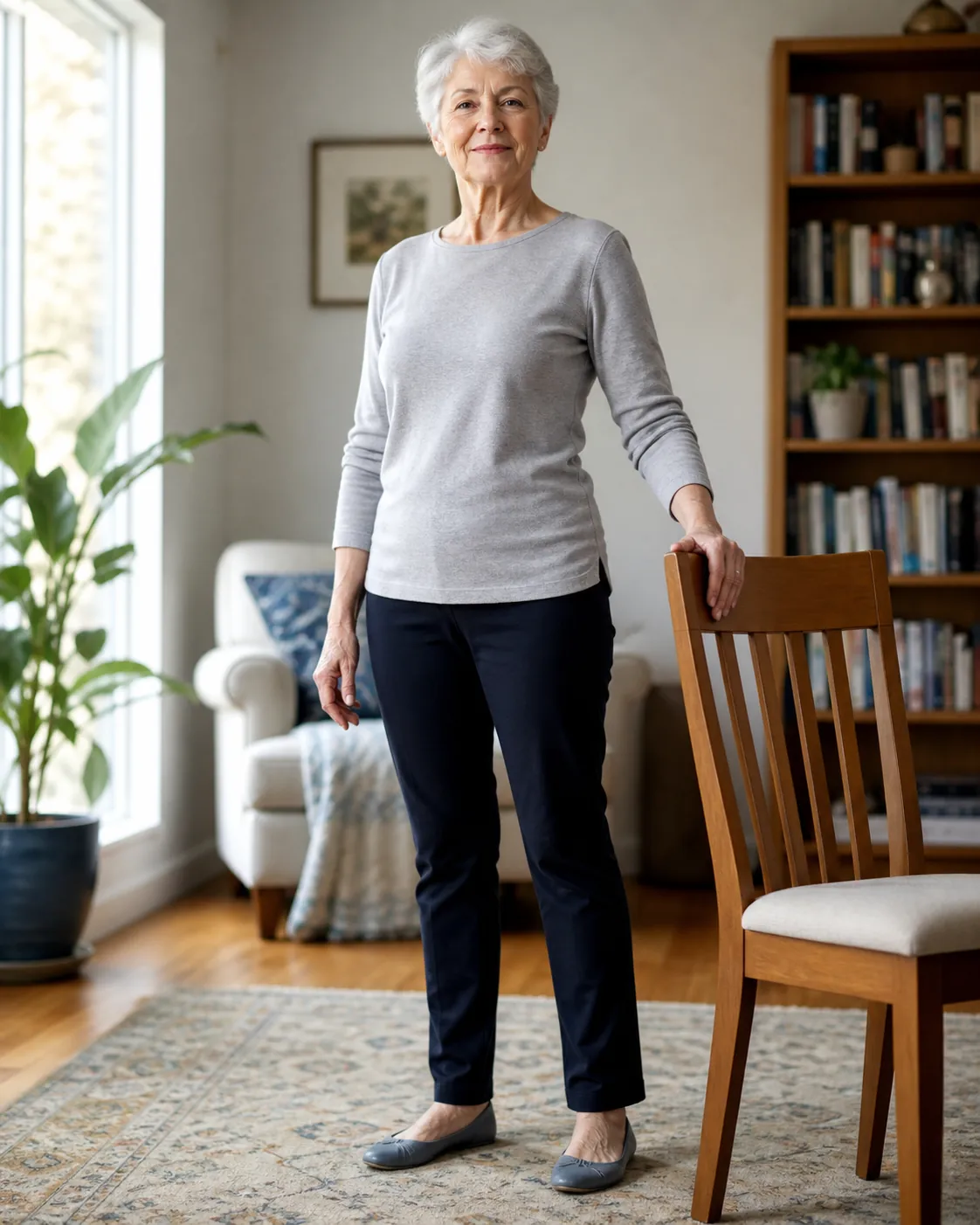
Most healthy retirement tips for seniors over 70 become useless the moment they drift into mood words: stay active, eat well, enjoy hobbies, keep a positive attitude. None of that is wrong. It is just too soft for the question most people actually care about after 70: can I keep living in my own home, safely, with enough strength and judgment around me to avoid preventable trouble?
That is not a sentimental goal. Pew Research Center reported in 2026 that 93% of U.S. adults ages 65 and older live in their own home, and among older adults living independently, 60% said they would want to stay home and receive care there if they could no longer live independently without help. [1] At the same time, only about 23.1% of adults 65 and older met federal physical activity guidelines in 2019. [2]
That gap is the whole problem. Wanting to age at home is common. Having the physical capacity, food routine, medication oversight, and home setup to make it more likely is much less automatic.
Start with the outcome: staying independent at home
A healthy retirement after 70 should be measured in ordinary scenes. Getting out of bed without dizziness. Walking to the bathroom at night without catching a rug edge. Carrying groceries from the counter to the refrigerator. Standing long enough to cook something real. Understanding which pills are being taken, why, and whether any of them are making balance worse.
Travel, volunteering, church, gardening, grandkids, clubs, and quiet mornings with a dog all matter if they matter to the person living the life. But they rest on a smaller set of maintenance systems. If those systems are weak, the pleasant parts of retirement start depending on luck, rescue, or someone else’s calendar.
| Maintenance system | What it protects |
|---|---|
| Strength, aerobic movement, and balance practice | Getting up, walking, recovering from a stumble, using stairs, going outside |
| Protein-sufficient meals | Muscle preservation, steadier energy, and better support for activity |
| Medication review | Less dizziness, sedation, confusion, and avoidable fall risk |
| A home fitted for aging | Fewer trip points, safer bathing, better lighting, and easier movement through rooms |
This is where the first effort belongs. Not in buying a miracle supplement. Not in pretending every 74-year-old should train like a 44-year-old. The first work is to keep the body capable enough, the food supportive enough, the medicines checked enough, and the house forgiving enough.
Build the physical capacity that independence spends every day
The CDC’s physical activity target for adults 65 and older is specific: at least 150 minutes a week of moderate-intensity aerobic activity, at least 2 days a week of muscle-strengthening activity, and balance activities. [3] That is not a lifestyle decoration. It is the working machinery behind independence.
Aerobic activity keeps walking from becoming an occasional event. Strength work helps with chairs, stairs, laundry baskets, and getting off the floor if something goes wrong. Balance practice is the quietest of the three, and often the most neglected, because people notice it only after it has already faded.
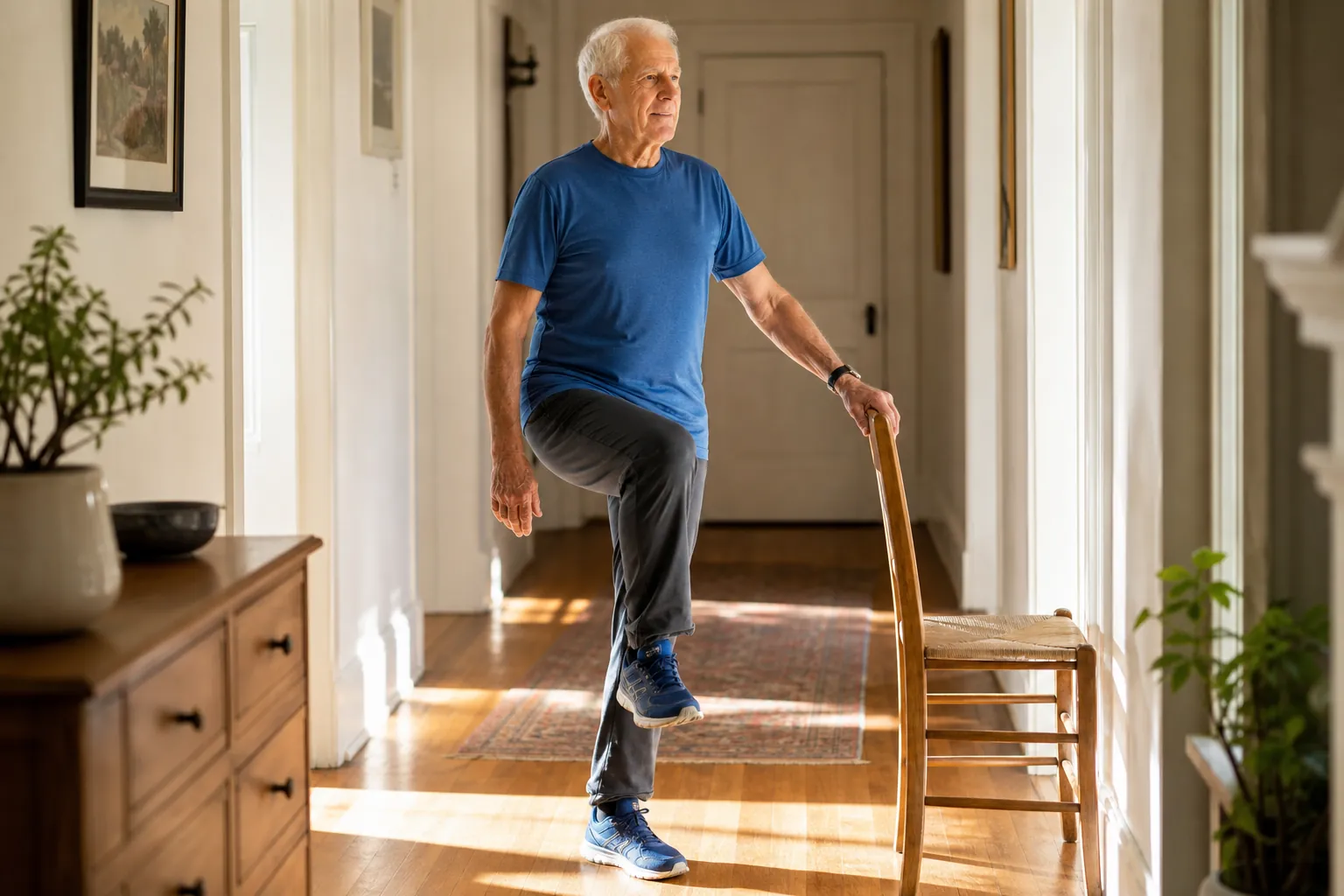
For someone over 70, the useful question is not “What workout sounds impressive?” It is “What movements will I actually repeat safely?” A walk that happens most days is worth more than a heroic plan abandoned by Thursday. A simple strength routine that uses a sturdy chair, a wall, resistance bands, or light weights may be more useful than a complicated program no one wants to start. Balance work should be done where a handhold is available, especially at first.
The routine does not have to be theatrical. It does have to cover the bases.
- Aerobic movement: walking, cycling, water exercise, or another moderate activity that can be repeated across the week.
- Strength: legs, hips, back, chest, arms, and hands need some regular challenge, not just gentle motion.
- Balance: practiced deliberately, near support, before a person is forced to test it in a dark hallway or on a curb.
- Recovery: enough rest between harder efforts to avoid turning a good plan into pain, dread, or injury.
Outdoor movement has its own hazards. If hiking, uneven sidewalks, winter weather, or icy steps are part of the week, those activities deserve their own safety habits. CareWise Guide’s senior hiking safety checklist and guide to preventing falls on ice are useful when “stay active” means leaving the living room.
If there has been a recent fall, new chest pain, shortness of breath, fainting, sudden weakness, or a major change in health, the next step is not stubbornness. It is a medical check before increasing activity. Independence is not proved by ignoring warning signs.
Eat to preserve muscle, not just to “eat healthy”
After 70, food advice that stops at “more fruits and vegetables” is incomplete. Older adults also need enough protein to help preserve muscle. Stanford Medicine describes a daily protein range of roughly 1.0 to 1.3 grams per kilogram of body weight for healthy aging; for a 150-pound person, that comes to about 68 to 88 grams per day. [4]

That number is not a command to eat steak at every meal. It is a reminder that tea, toast, crackers, and a few bites of dinner are not a maintenance plan. When appetite drops, cooking feels like too much, teeth or dentures make chewing harder, or shopping becomes tiring, protein is often one of the first things to quietly disappear.
A practical day might include protein in smaller portions spread across meals: eggs, yogurt, cottage cheese, fish, poultry, beans, lentils, tofu, milk, or other familiar foods the person will actually eat. The best plan is the one that survives a low-energy Tuesday, not the one that looks virtuous on paper.
Vegetables still matter, especially when they bring fiber, potassium, folate, and other nutrients into meals that might otherwise shrink. The point is to pair them with enough protein rather than using them as a substitute for it. For practical choices, see CareWise Guide’s nutrient-dense vegetables for older adults.
Adult children often discover nutrition problems late because the refrigerator can look “fine” while real intake is thin. Half-used containers, expired milk, untouched leftovers, or a parent saying “I just wasn’t hungry” for several days are not character flaws. They are signals to simplify food, make protein easier to reach, and ask whether swallowing, chewing, depression, medication side effects, or money for groceries is interfering. The response should preserve dignity: offer options, not surveillance.
Treat medication review as fall prevention
A pill organizer can make doses easier to track, but it does not answer the harder question: should all of these medicines still be here, at these doses, in this combination? Mayo Clinic advises having a health care professional review medications at least once a year, including prescription drugs, over-the-counter medicines, and supplements. [5]
This review matters because some medicines can increase fall risk by causing dizziness, drowsiness, confusion, blurred vision, or drops in blood pressure. Mayo Clinic flags several fall-risk categories, including some sleep medicines, anti-anxiety medicines, antidepressants, opioids, antihistamines, and blood pressure medicines. [5]
The cleanest review is not done from memory. Bring the bottles. Include supplements. Include “only sometimes” medicines, because the pill taken for sleep, pain, allergies, or nerves may be the one that changes tomorrow morning’s balance.
- Ask what each medicine is for and whether it is still needed.
- Ask whether any medicine could be contributing to dizziness, sleepiness, confusion, low blood pressure, or unsteadiness.
- Ask whether timing can be adjusted to reduce nighttime bathroom trips, morning grogginess, or unsafe periods of lightheadedness.
- Ask before stopping anything. A medication review is not the same as quitting medicines on your own.
This is also one of the places where an adult child can help without taking over. Someone can schedule the appointment, gather bottles into a bag, write down recent falls or near-falls, and sit quietly until the older adult wants help explaining. Control still belongs to the person taking the medicine.
Walk the house as if a fall is trying to find its opening
Falls are not a minor footnote in healthy aging. About 1 in 4 older adults falls each year. In 2021, falls among older adults caused more than 38,000 deaths and nearly 3 million emergency department visits, and the United States spends about $50 billion a year treating the effects of older-adult falls, with roughly three-quarters paid by Medicare and Medicaid. [6][7]
That is the warning. The work is less dramatic: room by room, remove the things that make a normal day less forgiving. AARP’s HomeFit Guide is built around this practical idea — adapting the home so people can live there safely and comfortably as needs change. [8]

Do not start with paint colors or a prettier basket for blankets. Start where bodies actually fall.
- Entryway: good lighting, a stable place to set packages, no loose mats, and a clear path from door to main living space.
- Hallways and stairs: bright bulbs, reachable switches, handrails where needed, and no cords, shoes, boxes, or laundry baskets narrowing the path.
- Bathroom: grab bars installed into proper support, non-slip surfaces, a reachable towel, and enough room to turn without catching a foot.
- Bedroom: a clear route to the bathroom, a lamp or nightlight, glasses within reach, and footwear that does not slide.
- Kitchen: frequently used items placed between shoulder and knee height so a step stool is not part of the breakfast routine.
- Living areas: secure rugs, chairs that are easy to rise from, and enough open space for a walker, cane, or another person assisting if that becomes necessary.
A useful home check is blunt. Where does the person rush? Where do they turn in the dark? Where do they carry something in both hands? Where do they reach overhead? Where do they avoid a room because it feels awkward, cold, dim, or hard to enter? Those are not quirks. They are design problems waiting to show up as injuries.
Seasonal hazards deserve their own pass. Winter creates ice, wet shoes, darker afternoons, and heavier clothing that changes movement. Storm seasons create power outages, cluttered walkways, and emergency supplies stored where no one can reach them safely. For more detailed room and seasonal checks, use the winter safety checklist for seniors at home and the guide to hurricane-ready home modifications.
Let the softer parts of healthy aging support the hard ones
Sleep, social connection, preventive care, and mental health are not decorations. NIH MedlinePlus, drawing on National Institute on Aging research, describes healthy aging as a pattern that includes movement, healthy eating, adequate sleep, social connection, stress management, and regular medical care. [9] The trouble is that these topics often become a fog of general advice unless they are tied back to daily function.
Poor sleep matters when it leads to grogginess, late-night wandering, or skipped morning movement. Loneliness matters when meals shrink, appointments are missed, or no one notices a new limp. Preventive care matters when vision, hearing, blood pressure, pain, or foot problems begin changing how a person moves through the house.
Social connection can be practical without becoming another assignment. A neighbor who walks on Tuesdays, a daughter who checks the porch light after storms, a friend who notices missed church, or a pet that keeps someone moving can all support independence. If a dog is part of the plan, the fall risk is real too; CareWise Guide’s senior dog adoption fall-safety guide covers that tradeoff.
The administrative side should stay in service of the same goal. Keep a current medication list, emergency contacts, advance care documents, insurance cards, and appointment notes where they can be found. If benefits, appointments, or planning documents are scattered, a family member may need a simple checklist rather than another anxious conversation. CareWise Guide’s Medicare benefits checklist for seniors and end-of-life planning checklist can help keep that work organized without pretending it is the center of healthy retirement.
What to do first this week
If everything feels like too much, do not start with a complete life overhaul. Start with the part most likely to reduce danger and reveal what else needs attention.
- Walk the main path: bed to bathroom, bathroom to kitchen, kitchen to favorite chair, door to car. Remove obvious trip points the same day.
- Choose a repeatable movement plan that includes walking or another aerobic activity, two days of strength work, and balance practice near support.
- Look at two ordinary days of food and check whether protein is showing up reliably, not just whether the meals look “light” or “healthy.”
- Schedule or request a medication review, especially after a fall, near-fall, hospitalization, new dizziness, or a recent medication change.
- Write down the one task at home that has become harder. That task is a clue: stairs, bathing, cooking, laundry, nighttime bathroom trips, or getting out of a chair.
Healthy retirement after 70 is not a personality trait, a hobby list, or a lucky default. It is a home-based system: checked for hazards, strengthened through movement, fed well enough to preserve muscle, and reviewed often enough that preventable medication problems do not become a fall.
References
- Most older adults who live at home want to age in place, but they aren’t entirely confident they’ll get to; Pew Research Center; Feb. 26, 2026
- Get the Facts on Healthy Aging; National Council on Aging
- Physical Activity Guidelines for Older Adults; Centers for Disease Control and Prevention
- Healthy habits for successful aging in your 60s and 70s; Stanford Medicine; Jan. 2026
- Medicines that increase fall risk in older adults; Mayo Clinic
- About Older Adult Fall Prevention; Centers for Disease Control and Prevention
- Falls Prevention for Older Adults; National Council on Aging
- AARP HomeFit Guide; AARP; 2020
- Live long, be well: Science-based tips for healthy aging; NIH MedlinePlus Magazine
Related reading
Noticed something outdated or inaccurate on this page? Flag a correction. We review every report against CDC, NIA, and AARP HomeFit guidance before updating a page.
Part of the Fall Prevention section.